Returns are unavoidable in distribution. Goods arrive damaged, a pallet is short by a few cartons, or a case turns up with the wrong SKU inside.
This post covers how a claim like that moves from a field report to an approved credit note, and how short receipts get settled without a pickup.
It also covers what changes for distributors in Ghana once that credit note has to line up with e-invoicing rules.
The hand-off matters most in categories carrying many small accounts on credit: FMCG, pharma and healthcare, cosmetics and personal care, and building materials.
How a Return Actually Starts
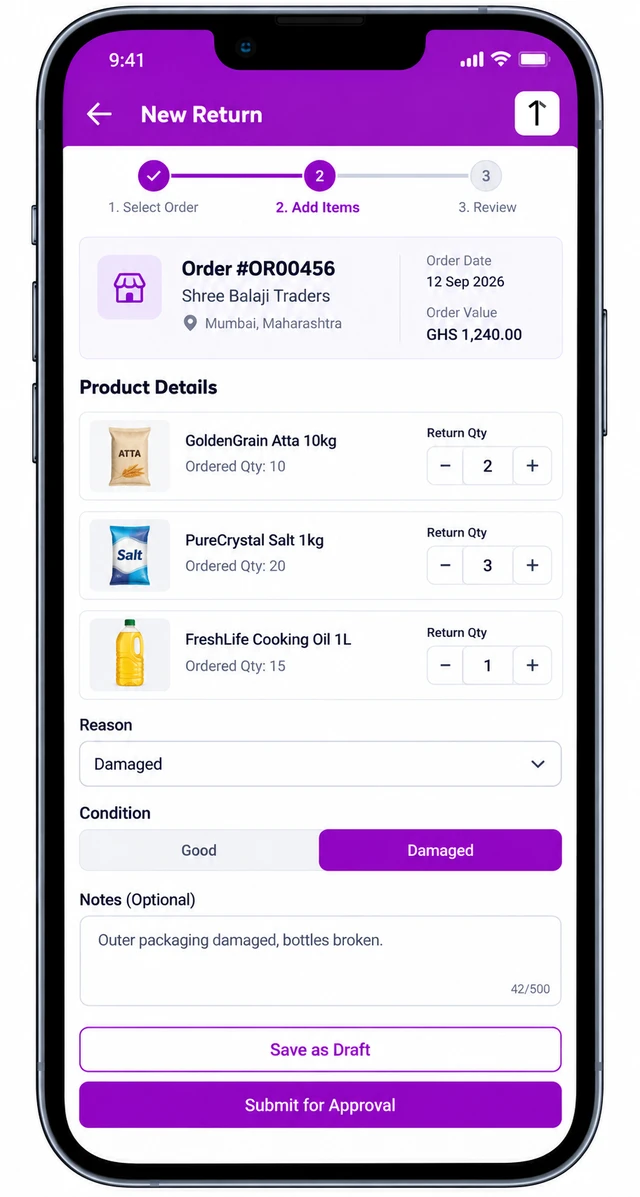
A retailer rarely logs into the system directly, so a field rep files the return on the outlet's behalf against the order it belongs to.
The rep picks which line items to return, up to the quantity actually delivered, tags a Reason such as Damaged, and records the Condition, Good or Sellable.
A distributor or a key distributor can file its own claim the same way, inside its own scope, and can save it as a draft before submitting.
Worked example: a Tamale distributor delivers forty cartons of cooking oil to a provision shop, and two arrive crushed.
The rep opens a Secondary Return against that order, selects the two damaged cartons, tags the reason Damaged, and submits it for approval.
Settling a Short Receipt Without a Pickup
A different mismatch shows up at the warehouse door, not the outlet: a shipment arrives short of what left the sending warehouse.
Rather than sending a truck back for the missing cartons, the receiving warehouse logs what it actually received against the delivery note.
That gap becomes a credit note instead of a physical return.
Worked example: a Kumasi key distributor dispatches fifty cartons of detergent to a sub-distributor, and only forty-six arrive.
The goods receipt note records forty-six received against fifty ordered, and the four-carton gap is settled as a credit line rather than a second trip.
| Return Reason | Typical Resolution | Who Approves It |
|---|---|---|
| Damaged in transit | Issue credit note | Next party up the chain |
| Short-received against the GRN | Credit note, no pickup | Receiving warehouse |
| Wrong SKU delivered | Replacement or credit note | Next party up the chain |
| Sellable but unwanted | Reject or restock | Next party up the chain |
Why Approval Comes Before the Credit Note
A return doesn't settle itself. A distributor's claim moves to its key distributor for approval before any credit note gets generated.
That step matters more now that a credit note has to reconcile against an invoice GRA's e-invoicing system already cleared.
An unapproved adjustment can leave the two out of step.
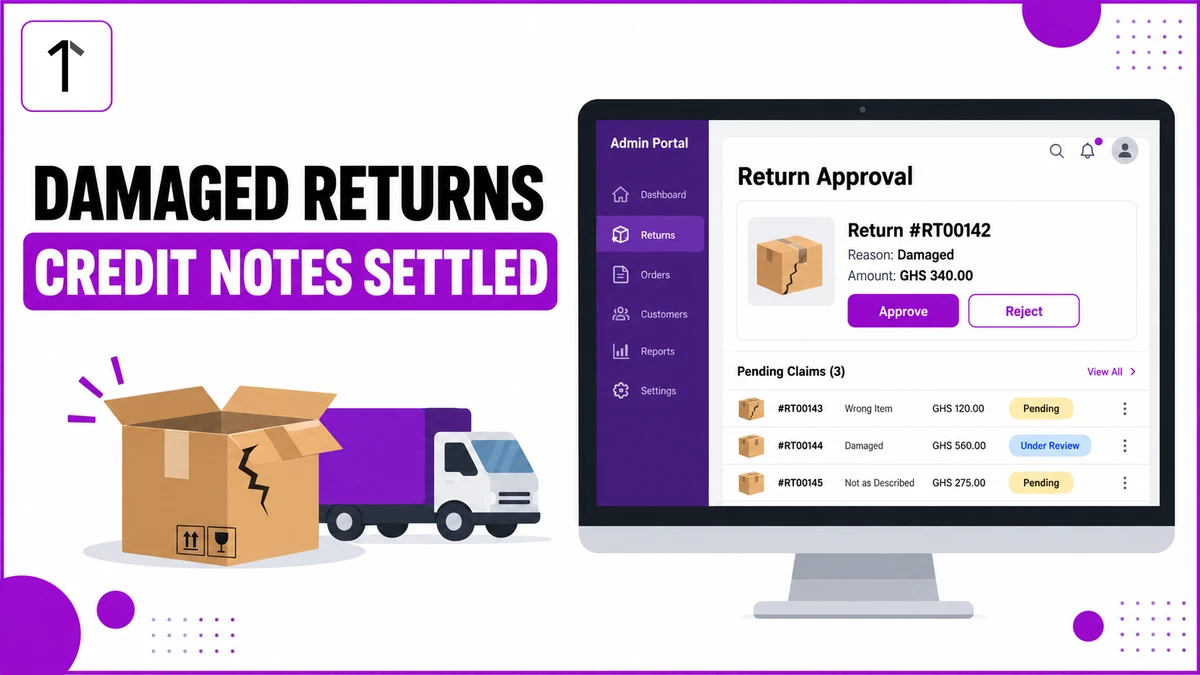
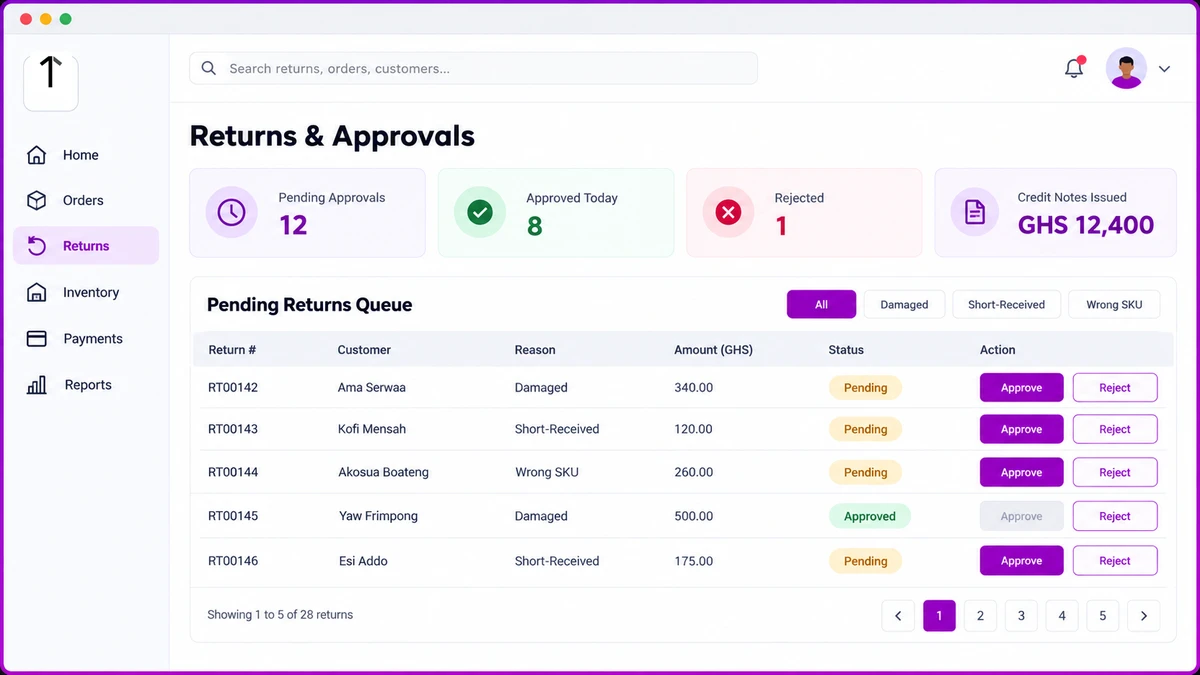
Every pending claim, whether it started as a return, a credit request or a workflow approval, sits in one queue until someone with authority acts on it.
How 1Channel Closes the Loop on Returns and Credit Notes
1Channel routes every return through the same approval chain used for orders, so a claim can't generate a credit note until the next party up signs off.
Every goods receipt note captures what a warehouse actually received against what was dispatched.
Any shortfall becomes a credit line on its own, with no separate return needed.
See How Returns and Credit Notes Stay Auditable
See how approval chains, GRN discrepancy handling and credit notes work together so every adjustment has a record behind it.
Explore Return Management →Common Mistakes to Avoid
- Approving against the ordered quantity, not the delivered one. A return can only cover what actually arrived at the outlet.
- Letting a retailer's claim skip the field rep. Retailers typically don't log in directly, so the rep is the entry point, not a workaround.
- Issuing a credit note before the matching invoice has cleared. An adjustment against an uncleared invoice creates a mismatch later.
- Mixing up Good/Sellable with Damaged. The condition tag decides whether stock gets restocked or written off.
- Treating every short receipt as a full return. A four-carton gap doesn't need a truck making a second trip.
- Leaving claims sitting in Draft. An unprocessed return blocks neither party's books from closing cleanly.
Note: Software screens may vary based on your business structure and configured workflows.