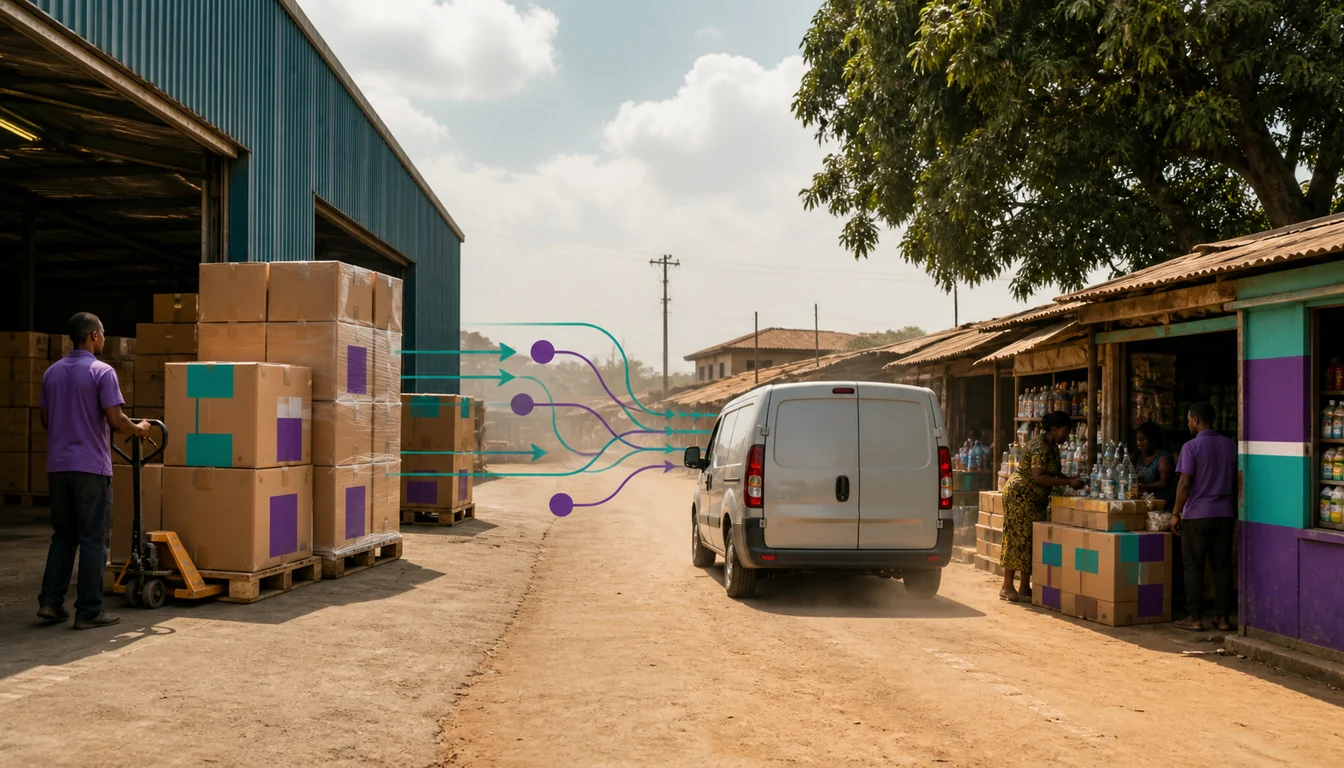
Mobile money moved GH¢4.54 trillion across Ghana in 2025, up 50.8 per cent in a year, while card acceptance still reaches only a thin slice of small shops.
This post covers the phone-based card acceptance just launched in Accra, why banks tie it to credit, and what it changes for distributors selling to outlets on credit.
The shift matters most where distributors carry many small outlets on credit: FMCG, pharma and healthcare, cosmetics and personal care, and building materials.
What Launched in Accra
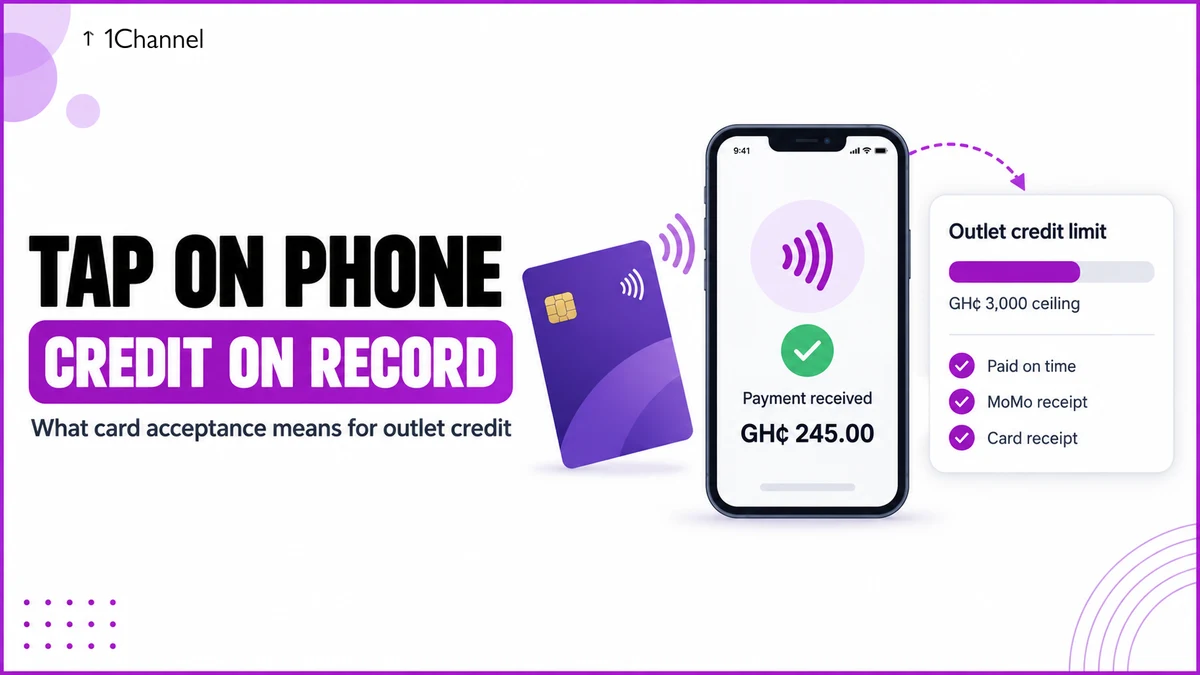
Visa has launched Visa Accept in Ghana, a tool that lets a merchant take contactless card payments on a compatible smartphone.
No separate POS terminal is needed, which removes the main cost barrier for a provision shop or kiosk owner.
Terminals are scarce today. Ghana had 18,117 POS devices in 2025, roughly 80 for every 100,000 adults, against 26.7 million active mobile money accounts.
Visa Ghana's country head, Fabrice Konan, pointed to thousands of micro merchants that still do not accept digital payments at all.
Why Banks Link Payments to Credit
Access Bank Ghana's Eugene Ocansey framed digital acceptance as a way to formalise small businesses that sit outside the formal economy.
The logic is simple. A shop that takes payments digitally builds a transaction history, and a history is what a lender needs before it extends credit.
Distributors face the same question every week. Most provision shop credit is still set on a rep's judgement and the owner's reputation.
The shop's card receipts belong to the shop and its bank. A distributor sees its own side: how often, and how promptly, each outlet pays.
| Credit decision | Informal practice | With a digital payment trail |
|---|---|---|
| Credit ceiling | Rep's estimate of the shop | GHS limit sized on paid history |
| Payment regularity | Memory of past visits | Dated receipts per outlet |
| Overdue exposure | Found at month end | Ageing visible before the next order |
| Proof of payment | Paper slip or a promise | Rail and reference logged |
As more outlets pay by MoMo, GhIPSS Instant Pay or card, that right-hand column gets easier to fill, but only if receipts are captured against the outlet.
How 1Channel Sizes Outlet Credit on Payment History
1Channel gives each outlet a GHS credit ceiling and books every receipt with its rail: MTN MoMo, Telecel Cash, GhIPSS Instant Pay, bank or cash.
As an outlet's paid history builds, its ceiling can be reviewed on evidence, and any breach routes through workflow automation for approval before the rep books another order.
Set Outlet Credit on What Shops Actually Pay
See how cedi credit ceilings, receipt capture across every rail and ageing reports work together for distributors selling on credit to provision shops.
Explore Payment & Credit Management →What This Looks Like in Practice
Take a Kumasi distributor serving 240 provision shops, each still on a flat GH¢3,000 credit ceiling set years ago.
- Outlet A pays weekly by MoMo. It has never passed 14 days, so its paid history supports a review up to GH¢5,000.
- Outlet B clears in cash at irregular intervals. It has twice gone past 45 days, so it stays at GH¢3,000 with approval on any breach.
- Outlet C now takes card payments on its phone. Its turnover may be rising, but its limit moves only once its payments to the distributor show it.
One flat limit becomes three different limits, each backed by dated receipts rather than a rep's impression.
Tap-on-phone acceptance will not set anyone's credit terms. It does make the evidence for them far easier to collect.
Source: Ghana Business News