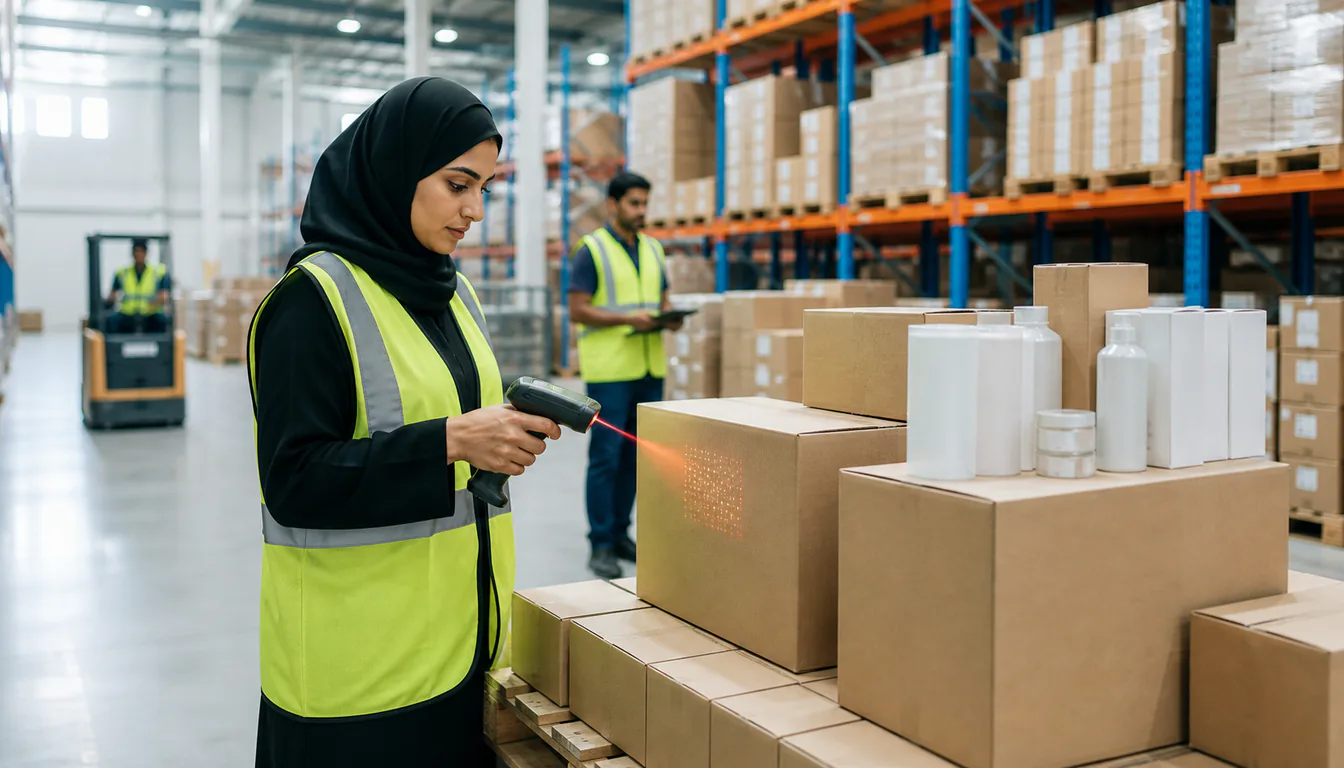
What Primary Sales and Secondary Sales Actually Track
A distributor's own books tell one version of the story. An order goes out, a delivery van drops it at a Carrefour distribution centre or a baqala's back room, an invoice is raised, and the sale is booked. That is primary sales: the movement of stock from the distributor to the outlet, measured in dirhams and cases, confirmed the moment the goods change hands. It is the number every distributor tracks first, because it is the easiest one to measure and the one tied directly to revenue.
Secondary sales measure something else entirely: what actually leaves the shelf and reaches a consumer. A hypermarket can accept a full truckload of stock and record it as a primary sale, and that stock can then sit on the shelf for weeks with barely any of it selling through. The primary number looks healthy. The secondary number, if anyone is watching it, tells a different story. For a UAE distributor managing a portfolio across dozens of hypermarket branches and hundreds of baqalas, the gap between what got delivered and what actually sold is where most of the real operational risk sits, and it rarely shows up in a primary sales report on its own.
The UAE's Modern Trade-Anchored Channel Shapes the Gap
The UAE is one of the region's most modern trade-dominant markets. Carrefour, Lulu Hypermarket, Spinneys (which also operates Waitrose in the UAE under licence), Choithrams, Union Coop, Al Maya and Nesto Hypermarket, together with the MAIR Group's cooperative banners across Abu Dhabi and Al Ain, between them cover a large share of everyday FMCG spend, and newer formats such as Grandiose, Viva, West Zone and Zoom add further branch density in residential neighbourhoods. Baqalas, the small independent neighbourhood groceries found on residential streets in every emirate, and mini-markets, the smaller branded and increasingly cashless format sitting between a baqala and a full supermarket, remain a real channel. They are simply a secondary one in a market this heavily weighted toward organised retail.
That weighting matters for visibility, not just for volume. A modern trade chain is a single organisation running many branches under one set of systems, so a distributor dealing with Lulu or Carrefour is dealing with one counterparty that, in principle, can produce a consistent read on how stock is moving branch by branch. A baqala is an independent, owner-run business with no such system behind it. The two tiers of the same dual channel produce two entirely different qualities of secondary sales signal, and a distributor that treats them the same way ends up either overinvesting in chasing data the baqala tier was never going to produce, or underinvesting in the modern trade relationship where better data is actually available.
Sell-Out Reporting from the Modern Trade Chains
Large organised retailers typically share some form of point-of-sale sell-out data with their key suppliers, whether through a vendor portal, a periodic extract, or a scheduled report agreed as part of the trading terms. For a distributor supplying a chain such as Carrefour, Lulu or Union Coop, that feed is the closest thing to a direct read on secondary sales: what actually scanned through the till, by SKU, by branch, over a given period. Reconciled against what was invoiced to that same chain over the same period, it turns a single primary sales figure into two numbers worth comparing.
What Chain-Level Reporting Still Misses
The feed is rarely complete enough to run a business on by itself. Reporting cadence varies by chain and is often weekly rather than daily, so a fast-moving stock-out can sit unnoticed for several days before the data catches up. Coverage tends to concentrate on higher-volume SKUs and flagship branches, leaving newer lines or smaller-format stores thinner on detail. And the feed explains what sold, not why a line went flat, so a distributor still needs its own merchandising visits to work out whether a slow SKU is a shelf-placement problem, a pricing problem, or genuinely soft demand.
Estimating Secondary Sales Across Baqalas and Mini-Markets
No baqala owner is sending a distributor a sell-out feed. At this tier, secondary sales has to be estimated rather than reported, and the estimate comes almost entirely from the distributor's own field visits. A Van Sales Representative or Merchandiser calling on the same baqala on a fixed cycle can see, each visit, how much of the previous delivery is still sitting on the shelf against how much has already sold through and needs replenishing. Recorded consistently, that pattern becomes a workable proxy for secondary sales at a tier that will never hand over its own point-of-sale data.
The quality of that proxy depends entirely on how disciplined the visit is. A rep who glances at the shelf and reports back that it "looks fine" is not producing usable data. A structured visit that captures shelf stock by SKU, notes what has moved since the last call, and logs it the same way store after store is what turns a series of individual baqala visits into a genuine secondary sales signal rather than an anecdote. A retail execution workflow built around that kind of structured, repeatable store visit is effectively the baqala tier's substitute for the sell-out feed a modern trade chain can provide directly.
What Primary-Only Tracking Hides
A distributor watching only primary sales can hit every order target for a quarter while the underlying business quietly weakens. Stock keeps moving out of the warehouse and onto outlet shelves, invoices keep getting raised, and the topline number looks strong. If that stock is not actually clearing at the outlet, the business is really just relocating inventory from one part of the supply chain to another, not selling it.
That gap carries real cost. Working capital sits tied up, in AED terms, in stock that has not converted to cash at the outlet, which matters directly for how comfortably a distributor can extend credit and manage collections against those same accounts. For FMCG and pharma lines with a defined shelf life, stock that lingers unsold at outlet level is stock edging toward expiry rather than toward a sale. And because sales incentives are frequently built around primary sales volume, a rep or sub-distributor can look like a strong performer purely by pushing stock into outlets that never move it, which is precisely the outcome a well-designed target should be trying to avoid.
Reading Ramadan and Dubai Shopping Festival Through Secondary Sales
The UAE's two genuine demand seasons, Ramadan and the Dubai Shopping Festival running from mid-December into late January, are exactly where primary sales on their own can mislead a distributor. Outlets stock up ahead of both windows, anticipating a sharp, short-window rise in consumer buying, and distributors respond with heavier primary sales into those same outlets in the run-up. Watched in isolation, that looks like genuine demand growth. It may just as easily be pre-positioning that has not yet been tested against a single real customer.
Secondary sales visibility is what confirms which of those two it actually is. Reading shelf sell-through at hypermarket level through a chain's sell-out feed, alongside baqala-tier stock movement picked up through field visits, tells a distributor whether the pre-Ramadan or pre-festival stocking decision is being validated by real consumer pull or is simply sitting in the channel unsold. That reading is what should drive the decision mid-window: push further replenishment into outlets where the shelf is genuinely clearing, and hold back from outlets where the initial stock is still sitting there. Treating every outlet's pre-season order the same way, without checking how much of it has actually sold through, risks ending both windows with a pile of slow-moving stock exactly where a distributor least wants it, tying up capital right as the next ordering cycle begins.
Reconciling the Two Numbers into One View
The practical goal is not choosing one number over the other. It is holding both side by side, SKU by SKU, outlet by outlet, so that the difference between them, cumulative primary sales minus cumulative secondary sales, becomes a visible measure of how much stock is genuinely sitting unsold in the channel at any point. Tracked by outlet type and by emirate, that measure separates a hypermarket network that is moving stock cleanly from a baqala tier that is quietly accumulating it, and separates one emirate's performance from another rather than averaging the whole picture into a single, less useful, national number.
Getting there depends on treating chain sell-out feeds and field-estimated baqala data as two inputs into the same view rather than two separate reports nobody reconciles. A distributor analytics layer that combines both sources, alongside a sales analytics view that tracks the primary-secondary gap by SKU and by territory over time, is what turns two disconnected data streams into a single, usable read on where actual demand is and where stock is simply parked.
How 1Channel Helps with Primary and Secondary Sales Visibility in the UAE
1Channel gives distributors a single view that connects what left the warehouse to what is actually happening on the shelf. Primary sales are captured automatically as orders are invoiced and dispatched, while secondary sales signals, whether pulled in from a modern trade chain's sell-out feed or built up from structured field visits across the baqala and mini-market tier, feed into the same reporting layer rather than sitting in separate spreadsheets.
On this topic, the platform helps you:
- Track primary sales by SKU, outlet and emirate as orders are invoiced and dispatched.
- Capture baqala and mini-market secondary sales signals from structured, repeatable field visits.
- Reconcile chain-reported sell-out data against primary sales to flag where stock is sitting unsold.
- Surface the primary-secondary gap by outlet type ahead of and through Ramadan and the Dubai Shopping Festival.
- Route replenishment decisions off actual shelf clearance rather than off order history alone.
See What's Actually Selling, Not Just What Shipped
See how 1Channel's distributor analytics connect primary sales to real secondary sell-through across the UAE's hypermarkets, mini-markets and baqalas.
Explore Distributor Analytics →Key Takeaways
Primary sales confirm what got invoiced. Secondary sales confirm what actually sold. A distributor operating across the UAE's modern trade-anchored dual channel needs both numbers, not just the one that is easier to measure.
- Primary sales measure dispatch, not demand. An invoice raised and stock delivered says nothing about whether it has reached a real consumer yet.
- The two channel tiers need different visibility approaches. Modern trade chains can share sell-out data directly; baqalas and mini-markets need field-visit-based estimation instead.
- Chain sell-out feeds are useful but incomplete. Reporting lag and thin SKU coverage mean they still need structured store visits to fill the gaps.
- Unsold stock in the channel is a cost, not a sale. It ties up AED working capital, raises expiry risk on perishable lines, and can flatter primary-sales-based performance metrics.
- Ramadan and Dubai Shopping Festival stocking decisions need a secondary sales check. A strong pre-season primary sales number only means something once shelf sell-through confirms it.
- Reconcile, don't just report. Tracking the gap between primary and secondary sales by SKU, outlet type and emirate is what turns two separate numbers into one usable view of real demand.