Van Sales and Pre-Sales: Two Different Ways to Sell the Same Case
For a UAE FMCG distributor deciding how stock should reach an outlet, the choice usually comes down to one of two route-to-market models, or a working blend of the two. Van sales puts the stock, the invoice and the sale in the same visit. Pre-sales splits that visit into two steps: an order taken today, a delivery that follows on a planned run. Neither model is inherently better. Each solves a different coverage problem, and most distributors operating across the UAE's dual channel of hypermarkets and baqalas end up running both at once, often through the same field team.
Van Sales: Load, Deliver and Sell in One Visit
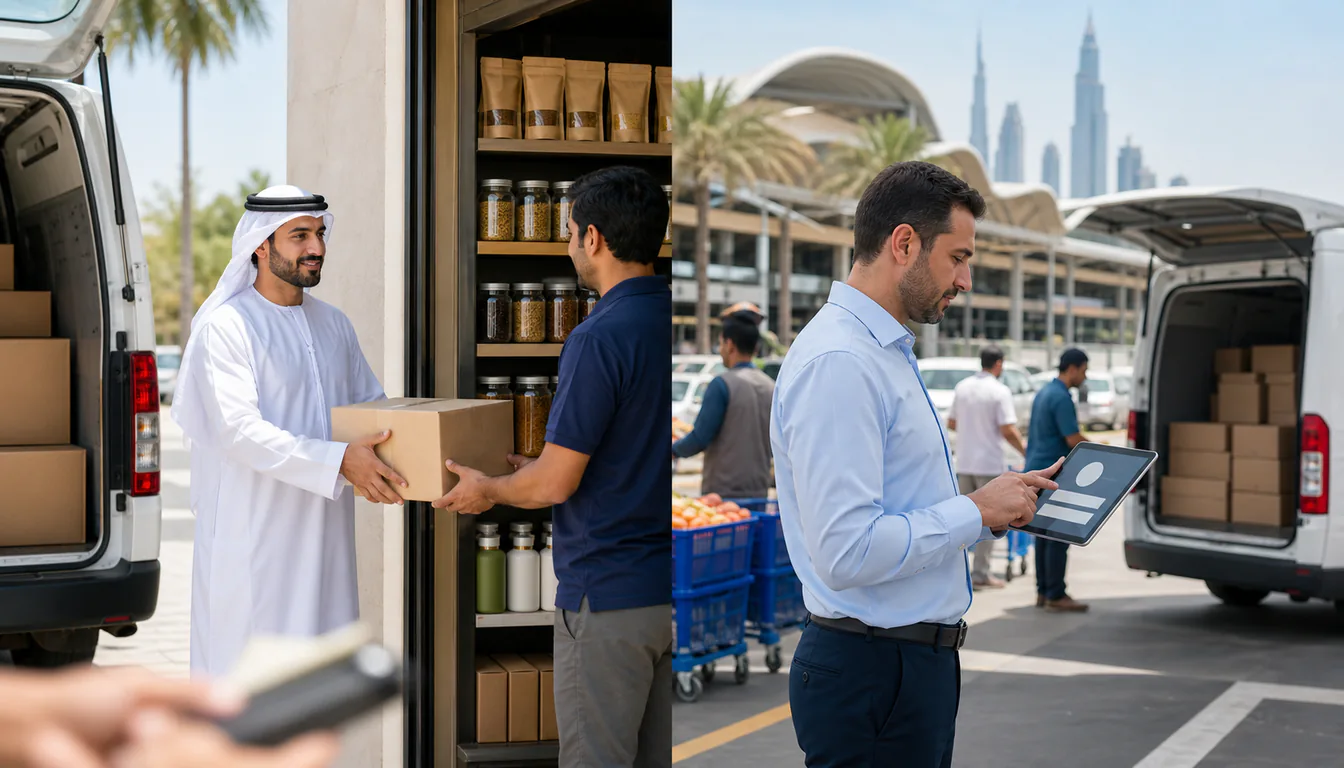
A Van Sales Representative loads a vehicle each morning, works a route, and sells directly from the stock on board. The outlet owner decides on the spot what to buy, and the rep hands over the goods and settles the invoice there and then, in cash, by card or increasingly through Aani. There is no order placed in advance and no separate delivery leg. What the van carries and what the outlet buys are the same transaction, decided in the same few minutes.
Pre-Sales: Order First, Deliver on a Separate Run
Pre-sales separates selling from delivering. A Field Sales Representative visits an outlet, checks shelf stock, takes an order against an agreed price list and terms, and leaves without any goods changing hands. A separate delivery run, usually the next day or on a fixed delivery day, fulfils that order against a picking list drawn from the warehouse. Because the order is planned rather than decided at the doorstep, almost everything downstream changes with it: routing, vehicle loading, invoicing and delivery scheduling.
Why the UAE's Channel Mix Keeps Both Models Relevant
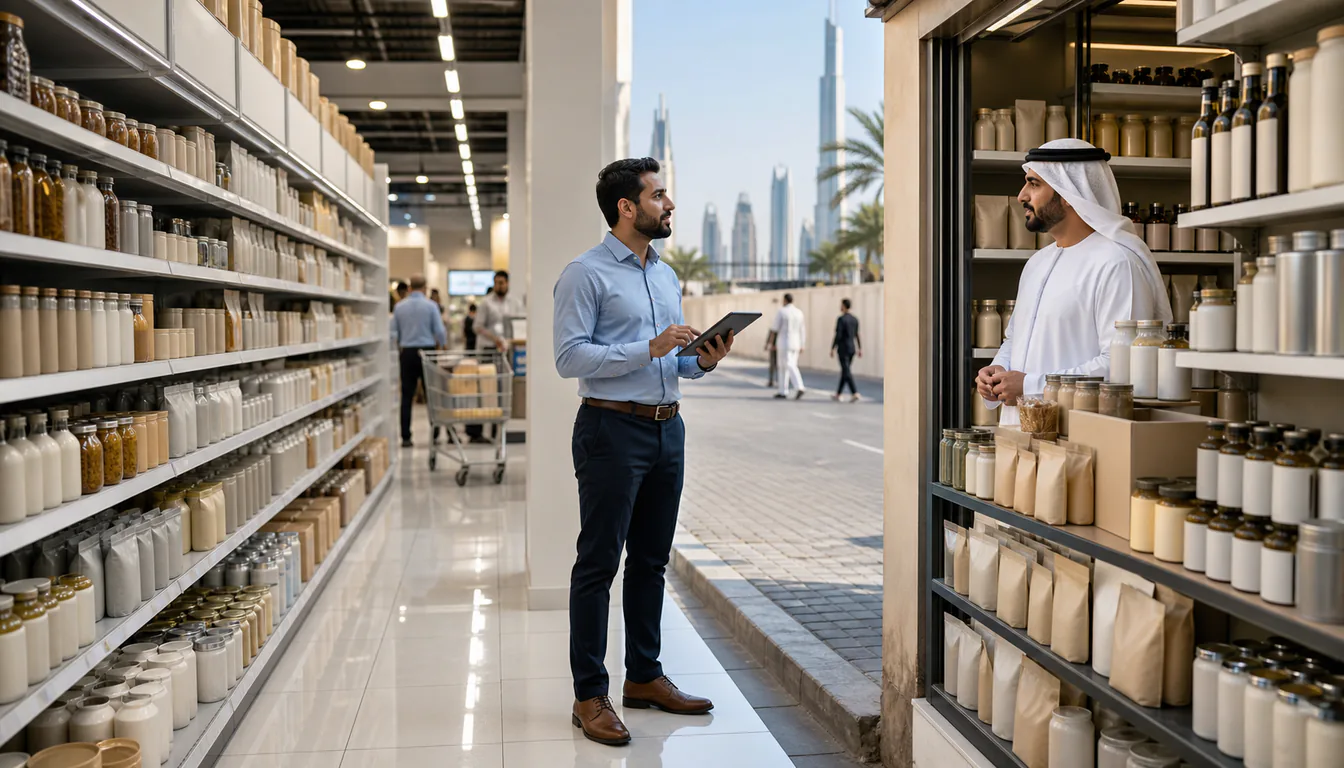
The UAE is one of the region's most modern-trade-dominant markets. Hypermarket and supermarket chains such as Carrefour, Lulu Hypermarket, Spinneys and Union Coop account for the bulk of everyday grocery spend across Dubai, Abu Dhabi and the other emirates, and a distributor building real FMCG volume needs to be listed and performing well on those shelves. Baqalas, and the smaller, often cashless mini-market format alongside them, sit beside that backbone as a real, clearly secondary general trade tier: the kind of outlet a resident walks to for a same-day top-up rather than a planned weekly shop.
That dual structure is why the van sales versus pre-sales question matters here. A single route-to-market model rarely serves a hypermarket buyer and a baqala owner equally well, because the two make different kinds of purchase decisions on different timelines. Choosing where each model fits, rather than defaulting to one across an entire territory, is where most of the practical coverage gains sit.
Where Van Sales Fits: Baqalas, Mini-Markets and Impulse Categories
Van sales suits outlets that buy on impulse and reorder little and often. A baqala owner is not negotiating a listing or working from a category plan; they are deciding, in the moment, whether to top up a shelf from whatever a rep has loaded on the van that week. Categories with a genuine impulse element, carbonated drinks, snacks, confectionery, single-serve packs, sell well through this model because the purchase decision and the transaction happen together, and a baqala rarely has the storage space or working capital for anything larger than a small, frequent drop.
The model also suits an owner who wants a gap filled now, not tomorrow. Making that immediacy pay off depends on route density: a van earns its keep only if it can call on enough baqalas and mini-markets in a working day to justify the vehicle and the rep's time, which is as much a route planning question as a sales one. A beat built around realistic call frequency and drive time between stops, rather than a fixed list carried over unchanged month to month, is what keeps a van sales route profitable as a territory grows.
Where Pre-Sales Fits: Hypermarket and Supermarket Accounts
Pre-sales suits the opposite kind of buyer. A hypermarket or supermarket chain such as Lulu or Carrefour orders against a listing agreement and a category plan, typically at chain level rather than branch by branch, and expects delivery, invoicing and returns to reconcile cleanly across every store under that account. Nobody is deciding on the spot whether to buy; that decision was made when the listing was agreed, and the order that follows is a planned quantity against it, not an impulse purchase from a passing van.
Separating the order from the delivery also fits how larger accounts want to be served. A Field Sales Representative capturing an order on a handheld device, with visibility into current stock, agreed pricing and any outstanding balance, can build an order that reflects what a branch genuinely needs rather than what happens to be loaded on a van that day. A mobile distributor management app that lets a rep place, check and adjust an order against live stock and price data, rather than a paper order pad reconciled hours later, is what makes pre-sales workable at the volume a large chain account demands. The delivery run that follows can then be planned around the picking list and the chain's own receiving window, not a rep's rough daily estimate of what might sell.
Blending Both Models Across a Single Territory
Few UAE distributors run one model exclusively. A distributor supplying a Carrefour branch and a run of baqalas in the same neighbourhood is operating two route-to-market models inside one territory, sometimes with the same rep covering both in a single day. The practical question is not which model to pick, but how to split a territory so that hypermarket and supermarket accounts sit on a pre-sales cycle while baqalas and mini-markets sit on a van sales beat, without the two plans colliding on the same vehicle or the same rep's schedule.
Getting that split right depends on one view of the field force rather than two disconnected teams. Whether a rep is closing a van sale at a baqala counter or capturing a pre-sales order at a hypermarket loading bay, the visit, the outlet history and the outstanding balance need to sit in the same record, not in separate systems reconciled by hand at week's end. Sales force automation that treats both visit types as variations of the same field activity, rather than two unrelated workflows, is what lets a distributor scale a hybrid model without losing track of who visited whom and what was actually sold or ordered.
Operational Considerations: Payments, Seasonality and Workforce
Reconciling Card, Wallet and Aani Settlements
Van sales settles on the spot, so reconciliation happens in the field, not the back office. Cash, card payments and, increasingly, transfers through Aani, the UAE's federal instant-payments platform, all show up at the point of sale, sometimes split across two payment types against a single invoice. Pre-sales pushes the same question downstream to delivery or to agreed credit terms, but does not remove it: a driver collecting on delivery still needs the payment tied to the right invoice, and a chain account settling on negotiated terms still needs that credit period tracked. With the FTA's e-invoicing mandate rolling out across 2026 and 2027, tying invoicing cleanly to whichever model generated the sale is worth building towards now.
Ramadan and Dubai Shopping Festival Demand
The UAE's two biggest demand windows, Ramadan and the Dubai Shopping Festival running from mid-December into late January, produce sharp, short-window spikes that hit each model differently. A van sales beat can absorb a spike simply by loading more stock and calling more frequently, one of the model's genuine advantages in a fast-moving season. Pre-sales needs that same spike planned for well in advance, because a chain account will not tolerate a stock-out during its busiest promotional weeks. A genuinely diverse, largely expatriate field force is a practical reality too: reps working a mixed beat often need training material and app interfaces in more than one language, whichever model they are running that day.
Common Mistakes Distributors Make Running a Hybrid Model
A few recurring errors show up wherever van sales and pre-sales are run side by side without enough structure behind them.
- Applying one route cadence to both models. A van sales frequency built for baqalas rarely suits a hypermarket account's planned order cycle, and a pre-sales rhythm built for a chain buyer is too slow for a baqala that needs a gap filled this week.
- Treating on-the-spot cash as informal. Payment collected at the doorstep still needs to be tied to a specific invoice immediately, not tallied from memory back at the depot.
- Overloading one vehicle with both jobs. A vehicle running an unplanned van sales beat and a scheduled pre-sales delivery in the same trip usually does neither well, since the two have different loading and timing needs.
- Applying the wrong credit expectations. A chain's negotiated payment terms and a baqala's near-immediate settlement are two separate rules; blending them into one average misreads both sides of the ledger.
- Leaving seasonal demand to be absorbed on the day. Ramadan and the Dubai Shopping Festival both need buffer stock and adjusted delivery frequency decided ahead of time, not worked out mid-spike.
How 1Channel Helps UAE Distributors Run Both Models
1Channel gives UAE FMCG distributors one platform that supports a van sales beat and a pre-sales cycle side by side, rather than forcing every outlet through an identical process. A rep sees the workflow that matches the visit in front of them, an on-the-spot sale and settlement at a baqala counter, or an order captured against live stock and pricing at a hypermarket account, with both feeding into the same view of the territory. On this topic, it helps distributors:
- Run van sales routes and pre-sales cycles from the same field-force view, without merging them into one ill-fitting workflow.
- Capture and reconcile cash, card and Aani settlements against the correct invoice at the point of collection.
- Plan delivery runs for pre-sales orders separately from van sales beats, using route density that reflects each model's real needs.
- Build seasonal buffer stock and delivery frequency for Ramadan and the Dubai Shopping Festival across both models ahead of time.
Key Takeaways
Choosing between van sales and pre-sales in the UAE is rarely an either-or decision. It is a question of matching each model to the outlet that suits it.
- Van sales fits impulse buying and immediate need, which describes most baqala and mini-market purchase decisions.
- Pre-sales fits planned ordering against a listing agreement, which describes how hypermarket and supermarket chains buy.
- Most UAE distributors need both models running at once, often through the same field team across the same territory.
- Route density decides whether van sales pays off, since the model only works if enough outlets can be called on in a working day.
- Payment reconciliation looks different by model, immediate at the doorstep for van sales, tied to delivery or credit terms for pre-sales, but has to be accurate either way.
- Ramadan and the Dubai Shopping Festival test both models differently and need their own buffer stock and delivery-frequency plans.
- One field-force view, not two separate systems, is what keeps a hybrid model manageable as a territory grows.
Get that split right, model by outlet rather than one default for the whole territory, and the rest of the coverage plan tends to fall into place around it.