FMCG companies like Hindustan Unilever, P&G, Nestlé, ITC, Britannia, Marico, Godrej Consumer Products, etc. operate in a highly competitive and fast-moving environment where managing field sales teams, distributors, and retail stores efficiently is critical. Without a structured system, tracking daily activities, sales performance, and retail execution becomes difficult.
Sales Force Automation (SFA) helps FMCG businesses streamline field operations by providing real-time visibility, structured workflows, and detailed reporting across the entire sales network.
Challenges FMCG Companies Face Without Automation
FMCG businesses typically deal with:
- Large field sales teams working across multiple cities
- Thousands of retail outlets and distributors
- Daily store visits, merchandising, and stock tracking
- Manual reporting and lack of real-time visibility
Without automation, these processes become fragmented, leading to poor productivity, inaccurate reporting, and weak execution.
How Sales Force Automation Solves FMCG Challenges?
1. Tracking Field Sales Attendance and Productivity
FMCG companies need to ensure that their field teams are actively working in the market.
SFA enables:
- Attendance tracking with photo, time, and location validation
- Monitoring of late attendance and missed check-ins
- Detailed attendance compliance reports
Example
An FMCG company can verify whether a sales representative actually started their day from the assigned market location by checking the attendance photo and GPS data.
2. Ensuring Structured Market Visits and Beat Compliance
In FMCG, sales reps must follow predefined routes (beats) to cover all assigned stores.
SFA helps by:
- Creating and approving beat plans
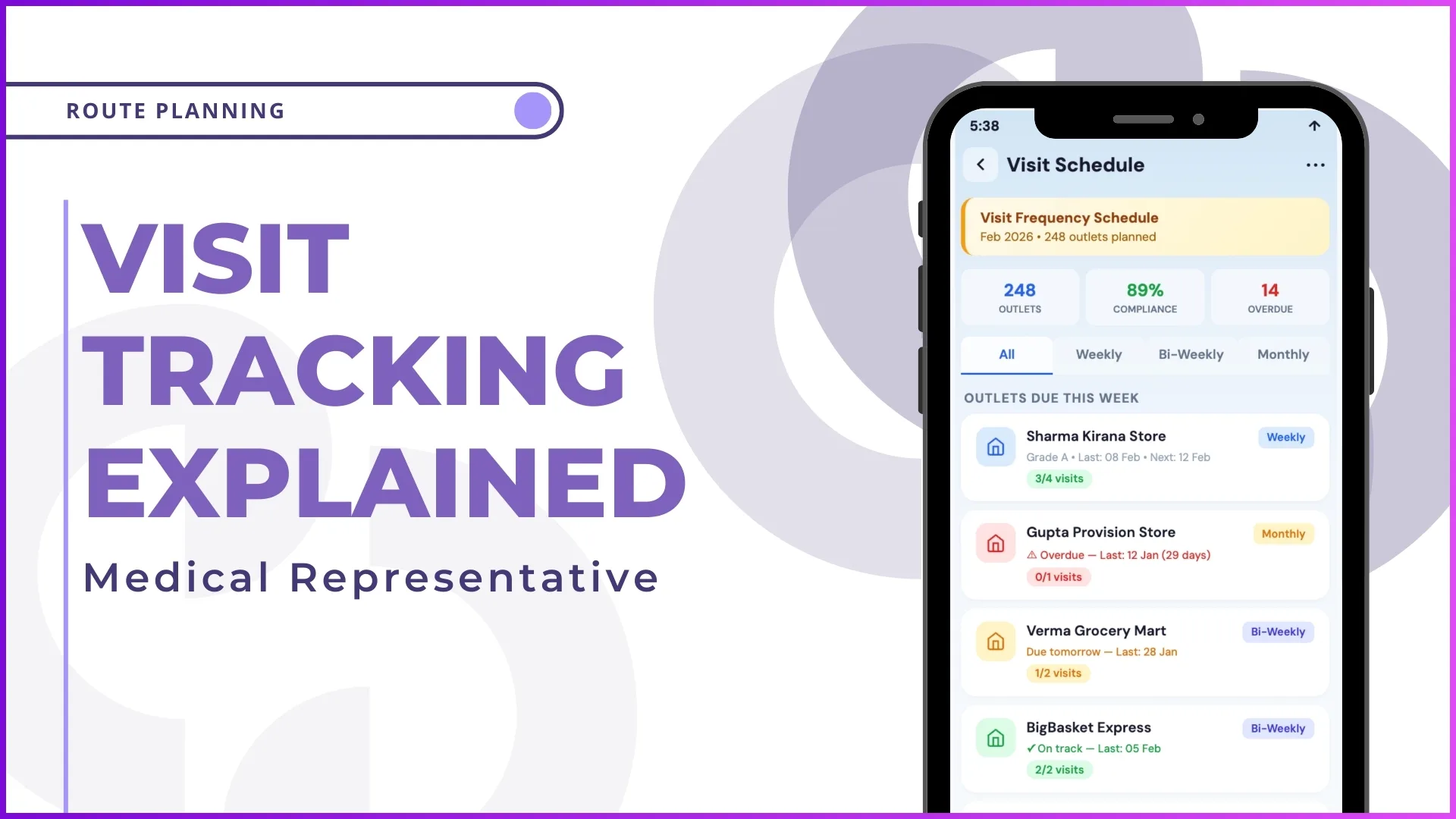
- Tracking planned vs actual store visits
- Measuring beat compliance based on stores covered
Example
If a sales rep is assigned 20 stores in a day but visits only 12, managers can immediately identify the gap using beat compliance reports.
3. Monitoring Retail Execution and Merchandising
Retail visibility is crucial in FMCG for brand presence and sales growth.
SFA enables:
- Tracking merchandising visits
- Capturing store images and POSM deployment
- Identifying reasons for missed merchandising
Example
A company launching a new product can track whether promotional materials are properly displayed in each store using merchandising photo reports.
4. Managing Distributor and Store Networks
FMCG companies rely heavily on distributor-driven sales.
SFA provides:
- Distributor master and stock management
- Distributor–store mapping
- Visibility into stock movement across the network
Example
A brand can track which distributor supplies products to specific retail outlets and monitor stock availability at each location.
5. Tracking Sales, Stock, and Secondary Sales
Accurate sales data is essential for decision-making in FMCG.
SFA helps with:
- SKU-level sales tracking
- Secondary and tertiary sales reports
- Store-wise stock reporting
Example
Managers can analyse which product categories are selling more in a specific region using MTD sales reports by product category.
6. Measuring Field Activity and Visit Quality
FMCG companies need to ensure that store visits are productive, not just completed.
SFA enables:
- Activity-based questionnaires during visits
- Tracking tasks performed at each store
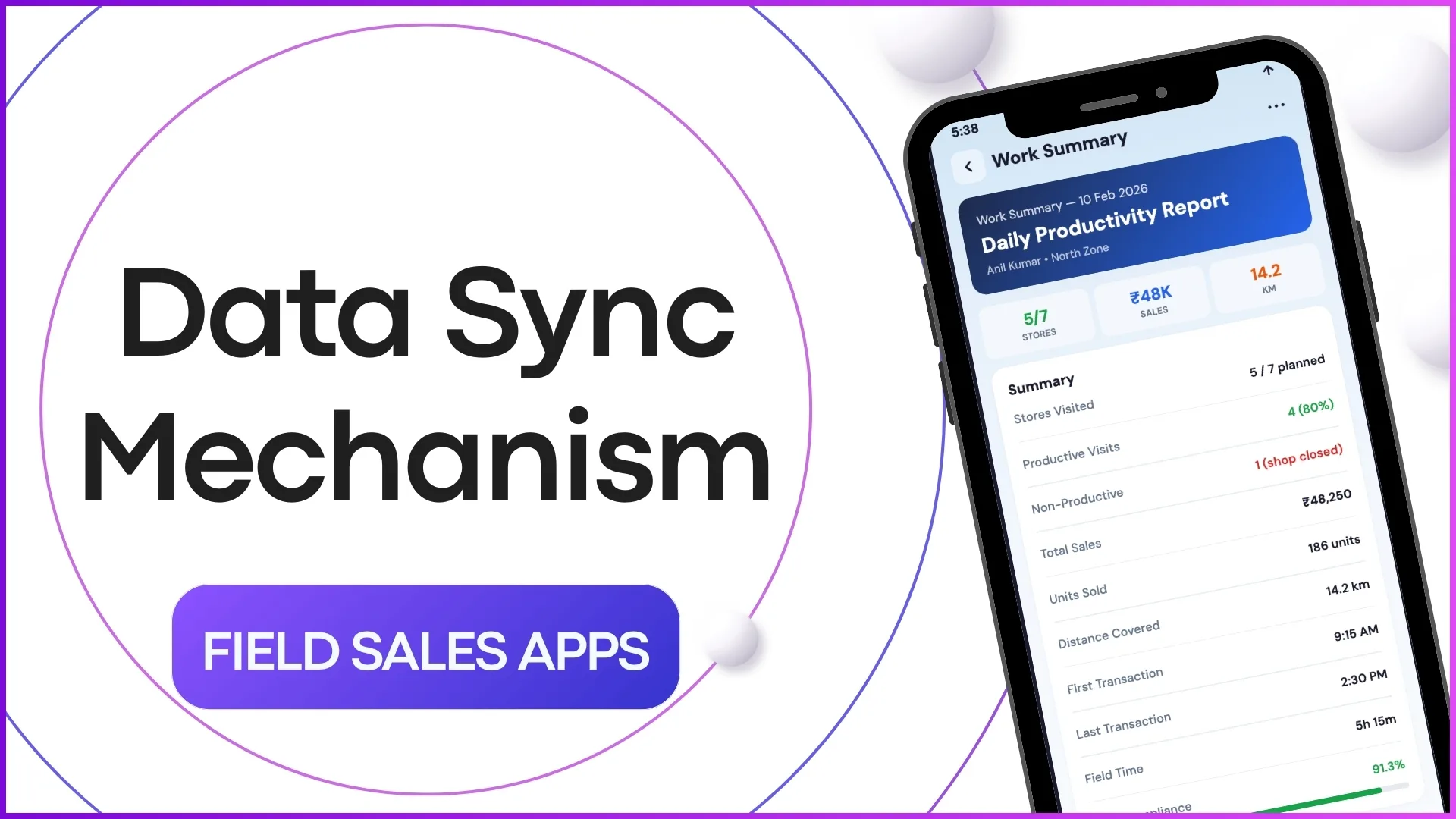
- Measuring visit productivity and quality
Example
During a store visit, a sales rep can fill a questionnaire about product availability, competitor presence, and stock levels, giving managers deeper insights.
7. Centralized Reporting and Data Visibility
FMCG operations generate large amounts of data daily.
SFA provides:
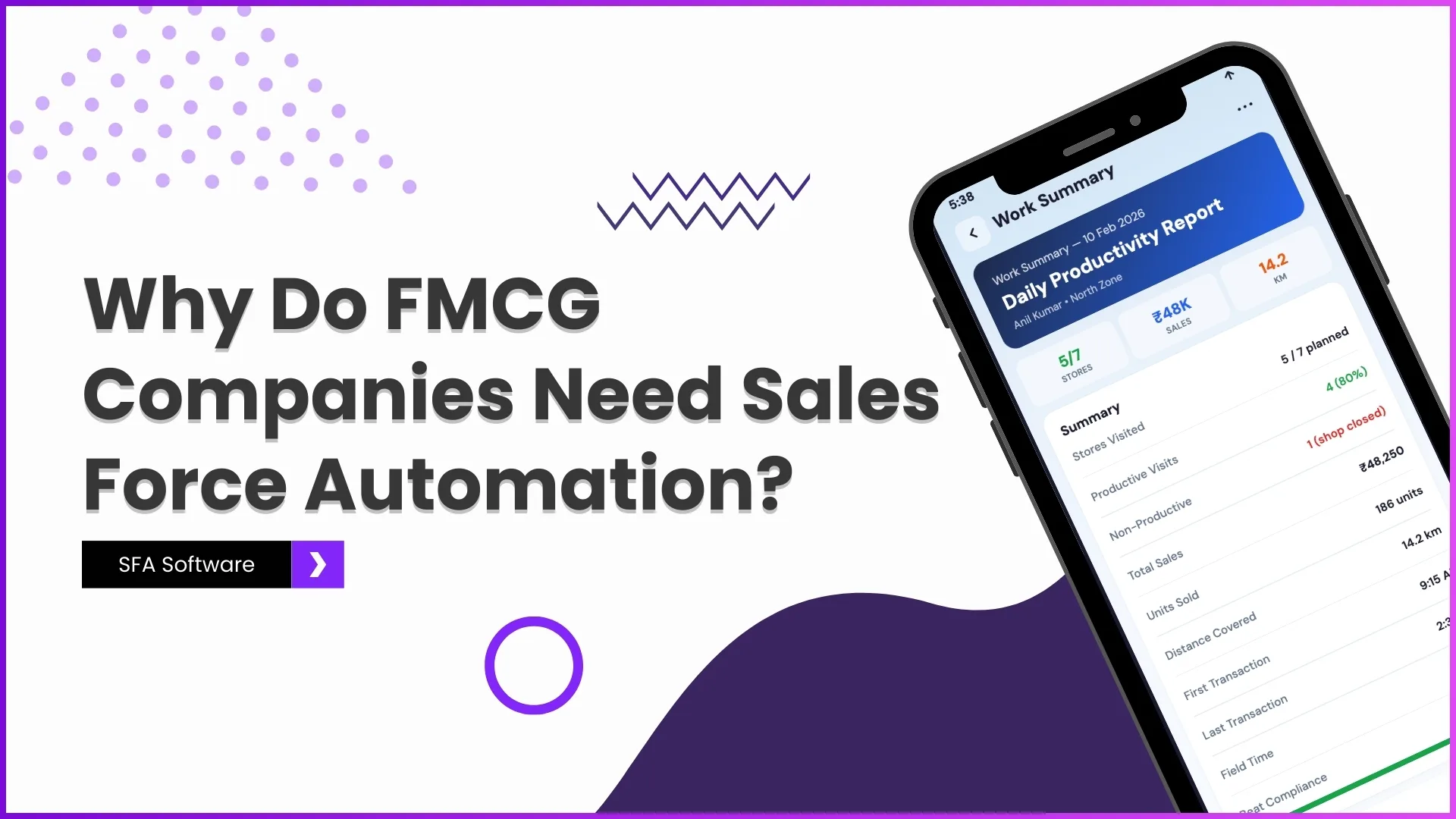
- Pre-built reports for attendance, sales, merchandising, and visits
- Custom report builder for business-specific needs
- Downloadable reports for analysis
Example
A regional manager can download a complete report of sales, attendance, and store visits for a specific city to evaluate team performance.
8. Managing Product and Pricing Structures
FMCG companies deal with multiple SKUs, pricing models, and product hierarchies.
SFA helps manage:
- Product master and SKU hierarchy
- Price configuration and updates
- Product availability norms
Example
When a new SKU is introduced, it can be added to the system and tracked across all stores and distributors instantly.
9. Improving Sales Team Accountability
With structured workflows and real-time tracking, SFA ensures accountability across the organization.
It enables:
- Role-based access and hierarchy management
- Activity tracking for each employee
- Approval workflows for attendance and tasks
Example
A team leader can monitor the activities of each sales representative and approve attendance or regularization requests directly within the system.
Best Sales Force Automation Software for FMCG in India
1Channel Sales Force Automation software is the best for FMCG businesses and manage their entire field sales ecosystem from attendance and beat planning to distributor management and retail execution.
With features like real-time dashboards, detailed reporting, merchandising tracking, and sales analytics, it enables companies to improve visibility, productivity, and decision-making across their sales operations.
Streamline FMCG Field Operations with Sales Force Automation
1Channel Sales Force Automation software delivers comprehensive field force management with real-time attendance tracking, beat planning, distributor management, retail execution monitoring, and powerful reporting to drive efficiency and growth in FMCG operations.
Explore Sales Force Automation →FAQs
1. Which is the best FMCG Sales Force Automation Software?
1Channel SFA is the best software for FMCG and suitable for businesses of all sizes, including small, mid-sized, and large FMCG companies, helping them manage field sales operations efficiently.
2. Why is Sales Force Automation important for FMCG companies?
It helps manage field sales teams, track store visits, monitor sales performance, and ensure proper retail execution with real-time visibility.
3. How does SFA help in tracking field sales teams?
It tracks attendance with photo and GPS, monitors market visits, and provides detailed productivity reports for each employee.
4. Can FMCG companies track distributor sales using SFA?
Yes, SFA provides distributor mapping, stock tracking, and secondary sales reports for complete visibility.
5. How does SFA improve retail execution?
It tracks merchandising activities, captures store images, and provides reports on POSM deployment and store compliance.
6. What kind of reports are available in SFA?
Reports include sales data, stock reports, attendance reports, beat compliance, visit productivity, and merchandising reports.
7. How does SFA improve decision-making?
By providing real-time data and customizable reports, managers can analyse performance and take faster, data-driven decisions.