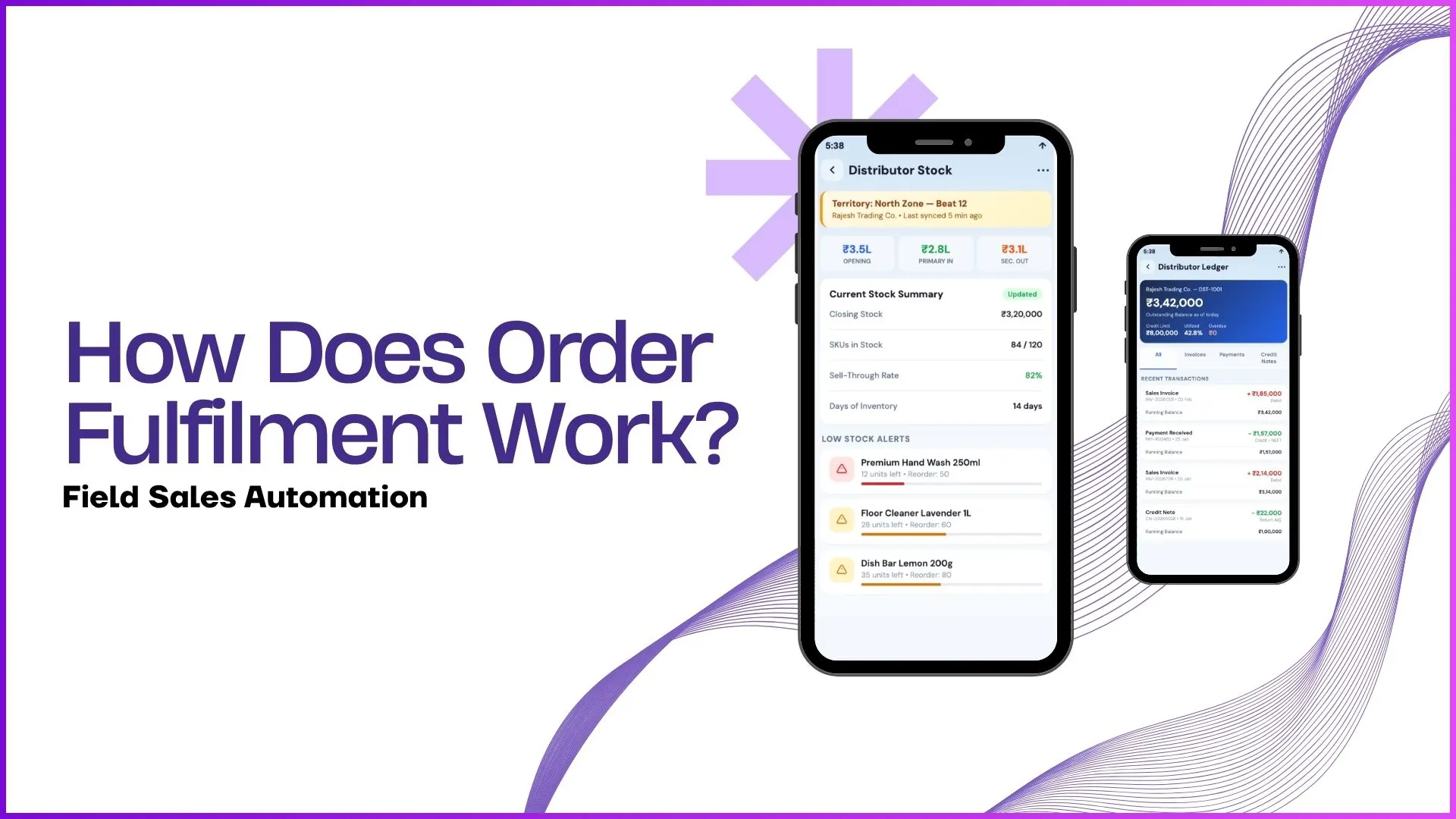
Without distributor stock visibility, a sales manager runs the territory on lagging assumptions. The platform shows what shipped to the distributor last week and what got billed back to retail. Whatever is on the warehouse floor right now is a guess.
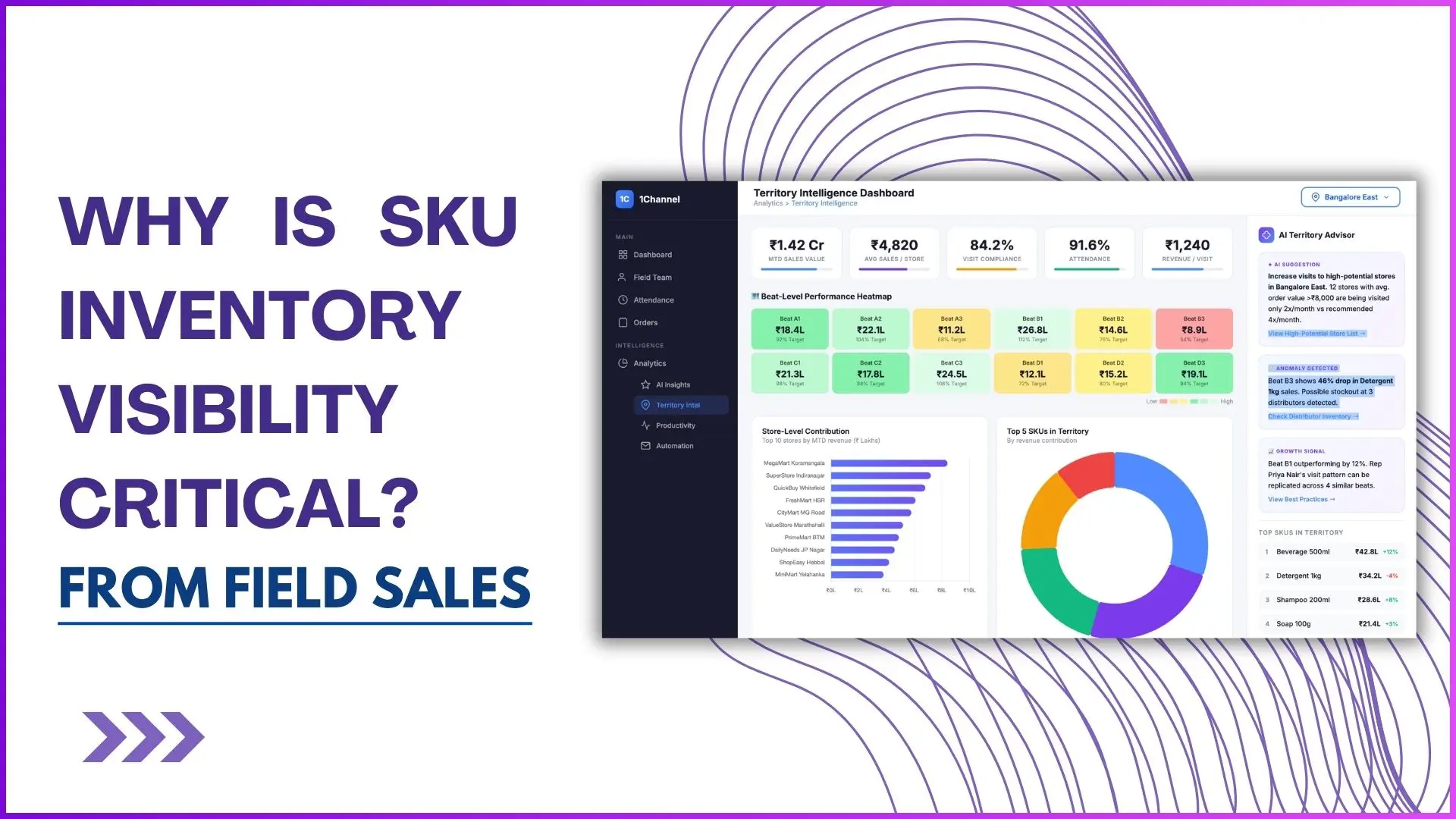
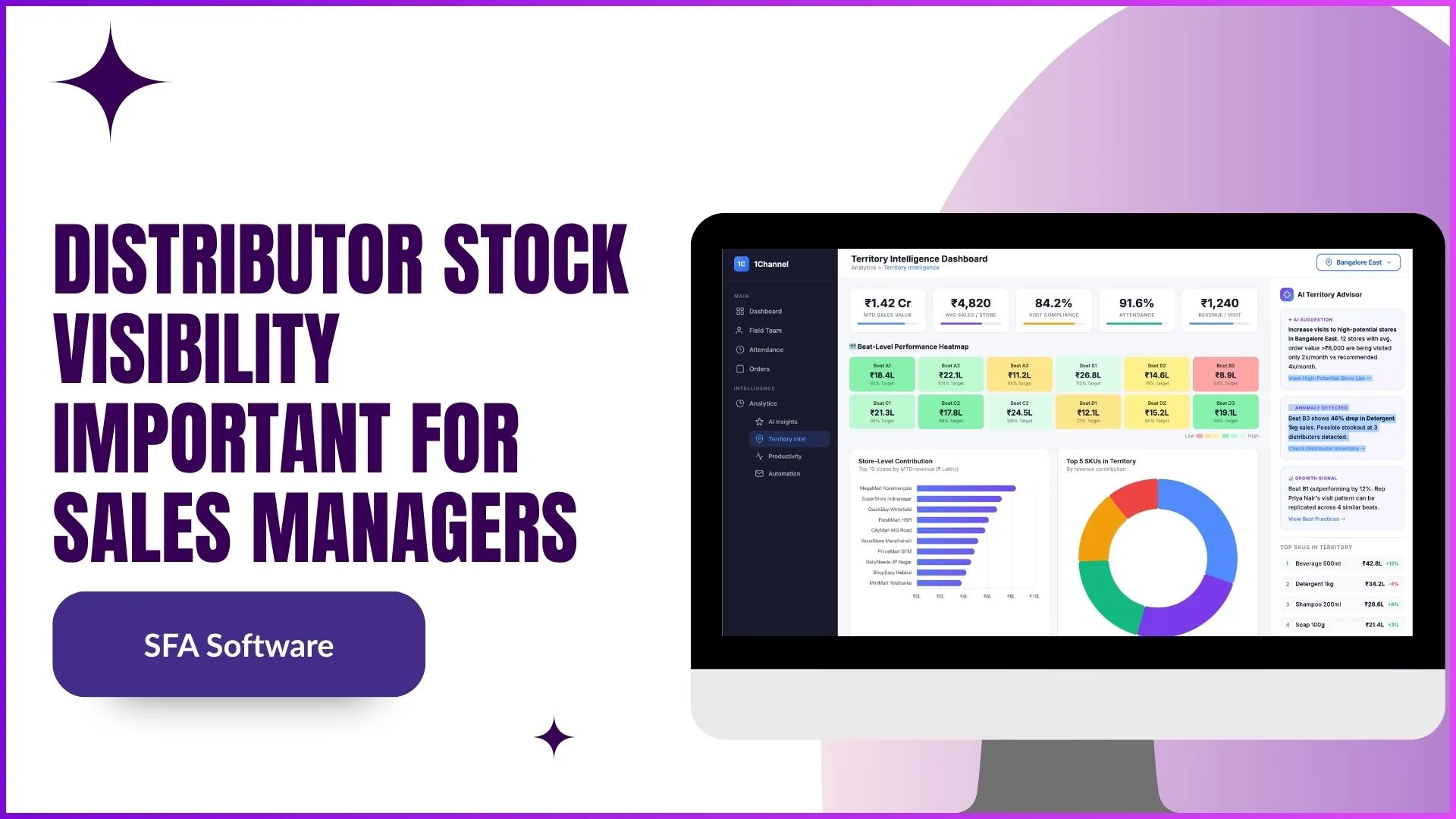
With distributor stock visibility, the same manager opens the dashboard and sees real-time stock on hand at every distributor in the patch. The reorder window, the stockout risk, the SKU-mix gap: all become visible before the next distributor call.
This walks through what distributor stock visibility actually means inside an SFA workflow, the four decisions it sharpens for a sales manager, and how the cloud platform brings the data together.
Table of Contents
What Distributor Stock Visibility Means in Modern Field Sales
Distributor stock visibility is the live read on what every distributor in the channel holds in their warehouse, broken down by SKU, batch, and aging.
The data updates either through an integration with the distributor's billing system, a periodic Excel sync from the distributor side, or a field-rep capture during a routine visit.
The point is not what feeds the data. The point is that the cloud SFA shows the sales manager what the distributor actually has, not what the distributor was supposed to have.
Four Ways It Shifts the Manager's Decision Surface
Four operational decisions get sharper when the manager sees real distributor stock:
Prevents Stockouts Across Retail Outlets
A flagship SKU running low at the distributor warehouse is the leading indicator of stockouts at retail. The manager watches the distributor base, not retail returns, and routes a replenishment dispatch before retail orders start failing.
Sharpens Territory-Level Sales Decisions
Territory targets land differently when the manager knows which patches are stock-short and which are stock-heavy. A patch sitting on 14 days of inventory is not the same conversation as a patch sitting on 4.
Aligns Replenishment With Real Consumption
Replenishment becomes a function of distributor depletion, not historical averages. The cloud platform reads the depletion velocity per distributor and proposes the dispatch quantity automatically.
Surfaces SKU-Mix Gaps in the Distributor Base
Some SKUs sit at every distributor; some only at half. The visibility view shows the mix gaps that hurt secondary sales, so the field push moves to the SKUs that need shelf presence, not the ones already overstocked.
How 1Channel Brings Distributor Stock Into the SFA View
1Channel runs distributor stock visibility through its cloud Sales Force Automation and DMS suite. The stock module pulls feeds from distributor billing systems, field-rep captures, and bulk Excel uploads into one normalised view.
1Channel's AI engine reads the stock pattern across every distributor in the channel. A distributor whose depletion has been climbing while reorders have not is flagged for manager review before the gap turns into a stockout.
Configuration is straightforward through the admin console. SKU mappings, variance tolerances, distributor alert thresholds, and territory roll-up rules go live the same day, with an automated dry-run preview against the existing distributor base.
Explore Distributor Analytics Software
1Channel's cloud distributor analytics platform turns distributor stock feeds into the AI-driven signal Malaysian sales managers act on.
Explore Distributor Analytics →Outcomes a Malaysian Sales Manager Can Measure
Five outcomes a manager can track once the visibility goes live:
- Stockout reduction at retail. The leading indicator (distributor stock) closes the gap before the lagging indicator (retail returns) reads it.
- Faster replenishment cycle. Dispatches go out on real depletion velocity, not on the 12-month average that hides the spike.
- Tighter SKU-mix discipline. Field push moves to the SKUs the distributor base is short on, not the ones already crowding the warehouse.
- Better forecasting accuracy. The sales forecast reads on actual stock state, not on shipped-to-distributor as a proxy for sold-through.
- Shorter manager-to-distributor escalation loop. The manager opens the conversation with data the distributor cannot dispute, and it moves to action faster.