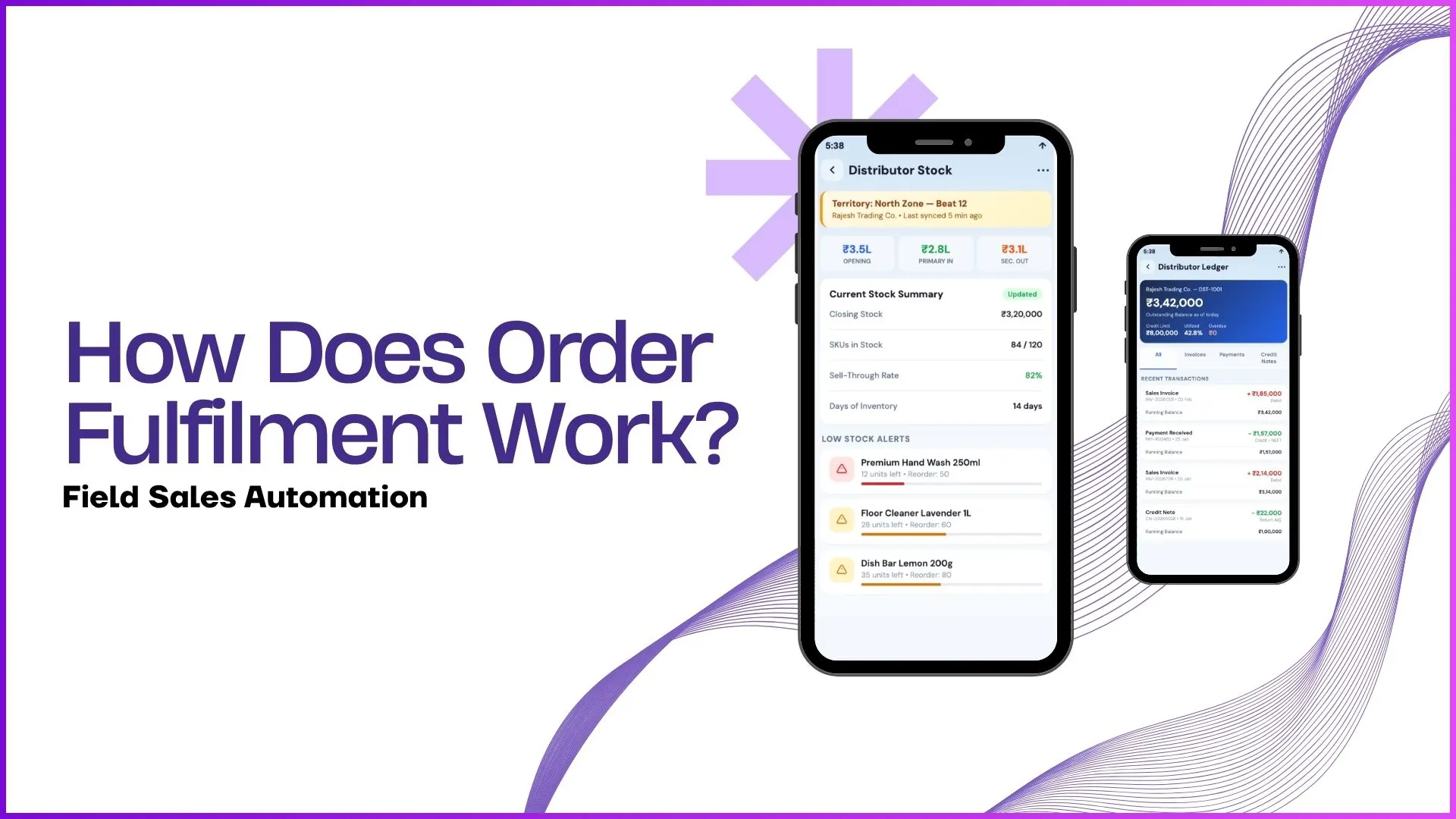
Inventory at the SKU level, fast-moving brands at the outlet, stock-out forecasts by region, distributor-level depot status, partner-level reorder cadence. Five signals that decide whether the field's next visit lands an order or a regret.
Without live SKU visibility, every one of those signals lives in someone's memory or yesterday's spreadsheet. The rep guesses, the partner restocks at the wrong volume, and the distributor's warehouse gets caught with stale stock.
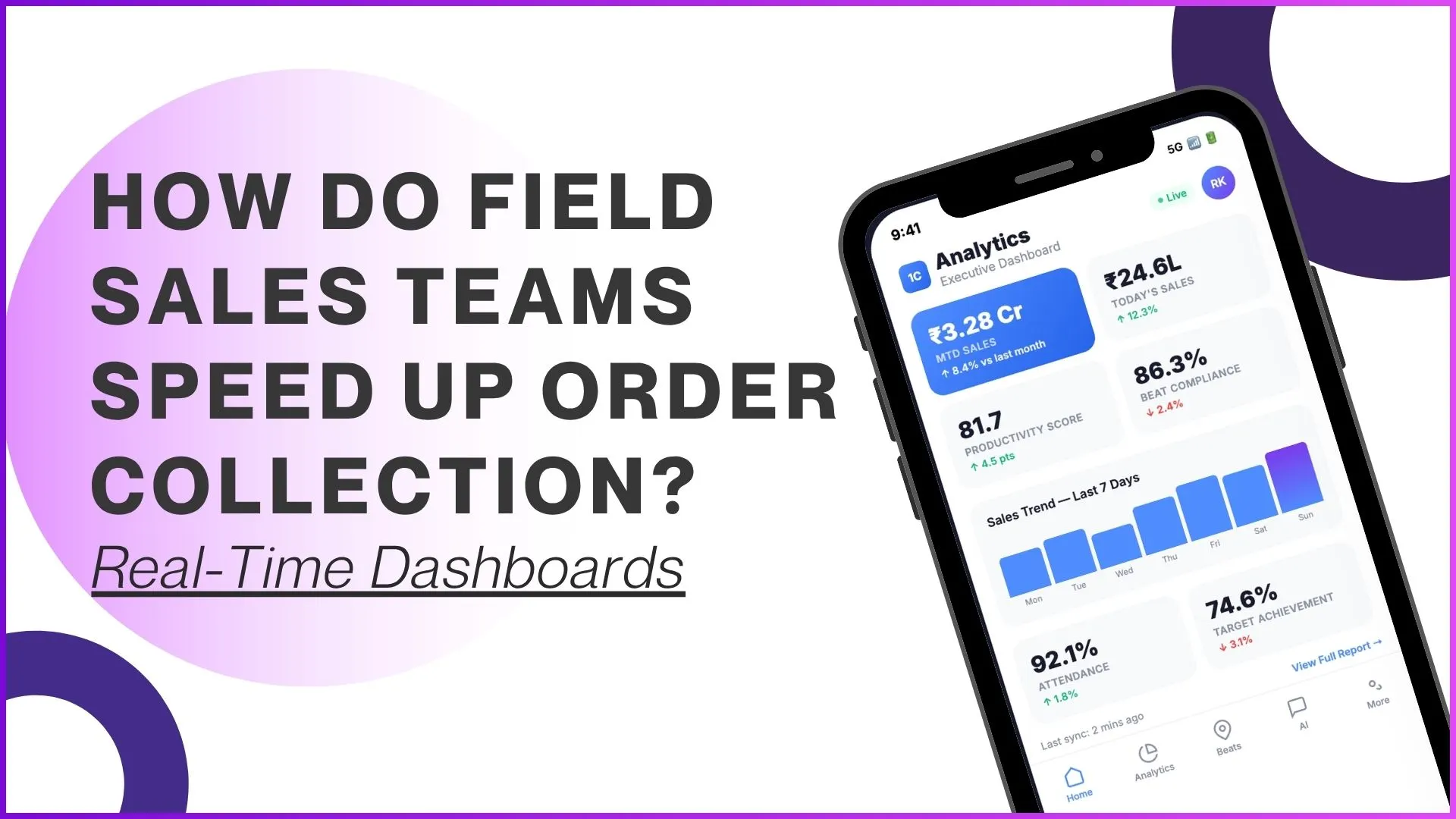
Live visibility is the layer that turns inventory from an end-of-week reconciliation into a moment-of-decision input. The cloud platform updates the rep's app as stock moves, so the conversation at the outlet runs on current numbers, not last quarter's averages.
Table of Contents
What 'SKU Visibility' Actually Means in Field Sales
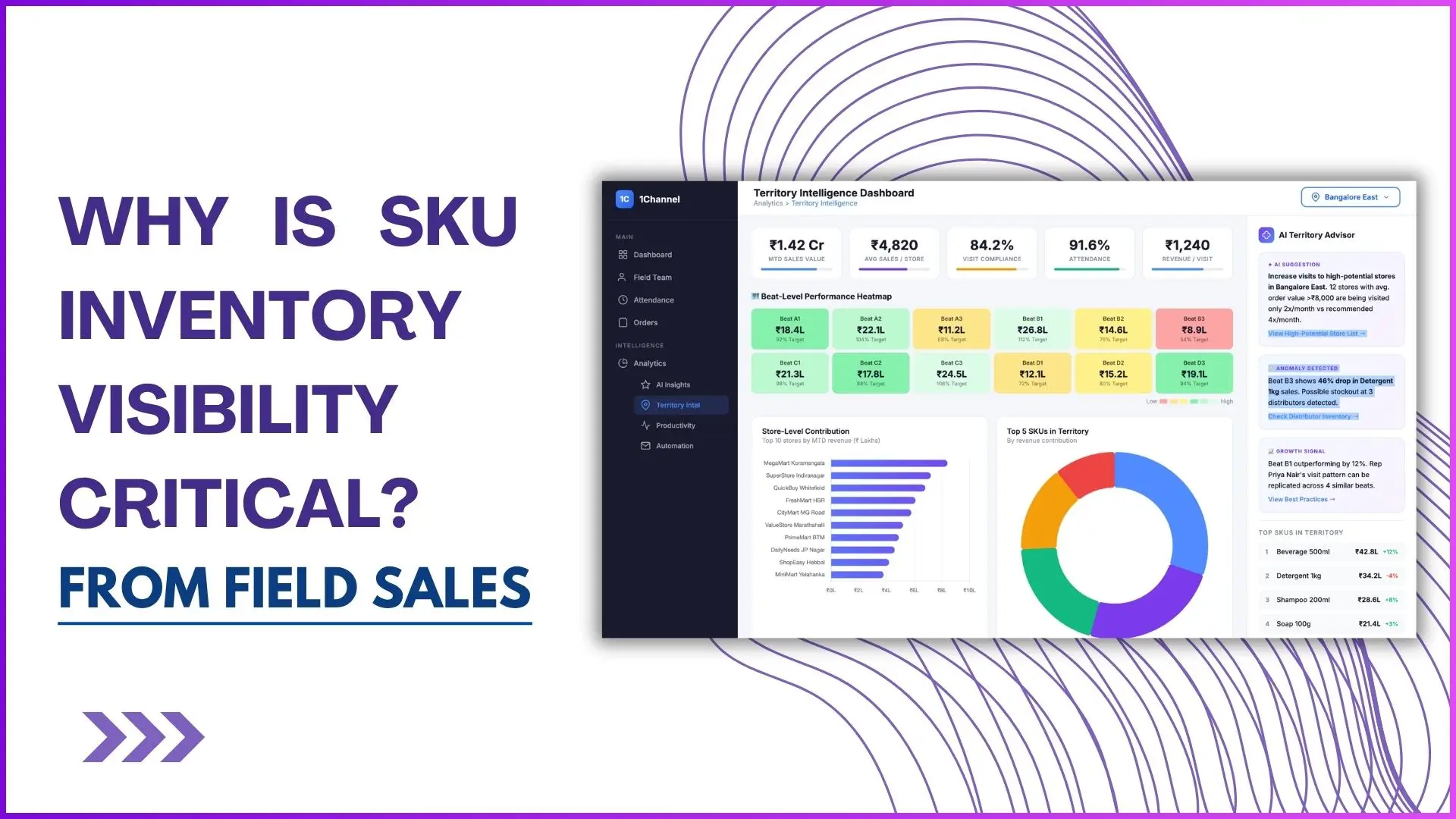
SKU visibility in field sales is the rep's ability to see real-time stock at the distributor depot, at the partner's outlet, and across the territory at the moment they need to decide what to push.
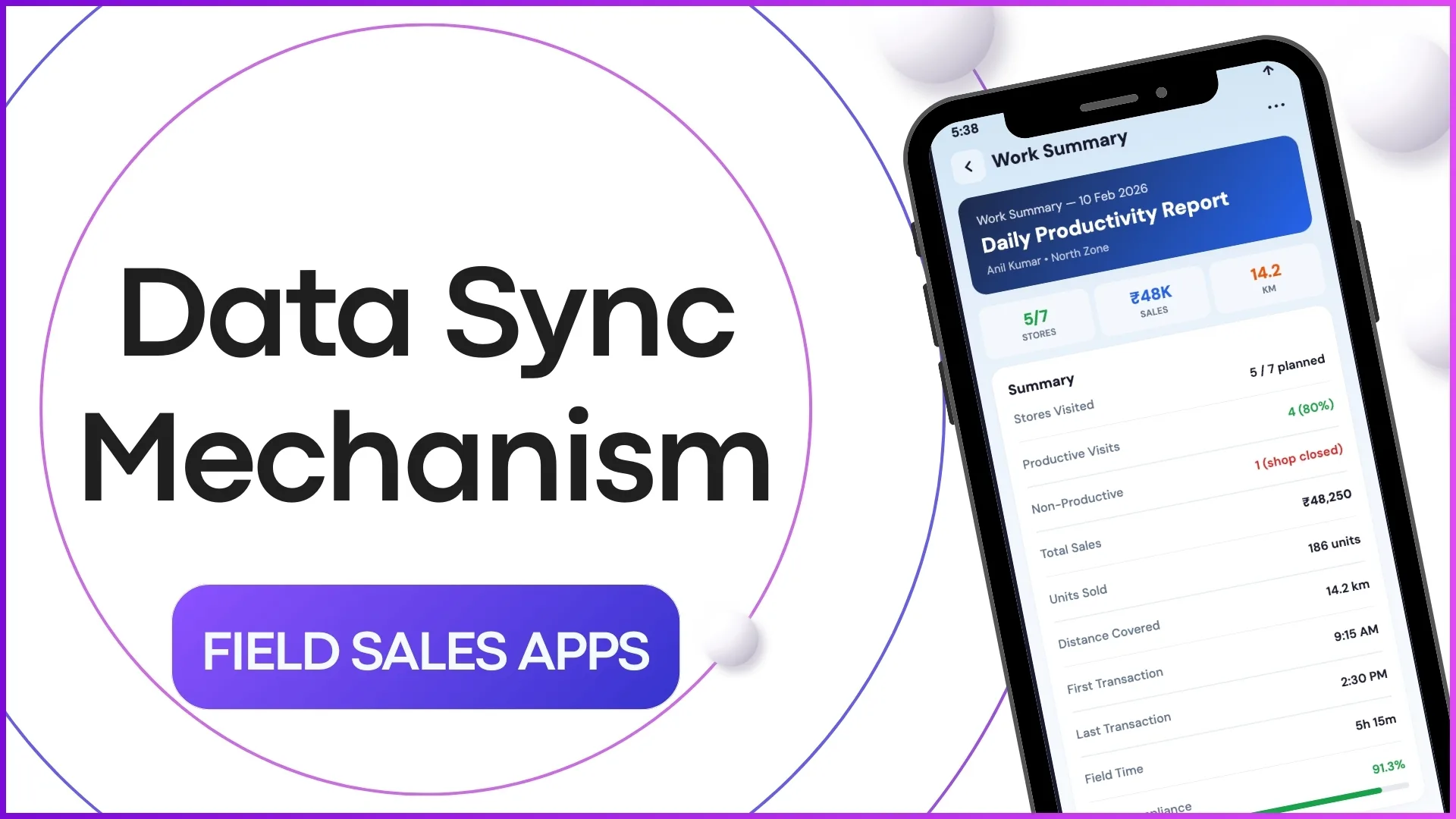
The data flows from the distributor management system, the partner's stock reporting, and the brand's central catalogue into one view inside the rep's mobile app. The cloud platform reconciles them and refreshes the view as events land.
Six Operational Wins From Live SKU Visibility
Six operational wins follow from a well-implemented SKU visibility layer. Each one removes a different category of guesswork:
- Stockouts get prevented at the outlet level. The rep sees which SKUs the partner is running low on before the visit and arrives ready to replenish, not to apologise for the gap.
- Store-level replenishment sharpens. The reorder quantity for each partner reflects their actual stock cycle, not a rolling average that misses both fast-movers and slow-movers.
- Sales prioritisation improves. The rep focuses the visit on the SKUs the partner can move, instead of pushing the brand's strategic line into an outlet that cannot turn it.
- Territory planning strengthens. The supervisor reads where SKU coverage is thin and where it is concentrated, then redirects scheme support or distributor allocation accordingly.
- AI-based recommendations land sharper. The platform's recommendation engine reads live stock plus partner history plus scheme rules, so the suggested order to the rep already has the math behind it.
- Stock health stays centrally visible. Managers read ageing stock, stockout risk, and depot imbalances without waiting for a monthly roll-up, so corrective action happens in days, not weeks.
How 1Channel Runs SKU Visibility for Malaysian Field Teams
1Channel runs SKU inventory visibility through its cloud Sales Force Automation, distributor management, and inventory modules. Distributor stock, partner stock reports, and brand catalogue all sit in the same ledger, refreshed in real time as events land.
1Channel's AI engine watches the patterns brand teams care about. Stockout risks by region, ageing stock at specific depots, partner segments where reorder cadence has drifted: all surface as alerts before they reach the monthly review.
Configuration runs through the admin console. New SKU categories, reorder thresholds, stockout-risk rules, and dashboard layouts go live the same day they are approved, with an automated dry-run preview against the existing distributor base.
Explore Cloud Inventory Management Software
1Channel's cloud inventory management platform delivers SKU-level visibility with AI stockout prediction and automated replenishment cues.
Explore Inventory Management Software →Common Pitfalls That Quietly Limit SKU Visibility
Programs that have rolled out SKU visibility and then watched it underperform usually trace the issue to one of five patterns:
- Static catalogue reads. The visibility refreshes only at the start of the day or only at sync points. By the time the rep is mid-visit, the data is already stale.
- Updates from a single source. Only the distributor's data flows in, not the partner's. The view shows what was dispatched but not what the partner actually has on shelf today.
- No SKU-level granularity. The platform shows category-level stock or brand-level stock, which hides the variation the rep actually needs at outlet level.
- Ageing data without alerts. Old stock and slow-movers sit in the depot without surfacing on anyone's dashboard until the write-off conversation starts.
- Visibility without action paths. Reps see the gap but cannot trigger replenishment, send a reorder, or flag a delivery from the same app, so the visibility becomes a passive report.