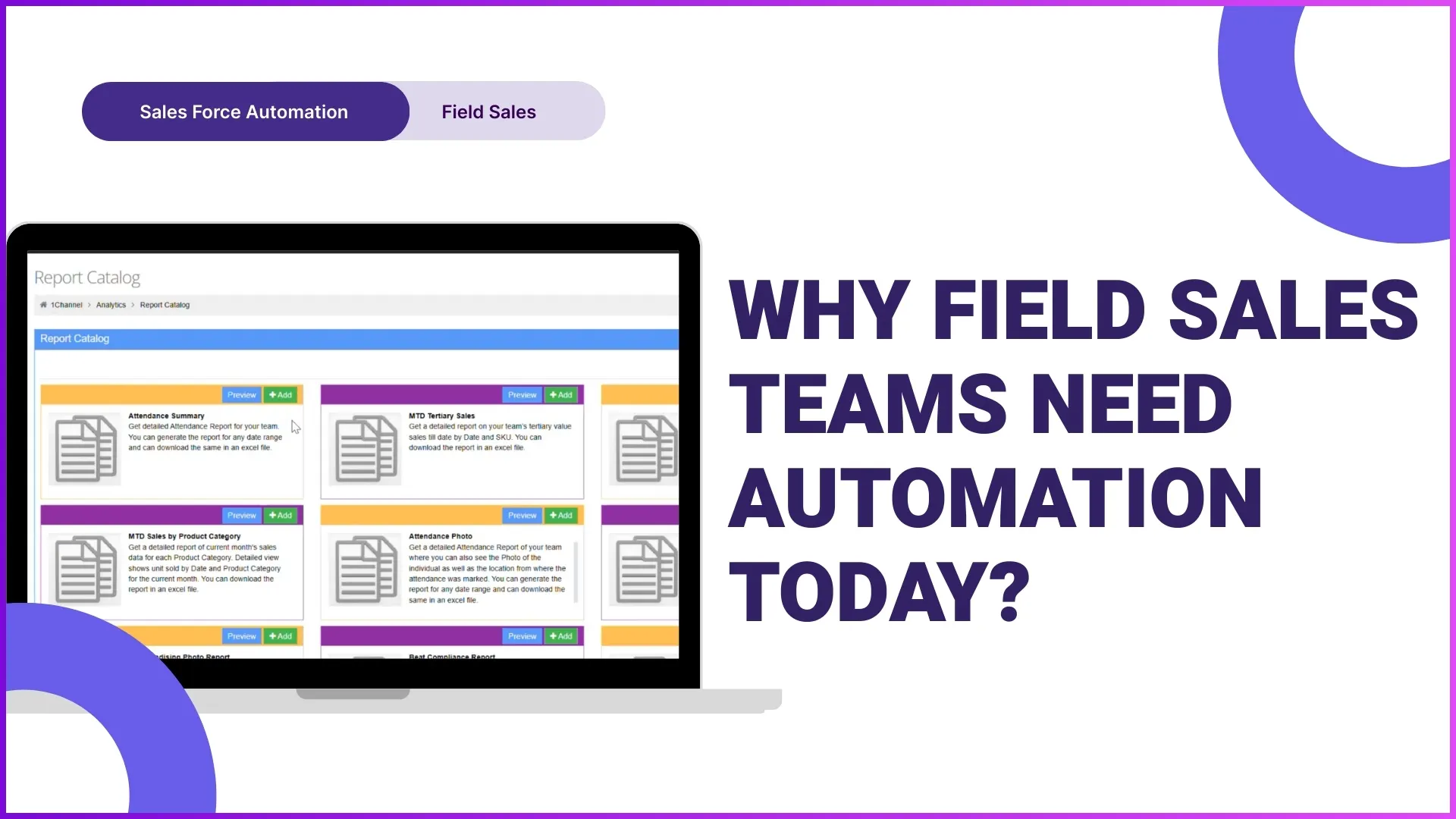
For any Malaysian business that relies on a field sales team, two questions come up constantly: Are my people where they should be? And is their time in the field actually translating into results?
When field reps mark attendance via WhatsApp messages or paper sign-in sheets, managers have no reliable way to answer either question. They cannot confirm whether a rep actually started work on time, which outlets they visited, how long they spent at each location, or whether the planned beat was followed.
Attendance and tracking tools built into sales force automation (SFA) software solve this by digitising every step, from the moment a rep clocks in to the last store visit of the day. The data that flows from these tools does not just verify presence. It directly improves how field teams operate, and that improvement shows up in sales numbers.
Table of Contents
Why Attendance and Tracking Matter for Field Sales
Office-based employees badge in at a fixed location every morning. Their presence is self-evident. Field sales teams operate differently. A promoter covering retail outlets in Selangor might start their day from home, drive to a first outlet in Subang Jaya, visit four more stores across Petaling Jaya and Shah Alam, and end their shift at a distributor warehouse in Klang. Without a digital tracking system, the manager in head office has no visibility into any of this.
This lack of visibility creates several problems that directly affect sales performance:
- Unverified attendance: Managers cannot confirm whether reps started work on time or at all. Late starts mean fewer store visits per day, which means fewer sales opportunities.
- Unaccountable routes: Without tracking, a rep might skip difficult-to-reach outlets in Rawang and cluster easy visits in one area. The skipped outlets represent lost revenue.
- Invisible gaps: If a rep spends 90 minutes between two store visits but the stores are only 15 minutes apart, that gap is invisible without location data. Across a team of 40 reps, these gaps add up to hundreds of lost selling hours per month.
- Unreliable expense claims: Travel reimbursements based on self-reported distances are prone to inflation. Without GPS-verified route data, finance teams have no way to validate claims.
How Attendance and Tracking Works in SFA Software
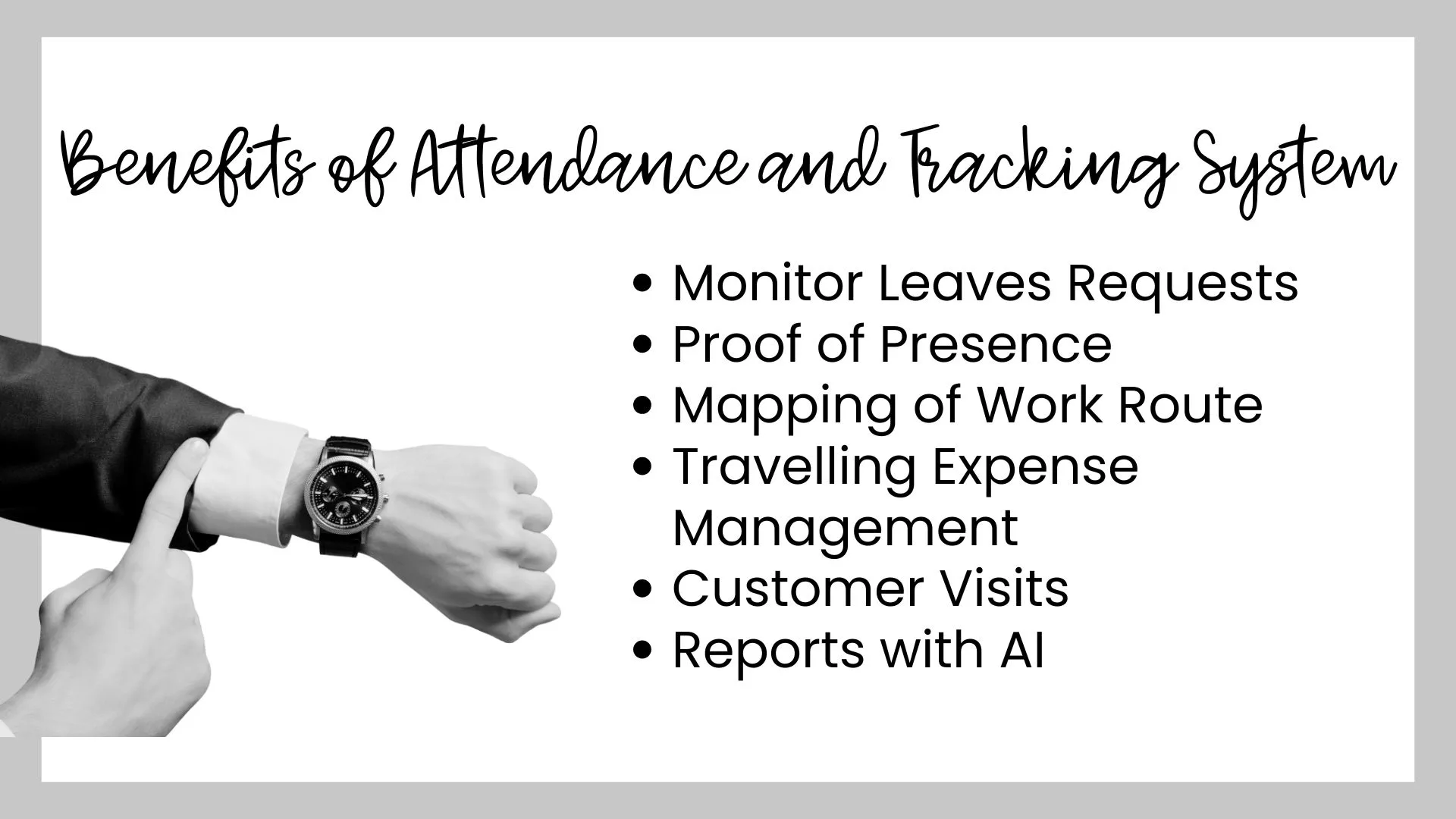
Modern SFA platforms combine multiple verification methods into the attendance process so that every check-in produces reliable, tamper-proof data.
GPS-stamped attendance with AI face validation
When a field rep opens the SFA mobile app and marks attendance in the morning, the system captures three data points simultaneously: their GPS coordinates, a timestamp, and a live selfie photograph. AI face validation then compares this selfie against the reference photo stored during the rep's first login. If the face does not match, the attendance is rejected.
This combination prevents the two most common attendance issues in field operations. GPS verification ensures the rep is at the right location, not marking attendance from home while claiming to be in the field. AI face matching ensures the person marking attendance is actually the assigned rep, not a colleague doing a proxy check-in.
For a company with reps spread across Penang, Johor Bahru, and Kota Kinabalu, this level of verification was previously impossible without physical supervision at each location.
Continuous location tracking throughout the day
Attendance is only the starting point. Once a rep checks in, the SFA system tracks their movement throughout the day as they check into and out of each store visit. The user activity report records the distance travelled between each store, the check-in and check-out times, and the first and last transaction times for the day.
This data gives managers a complete picture of how each rep spends their field time. A sales manager can see that Rep A covered 8 outlets in Klang Valley with an average of 25 minutes per visit and 12 minutes of travel between stops. Meanwhile, Rep B covered only 5 outlets with 45-minute gaps between visits, suggesting either route inefficiency or unproductive downtime.
Beat compliance verification
Most field sales operations assign daily or weekly visit plans to each rep through beat plan management. The rep is expected to visit specific outlets in a specific sequence. The beat compliance report then shows how closely each rep followed their assigned plan, calculated as the number of stores actually visited divided by the number of stores in the plan.
When attendance and tracking data feeds into beat compliance, managers get a clear view of which reps are disciplined and which are deviating from their routes. This is not about catching people. It is about identifying where the system needs adjustment, whether that means reassigning territories, rebalancing store counts, or coaching specific reps on time management.
How Better Attendance Tracking Directly Improves Sales
More selling hours per day
When attendance is GPS-verified and field activity is tracked, reps naturally become more disciplined about starting their day on time and following their planned routes. A rep who used to start field visits at 10:30am because no one was checking now starts at 9:00am because the system records their first check-in time. That extra 90 minutes translates to 2 or 3 additional store visits per day.
Across a team of 30 reps, gaining even one extra productive visit per person per day means 30 additional customer touchpoints daily, which compounds into hundreds of additional interactions per month.
Leave management that prevents coverage gaps
The SFA leave management module integrates directly with attendance data. When a rep applies for leave through the app, their reporting manager sees the request alongside the team's attendance calendar. If approving the leave would drop the Penang team below the minimum coverage required for that territory, the manager can plan accordingly by reassigning stores to other reps or rescheduling the leave.
Without this integration, managers often discover coverage gaps after they have already occurred. A distributor in Ipoh might go unvisited for a week because the assigned rep was on leave and no one realised until the sales report came in flat.
Accurate travel expense management
Field sales operations in Malaysian cities involve significant fuel costs, highway tolls, and parking expenses. When reps self-report their travel distances, there is a natural tendency to round up. Over a month, across a large team, these inflated claims add up to substantial unnecessary costs.
The SFA tracking system records actual distances between store visits based on GPS data. When a rep submits an expense claim through the app's claim management feature, the reporting manager can cross-reference the claimed amount against the system's recorded travel data. This does not just reduce fraudulent claims. It also makes the reimbursement process faster because the data is already verified.
Data-driven insights into what drives conversions
When attendance and visit tracking data accumulates over weeks and months, it reveals patterns that are invisible without systematic tracking. For example, a sales manager might discover that outlets in the Bangsar area convert at a higher rate when visited on Tuesdays and Wednesdays compared to Fridays. Or that a particular rep consistently achieves higher order values per visit, suggesting their approach to in-store engagement is worth replicating across the team.
AI-powered analytics dashboards can surface these patterns automatically, flagging performance outliers, identifying undervisited territories, and correlating visit frequency with sales outcomes across different regions and product categories.
Identifying top performers and those who need support
The attendance summary report in the SFA admin portal shows each rep's attendance compliance across any date range, including present days, late attendance count, days missed, and defaulted days. Combined with sales productivity data, this creates a clear performance picture.
A rep with 95 percent attendance compliance and strong sales numbers is someone to reward and potentially promote. A rep with consistent attendance but low sales numbers might need training on in-store selling techniques. A rep with poor attendance and low sales has a discipline issue that needs to be addressed. Without attendance data, managers often conflate all three situations.
Track, Measure, and Improve Field Sales Performance
1Channel's SFA platform includes GPS attendance with AI face validation, beat compliance tracking, route analytics, leave management, and expense claim workflows for field teams of any size.
Book a Free Demo →Frequently Asked Questions
How does attendance tracking improve sales?
By verifying that reps start on time and follow their planned routes, attendance tracking increases the number of productive store visits per day. More visits mean more customer interactions, which directly translates to more sales opportunities and higher conversion rates.
Can GPS-based tracking prevent fake attendance?
Yes. GPS captures the rep's exact location at the time of check-in, and AI face validation confirms their identity by matching a live selfie against a stored reference photo. Together, these two checks make proxy attendance and location faking virtually impossible.
How does route tracking help sales teams?
Route tracking records the actual distance and time between store visits. This data helps managers identify inefficient routes, reduce unnecessary travel, and restructure beat plans so reps spend more time in stores and less time on the road.
Is this useful only for large companies?
No. Businesses with even 10 to 15 field reps benefit significantly because attendance tracking provides accountability and route intelligence that would otherwise require additional supervisory staff. It scales equally well for teams of 200 or more.
Can I track travel expenses accurately with this tool?
Yes. The system records actual GPS-verified distances between store visits. When a rep submits an expense claim, the manager can compare the claimed amount against the recorded travel data, ensuring reimbursements reflect genuine work-related travel.
Does AI add value to attendance reports?
Yes. AI-powered analytics can compare rep performance across attendance compliance, visit productivity, and sales outcomes. It highlights top performers, flags reps who need support, and surfaces correlations between visit patterns and conversion rates that manual analysis would miss.
Final Words
Attendance tracking in field sales is not about surveillance. It is about creating reliable data that connects presence in the field to actual business outcomes. When managers can see verified attendance, real-time location data, beat compliance metrics, and travel patterns across their entire team, they can make informed decisions about territory allocation, team coaching, route optimisation, and resource planning.
For Malaysian businesses with field teams covering a geographically diverse market, from the dense urban corridors of KL and Selangor to spread-out territories in Sabah and Sarawak, this visibility is the foundation that turns field operations from a cost centre into a growth engine.
1Channel's Sales Force Automation platform includes comprehensive attendance and tracking capabilities with AI face validation, GPS verification, beat compliance reporting, and integrated expense management. Get in touch to see how it fits your field operation.