Running a B2B field sales operation in Malaysia means managing people spread across states, time zones, and traffic jams. Your promoters are visiting retail outlets in Bukit Bintang. Your team leaders are checking distributor stock in Penang. Your regional heads are trying to piece together what actually happened in the field today, relying on a WhatsApp group with 200 unread messages.
Field force automation (FFA) replaces that chaos with structure. It is a software platform that digitises every part of field operations, from the moment a rep marks attendance in the morning to the last store visit report at end of day. And with AI now layered into these systems, the shift is not just from manual to digital. It is from reactive to predictive.
This guide explains what field force automation actually looks like inside a Malaysian B2B operation, the specific benefits it delivers, and where AI is changing the game.
Table of Contents
What Is Field Force Automation and How Does It Work?
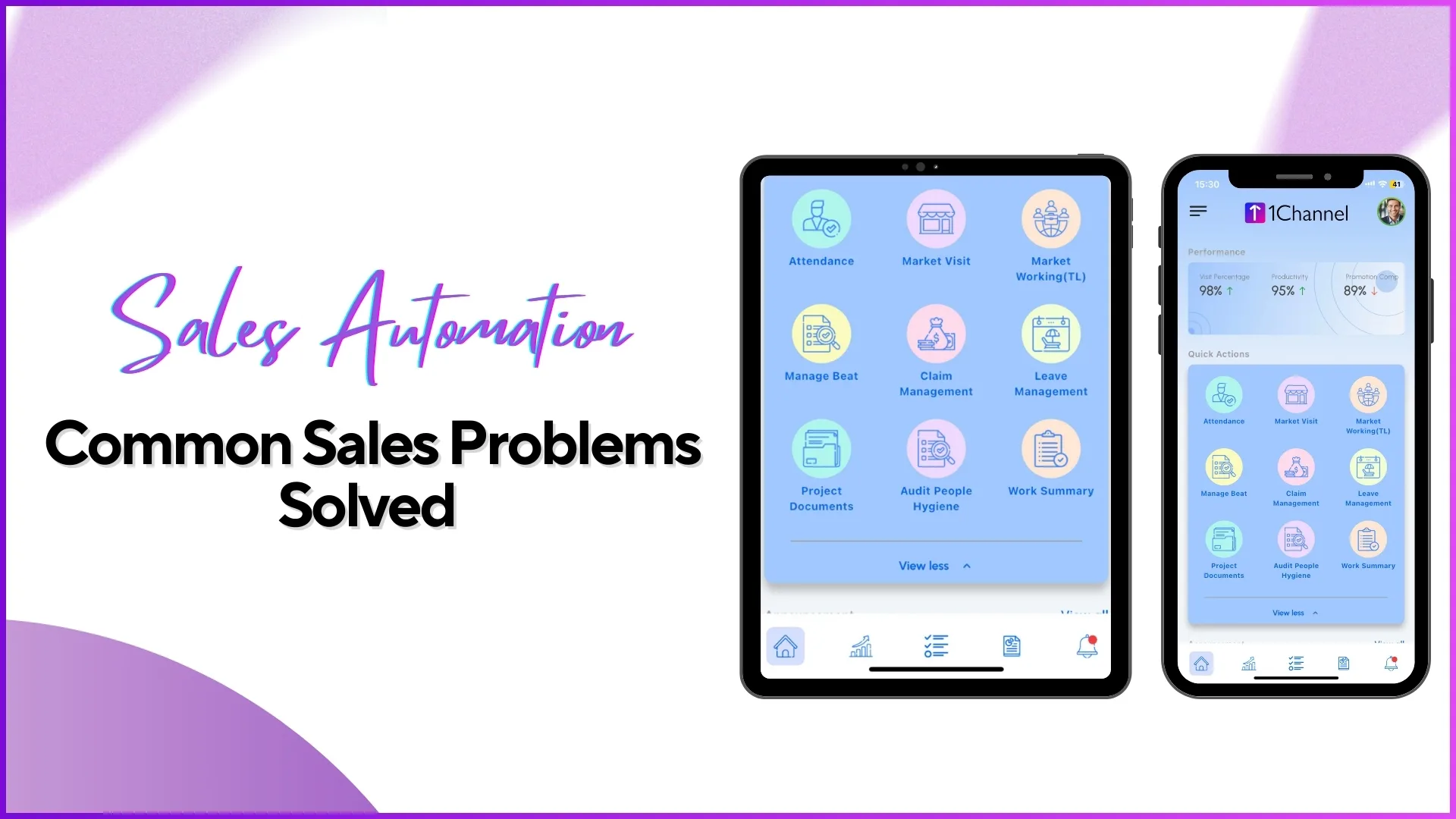
Field force automation is a cloud-based software system that manages the daily workflow of employees who work outside the office, including sales reps, promoters, merchandisers, delivery teams, and service engineers. Instead of relying on paper logs, Excel trackers, and end-of-day phone calls, everything runs through a mobile app (for field staff) and a web portal (for managers and admins).
Here is how it works in practice for a Malaysian FMCG company with 50 field reps across Peninsular and East Malaysia:
Morning: A promoter in Johor Bahru opens the 1Channel SFA app, marks attendance with a GPS-stamped selfie. AI face validation matches the photo against a stored reference image to confirm identity, making proxy attendance impossible.
Mid-day: The promoter follows a pre-assigned beat plan, visiting five retail outlets in sequence. At each store, the app captures check-in location, records stock levels by SKU, logs sales data, and prompts a short questionnaire about shelf conditions.
Afternoon: Back at head office in KL, the sales manager opens the admin portal. The advanced dashboard shows real-time attendance compliance across all regions, visit completion rates, and a beat compliance report breaking down how many planned stores were actually covered.
End of day: The system has automatically generated visit productivity reports, sales productivity reports (by unit and value), and a distance-travelled log for each rep. No manual data entry. No waiting for weekly Excel consolidations.
The core modules that make this work include:
- People Management — Beat plan creation and approval, attendance tracking with AI photo validation, leave management, expense claims, and HR workflows like regularisation.
- Sales & Stock Management — Product master with brand/category/SKU hierarchy, price management across primary and secondary channels, stock-in tracking, order confirmation, and target setting.
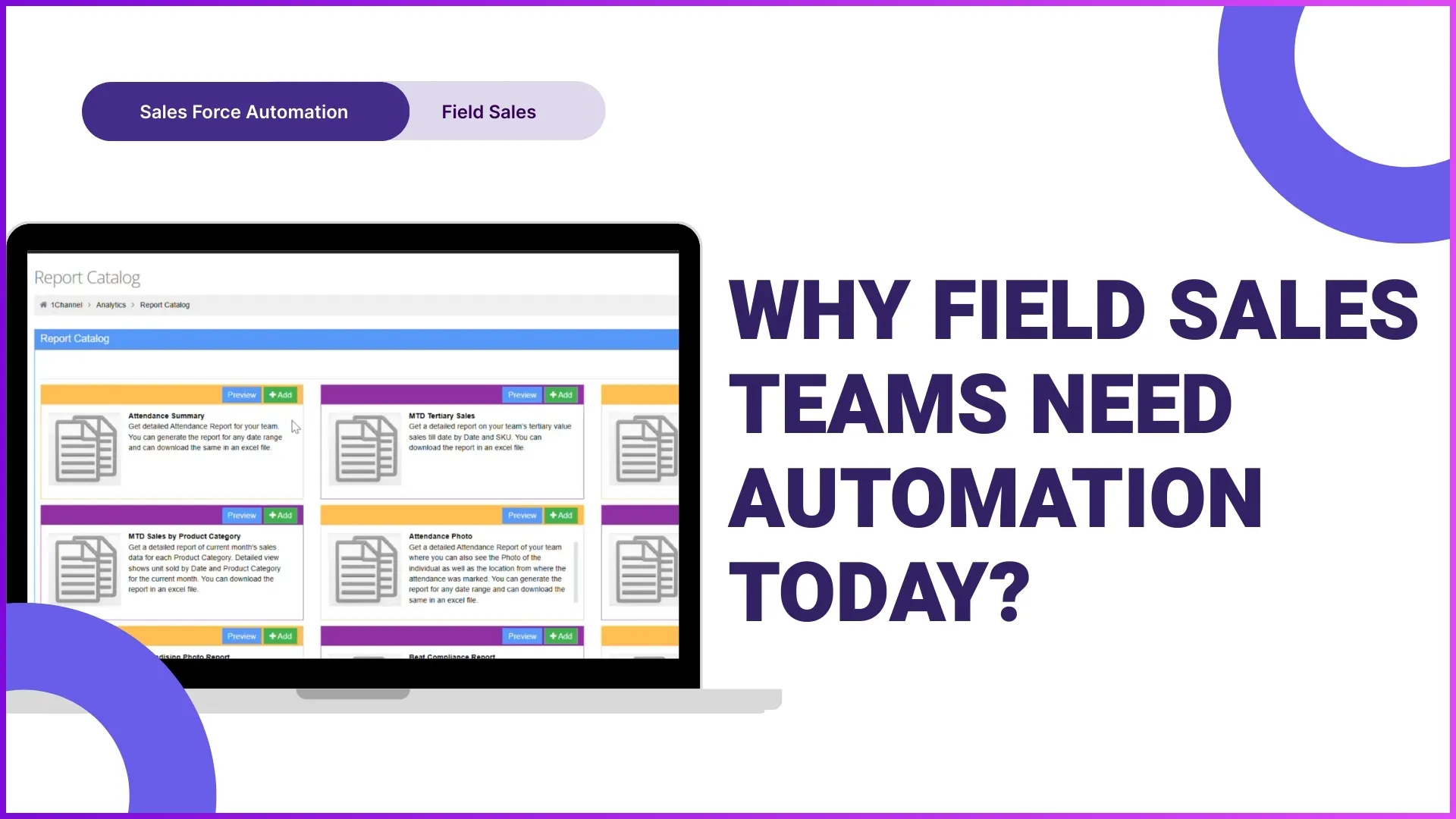
- Analytics & Reporting — A report catalogue with 40+ pre-built reports covering attendance, sales productivity, merchandising visits, beat compliance, and store-level data, plus a custom report builder for creating new reports based on specific dimensions.
- Store & Distributor Management — Store master with GPS coordinates and geofencing, distributor-store mapping, channel and category classification, and scheme management for trade promotions.
Key Benefits of Field Force Automation for Malaysian B2B Teams
1. Reclaim hours lost to manual reporting
Consider a typical day for a field sales rep covering outlets in Selangor without automation. After 8 store visits, they spend 45 minutes typing up visit notes in WhatsApp, another 30 minutes filling an Excel report for the regional manager, and 15 minutes logging expense receipts into a separate form. That is 90 minutes of admin work after an already long day on the road.
With FFA, every one of those steps happens in real time during the visit itself. The app auto-logs visit duration, GPS location, and check-in/check-out times. Stock and sales data is captured through structured forms with pre-loaded SKU catalogues. Expense claims are submitted directly from the app with photo receipts and go through a digital approval workflow to the reporting manager.
For a team of 30 reps, that is roughly 45 hours of manual work eliminated every single day, and that time goes back into actual selling.
2. Eliminate data entry errors that cost real money
When a promoter in Kuching manually types stock counts into a shared spreadsheet, transposition errors happen. A "120" becomes "12." A wrong SKU code maps to the wrong product. These small mistakes compound: inaccurate stock data leads to wrong replenishment orders, which leads to either stockouts at the retailer or excess inventory at the distributor.
FFA eliminates this by using structured data capture. The product master is pre-configured with brand hierarchy, product categories, and SKU details. When a rep logs stock or sales, they select from pre-loaded lists instead of free-text typing. Serial numbers can be scanned. Validation rules catch obvious errors before submission.
The admin portal then consolidates this data into downloadable reports such as attendance summaries, sales reports, stock reports, and secondary sales reports, all in standardised Excel formats that plug directly into your ERP or accounting system.
3. See what is happening in the field right now, not last week
This is where modern FFA creates the biggest shift for Malaysian B2B operations. Traditional field management runs on a one-week feedback loop: reps submit reports on Friday, managers consolidate over the weekend, leadership reviews on Monday. By then, the data is already stale.
1Channel’s advanced dashboard changes this fundamentally. The portal opens to a real-time analytics view showing attendance reporting percentage, present days percentage, late attendance rates, and market visit compliance, all updated as events happen in the field. A sales director can check, at 2pm on a Tuesday, exactly how many stores were visited in Penang today and what the tertiary sales numbers look like compared to target.
The report catalogue provides deeper drills: beat compliance reports showing which reps are actually following their assigned routes, visit productivity reports counting stores covered per day per employee, and detailed visit reports that capture every activity performed at each store, all downloadable as PDFs.
4. AI-powered attendance and identity verification
Proxy attendance, where one person marks attendance for another, is a persistent problem in field operations across Southeast Asia. Traditional solutions (biometric devices at fixed locations) do not work when your team operates across hundreds of outlets.
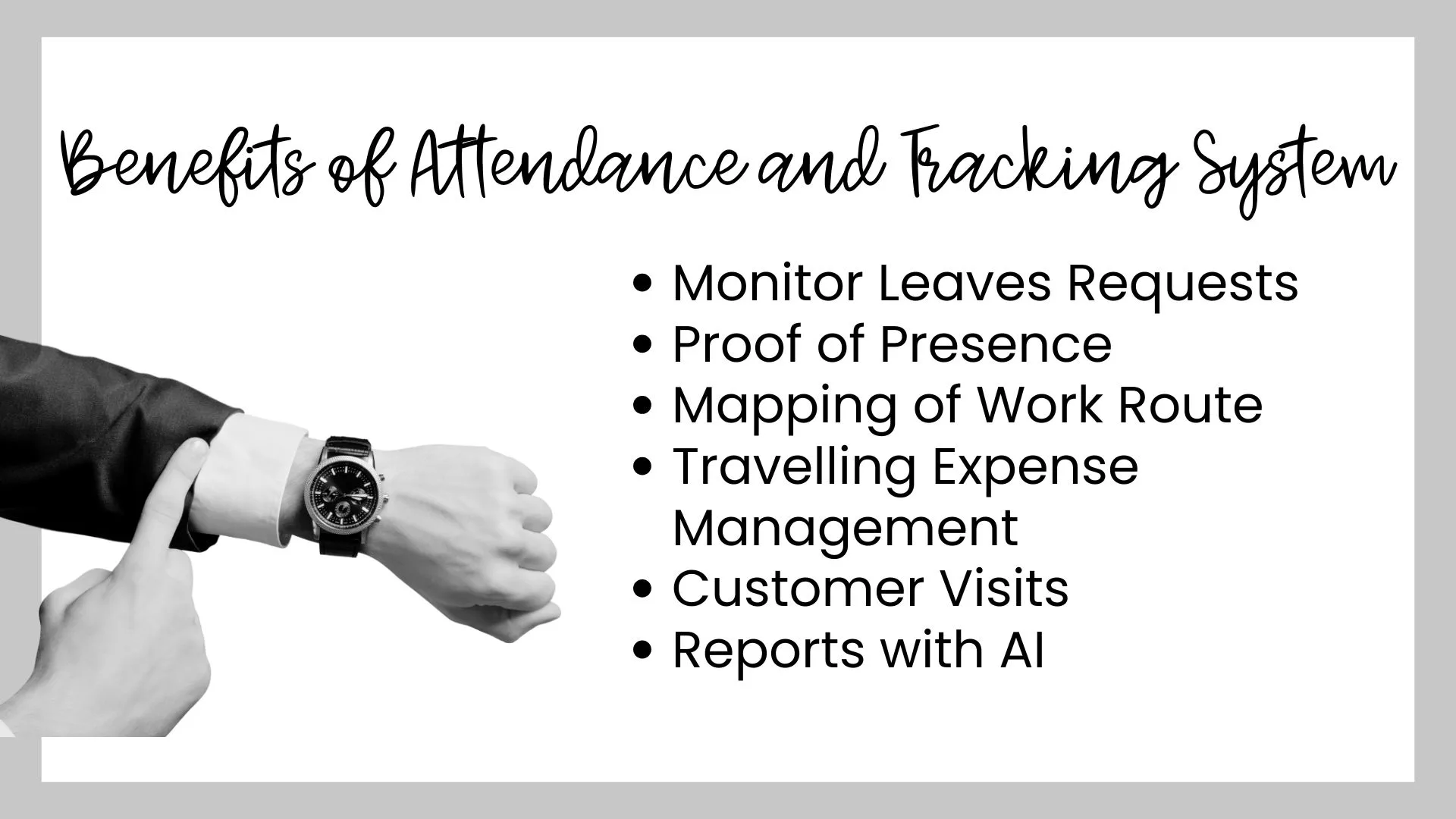
1Channel solves this with AI-based face validation. When a user first logs into the app, they register a reference photo. Every subsequent attendance marking requires a live selfie that the AI engine matches against this reference. The system captures the photo, GPS location, and timestamp simultaneously. If the face does not match, attendance is rejected.
Managers can review attendance photo reports from the portal, complete with individual photos and the exact location where each attendance was marked. Random attendance prompts can also be configured: the app requests a surprise photo check mid-shift to verify the rep is still at the assigned location.
For a company with field teams spread from Kuala Lumpur to Kota Kinabalu, this means a level of attendance integrity that was previously impossible to achieve at scale.
5. Coordinate distributed teams without micromanaging
A Malaysian B2B company selling industrial supplies might have promoters in Croma outlets, team leaders overseeing clusters of stores in Klang Valley, and a regional head managing both Peninsular and Sabah operations. Without a unified system, coordination happens through a patchwork of calls, texts, and emails. The team leader doesn’t know what the promoter did at a specific store until the next weekly call. The regional head gets conflicting data from different team leaders.
FFA creates a single source of truth. The organisation tree in the admin portal maps every employee to their reporting head. Beat plans are created and approved through the system, where admins can assign daily or weekly visit schedules per store per user. When the promoter completes a visit, the activity flows up the hierarchy automatically.
The activity quality check module adds an approval layer: once a field user submits a questionnaire or store audit, their reporting head reviews it in the portal, checks the data against the store visit GPS log, and approves or requests corrections. This creates accountability without constant phone calls.
Announcements, content decks, and app teasers can be pushed from the admin portal to specific user roles, so a training infographic goes to promoters while a new pricing update goes to team leaders. Communication becomes targeted and trackable.
6. Scale operations without proportionally scaling overhead
As a Malaysian B2B company grows by adding new product lines, expanding into East Malaysia, and onboarding new distributor partners, the complexity of field operations compounds. Without automation, growth means hiring more coordinators, more data entry staff, and more regional managers just to maintain visibility.
FFA platforms are built to absorb this growth. New users are bulk-uploaded via Excel. New stores are added to the store master with GPS coordinates and assigned to the relevant distributor through distributor-store mapping. New product SKUs are uploaded through the product master with pricing configured at the SKU level. Schemes and trade promotions are created centrally and mapped to specific stores or product categories.
The role-based access system means each user only sees what they need. A promoter sees their own stores and targets. A team leader sees their team’s data. A regional head sees the full territory. The admin defines exactly which modules and sub-options each role can access, right down to individual report visibility.
This means a company can go from 30 field reps in Klang Valley to 200 reps across all of Malaysia without fundamentally changing how the system operates. The same portal, the same workflows, the same reporting structure, with more data flowing through it.
Where AI Is Changing Field Force Automation
AI is no longer a future roadmap item for field force automation because it is already embedded in how leading platforms operate. Here is where it matters most for Malaysian B2B operations:
- AI face validation for attendance — Already live in 1Channel. Prevents proxy attendance across distributed field teams. The reference image model ensures identity verification happens at every login, not just onboarding.
- AI-powered analytics dashboards — Instead of static reports, AI surfaces anomalies and patterns. If beat compliance drops in a specific region, the dashboard flags it before a manager notices. If a product category shows unusual sales velocity in Johor but not Selangor, the system highlights the divergence.
- Conversational AI for field queries — Emerging capability where reps can chat with the system: “What was my total sales last week?” or “Which stores haven’t I visited this month?” and getting instant answers instead of navigating through menu screens. This reduces training overhead and makes the app faster to use for less tech-savvy field staff.
- Predictive visit scheduling — AI analyses historical visit-to-order conversion patterns and suggests optimal visit frequencies per store. A high-performing outlet in Bangsar might need weekly visits while a slow-moving one in Ipoh only needs bi-monthly check-ins. This optimises rep time allocation across territories.
- Image recognition for merchandising — Reps photograph shelf displays during store visits. AI analyses planogram compliance, share-of-shelf, and competitor presence, turning a manual visual merchandising audit into an automated, quantified data point.
Automate Your Field Sales Operations in Malaysia
1Channel’s SFA platform helps Malaysian B2B companies digitise attendance, route planning, store visits, sales capture, and analytics, with AI-powered verification built in.
Book a Free Demo →Final Words
Field force automation is not about adding technology for the sake of it. For Malaysian B2B companies, it solves a very specific set of problems: fragmented field data, invisible team activity, slow reporting cycles, and the inability to scale operations without proportionally scaling headcount.
The platforms that work best in this market combine practical field tools like GPS attendance, beat planning, and structured visit capture with the intelligence layer that AI provides: face verification, anomaly detection, predictive scheduling, and conversational interfaces.
If your field teams are still running on WhatsApp groups and Excel trackers, the gap between you and competitors who have automated is widening every quarter. The good news is that modern FFA platforms like 1Channel are cloud-based, require no on-premise setup, and can be deployed across your Malaysian operations with remote onboarding.
Get in touch to see how 1Channel’s Sales Force Automation fits your field operation.