Proxy attendance is a persistent problem in field sales operations across Southeast Asia. One rep marks attendance for a colleague who has not started their shift. Another uses a location spoofing app to check in from home while claiming to be at an outlet in Petaling Jaya. A third shares their login credentials with a teammate who marks attendance on their behalf. These scenarios are not hypothetical. They happen in organisations that rely on manual or basic digital attendance systems.
The cost is not just a few inflated payroll hours. When attendance data is unreliable, everything that depends on it becomes unreliable too: beat compliance reports, visit productivity metrics, field coverage analysis, and the manager's understanding of who is actually active in the field on any given day.
AI-based attendance validation within sales force automation software addresses this by verifying three things simultaneously: that the right person is marking attendance, from the right location, at the right time. This article explains how it works and why it matters for Malaysian businesses managing distributed field teams.
Table of Contents
How AI Attendance Validation Works
The validation process combines three verification layers into a single attendance action that takes the field rep about 10 seconds to complete.
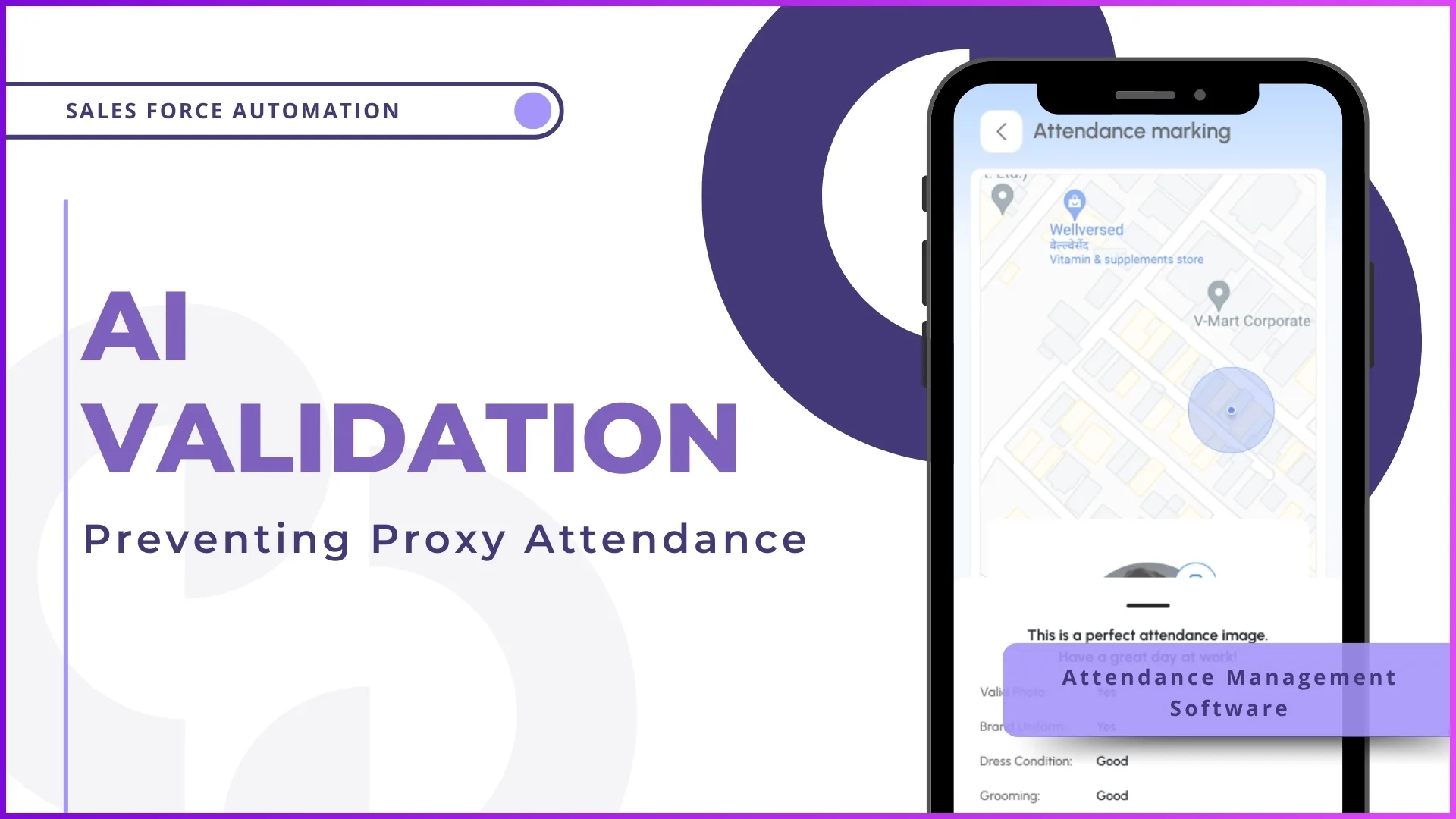
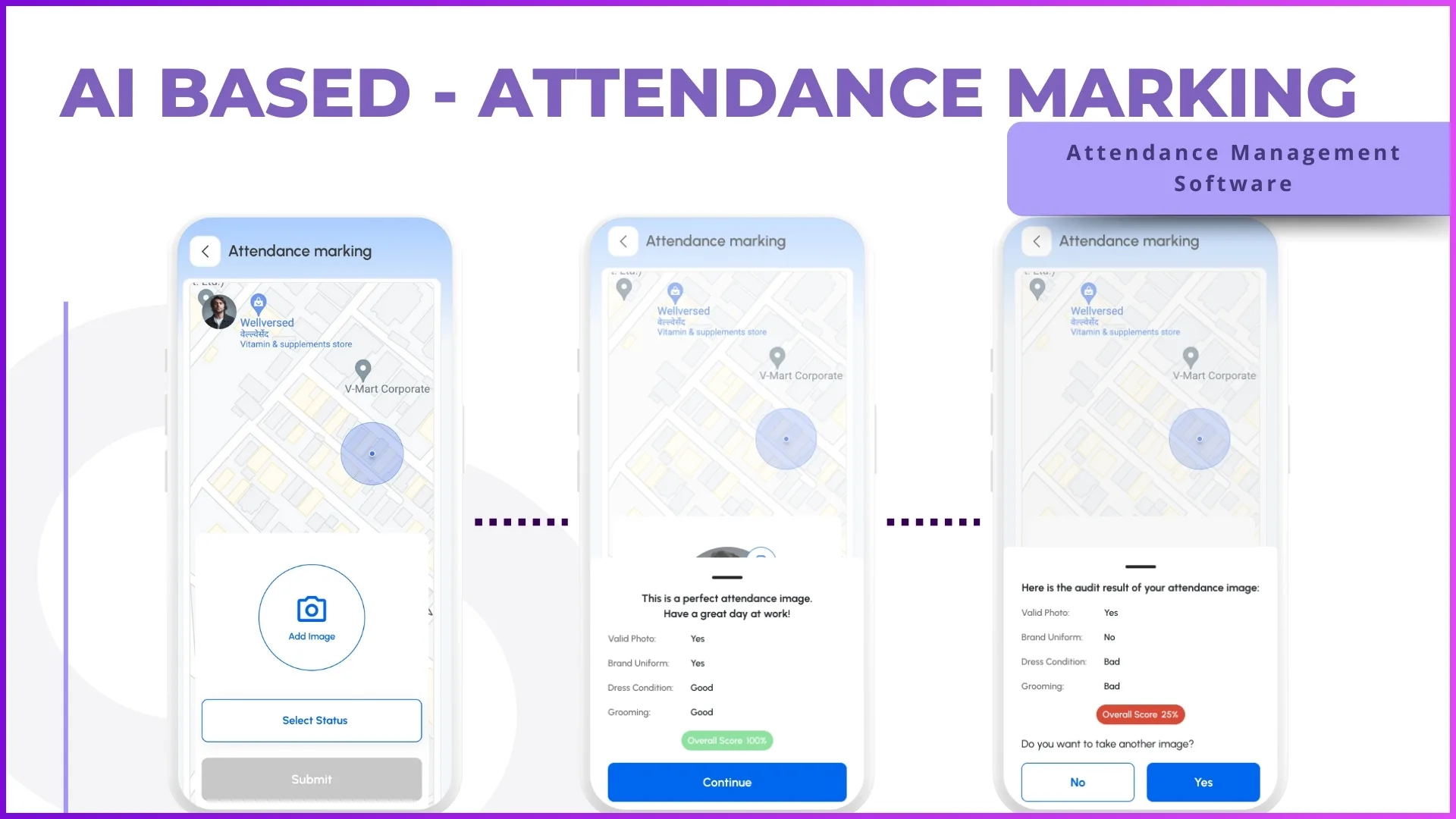
When the rep opens the SFA mobile app and taps "Mark Attendance," the app simultaneously captures a live selfie, records GPS coordinates, and logs the current timestamp. The AI engine then compares the selfie against a reference photo that was stored when the user first logged into the system. If the face matches within the configured validation threshold, the GPS location falls within an acceptable range, and the time is within the attendance window, the check-in is accepted.
If any of these checks fails, attendance is blocked. The system logs the failed attempt, including the photo that was submitted and the location it was submitted from, creating a complete record that the admin can review later.
For a company with 40 field reps spread across Klang Valley, Penang, and Johor, this means the attendance dashboard at 9:15 AM shows verified, identity-confirmed check-ins rather than unverifiable WhatsApp messages.
What Proxy Scenarios AI Validation Prevents
Buddy punching. One rep marks attendance for another using their phone. AI face validation catches this because the live selfie does not match the registered user's reference photo. The system blocks the attendance and logs the mismatch.
Location spoofing. A rep uses a GPS spoofing app to fake their location. While spoofing can deceive basic GPS checks, the combination of AI face validation with location data makes it significantly harder to fabricate a convincing check-in. The system can also be configured with random attendance prompts that request a surprise photo check mid-shift, catching reps who spoofed their morning location but are no longer at the claimed position.
Shared login credentials. Two reps share one account to alternate coverage without the manager knowing. AI face validation ensures only the registered person can mark attendance on that account. If a different person attempts to check in, the face match fails.
For a pharmaceutical company with medical reps visiting clinics across Penang and Sabah, where physical supervision is impossible, these automated checks replace the trust-based assumptions that manual attendance relies on.
Why It Matters for Both Managers and Reps
For managers
AI-validated attendance creates a reliable data foundation for everything downstream. Productivity tracking becomes accurate because the system knows exactly when each rep started their day. Beat compliance reports are meaningful because they compare planned visits against verified working hours rather than assumed ones. Payroll preparation becomes straightforward because attendance records are verified rather than disputed.
A sales manager overseeing 30 reps across Selangor no longer needs to spend the first hour of their day calling to verify who is in the field. The dashboard already shows verified check-ins with photos and locations.
For field representatives
The process is simple and fast. Attendance marking becomes a 10-second verified action rather than a manual routine prone to disputes. Clear validation rules also protect genuine employees. When attendance authenticity is system-verified rather than manager-assumed, there are no unfair suspicions or disputes about who was really working and who was not.
For genuine exceptions such as missed check-ins due to connectivity issues or technical problems, attendance regularisation workflows allow employees to submit requests that managers can review and approve. The system maintains flexibility without weakening compliance.
How AI Attendance Connects to the Broader SFA System
AI-validated attendance is not a standalone feature. It acts as the entry point for the entire daily field sales workflow. Once attendance is confirmed, the system activates the rep's beat plan for the day. Store visits are then tracked against the verified start time. Expense claims reference the GPS-confirmed travel that happened after the verified attendance. Analytics dashboards aggregate attendance compliance data across teams and regions.
This integration means that a single reliable data point, verified attendance, cascades accuracy through every other module. When attendance data is unreliable, beat compliance, visit productivity, expense verification, and payroll all inherit that unreliability.
The Three Verification Layers Working Together
Layer 1: Identity (Who)
AI face validation compares the live selfie against the stored reference photo. This confirms that the person marking attendance is the registered employee, preventing buddy punching and shared logins.
Layer 2: Location (Where)
GPS coordinates are captured at the moment of check-in and compared against expected locations or geofenced boundaries. This confirms the rep is at the right place, preventing remote or spoofed check-ins.
Layer 3: Time (When)
The timestamp is recorded automatically and compared against the configured attendance window. This confirms check-in happened within acceptable hours, preventing after-the-fact entries or pre-dated attendance.
When all three layers pass simultaneously, the system has high confidence that the right person is at the right place at the right time. No single layer alone is sufficient. Identity without location means a rep could be checking in from home. Location without identity means anyone at the store could mark attendance. Time without either is meaningless.
Explore Attendance Software
1Channel's SFA platform includes AI face validation, GPS verification, geofencing, random attendance prompts, and regularisation workflows for verified field attendance.
Explore Attendance Software →Frequently Asked Questions
How does AI prevent proxy attendance?
The system compares a live selfie taken during attendance with a pre-stored reference image. Attendance is allowed only when the AI match meets the configured validation threshold. If the face does not match, the check-in is blocked and the attempt is logged.
What happens if validation fails?
Attendance is blocked and the failed attempt is recorded with the submitted photo and location. The employee can use the attendance regularisation workflow to submit a request explaining the issue, which the manager reviews and approves or rejects.
Is AI attendance validation mandatory for all users?
No. The validation rules are configurable. Organisations can enable AI face validation for specific roles, teams, or locations based on their operational needs. A company might require it for field promoters but not for office-based staff.
Does AI validation replace geofencing?
No, they complement each other. AI face validation answers "who is marking attendance" while geofencing answers "where are they marking it from." Together, they provide both identity and location verification in a single attendance action.
Proxy attendance erodes the reliability of every downstream metric that depends on accurate field data. AI validation ensures that attendance, the starting point of every field sales day, is verified rather than assumed. For Malaysian businesses with reps across multiple states where physical supervision is impractical, this verification layer is what makes the difference between field data you can act on and field data you have to question. Get in touch to explore how AI attendance validation can work for your team.