Managing a field sales team has always been difficult. People operating outside the office, across multiple cities, visiting different customers every day, with outcomes that depend on individual discipline and effort. That complexity has not changed. What has changed is the expectation.
Malaysian businesses now expect real-time visibility into field activity, not end-of-week summaries. They expect data-backed decisions, not manager intuition. They expect consistent execution across 50 reps in five states, not results that vary wildly depending on who is covering which territory. These expectations cannot be met with WhatsApp groups, Excel trackers, and phone call follow-ups.
This article explains why automation has become essential for field sales teams, what specifically it changes in daily operations, and why waiting is more costly than acting.
Table of Contents
The Blind Spots in Manual Field Sales
Manual field sales processes create information gaps that managers cannot close without being physically present at every location. A sales manager overseeing 30 reps across Klang Valley, Penang, and Johor faces three persistent blind spots every single day.
First, they do not know who is actually active in the field right now. Attendance is assumed based on a morning WhatsApp message. Whether the rep started their day on time, reached their first outlet, or is still at home is unknown until someone calls and asks.
Second, they do not know which markets are being covered properly. A rep might claim to have visited 10 stores, but whether those were the right 10 stores, in the right sequence, with the right activities completed, is unknowable without GPS verification and structured visit tracking.
Third, they do not know where execution is breaking down until the consequences appear in sales numbers weeks later. A distributor issue in Johor, a stock gap in Penang, or a competitive move in Selangor surfaces only when the monthly report shows a revenue decline. By then, the window for corrective action has closed.
Automation Starts with Visibility
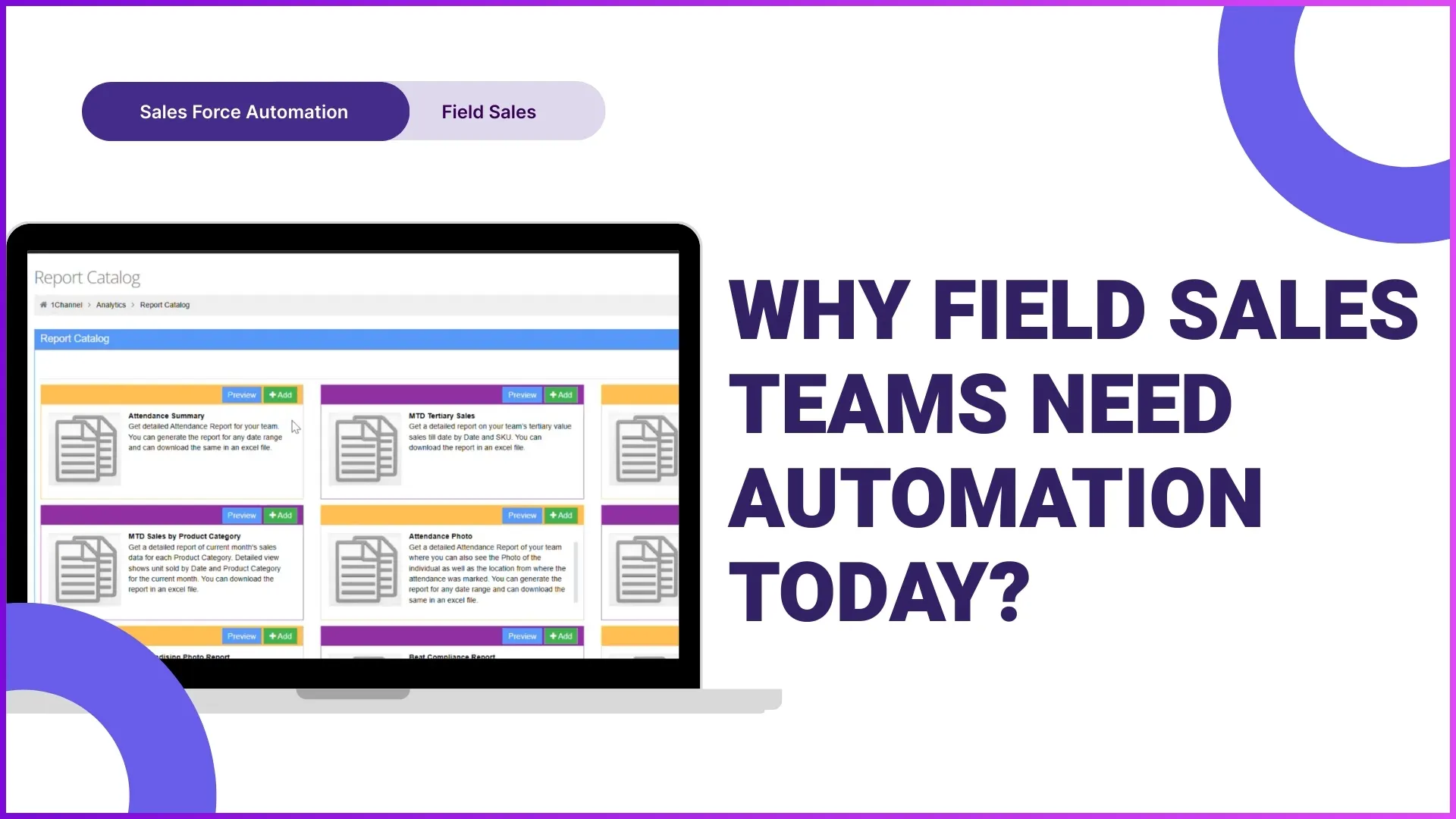
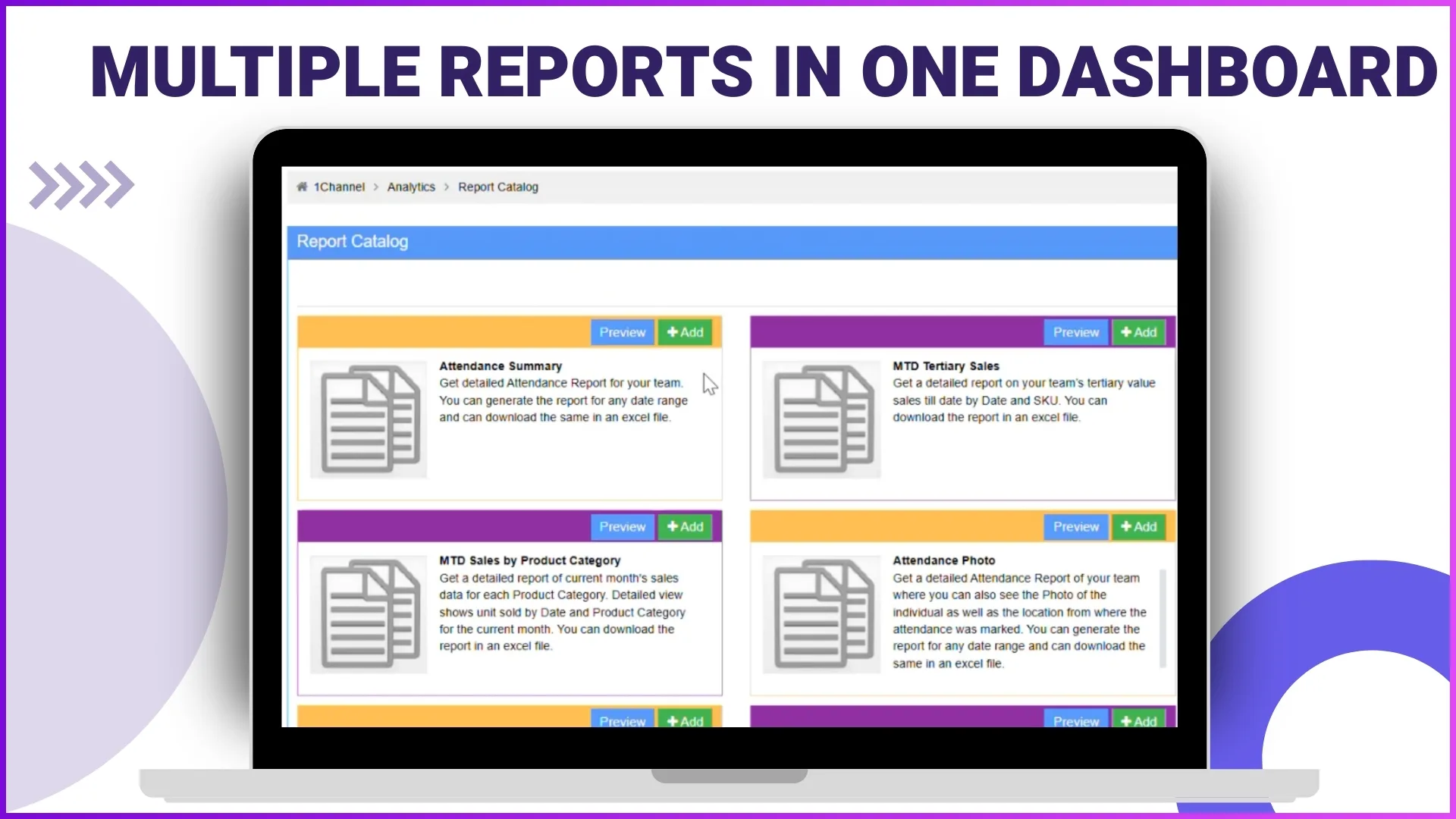
The most immediate change automation brings is visibility. Field activity is captured as it happens, not reported later from memory. Every attendance marking, every store visit, every order captured, every questionnaire completed enters the system in real time. The manager opens a dashboard and sees the current state of field operations, not yesterday's reconstructed version.
For a sales director at an FMCG company with merchandisers across Selangor and Sabah, this means knowing by 10 AM how many reps have started their day, by noon how many planned visits have been completed, and by 3 PM whether any territories are falling behind schedule. This level of awareness allows intervention while the day is still happening, not after it has already ended.
Accountability That Scales
Trust is important in any organisation. But trust alone does not scale. A manager who personally knows and supervises 8 reps can maintain accountability through relationships. A manager overseeing 40 reps across four states cannot. The sheer volume of daily interactions makes it impossible to verify attendance, validate visits, and track performance through personal oversight.
Automation introduces system-driven accountability. Attendance is GPS-verified and AI-face-validated. Visits are timestamped and location-checked. Performance data is objective and consistent. This does not replace trust. It provides the data infrastructure that allows trust to operate at scale. A rep knows their work is visible. A manager knows the data is reliable. Both sides benefit from clarity rather than assumption.
Faster Data, Faster Decisions
Manual reporting creates a decision lag that directly costs revenue. A rep visits a distributor in Johor on Monday and discovers they have switched to a competitor's pricing structure. The rep notes it in their WhatsApp summary on Monday evening. The manager sees it on Tuesday, discusses it in Wednesday's team call, and escalates it to the regional head on Thursday. By Friday, the competitor has already won a week's worth of orders.
With automation, the rep logs the competitive observation during the visit itself through a structured questionnaire. The data appears in the manager's dashboard within minutes. The regional head can see it the same day. The response time compresses from five days to hours. In fast-moving markets like Malaysian FMCG and consumer goods, this speed difference determines whether a competitive threat is contained or compounded.
Field Sales Is More Than Selling
Modern field sales teams do not just take orders. They collect market feedback that informs pricing and product decisions. They monitor competitive activity across outlets. They ensure brand visibility through merchandising compliance. They coordinate with operations, finance, and logistics teams who all depend on field data for their own decisions.
Managing all of this through separate WhatsApp groups, personal notebooks, and monthly email reports creates fragmentation. Automation organises these activities into structured workflows. Market feedback is captured through standardised questionnaires. Competitive observations are logged during visits with photo evidence. Merchandising compliance is tracked through the same system that manages attendance and route planning. All the data lives in one place, accessible to all stakeholders who need it.
Scaling Without Losing Control
For Malaysian businesses expanding into new states or adding distribution channels, the operational question is not whether they can hire more reps. It is whether their management systems can absorb the additional complexity. Adding 15 reps to cover East Malaysia means 15 more sets of daily reports, expense claims, attendance records, and performance data flowing into a system that was already strained at the previous headcount.
Automation provides the framework that makes this growth manageable. The same dashboards, the same beat planning process, the same reporting structure serves 30 reps or 130 reps. The administrative overhead of managing field operations does not scale linearly with headcount because the system handles the tracking, verification, and reporting that would otherwise require additional supervisors.
Managers Shift from Chasing to Leading
In manual environments, a significant portion of a sales manager's day is consumed by administrative tasks: calling reps for updates, reconciling attendance records, reviewing expense claims, compiling weekly reports, and following up on missed visits. These are necessary activities, but they are not strategic work. They do not improve the team's selling capability or expand market coverage.
Automation eliminates these tasks by making the information available without asking for it. The manager's role shifts from data collection to data analysis, from verification to coaching, from chasing updates to making decisions. This shift is what allows a single manager to effectively oversee a larger team while actually improving performance rather than just tracking it.
Automation Builds Cross-Team Trust
Manual processes create friction between departments because different teams work with different versions of the same data. Finance disputes expense claims because there is no GPS travel data to validate them. HR questions attendance records because there is no photo or location verification. Leadership questions sales forecasts because they are built on manually compiled numbers that different managers round differently.
Automation creates a single source of truth. When every stakeholder works from the same verified data set, disputes decrease and alignment improves naturally. The finance team sees GPS-verified travel distances alongside expense claims. HR sees AI-verified attendance records. Leadership sees real-time pipeline data. Trust between teams improves because the data does not depend on who compiled it or when.
Explore Sales Force Automation
1Channel's SFA platform provides GPS attendance with AI verification, beat planning, real-time dashboards, expense management, and configurable workflows for field teams of any size.
Explore SFA Software →Frequently Asked Questions
Is automation only useful for large field teams?
No. Even teams of 10 to 15 reps benefit from automation because it provides accountability, route discipline, and reporting accuracy that manual processes cannot match at any scale. Starting early also means the team builds structured habits before complexity increases.
Does automation make field sales too rigid?
Automation adds structure, not rigidity. Beat plans provide a framework, but reps can still adapt to on-ground situations. The system tracks what happened rather than dictating every minute of the day. The goal is visibility and consistency, not micromanagement.
What are the biggest risks of staying manual?
Lower productivity due to time lost on non-selling administrative tasks. Poor visibility that prevents managers from intervening before performance drops. Difficulty scaling as team size or geographic coverage increases. And growing gaps between your operations and competitors who have already automated.
Does automation replace salespeople?
No. Automation removes the administrative burden of manual reporting, attendance verification, and data compilation. Salespeople spend more time selling and building relationships because the system handles the tracking and paperwork that previously consumed hours of their day.
Field sales automation is not about adding technology for its own sake. It is about closing the gap between what businesses expect from their field operations and what manual processes can actually deliver. For Malaysian businesses managing teams across multiple states, that gap widens every quarter they wait. Get in touch to explore how automation can work for your field operation.