On a normal store visit, the field rep is surrounded by competitive signal. Shelf share, price tags, planogram changes, new SKU appearances, POSM placements, depot-level discount notes.
Most of it walks out of the store with the rep, lost to memory. The brand team only learns about a competitor's price drop two weeks later, after the sell-through report shows the dent.
Capturing competitive signal at the shelf is the cheapest market research the brand can run. The infrastructure to do it well already lives inside the SFA app the rep uses every day.
Table of Contents
Why Field Teams Are the Best Source of Competitive Signal
The rep is inside the store on every visit cycle. They see the planogram, count the facings, photograph the POSM, and hear the retailer's reaction to the competitor's latest offer.
Market research panels take weeks to refresh. The field rep refreshes the data every visit. The freshness matters more than the methodological sophistication in most categories.
Five Signals Worth Capturing on Every Visit
Not every observation carries weight. The five categories below deliver the most operational value:
- Shelf share and facing count. How much real estate the competitor holds against the brand across the SKU range. A drop here often precedes a sell-through fall.
- Pricing and promotion offers. The competitor's shelf price, any visible discount, and the bundling on offer. Captures the actual transaction price, not the published one.
- New SKU appearances. A new pack size, a new variant, a new sub-brand. Caught at the shelf, it lands weeks earlier than the trade press would deliver it.
- POSM and in-store branding. Standees, wobblers, gondola wraps, shelf strips. Reveals where the competitor is putting its merchandising budget.
- Distributor and retailer commentary. Notes the rep picks up from the conversation. Often the earliest indication of a competitor's scheme change or stockist push.
How Structured Questionnaires Turn Observations Into Data
Free-text capture is unreliable. Two reps describing the same shelf produce two different reports, and the analyst spends an hour reconciling the language before any pattern emerges.
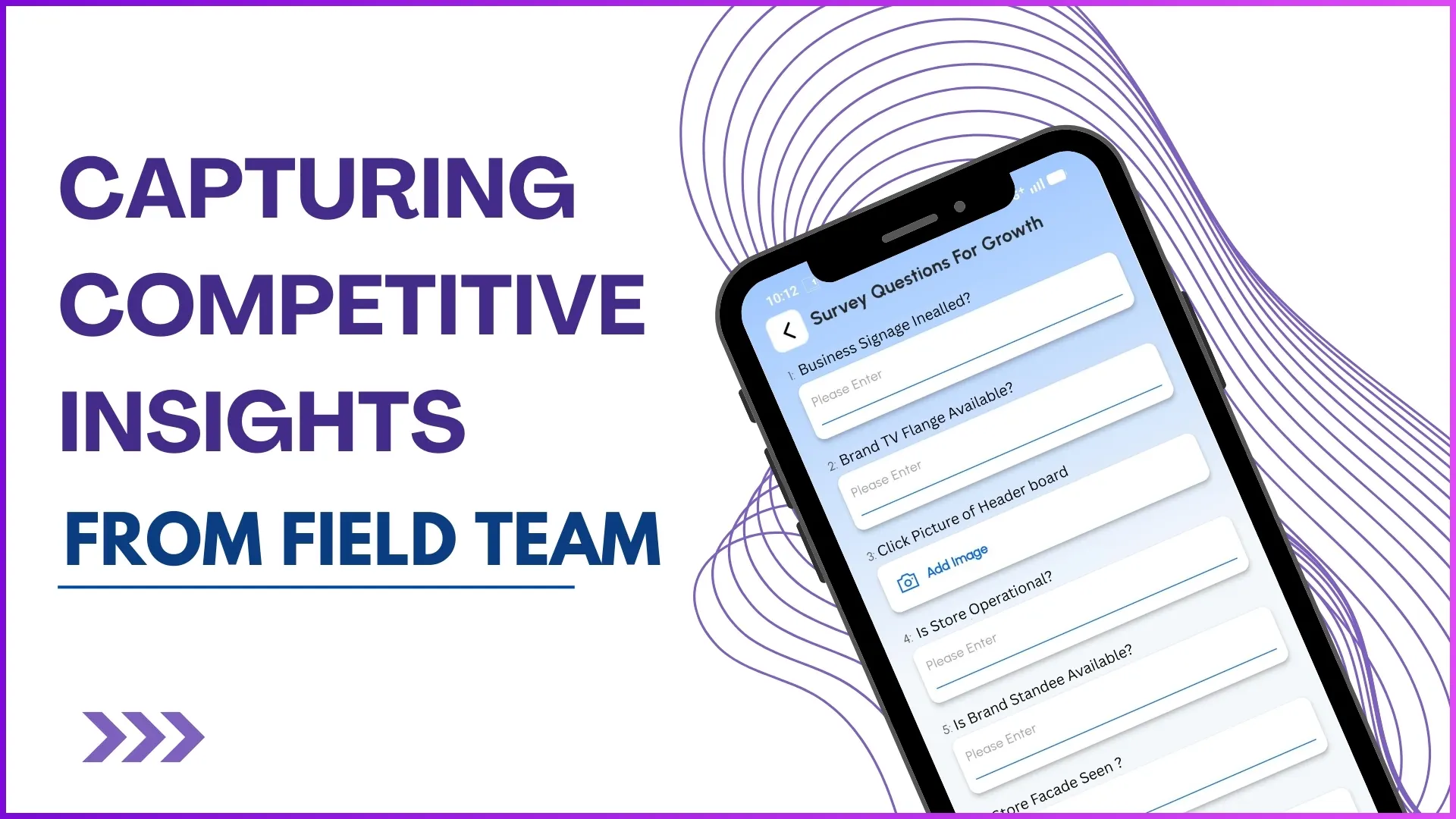
Structured questionnaires fix that. Closed-form fields, drop-downs, scales, and photo-capture slots produce data the analytics engine can roll up at the region or beat level.
The cloud platform lets the brand team configure the questionnaire per visit type. A general-trade beat collects a lighter form than a modern-trade audit, and the rep does not waste time on irrelevant fields.
How 1Channel Routes Competitive Captures Into the Insight Stack
1Channel runs competitive capture through its cloud Sales Force Automation module. Every shelf observation lands as structured data, every photo carries a geo-stamp and a timestamp, and the entries flow into the same analytics tier as orders and visits.
1Channel's AI engine reads the photo and the form together. A competitor logo detected in an image gets cross-referenced against the form field, and the analytics dashboard surfaces the pattern at the region or beat level automatically.
Brand teams can launch a competitor watch as a campaign. Reps see the new fields inside their existing visit flow, and the data lands in the analytics warehouse through an automated pipeline that needs no extra plumbing.
Explore Cloud Field Activity Management
1Channel's cloud field activity platform turns every store visit into structured competitive data, with AI image checks and automated rollups.
Explore Field Activity Management →Outcomes the Brand Team Should Watch For
Programs that wire competitive capture into the field visit see measurable shifts within a quarter:
- Response time to competitor moves drops sharply. The trade and marketing teams see the signal in days, not in weeks.
- Merchandising spend gets targeted. Stores where the competitor is investing become the priority for the brand's own POSM push.
- Regional intelligence sharpens. State-level patterns surface earlier, and the marketing team can adapt campaigns before they go national.
- Distributor conversations get sharper. Reps walk in with current data on what the competition is offering, not last quarter's report.
- Audit credibility improves. Photo-stamped, time-stamped, geo-stamped captures stand up in commercial reviews, and the field team's intelligence carries weight at the brand-strategy table.