Two reps each log nine visits in a day. One walks away with three orders, two POSM placements, and a planogram fix. The other clocked the same nine, but with two cancelled stops and a 70 km loop.
On the raw count, both look productive. On the metrics that actually drive territory output, only one of them is.
The point of visit-productivity tracking is to tell those two days apart. Not to celebrate the total.
Table of Contents
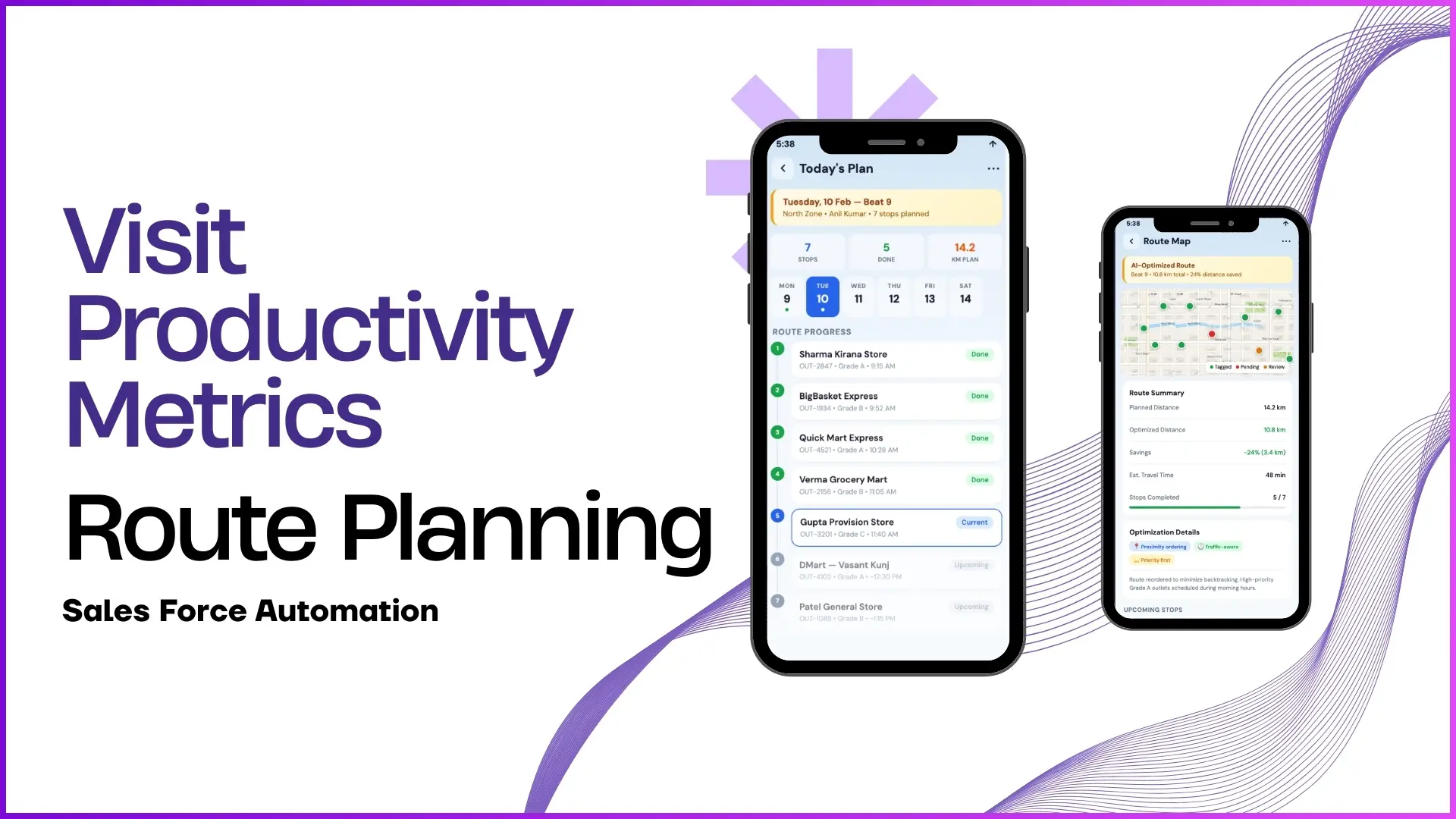
What Productive Really Means for a Field Visit
A productive visit is one where the planned actions for that store actually completed. Order capture, audit, planogram check, POSM placement, competitor scan, and feedback collection, whatever the beat plan called for.
Visit volume on its own is a vanity number. A rep who stops at nine stores but completes the activity at only three has delivered three productive visits, not nine.
The cloud SFA platform captures the activity, the timestamp, and the geo-stamp for each visit, so the question becomes measurable.
Six Visit Metrics Worth Tracking
The metrics below cover the visit cycle end to end. Each measures a different dimension of what the rep did on the ground:
1. Daily Store Visit Count
Visits per rep per day, benchmarked against the beat plan target. The number anchors capacity planning and surfaces under-utilisation early.
2. Beat Plan Compliance
The percentage of planned stops actually visited on the planned day. A 60 percent compliance rate means roughly four out of ten planned stores got skipped.
3. Activity Completion Per Visit
The share of in-store tasks completed: order capture, audit, planogram check, POSM placement, competitor scan. A visit with zero activities is a check-in, not a visit.
4. Sales Per Productive Visit
Order value divided by visits that captured an order. The ratio separates volume from conversion and exposes reps who walk a long beat without closing.
5. Travel-to-Visit Ratio
Kilometres driven divided by productive visits. A high ratio points to a beat plan that needs re-clustering or to off-route detours.
6. Market Plan Adherence
The match rate between assigned visits and actual visits across the cycle. The number tells the supervisor whether the field is following the plan or rewriting it on the fly.
Turning the Metrics Into Operational Decisions
The metrics matter only when the supervisor acts on the pattern they reveal. A low activity-completion rate calls for a coaching conversation, not a quota cut.
A high travel-to-visit ratio usually means the beat needs re-clustering, not that the rep is slow. A drift in market plan adherence often points to a missing store master entry, not to indiscipline.
Reading the metrics together is the skill. Reading them in isolation is the trap.
How 1Channel Surfaces Visit Productivity in Real Time
1Channel runs visit productivity tracking through its cloud Sales Force Automation module. Each visit posts its activity, timestamp, geo-stamp, and order context to the same ledger, so the six metrics are computed on live data.
1Channel's AI engine watches for the patterns that hide in the averages. A rep whose visit count looks healthy but whose activity completion has been sliding for three weeks gets surfaced on the supervisor's dashboard before the slide shows up in territory revenue.
The dashboards segment the view by region, beat, and rep. The underlying calculations are exposed for audit, so the rep and the supervisor are reading the same numbers.
Configuration is automated through the admin console, so adding a new metric does not need an engineering ticket.
Explore Cloud Retail Execution Software
1Channel's cloud retail execution platform turns every store visit into measurable activity, with AI-surfaced patterns and audit-grade tracking.
Explore Retail Execution Software →Key Takeaways
A few points the field team can carry into next quarter's review:
- Count the productive visits, not the visits. A visit without a completed activity is a check-in.
- Pair beat compliance with sales per productive visit. Compliance without conversion just means the rep is on time to lose deals.
- Watch the travel-to-visit ratio for beat-design feedback. A ratio that drifts up over a quarter usually flags a routing problem, not a rep problem.
- Read the metrics as a system. Any single metric in isolation will mislead. Together, they describe how the territory is actually behaving.