Electronics brands run on a different distribution arithmetic than FMCG. Fewer SKUs but higher value per unit, fewer outlets but harder-to-replicate execution, slower turn but stricter pricing discipline.
Every distributor decision in electronics carries more weight. A pricing slip in one channel reads as a price war the brand never authorised. A stock-out at a multi-brand chain reads as the competitor's signal.
Managing this category needs distribution mechanics that match its specifics: tight pricing control, clean stock visibility, strong scheme governance, and real-time shelf signal. Sales force automation assembles those mechanics into one workflow.
Table of Contents
Why Electronics Retail Distribution Is Uniquely Hard
Electronics distribution sits between two pressures. Brand-side pricing discipline, where a single rogue retailer can damage a quarter's positioning. Channel-side execution complexity, where the same SKU might sit in a multi-brand chain, a brand-exclusive store, and an e-commerce satellite.
Manual oversight at this complexity does not scale. The brand needs structured automation that reads every channel, every distributor, and every transaction against the same governance rules.
Five Layers of Distribution Control
Five layers assemble into a working electronics distribution operation. Each layer addresses a specific failure mode:
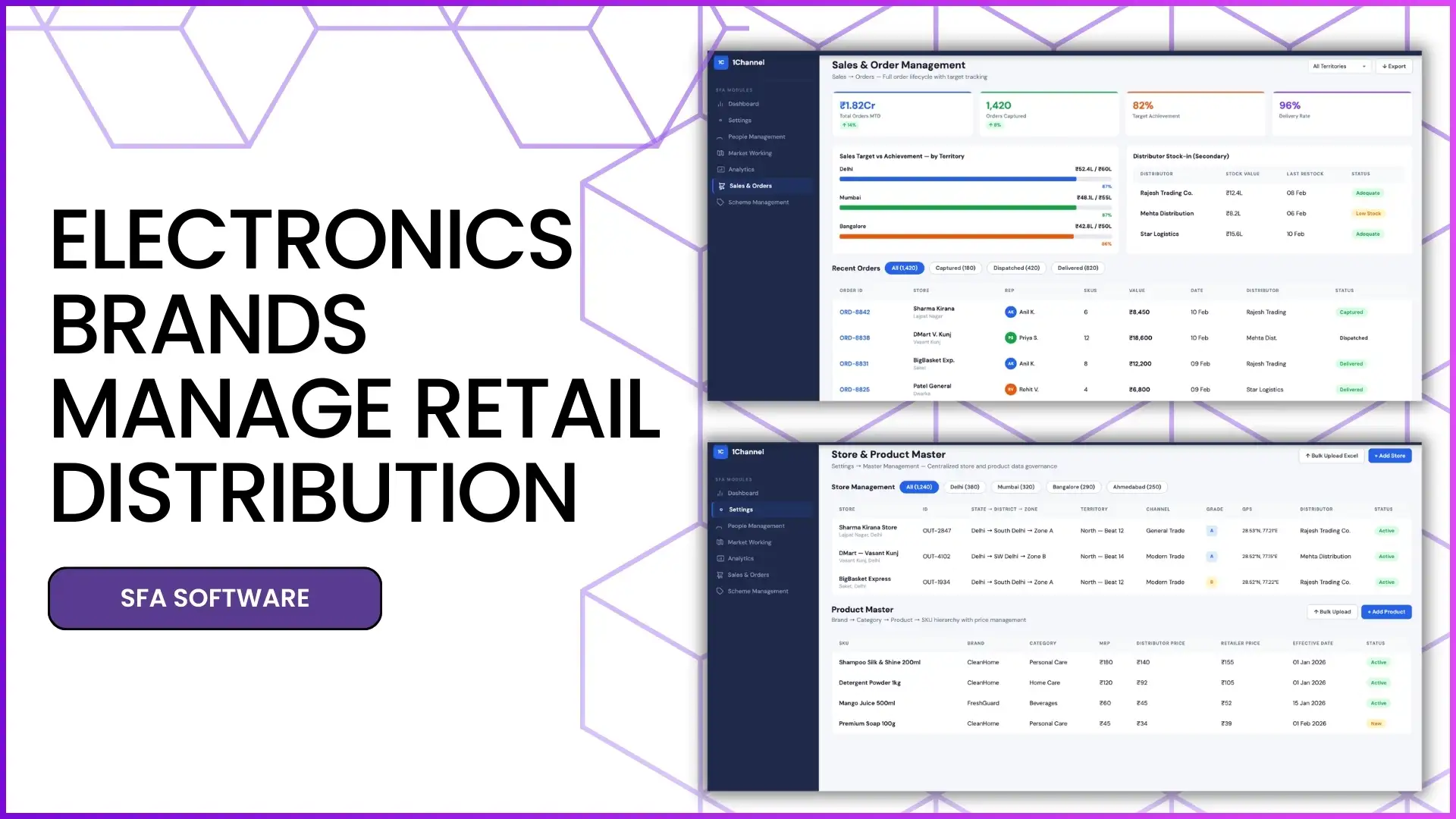
1. Centralised Store Master
Every outlet, multi-brand or exclusive, tagged with its channel format, region, distributor, and stocking authority. The master is the spine the rest of the system reads from.
2. Distributor Mapping and Authorisation
Each distributor's territory, SKU authority, pricing band, and scheme participation defined in the platform. Without this, escalations land on the brand's lap instead of the distributor's.
3. SKU and Pricing Governance
Active SKUs, region-specific MRP, distributor-to-retailer price bands, scheme overrides: all controlled centrally and synced to the field app in real time.
4. Retail Execution Capture
Shelf-share photos, planogram audits, POSM placement, and competitor pricing all captured structurally on the rep's mobile app, then analysed by region and channel format.
5. Real-Time Reporting Across the Network
Sell-in, sell-through, scheme adherence, retailer compliance, and exception alerts all roll up automatically. Leadership reads the same numbers as the regional manager.
How 1Channel Wires Electronics Distribution for Malaysian Brands
1Channel runs electronics distribution management through its cloud SFA, retail execution, and analytics modules. Every store, every distributor, every SKU sits in one connected ledger that drives both field operations and central reporting.
1Channel's AI engine watches the patterns electronics brands care about. Pricing drift across distributors, stock anomalies in a specific channel format, scheme adherence slipping in a region, competitor visibility climbing on the shelf: all surface as alerts before they become quarterly-review surprises.
Configuration runs through the admin console. New SKUs, distributor authorisations, schemes, and pricing rules go live the same day they are approved. The automated dry-run report previews field-level impact before activation.
Explore Cloud Distributor Portal Software
1Channel's cloud distributor portal platform anchors electronics distribution with AI pricing-drift detection and automated scheme governance.
Explore Distributor Portal Software →Outcomes Brands Watch For After SFA Goes Live
Programs that move from manual oversight to SFA-driven distribution see operating metrics shift in predictable ways:
- Pricing discipline tightens across the channel. Rogue pricing in one outlet surfaces in days, not at end-of-quarter. Brand positioning becomes defensible.
- Stock visibility opens up. The brand reads sell-in and sell-through at the SKU level by channel format. Production and replenishment decisions stop running on lagging estimates.
- Scheme adherence improves. Distributors and retailers know that the platform reads every transaction. Scheme leakage drops without confrontation.
- Retail execution gets measurable. Shelf share, planogram compliance, and competitor visibility become structured data instead of anecdote.
- Operations scale without proportional headcount. New regions, distributors, and product lines onboard onto an existing operating model rather than rebuilding workflows each time.