FMCG operations move at a different velocity than most other categories. Thousands of SKUs, hundreds of distributors, tens of thousands of outlets, all touched every cycle.
Volume that high without structured automation is volume the brand cannot see. Reps file what they remember, distributors send what they choose, and the central team reads on lagging data.
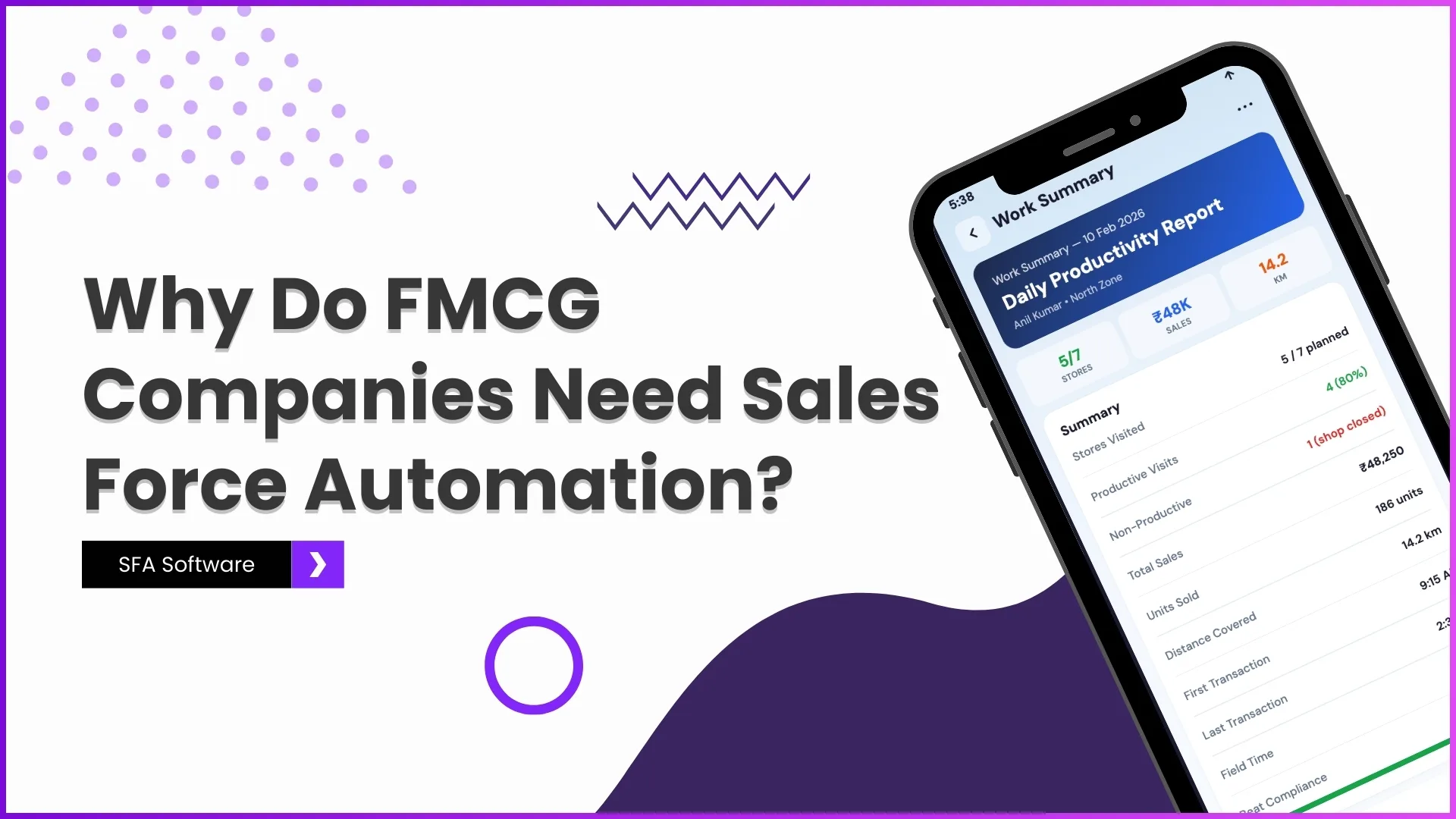
Sales force automation is what turns that velocity into visible data. Every visit, every order, every sale flows into one source of truth, and the brand starts running on signal instead of summary.
Table of Contents
Why FMCG Operations Are the Hardest Place to Run Without SFA
FMCG is a high-frequency, low-margin business. A 2 percent miss on coverage or a 3 percent slip on visit quality compounds into a quarterly revenue gap too big to ignore.
Manual workflows that work for slower categories collapse at FMCG scale. The brand cannot inspect what it cannot measure, and at this transaction volume, manual measurement is impossible.
Five Pressure Points Where SFA Pays Off in FMCG
Five operational areas absorb the most pressure from FMCG's scale. Each is where SFA earns its keep first:
1. Attendance and Field Discipline
SFA puts geo-stamped, photo-verified attendance into the loop, so the manager reads who showed up, where, when, and against which beat. Without it, attendance is faith.
2. Beat and Visit Compliance
Structured visit capture against a beat plan tells the team whether the rep covered the planned outlets or improvised the day. Compliance is the leading indicator of next quarter's coverage.
3. Retail Execution at the Shelf
Photo audit, planogram check, POSM placement, and competitive signal flow back to headquarters in structured form. Brand teams react to shelf reality, not to last month's report.
4. Order Capture and Secondary Sales
Orders booked through the mobile app post directly to the DMS, eliminating rekeying and reconciliation. Secondary sales become measurable rather than estimated.
5. Centralised Reporting Across the Network
Distributor performance, regional coverage, scheme adherence, and category mix roll up automatically. Leadership reads the same numbers the regional manager reads, no separate spreadsheets.
Where Manual Workflows Stop Scaling for FMCG
Manual systems work until they don't. The break point usually comes at scale: when the reporting cadence cannot keep up with the cycle, when the spreadsheet count exceeds analyst review capacity, when the audit takes longer than the period it covers.
FMCG hits those break points earlier than most categories. The structured automation that SFA delivers is what lets the operation scale past the manual ceiling without losing visibility.
What Changes the Day After SFA Goes Live
The first signal is data latency. Daily numbers stop being a Monday-morning roll-up of last week and start being a live picture of yesterday. The review meeting becomes faster and more decisive.
The second signal is exception visibility. Reps slipping on coverage, outlets dropping off the beat plan, distributors stocking below cycle: all surface as alerts instead of post-mortem findings.
How 1Channel Runs SFA for Malaysian FMCG Operations
1Channel runs FMCG sales force automation through its cloud SFA, retail execution, and analytics modules. Every event captured in the field flows into a single ledger that drives both operations and analytics.
1Channel's AI engine watches the patterns FMCG teams care about. Falling visit-quality scores at a regional level, distributor stock anomalies, scheme adherence drift, and competitor signal: all surface in real time, not at quarterly review.
Configuration runs through the admin console. New beat plans, new SKUs, new scheme rules go live the same day they are approved. The automated dry-run report lets the operator preview the impact across the field before activation.
Explore Cloud Sales Force Automation
1Channel's cloud SFA platform absorbs FMCG-scale field events with AI pattern detection and automated reporting rollups.
Explore Sales Force Automation →Key Takeaways for FMCG Leadership
Three points to carry into the next budget or operations review:
- At FMCG scale, automation is not optional. Manual workflows hit their break point earlier than leaders expect, and the cost of staying manual compounds quietly until recovery becomes impossible.
- The five pressure points are where SFA pays back fastest. Attendance, beat compliance, retail execution, order capture, and reporting are the areas where return on investment shows up within the first two cycles.
- The platform matters more than the implementation timeline. A cloud-native SFA with AI pattern detection, automated dry-runs, and a clean audit log is what separates a program that scales from one that needs replatforming in 18 months.