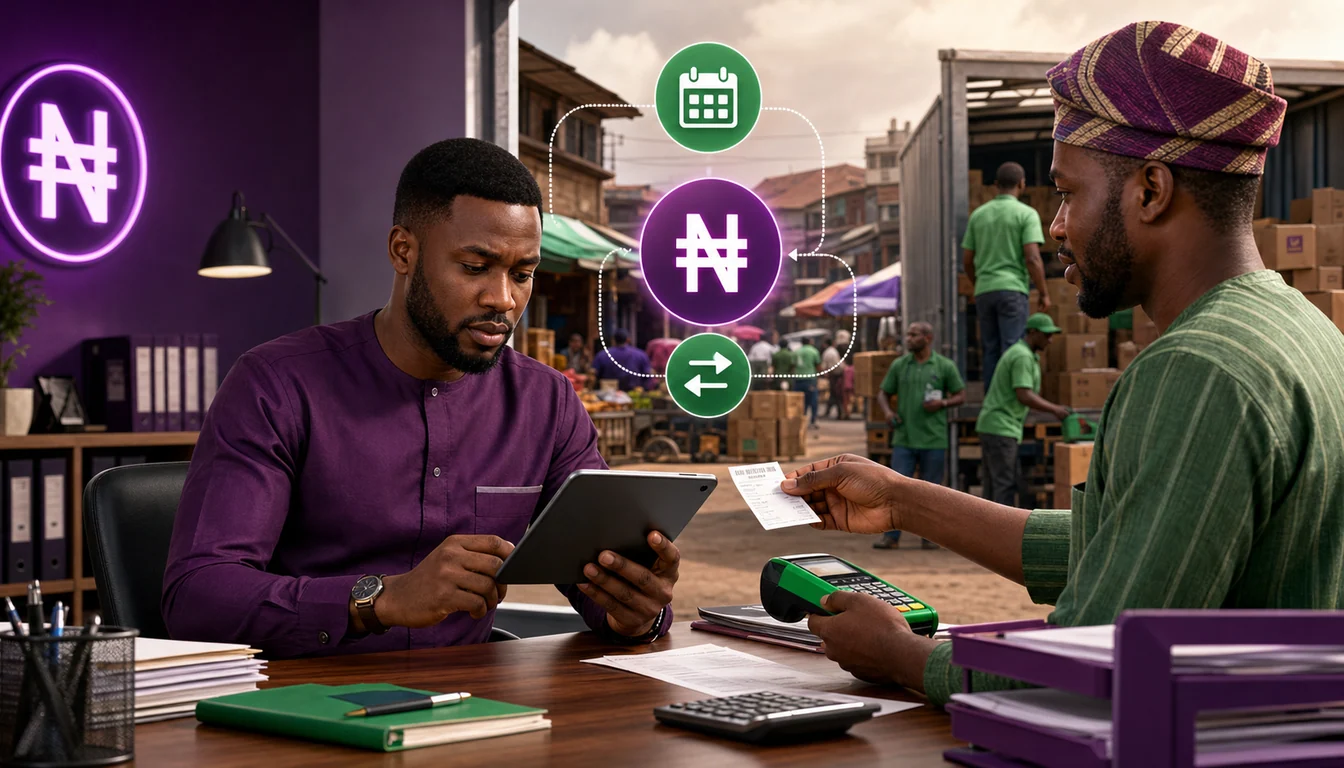
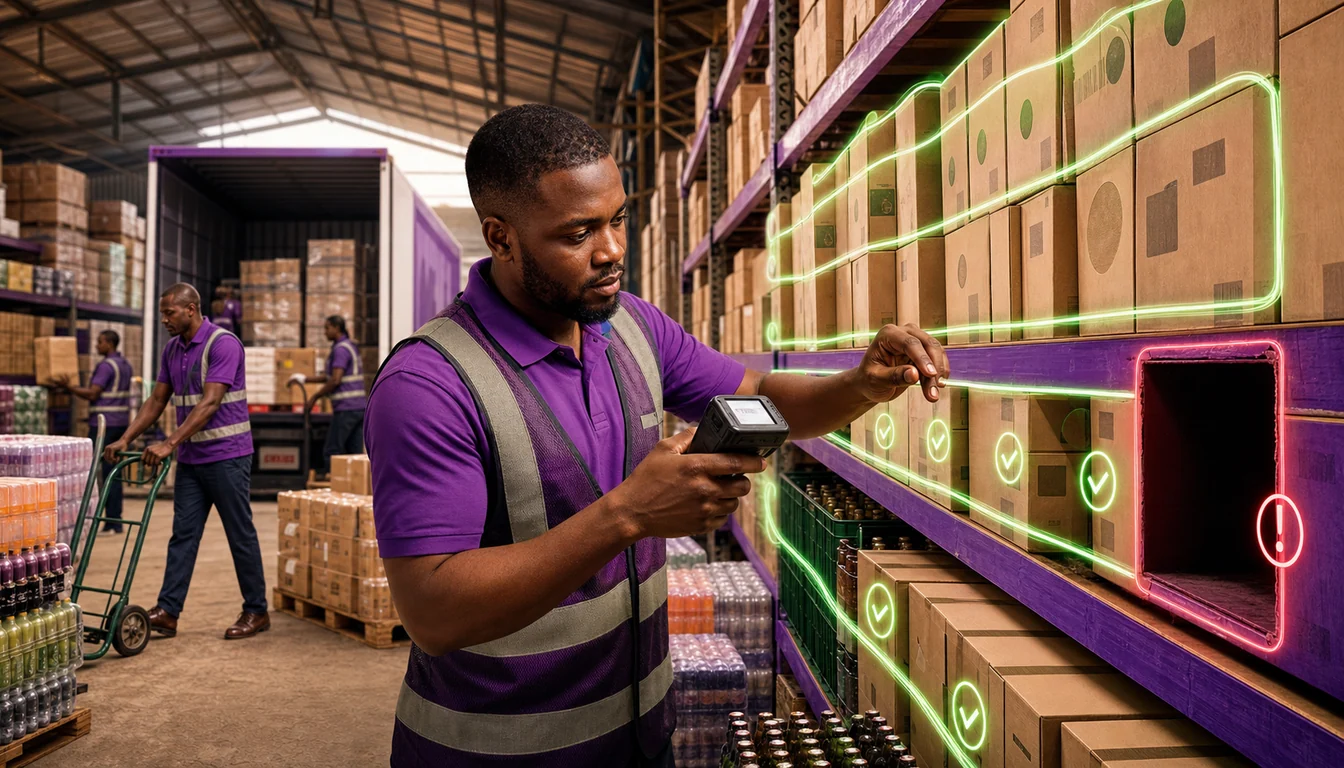
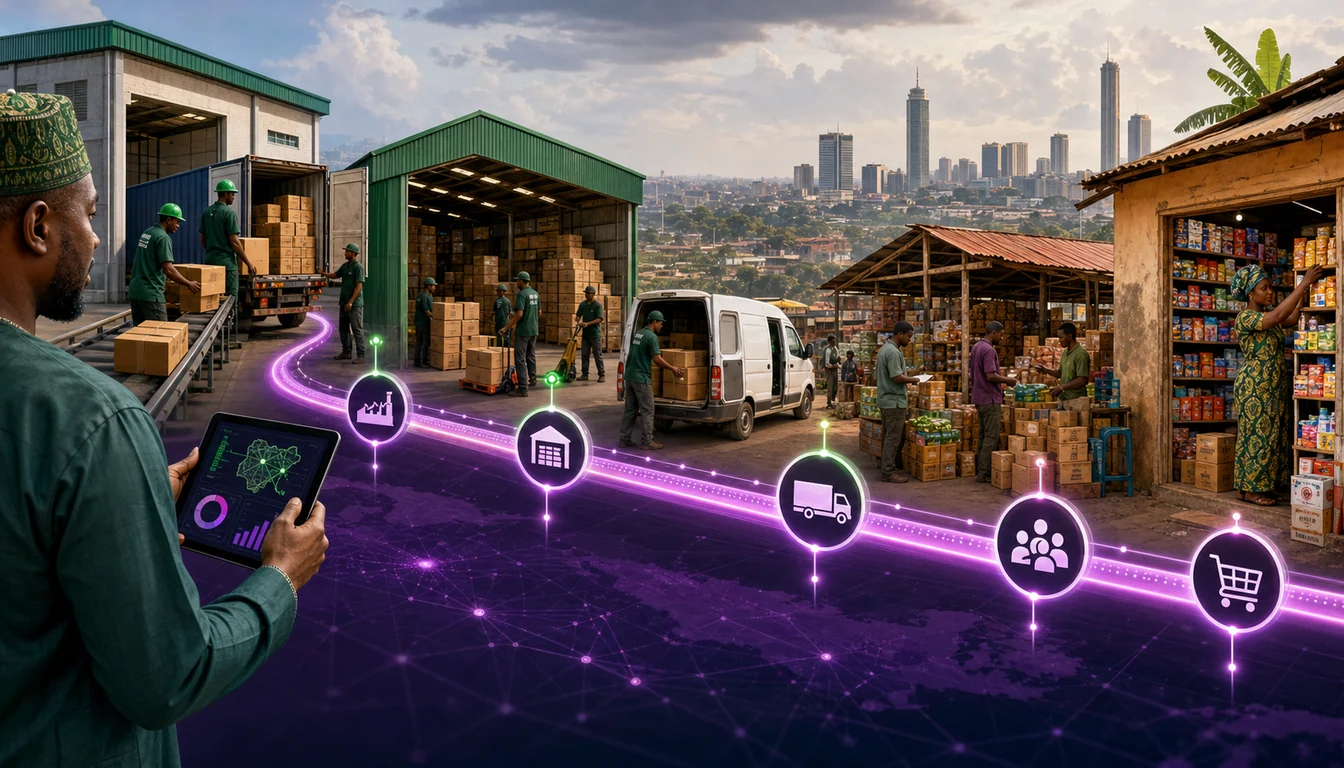
A Lagos-based startup called City Distro says it is digitising one of Nigerian FMCG's oldest problems.
Getting goods from a factory gate to a corner shop, without three or four hands in between.
The gap it is trying to close matters most to businesses moving goods through many small outlets: FMCG, cosmetics and personal care, consumer durables, and building materials.
This post covers what City Distro is actually building, and why one delivery startup cannot solve a manufacturer's whole distribution problem.
It also covers what a distribution system still has to capture, regardless of who runs the trucks.
What City Distro Is Building
City Distro runs micro-hubs across seven Nigerian cities, moving beverages, household products and food staples from manufacturers straight into retailers.
In two years it says it has reached over 1,000 stores, including modern-trade names like Prince Ebeano Supermarket and Market Square.
It has also moved more than 5 million units of goods worth over $3 million, by its own figures.
Orders are typically fulfilled within 24 to 48 hours through the hub network.
The company also plans to add inventory-backed credit for retailers, sized against their own sales performance.
Why It Matters Beyond One Startup
Nigeria's FMCG distribution is widely described as fragmented and heavily informal.
A micro-hub model is attractive for exactly that reason. It shortens a chain that otherwise loses visibility across layers of sub-distributors.
But a delivery network solves routing and speed.
It does not give a manufacturer inventory visibility across every distributor already selling its brand.
Most of those distributors are not on any single startup's hub network.
| Layer | What a hub network reports | What the manufacturer's own system still needs |
|---|---|---|
| Hub-to-retailer delivery | Order fulfilled, on time or late | Which SKU, which retailer, which route |
| Retailer credit (hub-issued) | A credit line sized to hub sales history | How that credit interacts with the distributor's own terms |
| Sub-distributors outside the hub | Nothing | Stock and collections at every tier the hub never touches |
| Returns and damaged stock | Not tracked by the hub | Batch, reason, and where liability sits |
Inventory-backed credit from a delivery platform is also a different ledger from the credit a distributor extends further down the chain.
Something still has to reconcile both.
How 1Channel Keeps Replenishment and Credit in Sync
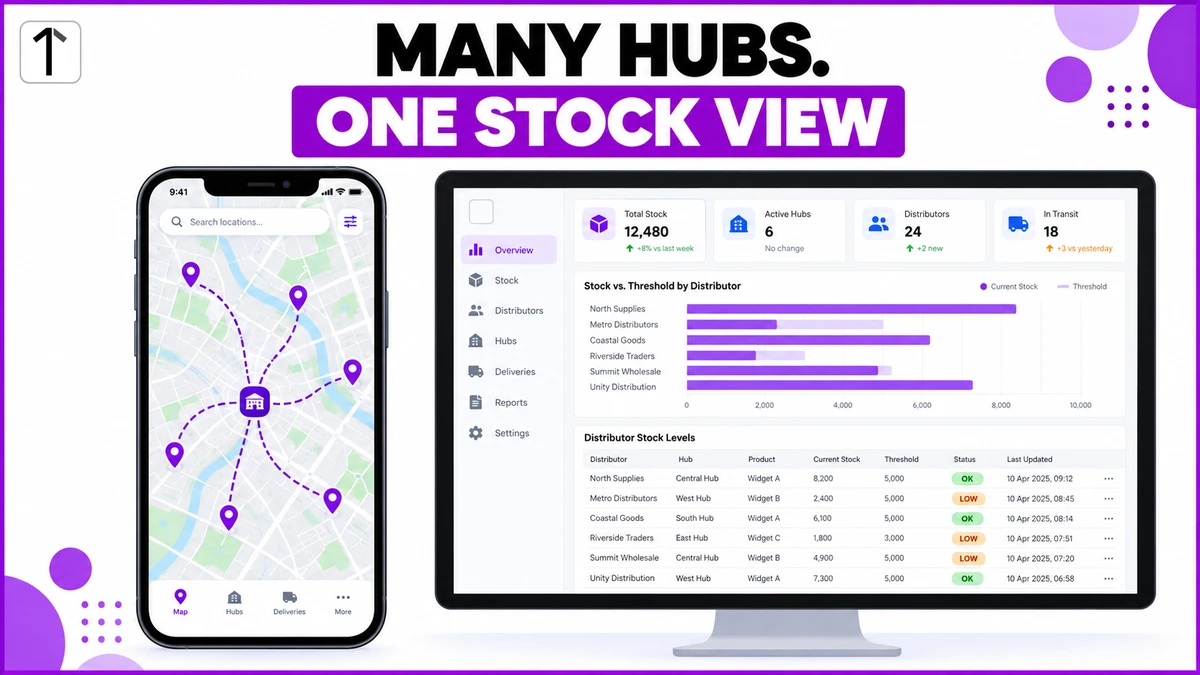
1Channel's AI-driven workflow automation already watches stock thresholds across every distributor and sub-distributor a brand sells through, not just the ones inside someone else's hub network.
Its Smart Replenishment and Analytics keeps threshold monitoring and credit exposure on the same system.
A retailer's payment history feeds the next credit decision instead of sitting in a separate ledger elsewhere.
Give Every Distributor the Same Stock and Credit View
See how the platform's inventory, analytics and credit tools work together so replenishment and collections stay on one page, hub network or not.
Explore Distributor Analytics & Reporting →Decision Checklist for Distribution Leaders
A consolidating distribution market is good news for retailers waiting on deliveries.
- How many hands touch a case of stock between your warehouse and the shelf, and can you name them?
- Can you see stock levels at every distributor and sub-distributor, or only the first tier closest to you?
- Is retailer credit tracked against actual payment history, or against whoever asked for it last?
- If a delivery partner or micro-hub network disappeared tomorrow, would your own system still show accurate stock?
- Are replenishment cues automatic, or does someone have to notice a stock-out first?
- Does a returns or damaged-stock claim carry a batch number and a reason, or just a total?
For manufacturers, a consolidating delivery market is only useful if their own system can already answer those questions, hub network or not.
Source: TechMoran