Why Peak Season Exposes Warehouse Gaps in the UAE
A warehouse that runs smoothly for most of the year can look very different once Ramadan begins or the Dubai Shopping Festival opens. Order volumes climb, replenishment cycles shorten, and the gap between what a stock report says and what is actually sitting on a rack becomes far harder to ignore. In a market where modern trade chains carry the bulk of FMCG volume and set firm expectations at goods-in, that gap turns into a lost listing or an empty hypermarket shelf well before anyone in the warehouse notices a problem.
The UAE's demand pattern makes this sharper than in many markets. A large, diverse population, most of it expatriate, combines with genuinely high tourist footfall to push retail and HORECA demand well beyond what a resident count alone would suggest. Ramadan and the Dubai Shopping Festival period each bring a sharp, short-window rise in demand for fast-moving lines, and neither spike gives a warehouse much time to catch up once it falls behind. Getting ahead of that pressure starts with treating stock-outs and leakage as two sides of the same operational problem, not two separate headaches.
Stock-Outs and Leakage Share the Same Root Cause
A stock-out is what a shopper or a hypermarket buyer sees: an empty shelf slot, a delivery short of what was ordered, a SKU marked unavailable at the worst possible moment. Leakage is quieter. It is stock that exists on paper but cannot be found, sold or accounted for: a pallet miscounted during a manual stock take, a case damaged in transit and never written off, a return that sat in a corner instead of being logged back into available stock. Both look like different problems from the warehouse floor, but they trace back to the same cause, an inventory record that has drifted away from what is physically on the rack.
That drift rarely announces itself. A distributor does not usually discover a stock-out because a system flagged low inventory in time to act. More often, a van sales representative arrives at a baqala or a hypermarket distribution centre with less stock than the order called for, and only then does anyone go looking for where the shortfall came from. By the time that happens, the underlying leakage, whatever caused it, has usually been sitting unresolved for days or weeks.
Where Leakage Actually Creeps Into a UAE Warehouse
Leakage rarely comes from one dramatic event. It builds up from small gaps in process, repeated often enough across a high-throughput warehouse that the total becomes significant.
Goods-In and GRN Accuracy
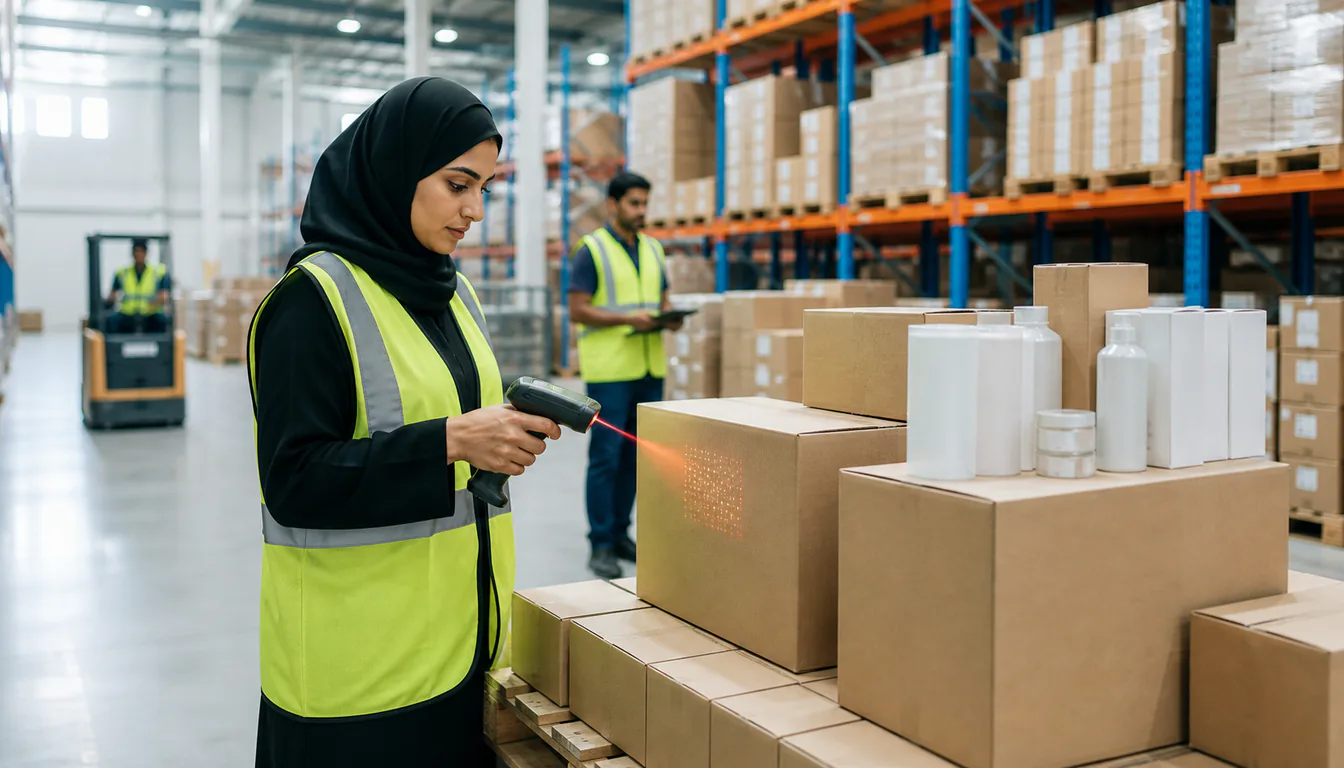
The first point where a stock record can go wrong is the moment goods arrive. A delivery that is counted quickly against a supplier invoice, rather than checked carton by carton, can be logged as received in full when a case was actually missing or damaged. A goods received note completed on paper, then re-keyed into a spreadsheet later in the day, adds another point where a number can be transcribed incorrectly or simply forgotten. A GRN process that captures quantities, batch details and any discrepancy at the moment of receipt, rather than reconstructing them from memory afterwards, closes off one of the most common sources of leakage before it ever reaches the rack.
Picking, Damage and Unreconciled Returns
Further along, a picker working from a paper list can select the wrong SKU or the wrong batch under time pressure, particularly during a peak-season rush when order volumes are highest and staffing is stretched thinnest. Damaged stock, a crushed carton, a leaking container, a case that failed a hypermarket's goods-in check and was sent back, needs to be written off promptly or it sits in the system as available stock that nobody can actually sell. Returns are a similar trap: a case that comes back from a modern trade distribution centre or a baqala delivery needs to be logged back into inventory, not left in a holding area until someone gets around to it. Each of these gaps is small on its own. Across a warehouse handling hundreds of SKUs during a demand spike, they add up quickly.
Jebel Ali and Khalifa Port Add a Layer Most Markets Don't Have
Jebel Ali Port and its surrounding free zone, JAFZA, form the region's largest port and free zone complex, and Khalifa Port in Abu Dhabi is the other major container gateway. Together they give the UAE a genuine role as a regional re-export and distribution hub, with many UAE-based distributors serving the wider Gulf Cooperation Council and MENA region from a UAE base rather than the domestic market alone.
That role adds a layer of complexity a purely domestic distributor does not have to manage. Stock arriving at a warehouse near Jebel Ali may be broken down and split across several outbound consignments rather than sold as a single domestic order, each potentially bound for a different market. A miscount or a misplaced pallet in that setting does not only create a domestic stock-out; it can leave a re-export consignment short as well, with the added friction of tracing the shortfall through a warehouse that never intended to hold that stock for long in the first place. A warehouse management system that tracks stock by location and consignment, not only by SKU, is what keeps that kind of split traceable when volume is high and turnaround is fast.
Modern Trade Sets the Bar, Baqala Still Needs Fast Top-Ups
The UAE is one of the region's most modern-trade-dominant markets. Hypermarket and supermarket chains such as Carrefour, Lulu Hypermarket and Spinneys, alongside cooperative groups like the MAIR Group's Abu Dhabi Coop and Al Ain Coop banners, carry the bulk of packaged FMCG volume, and their goods-in teams tend to enforce firm delivery and fill-rate expectations. A short delivery or a late replenishment during a peak window risks more than a single lost sale; repeated shortfalls can put a listing at risk.
The baqala, the small independent neighbourhood grocery familiar across the emirates, and the mini-market format sitting just above it, remain a real but clearly secondary coverage layer. These outlets order in smaller volumes and expect faster, more informal replenishment, often from a van sales representative working a fixed round rather than a scheduled distribution centre delivery. A stock-out at a baqala is less likely to threaten a listing, but it is an immediate lost sale to a shopper who will simply buy the substitute product sitting next to the gap. Covering both channels well during a demand spike means a warehouse that can service a strict, high-volume modern trade order and a smaller, faster-moving baqala top-up from the same accurate stock picture.
Ramadan and the Dubai Shopping Festival Compress the Margin for Error
Ramadan brings a sharp, predictable rise in demand for particular categories, food and beverage lines especially, concentrated into a short window each year. The Dubai Shopping Festival period, running from mid-December into late January, brings a different kind of spike: a mix of resident and tourist spending across a broader range of categories, driven by retail promotions and a globally connected visitor economy. Both periods share a common warehouse challenge, a much shorter runway to notice a problem and fix it before it turns into an empty shelf.
Reorder points and safety stock levels set for an average month rarely hold up once either period arrives. A distributor that reviews and lifts its buffer stock and reorder thresholds ahead of the season, rather than reacting once shelves start emptying, is working from a plan rather than a scramble. Cycle counting, checking a rolling sample of high-velocity SKUs frequently rather than waiting for a full stock take, matters more here than at any other point in the year, because a count that is even a few days stale during a demand spike can be badly wrong by the time anyone looks at it again.
Real-Time Visibility Across Warehouses Closes the Gap
Many distributors operating across the UAE run more than one warehouse, commonly a base near Dubai's logistics corridor and a second facility serving Abu Dhabi or the northern emirates. Keeping stock records accurate at each site individually is only half the task; a distributor also needs to know, in real time, whether a shortfall at one warehouse can be covered from another before it becomes a customer-facing stock-out. Reconciling that picture manually, by phone or by comparing spreadsheets at the end of the day, is slow exactly when speed matters most.
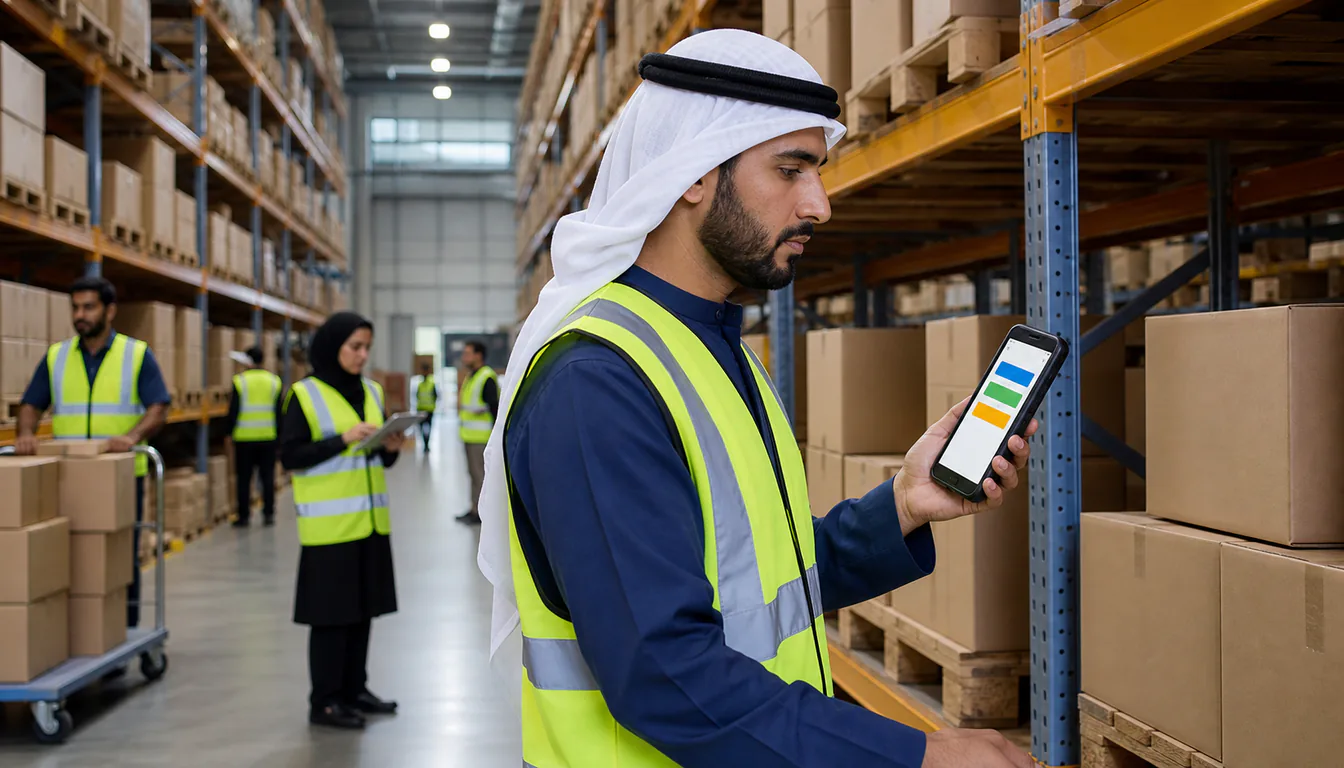
An inventory management system that gives a single, current view across every warehouse, rather than a set of separate local records updated at different times, turns that reconciliation from an end-of-day exercise into something a warehouse manager or a distribution planner can check at any point during a peak-season day. That visibility does not eliminate leakage on its own, but it makes it visible fast enough to act on, rather than discovering it weeks later during a routine stock take.
How 1Channel Helps UAE Distributors Cut Stock-Outs and Leakage
1Channel's platform gives warehouse and field teams a shared, real-time view of stock across every location, from goods receipt through put-away, picking and dispatch. A digital GRN process captures quantities and any discrepancy at the point stock arrives, rather than reconstructing them from paper later, and every subsequent movement, a pick, a damage write-off, a return, updates the same stock record instead of a separate spreadsheet.
For distributors running more than one warehouse across the emirates, or handling stock that moves through Jebel Ali or Khalifa Port before being split across domestic and re-export consignments, that shared record makes a shortfall visible at the location and consignment level, not just as a vague dip in a total stock count. Reorder points and safety stock thresholds can be adjusted ahead of Ramadan or the Dubai Shopping Festival rather than after the first empty shelf, giving distributors a system built to hold up under peak-season pressure rather than one that only works when demand is steady.
Key Takeaways
- Stock-outs and leakage share the same root cause: an inventory record that has drifted away from what is physically on the rack, usually discovered only once a delivery falls short.
- Most leakage builds up from small gaps, an inaccurate GRN, a mis-pick, unwritten-off damage, an unreconciled return, rather than one dramatic event.
- Jebel Ali and Khalifa Port's re-export role means UAE warehouse stock often splits across multiple outbound consignments, adding a layer of tracing complexity most domestic-only markets do not face.
- Modern trade's fill-rate expectations and the baqala tier's need for fast, informal top-ups both need to be served from the same accurate stock picture.
- Ramadan and the Dubai Shopping Festival compress the time available to notice and fix a stock problem, making reviewed reorder points and frequent cycle counts especially valuable ahead of each period.
- Real-time visibility across multiple warehouses turns leakage from something discovered weeks later into something a distribution planner can act on the same day.