A Field Force That Reflects the UAE Itself
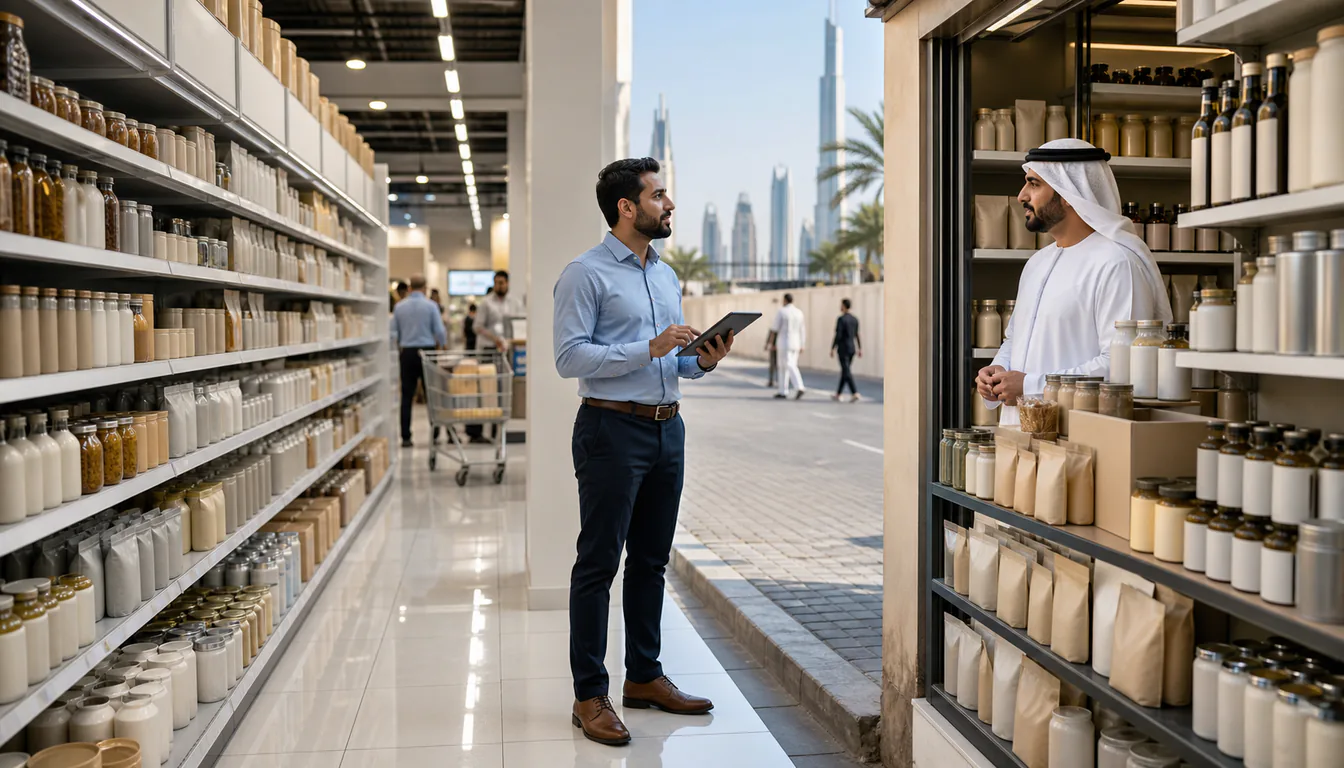
The UAE's population is overwhelmingly expatriate, drawn from Indian, Pakistani, Bangladeshi, Filipino and other South and Southeast Asian and Arab communities, with Indian nationals forming by far the largest single group. That mix is not an abstract demographic fact for a distributor or FMCG brand, it is the field team itself. A Field Sales Representative calling on a baqala in Deira might report to a supervisor from a different background again, and hand paperwork to a Van Sales Executive who is more comfortable in a third language than either of them.
For anyone building or buying field sales software here, that diversity is the starting condition, not a detail to work around later. A tool built for one working language, with instructions and error messages that assume everyone reads them the same way, will always run smoothly for part of the team and awkwardly for the rest. The practical fix is not a longer manual. It is software simple and consistent enough that language rarely stands between a rep and a completed visit.
Two Channels, One Territory: Modern Trade and the Baqala Layer
The UAE is one of the region's most modern-trade-dominant markets. Hypermarkets and supermarkets, from Carrefour and Lulu Hypermarket to Spinneys, Choithrams, Union Coop and newer entrants such as Nesto and Viva, carry the bulk of FMCG volume, and a field rep's week is built largely around servicing and auditing that estate. The baqala and mini-market layer is real too though, smaller, independently run neighbourhood stores that still need their own call frequency, pricing approach and promotion handling, even with a smaller share of overall volume.
Modern Trade Sets the Pace
Chain accounts expect a consistent visit cadence, accurate stock and pricing capture, and clean proof of execution for every promotion or new listing. A rep working a hypermarket account cannot afford to arrive without the previous visit's history, the current planogram and a clear view of what is owed or outstanding.
The Baqala Layer Still Needs Its Own Playbook
Independent baqalas and mini-markets run on different economics: smaller basket sizes, lighter but more frequent restocking, and pricing a rep often negotiates on the spot rather than reads off a fixed list. Treat this tier as an afterthought bolted onto a modern-trade-first system, and it tends to show up later as missed calls and inconsistent pricing. A route planning system that can sequence both channel types on the same beat, without forcing one workflow to fit both, keeps coverage honest across the whole territory.
Finding the Right Door: Makani and Onwani
Precise field visit verification depends on knowing exactly where a rep actually stood, not just which street they were on. Dubai addresses this with Makani, a geocoded addressing system run by Dubai Municipality that assigns individual buildings a unique number tied to their exact location, widely used across the emirate for navigation, deliveries and emergency response. Abu Dhabi runs a comparable system of its own, Onwani, mapping streets and buildings to precise addresses rather than relying on the informal, landmark-based directions that once made newer areas harder to find.
For field sales operations, that infrastructure is a genuine advantage most markets simply do not have. A field activity management tool that captures a Makani or Onwani reference alongside a GPS-stamped visit gives a supervisor two independent ways to confirm a rep actually reached the outlet, rather than checked in from nearby. It also speeds up onboarding a new rep into an unfamiliar area, since the address itself, not a description of "the shop near the roundabout", is enough to find the door.
Designing Field Software Reps Actually Use
Coverage across a diverse, dual-channel territory only works if the software itself gets out of the way. That means an interface built around a handful of clear actions, visit, capture, order, confirm, rather than dense menus that assume every user reads the same language fluently and has used similar software before.
One App, Several Languages
A field app that lets each rep choose their own working language for the visit checklist, order screen and error messages removes a source of daily friction a single-language rollout never quite solves. It also shortens onboarding, since a new Merchandiser or Van Sales Representative can start working productively in the language they are most confident in from day one, rather than translating instructions in their head on every call.
Simple, Reliable, and Resilient When It Needs to Be
The UAE's mobile networks are among the fastest and most consistently available anywhere, so field software here is not designed around gaps in coverage the way it might be in a market with patchier infrastructure. That said, a brief lapse in signal, inside a basement stockroom or an underground car park, should never cost a rep a completed visit. Software that queues a capture locally and syncs it the moment connectivity returns is simply good practice, not a headline feature.
Coverage Across Seven Emirates
Territory planning in the UAE has to account for very different operating environments inside one country. Abu Dhabi, the largest emirate by land area, and Dubai, the busiest by retail and logistics volume, sit alongside Sharjah's genuinely diversified economy and the smaller markets of Ajman, Umm Al Quwain, Ras Al Khaimah and Fujairah, the only emirate with its own coastline on the Gulf of Oman. A single beat plan rarely fits all seven well.
A sales force automation platform that lets a distributor draw territories around actual outlet density and travel time, rather than emirate borders alone, tends to produce more realistic call plans. It also needs to work around the UAE's own working week, Monday to Friday with a shortened Friday, weekend Saturday and Sunday, so route plans and reporting cycles line up with when outlets and offices are actually open, rather than assuming a schedule borrowed from elsewhere in the region.
Seasonal Surges: Ramadan and the Dubai Shopping Festival
Demand in the UAE moves sharply around a small number of predictable windows. Ramadan brings a genuine shift in shopping patterns across the Gulf, and the Dubai Shopping Festival, running from mid-December into late January, is one of the region's largest retail and tourism events in its own right, drawing both resident and visitor spending into a short, intense period. UAE National Day and the year-end period add a further seasonal lift on top.
None of this is a surprise to a distributor who has planned for it, but it puts real pressure on route capacity, stock buffers and promotion execution in a short window. Field software that lets a business temporarily increase visit frequency, push scheme details to every rep at once and pull compliance data back quickly turns a predictable spike into something manageable rather than a scramble.
How 1Channel Helps UAE Field Sales Teams
1Channel brings route planning, visit capture, order taking and reporting into one field sales platform built for a genuinely diverse, dual-channel market like the UAE. Reps work the app in the language they are most comfortable with, while supervisors and head office keep one consistent view of coverage across hypermarkets, supermarkets, mini-markets and baqalas alike.
Visit verification draws on GPS alongside local addressing detail, including Makani and Onwani references where available, so a completed call is easy to confirm without extra back-and-forth. On this topic, the platform helps distributors and brands:
- Plan and sequence beats that mix modern trade and baqala coverage on the same route.
- Let each rep work the visit checklist, order screen and prompts in their own language.
- Verify field visits using GPS and local address references for precise, defensible proof of call.
- Scale visit frequency and push scheme updates quickly during Ramadan and Dubai Shopping Festival peaks.
- Give supervisors one current view of coverage across all seven emirates.
Give Every Rep a Simple, Reliable Field Sales Tool
See how 1Channel's sales force automation platform covers modern trade and baqalas on the same route, in the languages your team already works in.
Explore Sales Force Automation →Key Takeaways
Field sales software for the UAE has to work for a genuinely diverse team across a genuinely two-tier retail landscape. Keep these points in view:
- Design for a multilingual team from the start. The UAE's field force is drawn from many nationalities, and software built around one language will only ever serve part of it well.
- Cover both channels properly. Modern trade sets the pace, but the baqala and mini-market layer needs its own call cadence and pricing approach, not a bolt-on workflow.
- Use Makani and Onwani for precise visit verification. Geocoded addressing gives supervisors a reliable second check that a visit actually happened where it says it did.
- Plan around the UAE's own working week and seven emirates. Monday to Friday, weekend Saturday and Sunday, and very different terrain from Fujairah's coast to Abu Dhabi's interior.
- Prepare for Ramadan and the Dubai Shopping Festival. Short, sharp seasonal windows reward businesses that can flex visit frequency and push updates fast.
- Keep reliability simple, not a headline. The UAE's infrastructure is fast and consistent, so software should handle the rare gap quietly rather than build a whole story around it.
Get the coverage model, the language support and the local detail right, and field sales execution in the UAE stops depending on any one rep's memory of the territory, and starts running on a system the whole team can actually use.