A B2B loyalty program involves multiple participants, transactions, approvals, rewards, campaigns, and business rules.
This is particularly relevant for industries such as building materials & hardware, automotive & auto components, and agriculture & agro chemicals, where businesses manage large networks of dealers, distributors, influencers, or other channel participants.
Managing this information manually or across disconnected systems often leads to duplicate records, delayed support, inconsistent participant data, and limited operational visibility.
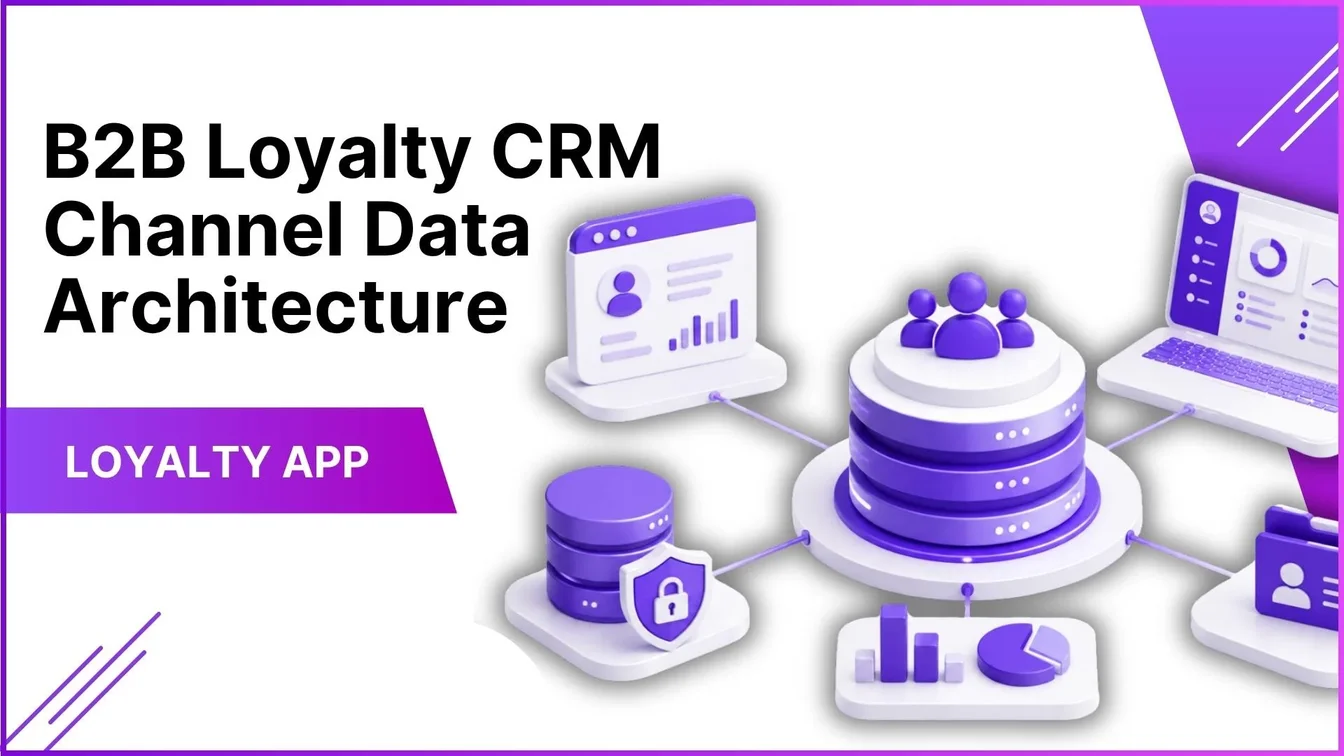
A well-structured B2B loyalty CRM channel data architecture provides a centralized framework where participant information, loyalty activities, business relationships, and operational records are connected throughout the entire program lifecycle.
Instead of treating CRM as only a contact database, it becomes the operational layer that supports enrolment, verification, participant management, loyalty tracking, and ongoing engagement.
Why Channel Data Architecture Matters in B2B Loyalty
In channel loyalty programs, every participant continuously generates information, from registration and KYC verification to transactions and reward redemption.
Organizing this data within a structured CRM architecture enables administrators to quickly locate participants, manage records, and monitor loyalty activities from a single interface.
For example, when a retailer contacts support regarding missing loyalty points, the CRM team can search using the participant's mobile number, membership ID, retailer code, or region to access the complete profile and review loyalty activity without switching between multiple systems.
Centralized Participant Profiles
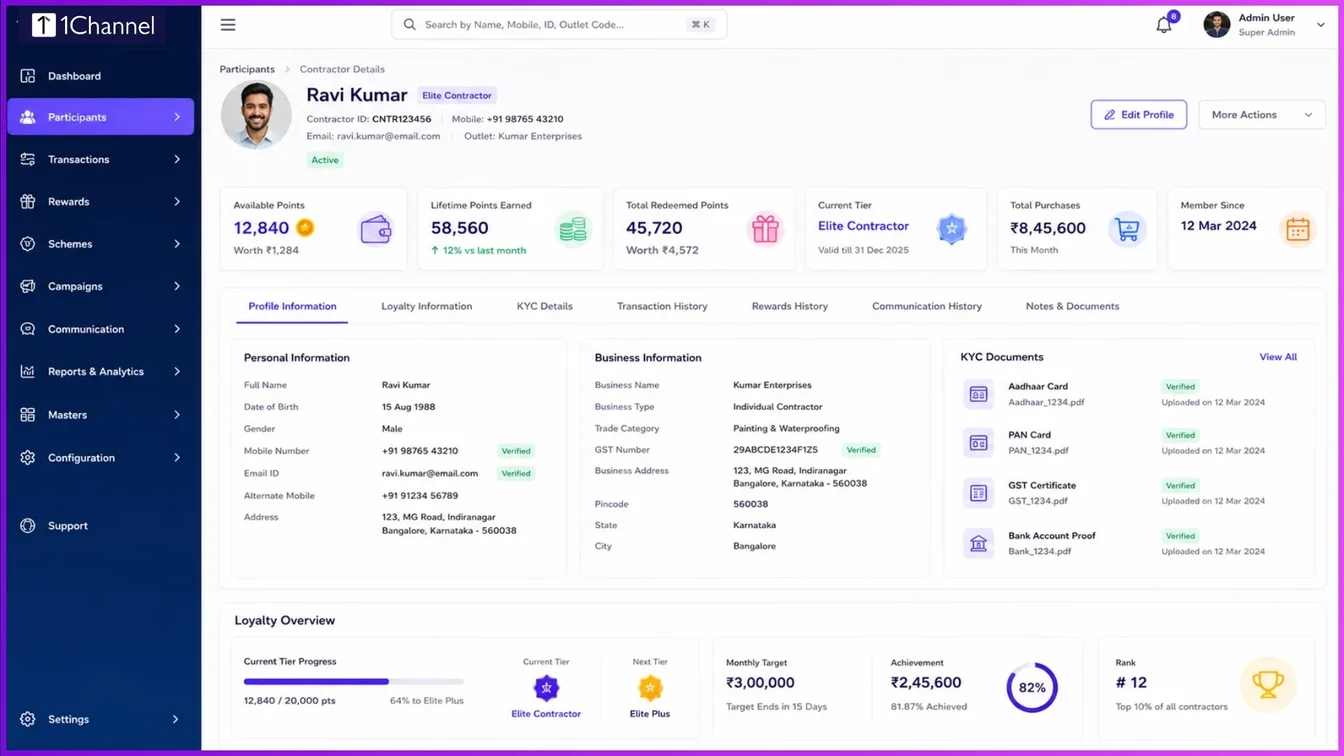
A strong channel data architecture maintains a comprehensive participant profile by combining personal, professional, KYC, and loyalty information into one operational view.
The CRM profile may include:
- Personal information
- Business details
- Membership category
- Distributor mapping
- KYC verification status
- Loyalty points earned
- Available balance
- Transaction history
- Reward redemption history
Example:
If a distributor wants to verify whether a retailer has completed KYC before becoming eligible for loyalty benefits, the administrator can review both the verification status and loyalty information from the same participant profile.
Organizing Participants Through Business Mapping
Channel loyalty programs often involve multiple business relationships. A structured CRM architecture maps participants to their respective business hierarchy.
Typical mapping may include:
- Retailer
- Distributor
- Sales Territory
- Regional Office
- Business Unit
This organized relationship improves reporting, territory management, and performance analysis.
Example:
When regional managers need to review loyalty participation across a specific sales territory, participant mapping allows them to filter users according to the configured business hierarchy.
Managing the Complete Participant Lifecycle
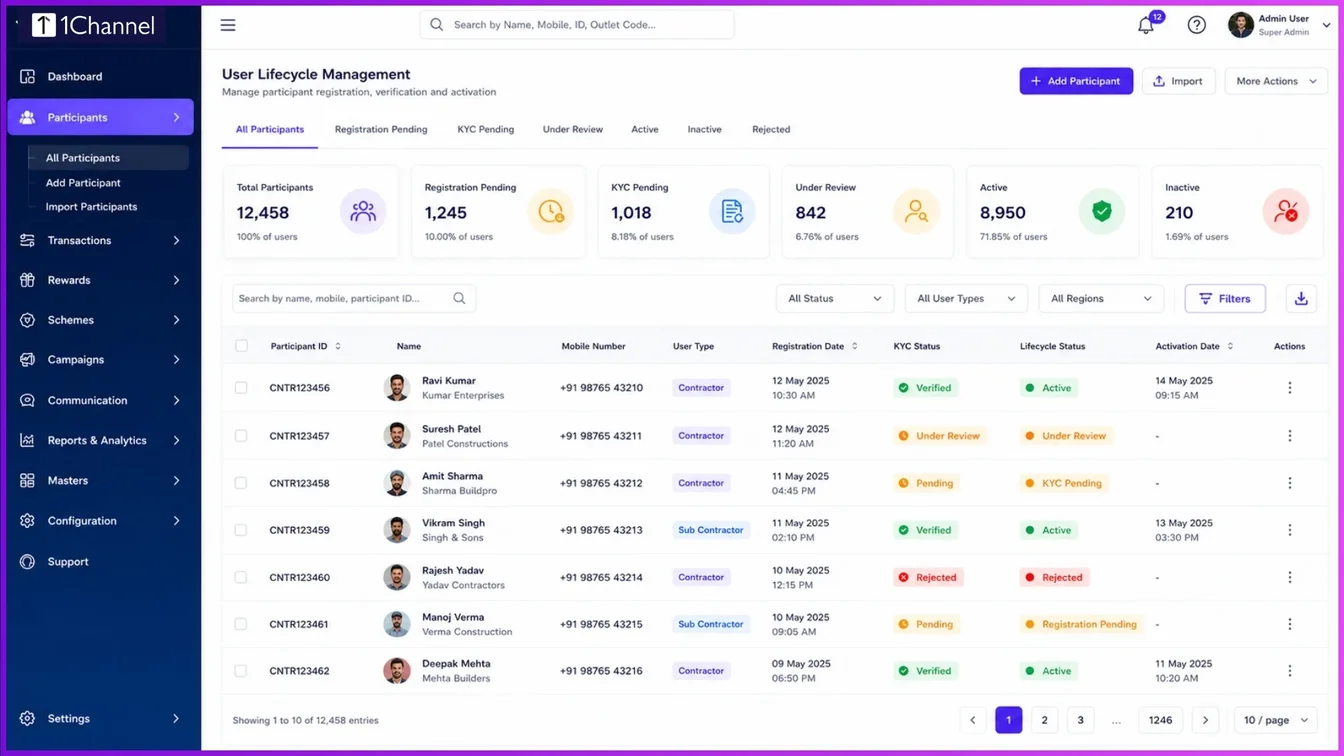
Participant management extends far beyond registration. The CRM architecture supports every stage of the participant journey while maintaining accurate operational records.
Typical lifecycle stages include:
- Registration
- Verification
- Activation
- Loyalty Participation
- Reward Redemption
- Ongoing Engagement
Every stage remains visible to administrators.
Example:
A newly registered retailer may remain in "Pending Approval" until verification is completed. Once approved and activated, the participant becomes eligible to earn loyalty points and redeem rewards according to configured program rules.
Flexible Enrolment and User Management
The platform supports multiple enrolment methods to accommodate different business requirements. Participants can be onboarded individually or in bulk while maintaining consistent data quality.
Administrative capabilities include:
- Manual participant creation
- Bulk user upload
- Registration approval
- User activation
- User deactivation
- Profile modification
Example:
When launching a new regional loyalty program, administrators can upload thousands of participant records using a predefined template instead of creating every account manually.
Powerful Search and Operational Visibility
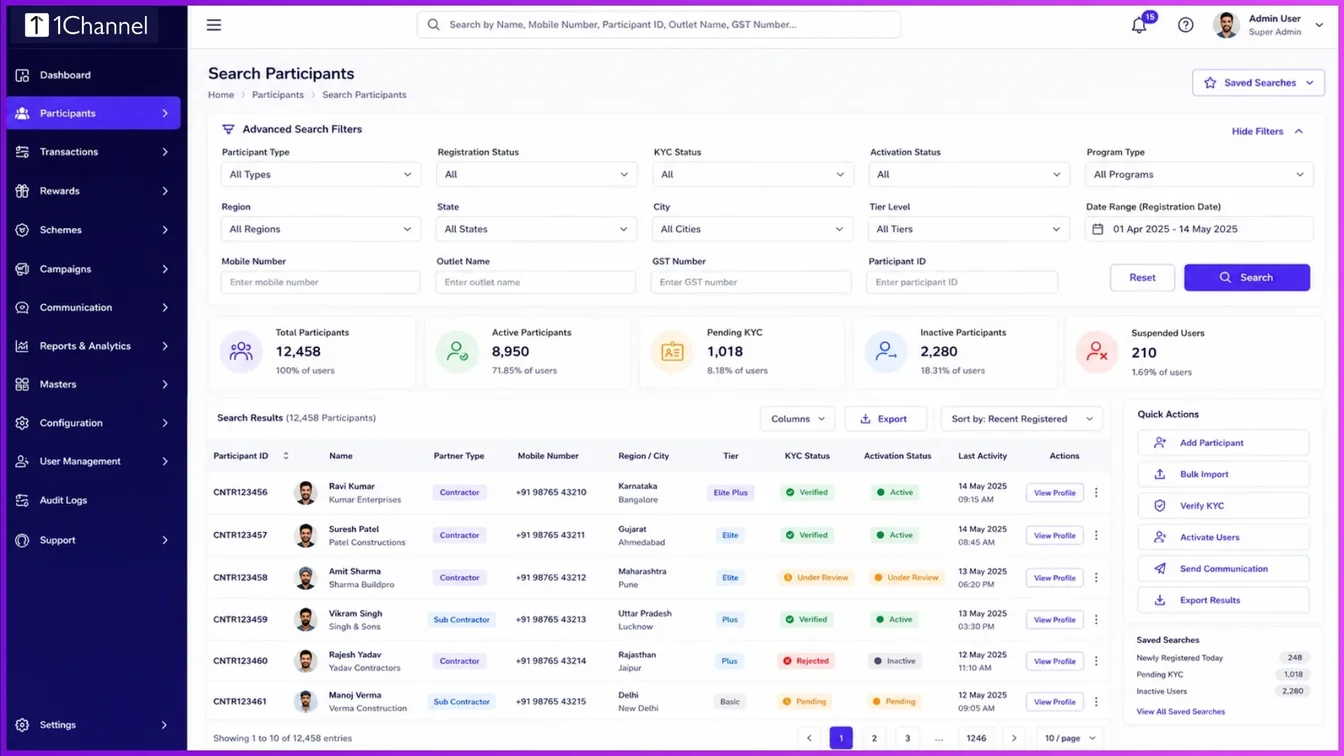
As loyalty programs expand, locating participant information quickly becomes essential. The CRM architecture supports comprehensive search capabilities using multiple identifiers.
Administrators can search by:
- Mobile Number
- User ID
- Membership ID
- Retailer Code
- Partner Type
- Region
- District
This improves operational efficiency even in large-scale loyalty programs.
Maintaining Accurate Data with Verification and Audit History
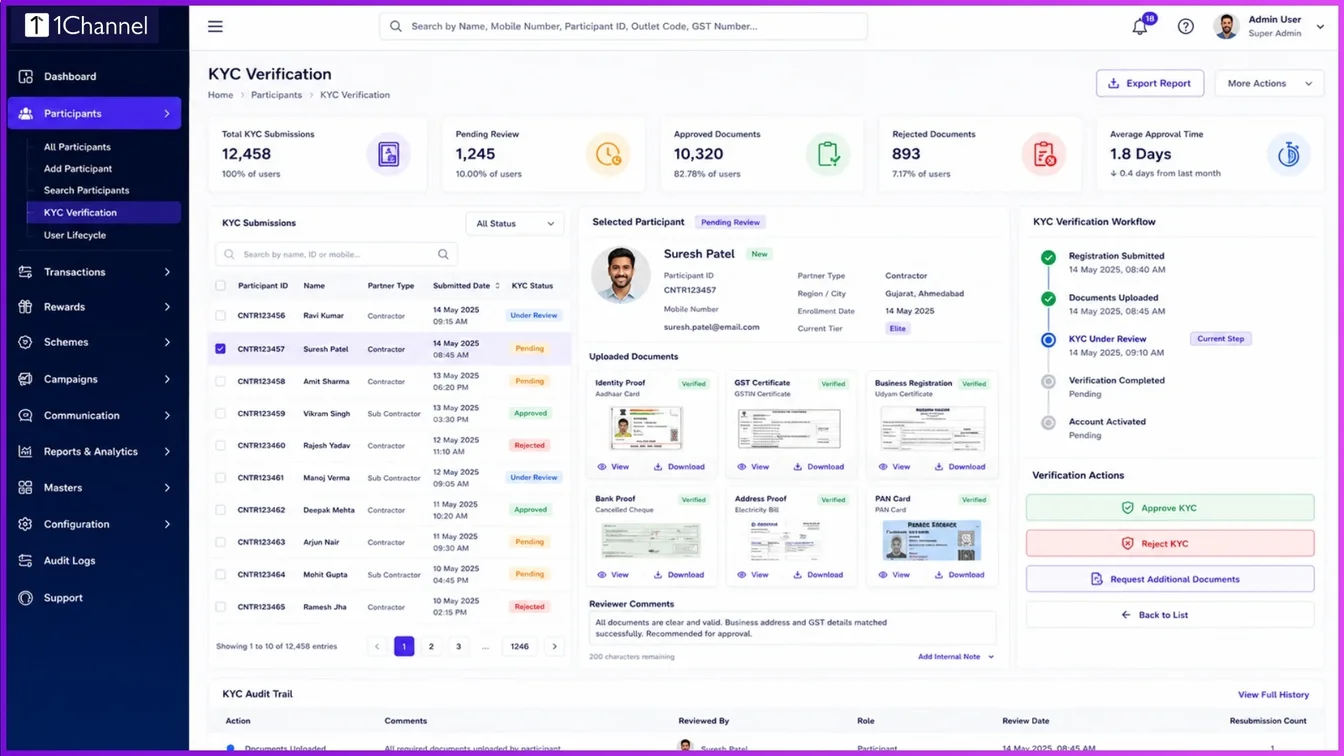
Reliable loyalty programs depend on verified participant information. The CRM architecture enables administrators to review submitted KYC documents, approve or reject verification requests, and maintain complete historical records of profile updates and operational activities.
Historical information may include:
- Registration date
- Profile updates
- KYC changes
- Status changes
- Transactions
- Reward redemptions
Example:
If participant bank information is updated after registration, administrators can review the modification history alongside previous verification records for complete operational transparency.
Supporting Secure CRM Operations with Role-Based Access
Different administrative teams require different levels of access. The platform supports role-based permissions so users can perform responsibilities relevant to their role without accessing unnecessary administrative functions.
For instance, a CRM executive may manage participant profiles and KYC verification, while a finance team member focuses on redemption settlements. This structured access improves security while maintaining accountability across the loyalty program.
How 1Channel Simplifies B2B Loyalty Management
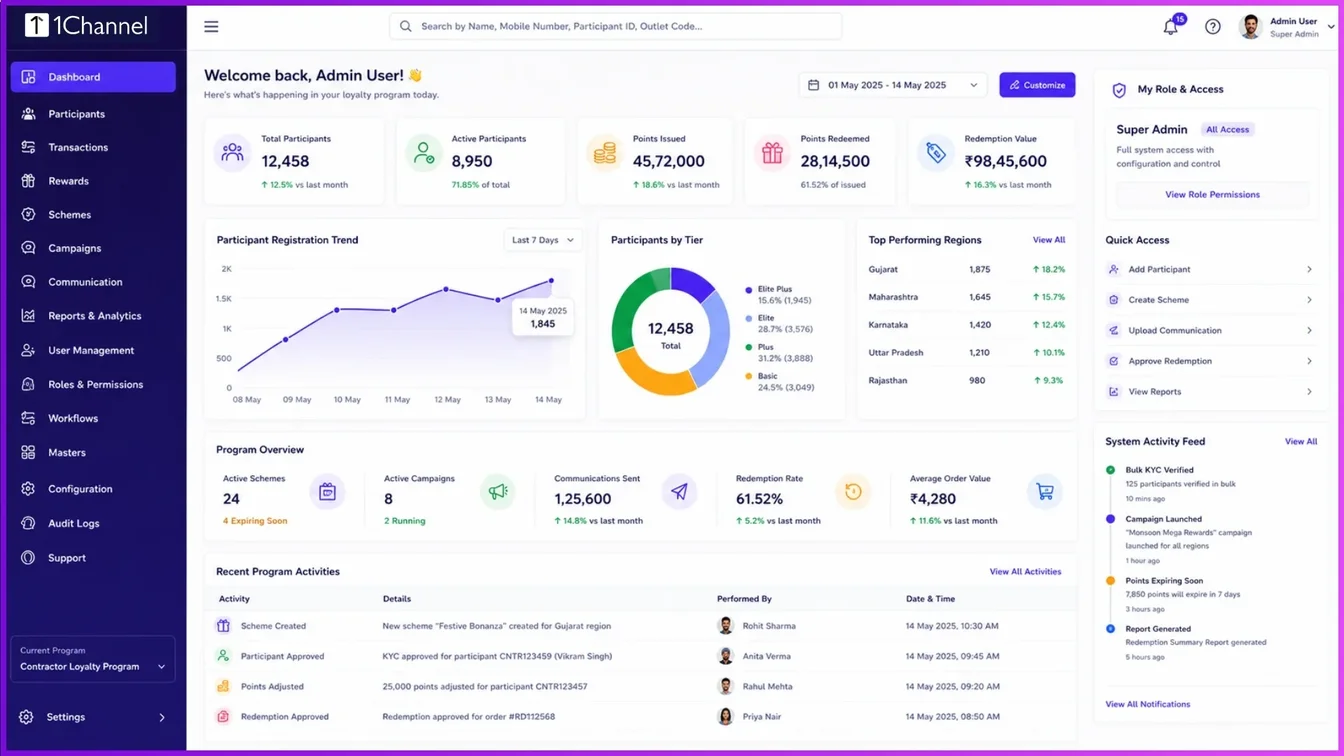
Managing participant data becomes significantly easier when every registration, verification, profile update, loyalty activity, and administrative workflow is connected through a centralized CRM platform.
1Channel enables businesses to manage participant lifecycles, streamline onboarding, organize channel partner data, maintain verification workflows, and improve operational visibility through configurable CRM capabilities built for enterprise loyalty programs.
Explore 1Channel Loyalty Management Software
See how 1Channel's Loyalty Management Software brings participant profiles, business mapping, enrolment, verification, and role-based access together in one centralized CRM platform.
Explore Loyalty Management →Points to Remember
- Centralized CRM architecture keeps participant information organized throughout the loyalty program.
- Business mapping connects participants with distributors, territories, and organizational structures.
- Complete lifecycle management improves onboarding and participant engagement.
- Advanced search capabilities simplify participant management in large programs.
- Verification workflows help maintain accurate participant records.
- Historical records improve operational transparency and administrative accountability.
- Role-based access enhances security while supporting different operational teams.
Frequently Asked Questions
1. What is B2B Loyalty CRM Channel Data Architecture?
It is the structured organization of participant, business, verification, and loyalty data within a centralized CRM system to support the complete loyalty program lifecycle.
2. Why is participant mapping important?
It connects participants with distributors, territories, and business units, improving reporting, performance analysis, and operational management.
3. Can administrators manage participant records after registration?
Yes. Administrators can modify participant information, activate or deactivate users, review verification status, and manage participant records throughout the program lifecycle.
4. How does CRM improve operational efficiency?
Centralized participant profiles and advanced search capabilities allow administrators to quickly locate, review, and manage participant information.
5. Does the CRM maintain participant history?
Yes. The CRM maintains historical records such as registration details, profile updates, verification changes, transactions, reward redemptions, and status changes.
6. How does role-based access improve CRM management?
Different administrative users receive permissions based on their responsibilities, helping improve security, accountability, and controlled access to participant data.