Managing distributor orders efficiently is one of the most important parts of running a smooth distribution operation. As businesses grow, order volumes increase, multiple customer types get involved, inventory movement becomes more complex, and maintaining accuracy across every order stage becomes challenging.
A structured distributor order management approach helps businesses manage order creation, stock availability, pricing, schemes, credit limits, dispatch, delivery notes, invoices, and payments from a connected system.
With the right processes in place, businesses can reduce manual dependency, improve order visibility, prevent stock-related issues, and create a smoother experience for distributors and customers.
1. Maintain Accurate Distributor and Customer Data
A strong distributor order process starts with properly managed customer information.
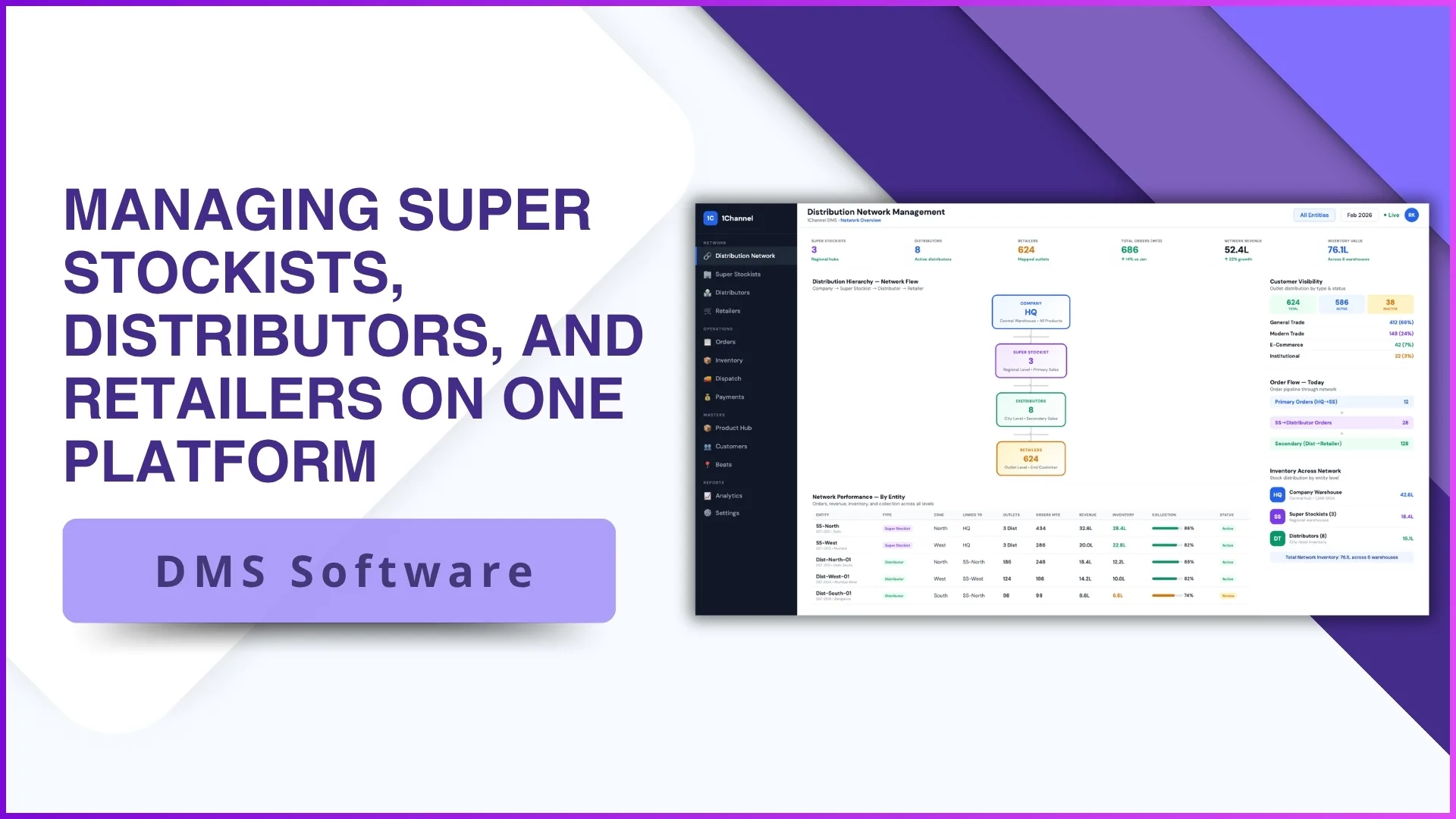
Distributor management involves handling different customer types such as distributors, super stockists, retailers, and other customer users. Maintaining accurate customer records helps ensure that every order is processed with the correct details.
Important customer information includes:
- Customer type
- Location details
- Credit limit
- Status
- Assigned users
- Customer mappings
A centralized customer master allows businesses to add customers individually, import customer data, and manage customer-related information from one place.
For example, when a distributor places an order, the system can automatically identify the related customer details and apply the correct pricing, credit rules, and order conditions.
2. Enable Simple and Structured Order Creation
A distributor order process should be easy to follow and consistent across users.
A well-managed order flow includes:
- Selecting the customer
- Selecting the warehouse
- Choosing payment type
- Adding products and quantities
- Checking applicable pricing and schemes
- Confirming order placement
A structured order creation process ensures that distributors can place retailer orders directly while maintaining proper records.
The system can also validate important factors during order placement, such as:
- Available stock
- Applicable schemes
- Customer pricing
- Credit limits
This reduces errors and improves order accuracy.
3. Connect Orders with Inventory Availability
One of the biggest challenges in distributor order management is avoiding situations where orders are placed for unavailable stock.
Order processing becomes more efficient when inventory visibility is connected with order management.
Before confirming an order, businesses should monitor:
- Available stock
- Reserved stock
- Stock in transit
- Warehouse-level inventory
For example, when a distributor places an order, the system can check stock availability and allocate inventory based on configured rules.
This helps prevent unnecessary delays and improves order fulfilment planning.
4. Manage Pricing and Schemes Automatically
Different distributors or customers may require different pricing structures.
An effective distributor order process should support flexible pricing management based on:
- Customer-specific pricing
- Customer type pricing
- Geography-based pricing
If a special price list is not available, default product pricing can be applied automatically.
Similarly, schemes should be managed properly to ensure customers receive applicable benefits.
Distributor order systems can support schemes such as:
- Value-based schemes
- Volume-based schemes
- Free goods schemes
For example:
A quantity-based scheme can be configured where buying a certain quantity allows customers to receive additional free products.
This ensures schemes are applied consistently during order processing.
5. Track Credit Limits Before Processing Orders
Credit management plays an important role in distributor order control.
Before processing large orders, businesses should have visibility into:
- Customer credit limits
- Utilized credit
- Outstanding amounts
- Overdue payments
For example, if a customer exceeds their allowed credit limit, the system can identify the situation and follow configured approval processes.
Businesses can configure options such as:
- Stop orders after credit limit breach
- Allow specific order conditions
- Require approval before processing
This helps maintain financial control while continuing smooth order operations.
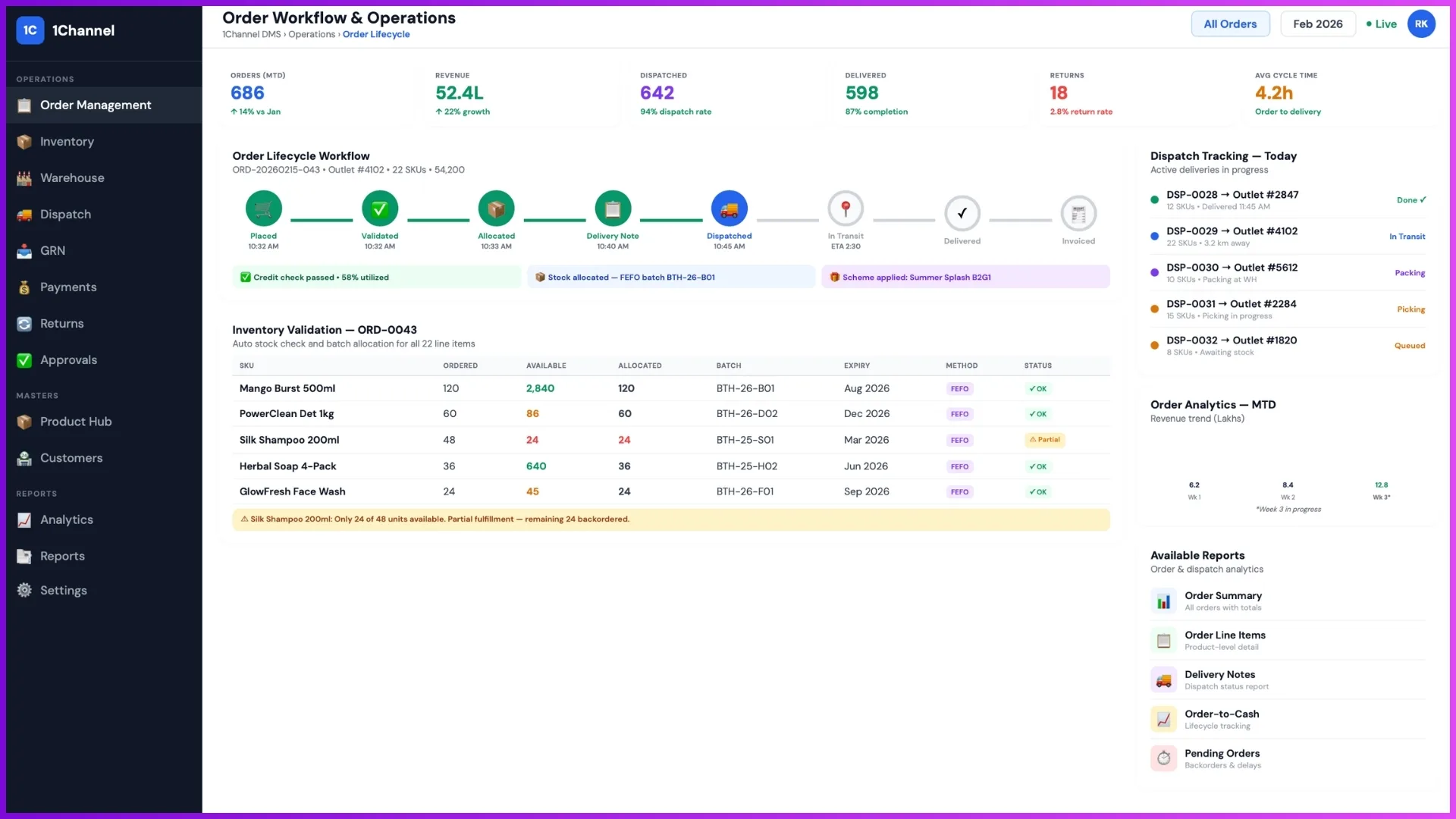
6. Create Clear Order-to-Delivery Workflows
Distributor orders do not end after order creation. A complete process includes multiple stages.
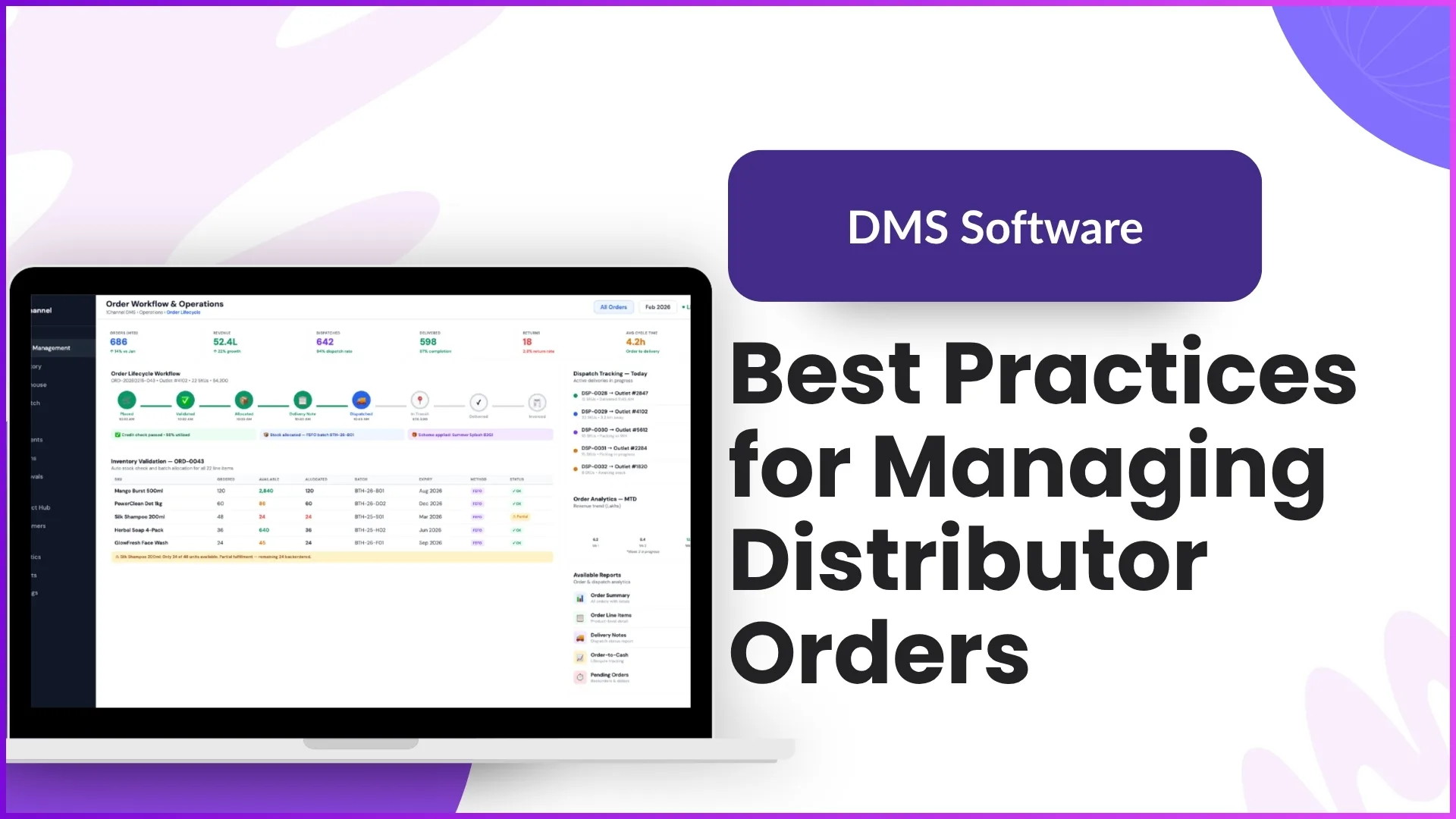
A connected workflow can manage:
- Order placement
- Stock allocation
- Delivery note generation
- Dispatch processing
- Invoice creation
- Payment tracking
Once an order is placed, delivery notes can be generated and dispatch activities can be managed.
This creates better visibility for every stakeholder involved in the distribution process.
7. Manage Stock Allocation with Proper Batch Handling
For businesses managing batch-based products, stock allocation becomes an important part of order processing.
Batch management allows businesses to track:
- Batch details
- Expiry information
- Stock movement
Different batch selection methods can be configured:
- FIFO - Oldest manufactured batch selected first
- FEFO - Earliest expiry batch selected first
- LIFO - Newest manufactured batch selected first
- Manual selection
For expiry-sensitive products, automatic batch allocation helps ensure the right stock is selected during order fulfilment.
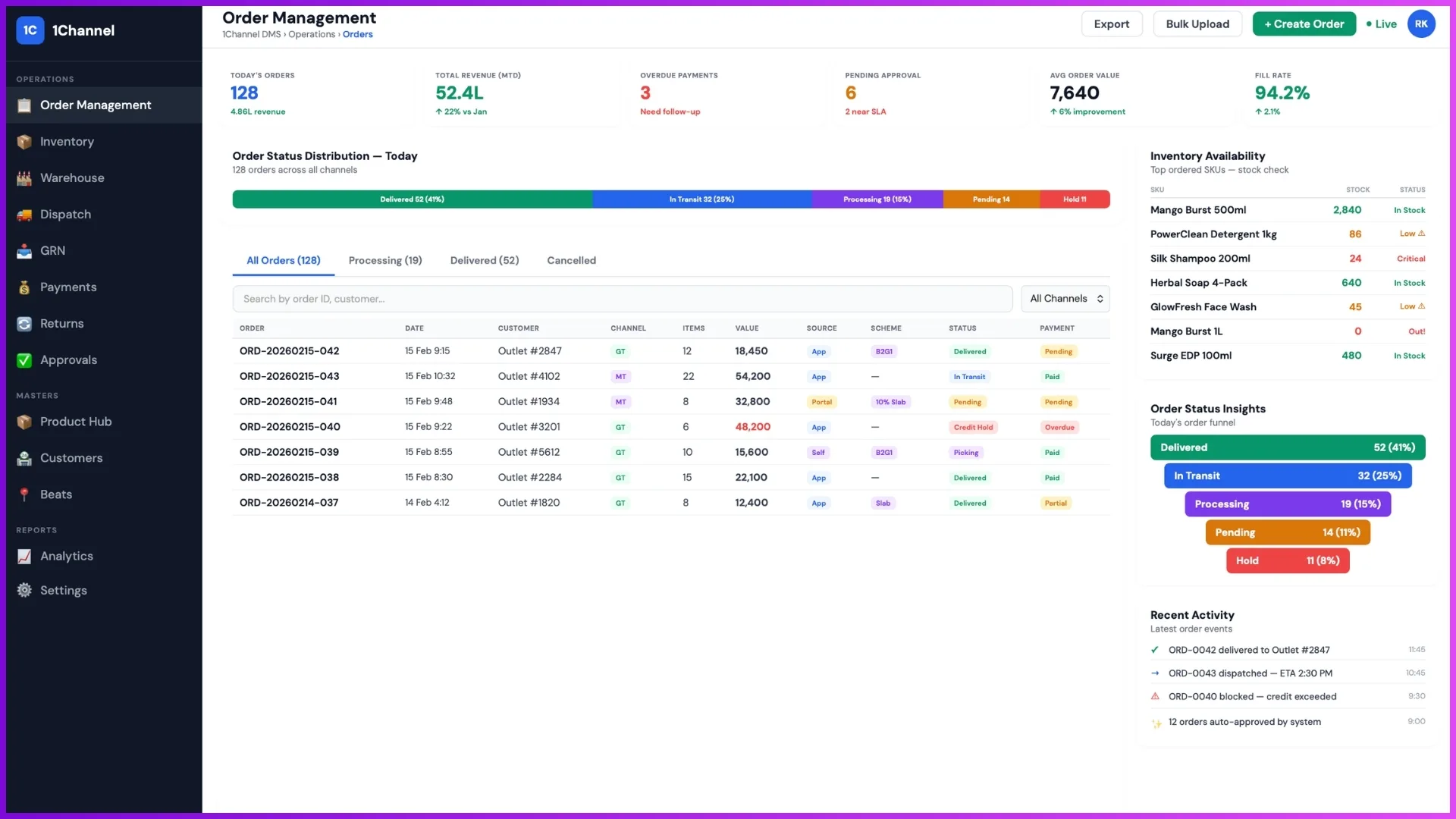
8. Maintain Visibility Through Order Tracking
Distributor order management requires continuous visibility after order creation.
Businesses should monitor:
- Pending orders
- Processing orders
- Delivered orders
- Cancelled orders
- Payment status
Order dashboards help teams quickly understand the current order position and identify pending actions.
Recent activities, order summaries, and status tracking make it easier for teams to manage daily operations.
9. Use Reports and Analytics for Better Order Decisions
Data-driven order management helps businesses improve planning and execution.
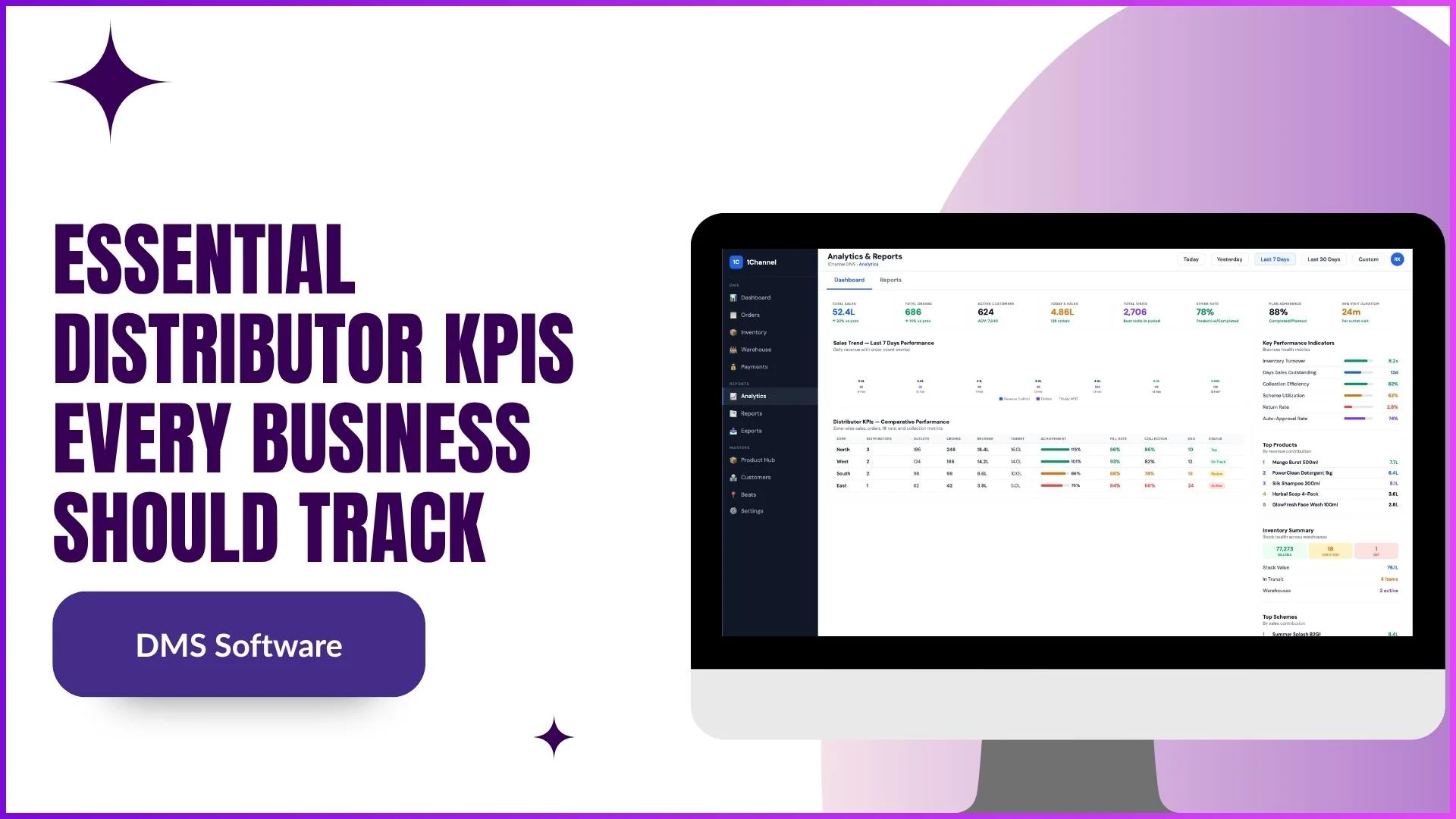
Distributor order analytics can provide insights such as:
- Total sales
- Total orders
- Customer performance
- Product contribution
- Scheme performance
- Pending orders
Reports can help analyze:
- Order summary
- Customer orders
- Sales performance
- Delivery notes
- Order-to-cash cycle
With export options, teams can easily download required data for analysis and decision-making.
10. Automate Approvals and Order-Related Workflows
Manual approvals can slow down distributor operations.
Workflow automation helps businesses configure approval processes based on requirements.
Examples include:
- Order approval workflows
- Credit approval workflows
- Customer creation approvals
Businesses can define:
- Conditions
- Approval levels
- Notifications
- Escalation rules
This ensures that important transactions follow the correct process before completion.
How AI Assistance Improves Distributor Order Management
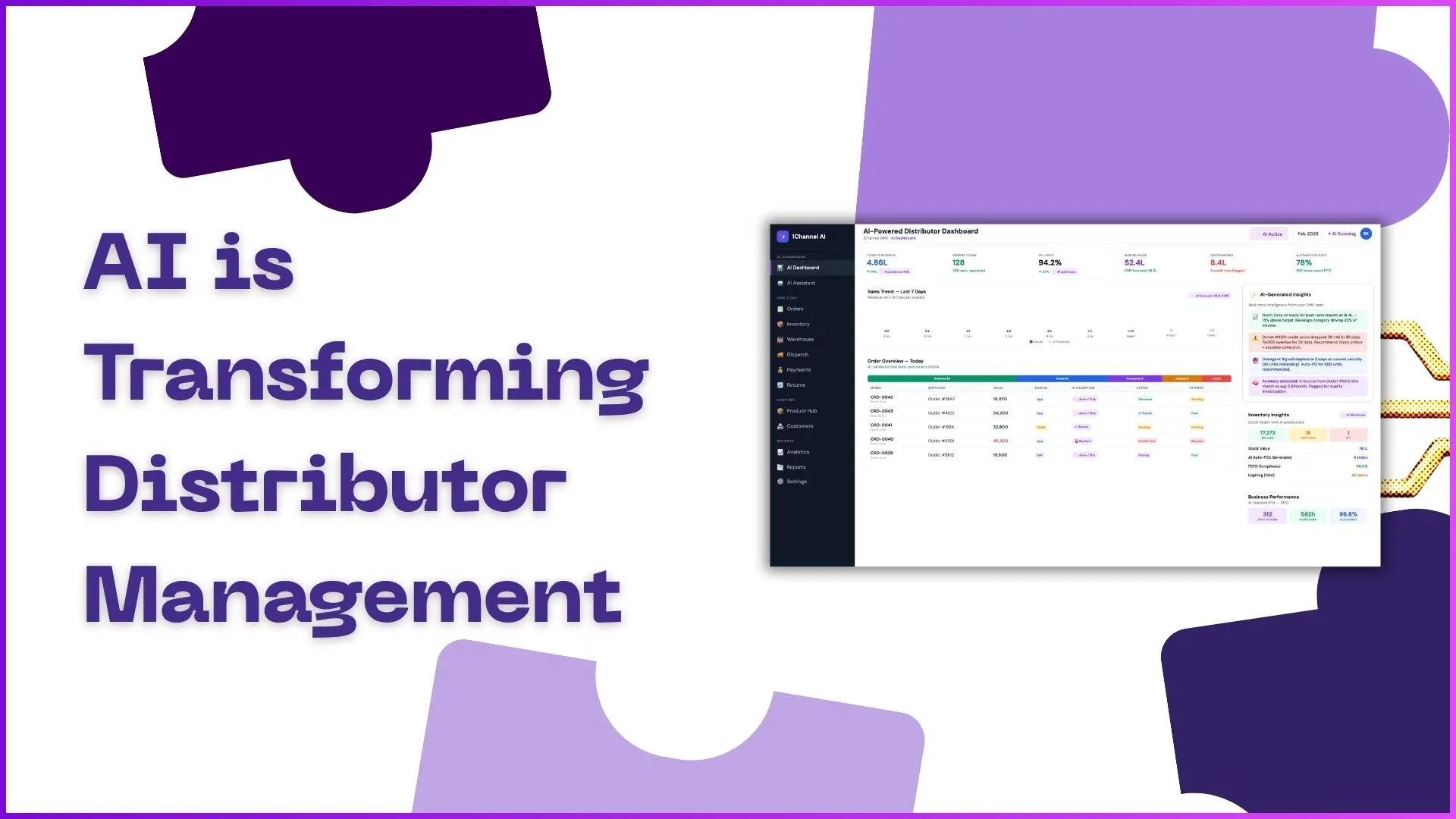
Modern distributor management systems can include AI assistance that helps users quickly access information without manually searching through multiple reports.
Users can directly ask questions such as:
- “Show my pending orders”
- “Show orders for a specific location”
- “Generate order-related reports”
The AI assistant helps users get required information faster through simple conversations.
How 1Channel Helps Businesses Manage Distributor Orders Better
Managing distributor orders requires visibility across customers, inventory, pricing, approvals, and reporting. 1Channel provides a connected distribution management solution that brings these activities together in one system.
The platform helps businesses manage:
- Distributor order creation
- Customer management
- Inventory visibility
- Pricing and schemes
- Credit management
- Delivery workflows
- Reports and analytics
With AI assistance integrated into the system, users can quickly access required information by asking questions directly through the chat interface.
This helps teams reduce manual effort, improve operational visibility, and manage distributor order processes more efficiently.
Explore 1Channel Distributor Order Management
See how 1Channel's distributor order management software simplifies order creation, inventory tracking, pricing, schemes, approvals, and delivery workflows in one connected platform.
Explore Distributor Order Management →Conclusion
Effective distributor order management requires more than just capturing orders. Businesses need a connected approach that manages customer data, inventory availability, pricing, schemes, credit control, delivery processes, and reporting.
By following structured order management practices, businesses can improve accuracy, reduce operational challenges, and create a smoother distribution workflow.
A well-managed distributor order process helps teams respond faster, maintain better control, and support scalable business operations.