In competitive retail environments, the ability to gather accurate market insights directly from the field can significantly influence business decisions. Field teams interact with stores, distributors, and customers daily, making them the most reliable source of real-time competitive intelligence.
A structured system for collecting and analysing field data ensures that organizations can identify competitor activities, monitor store conditions, and respond quickly to market changes. By capturing insights through field activities, questionnaires, store visits, and reports, businesses can transform everyday field interactions into strategic intelligence.
This article explains how competitive insights can be captured from the field using structured processes, field reporting, and analytics.
Why Competitive Insights from the Field Matter
Retail markets change quickly. Competitors introduce new promotions, update merchandising displays, adjust pricing strategies, and increase visibility in stores.
Field teams visiting stores regularly can capture these changes as they happen. When structured properly, these insights help businesses:
- Track competitor signage and merchandising presence
- Monitor competitor product visibility in stores
- Identify gaps in store execution
- Detect new campaigns or promotions from competitors
- Improve product placement and in-store strategy
Instead of relying only on secondary research, companies gain real-time ground intelligence directly from the market.
Track Field Activities and Store Visits
1Channel's Field Activity Management Software enables structured store visit tracking, activity questionnaires, and real-time field reporting. Capture competitive intelligence directly from your field teams.
Explore Field Activity Management →Using Store Visits to Capture Market Intelligence
Store visits are one of the most effective ways to gather competitive insights. Field employees visit assigned outlets according to predefined market visit plans, ensuring regular coverage of the retail network.
During these visits, employees perform activities such as:
- Checking product availability
- Observing competitor displays
- Reviewing store conditions
- Recording merchandising status
Example
A promoter visits a supermarket as part of the weekly market visit plan.
During the visit they observe:
- A competitor brand has installed a new shelf display.
- Their own product placement is on a lower shelf.
- Competitor signage is visible near the billing counter.
The promoter records this information through the system during the visit, enabling the company to quickly identify a competitor visibility advantage in that store.
Capturing Insights Through Structured Questionnaires
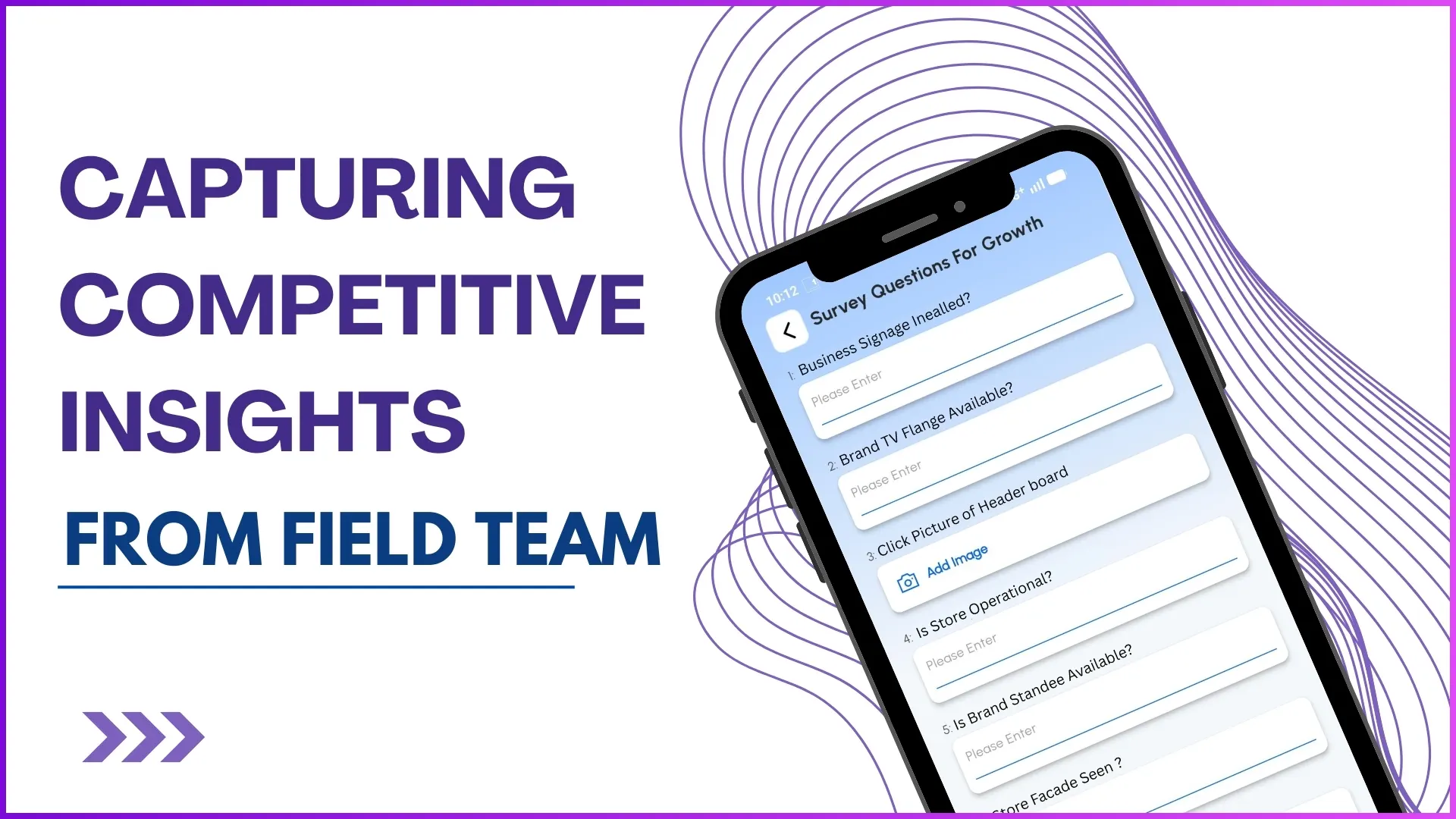
One of the most powerful ways to collect competitive intelligence is through structured questionnaires assigned to field teams.
Organizations can create questionnaires under different categories such as surveys or suggestions. These questionnaires can include multiple question formats such as:
- Open-ended questions
- Radio buttons
- Checkboxes
- Dropdown selections
- Rating questions
- Rank-order questions
- Matrix questions
These questionnaires are linked to store visits and are filled out by field employees based on real store conditions.
Example
A retail brand launches a competitor tracking questionnaire with questions like:
- Is competitor branding visible at the store entrance?
- Which competitor products are displayed on eye-level shelves?
- Are competitor promotional materials present?
When a promoter checks into a store, they answer these questions based on what they observe, creating structured competitive data.
Role-Based Activity Assignments for Field Teams
Competitive intelligence activities can be assigned to specific roles such as promoters or team leaders. These activities are created in advance and linked to relevant questionnaires.
Administrators can decide:
- Which user roles will see the activity
- Which stores it will apply to
- The start and end date of the activity
Once the activity is live, field employees complete the questionnaire during store visits. The submitted responses are then reviewed through activity quality checks before becoming part of the reporting system.
Example
A company launches a "Competitor Visibility Audit" activity for promoters.
Promoters visiting assigned outlets answer questions like:
- Are competitor danglers installed?
- How many competitor SKUs are visible on shelves?
- Is competitor signage placed near billing areas?
These responses help the company evaluate competitor visibility across regions.
Using Photo-Based Evidence for Competitive Tracking
Competitive insights become more reliable when supported by photographic evidence.
Field reporting systems can include photo-based reports during store visits. For example, reports can include images captured during merchandising activities or store visits, helping organizations visually verify field observations.
Example
A promoter uploads a store-front photo showing:
- Competitor standee placed at the store entrance
- Competitor POS material displayed near the product aisle
Managers reviewing the visit report can clearly verify competitor marketing presence in that outlet.
Tracking Competitor Signage and In-Store Branding
Retail outlets often contain multiple marketing elements such as signage, banners, danglers, and displays. Monitoring these elements helps businesses understand how competitors are promoting their products inside stores.
Signage tracking reports allow organizations to monitor the status of signage across all retail outlets covered by the field team.
This information can be used to track:
- Competitor promotional visibility
- In-store branding presence
- Placement of marketing materials
Example
A report shows that:
- 60% of outlets have competitor signage near the product shelf
- Only 30% of outlets display the company's signage
This insight immediately highlights a merchandising gap that needs to be addressed.
Using Analytics and Reports for Competitive Intelligence
Field data becomes valuable only when it can be analysed. Analytics modules provide access to detailed reports that capture activities performed by field teams.
Reports can include insights related to:
- Store visits
- Merchandising activities
- Store productivity
- User activity and field movement
- Sales productivity by store and SKU
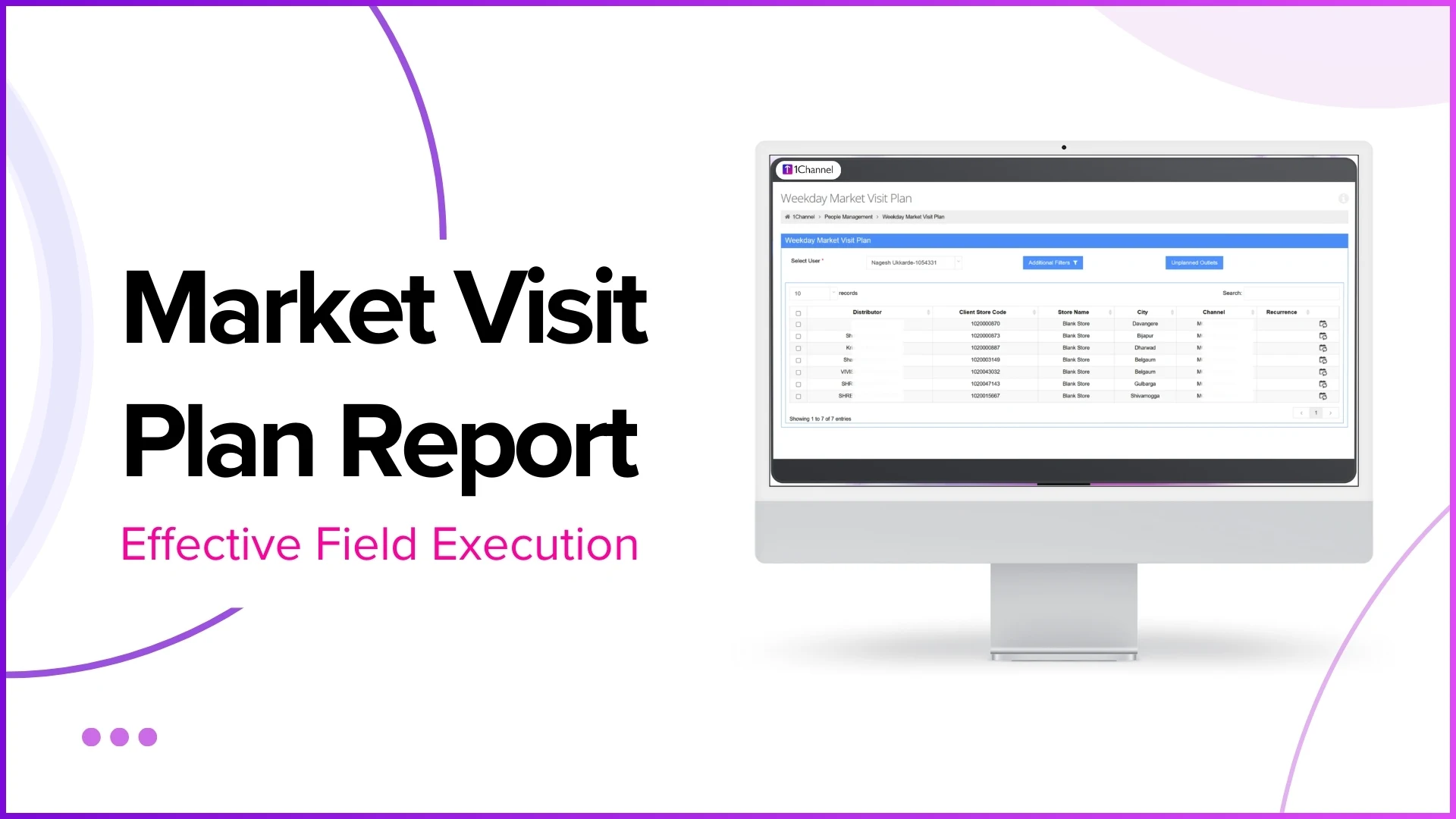
- Market visit reports
Managers can generate these reports for selected date ranges and download them for deeper analysis.
Example
A sales manager reviews the Market Visit Report and notices that competitor promotional material is being reported across several outlets in a specific city.
By identifying this trend early, the company can deploy its own promotional campaign in the same region.
How Competitive Insights Improve Retail Strategy
When captured consistently, competitive insights from the field help businesses improve decision-making in several areas.
1. Merchandising Improvements
Field data reveals where competitor products receive better shelf placement or branding visibility.
2. Campaign Planning
Competitor promotions detected during store visits help marketing teams plan counter campaigns.
3. Regional Market Intelligence
Insights from different cities reveal regional competitor strategies.
4. Store-Level Strategy
Retail outlets with strong competitor presence can be prioritized for merchandising interventions.
How 1Channel SFA Helps Capture Competitive Field Insights
1Channel enables organizations to capture structured competitive intelligence directly from field teams through its SFA platform.
Through features such as market visit planning, questionnaires, activity management, signage tracking, photo reports, and analytics dashboards, businesses can systematically collect market insights from retail outlets.
Field employees can record store observations, upload photos, complete competitor tracking questionnaires, and submit activity data during their visits.
Managers can then review these submissions through reports and analytics to identify trends, monitor competitor activity, and take timely action.
This structured approach transforms everyday store visits into a reliable source of competitive market intelligence.
Automate Field Sales with Structured Intelligence
1Channel's Sales Force Automation platform powers competitive intelligence gathering with structured questionnaires, visit tracking, photo reports, and real-time analytics. Transform field data into strategic insights.
Explore Sales Force Automation →FAQs
1. What are competitive insights in field sales?
Competitive insights are observations and data collected by field teams about competitor products, promotions, signage, pricing, and store visibility during retail visits.
2. How do field teams capture competitor information?
Field teams capture competitor information through store visit reports, questionnaires, merchandising audits, and photo-based documentation during their market visits.
3. Why are structured questionnaires important for competitive insights?
Structured questionnaires ensure that field teams collect consistent and standardized data about competitors across all retail outlets.
4. How can managers verify competitive insights from field teams?
Managers can verify field insights through photo reports, activity quality checks, and detailed visit reports submitted by employees.
5. What role do analytics reports play in competitive intelligence?
Analytics reports aggregate field data and help managers identify patterns such as competitor visibility trends, merchandising gaps, and regional promotional activities.