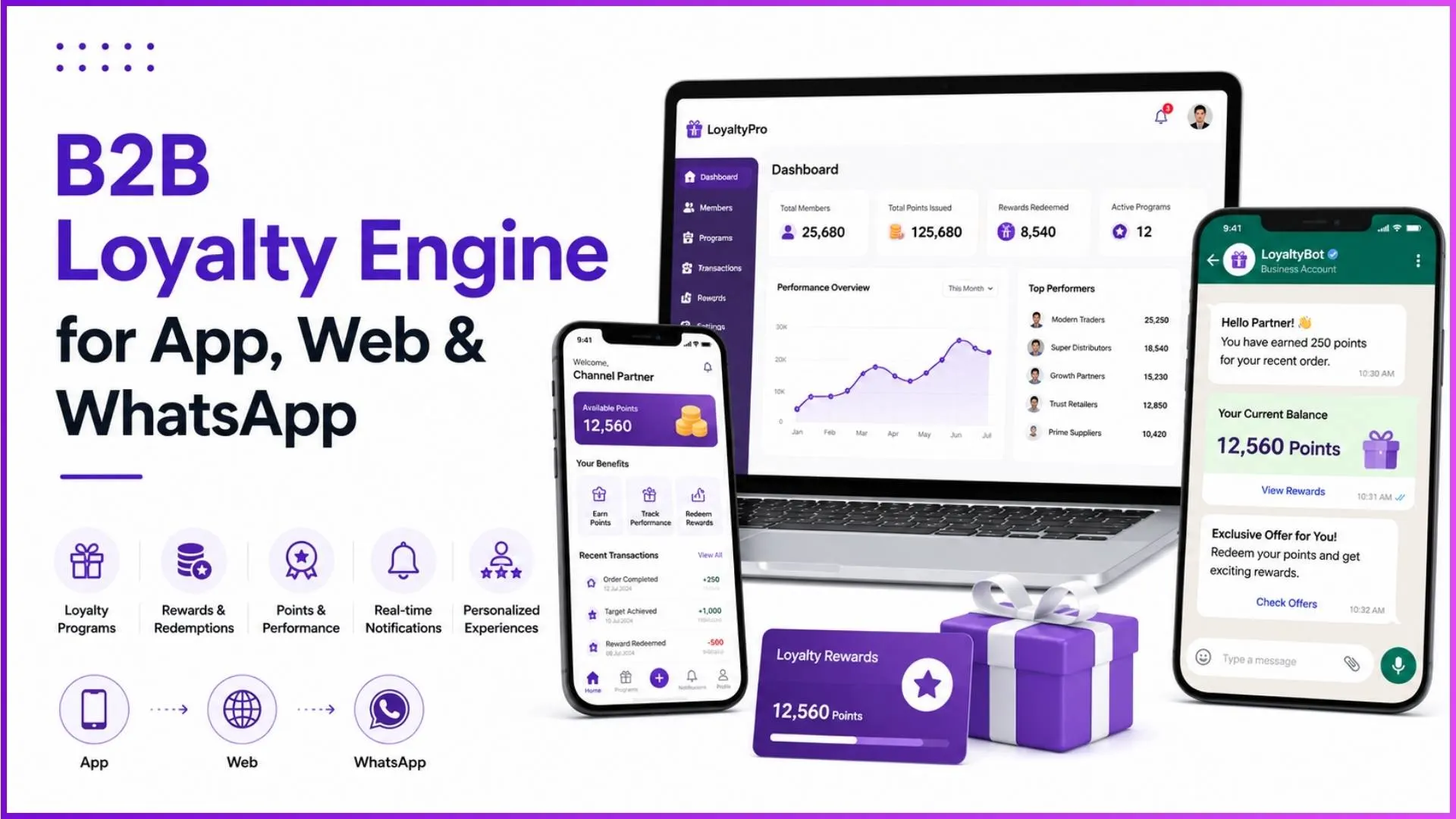
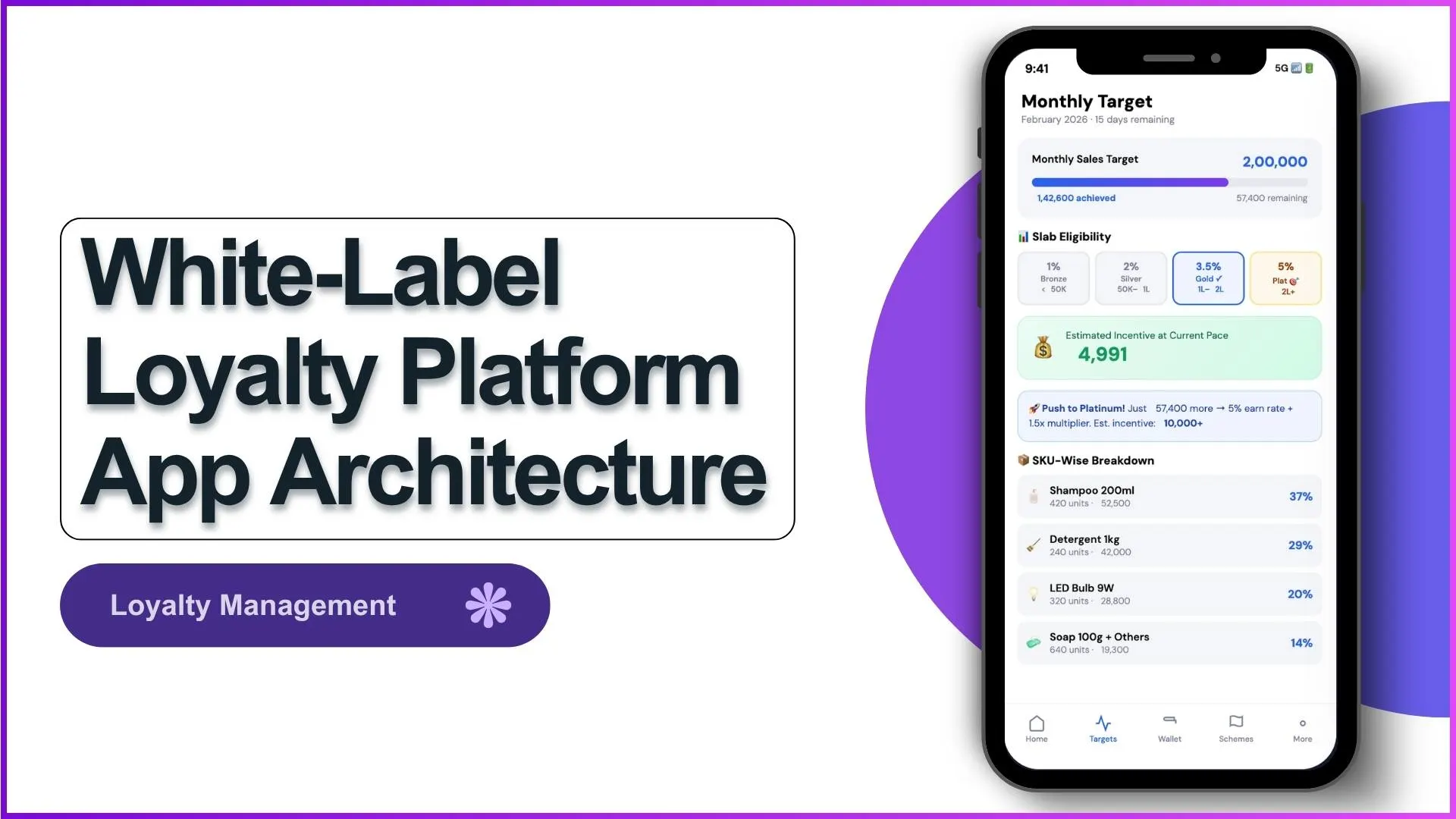
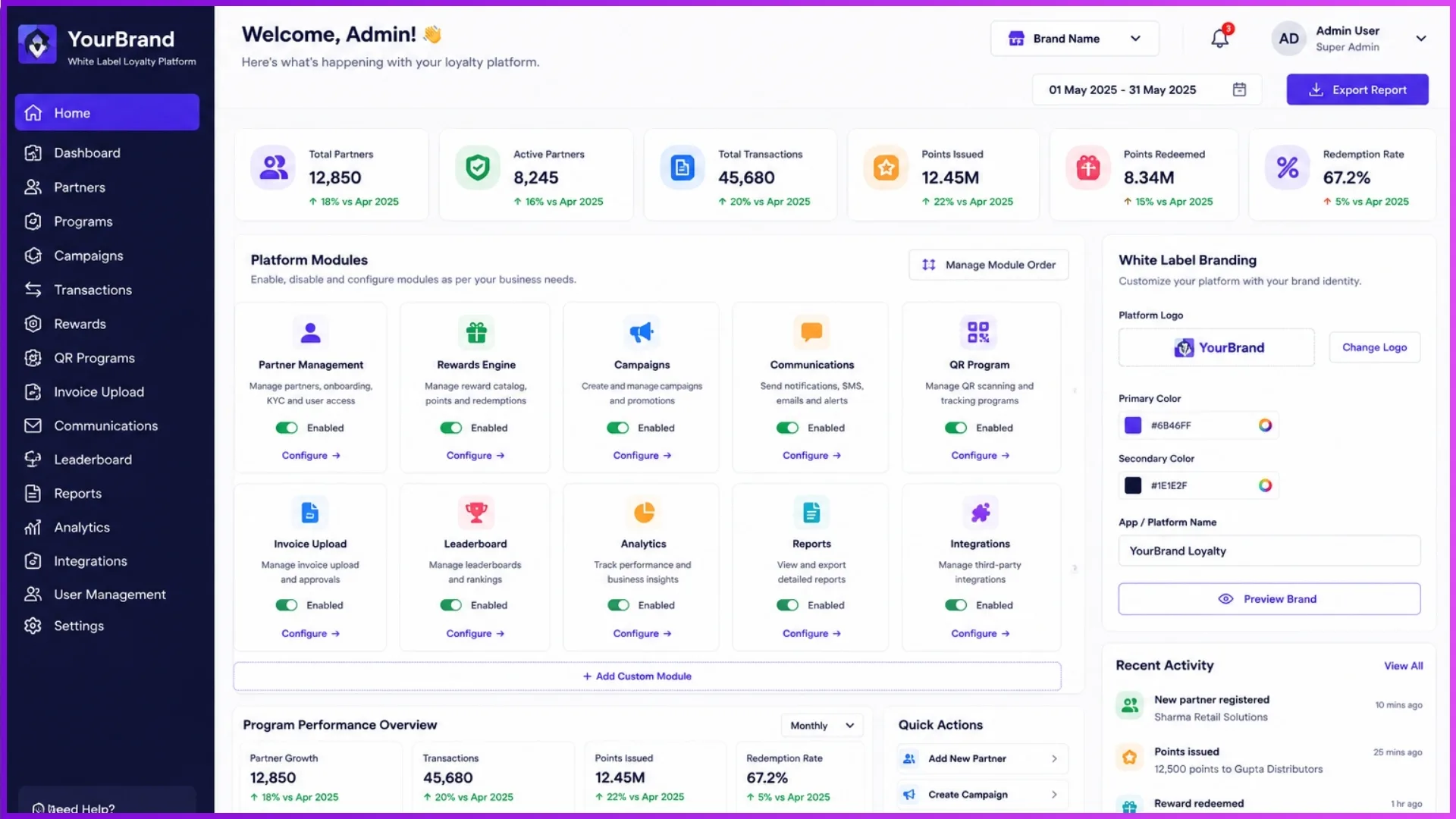
A white label loyalty platform is designed to let organizations launch branded loyalty programs without rebuilding the application for every new business requirement.
Instead of changing the application's core logic, administrators configure branding, workflows, rewards, dashboards, navigation, campaigns, and business rules through a centralized backend.
The architecture focuses on modularity, configurability, and a consistent user journey.
Whether a program uses QR code scanning, invoice uploads, ERP integrations, or purchase validations, the same application framework can support different loyalty programs by enabling or disabling specific modules.
For example, one organization may display QR Scanning and Rewards as primary actions on the dashboard, while another may prioritize Invoice Upload and Performance Tracking all without changing the application's core architecture.
Core Architecture Built Around Configurable Modules
The platform architecture is divided into multiple functional modules that work together throughout the participant journey. Each module performs a dedicated responsibility while remaining connected with the others.
The core application architecture typically includes:
- User Registration and Login
- Home Dashboard
- Profile & KYC Management
- Purchase Submission
- Transaction Management
- Loyalty Wallet
- Reward Catalogue
- Reward Redemption
- Performance Dashboard
- Notifications
- Help & Support
- Admin Configuration Portal
Example:
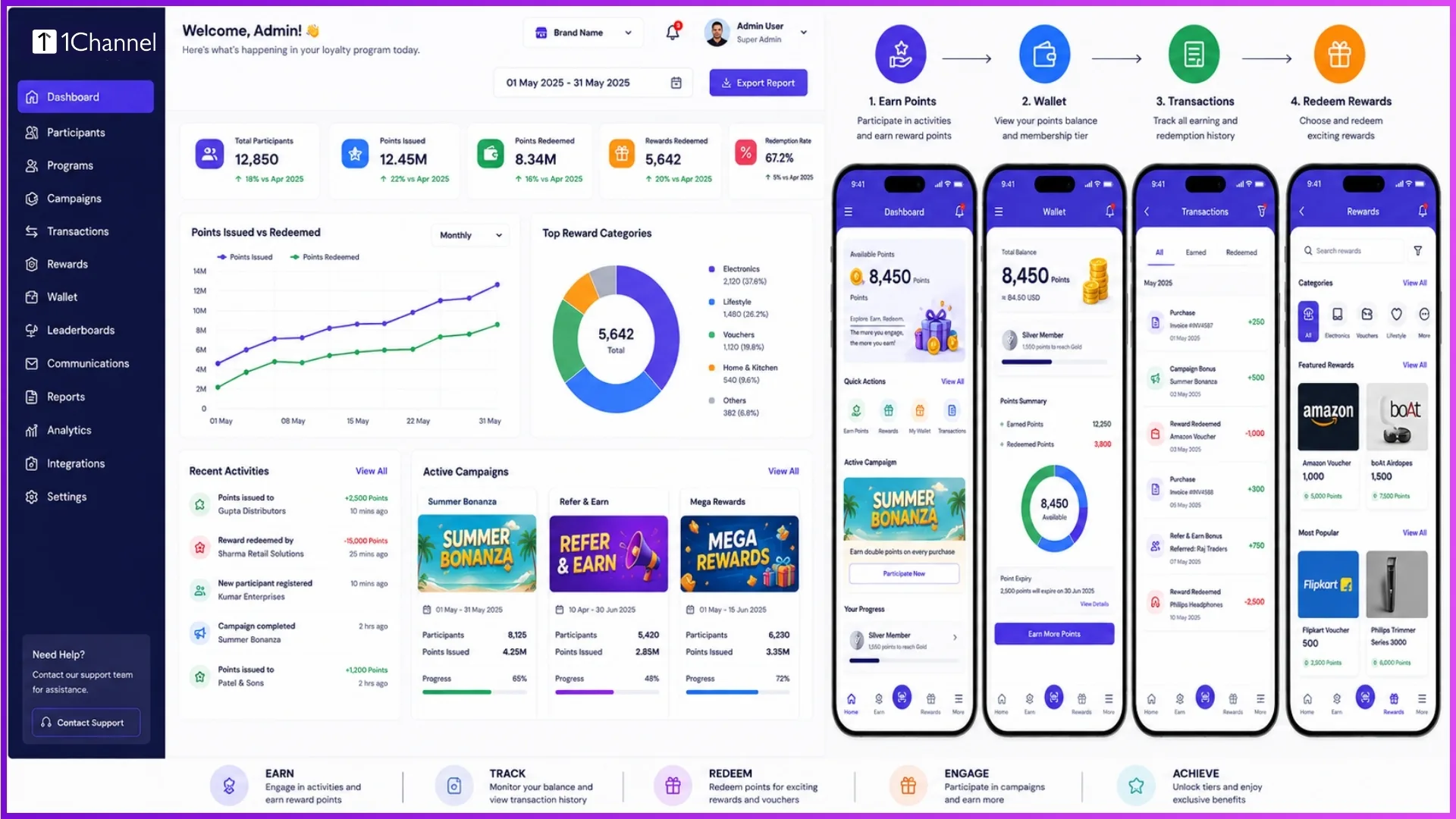
A participant logs in, uploads an eligible purchase, earns loyalty points after validation, sees the updated wallet balance, browses available rewards, redeems points, tracks the reward order, and continues participating all within the same application flow.
Modular User Journey Across the Platform
Instead of functioning as isolated screens, every module contributes to a continuous loyalty experience.
A typical application flow follows this sequence:
Partner Enrolment
↓
OTP Login
↓
Profile Completion
↓
KYC Submission (if required)
↓
Home Dashboard
↓
Participation through QR Scan, Invoice Upload, ERP Purchase, or Other Eligible Activities
↓
Points Credited
↓
Wallet Updated
↓
Reward Browsing
↓
Reward Redemption
↓
Order Tracking
↓
Notifications
↓
Continued Participation
Example:
After an invoice is approved, the system automatically credits points, updates the wallet, records the transaction, refreshes the dashboard, and generates a notification without requiring separate user actions.
Configurable Navigation for Different Loyalty Programs
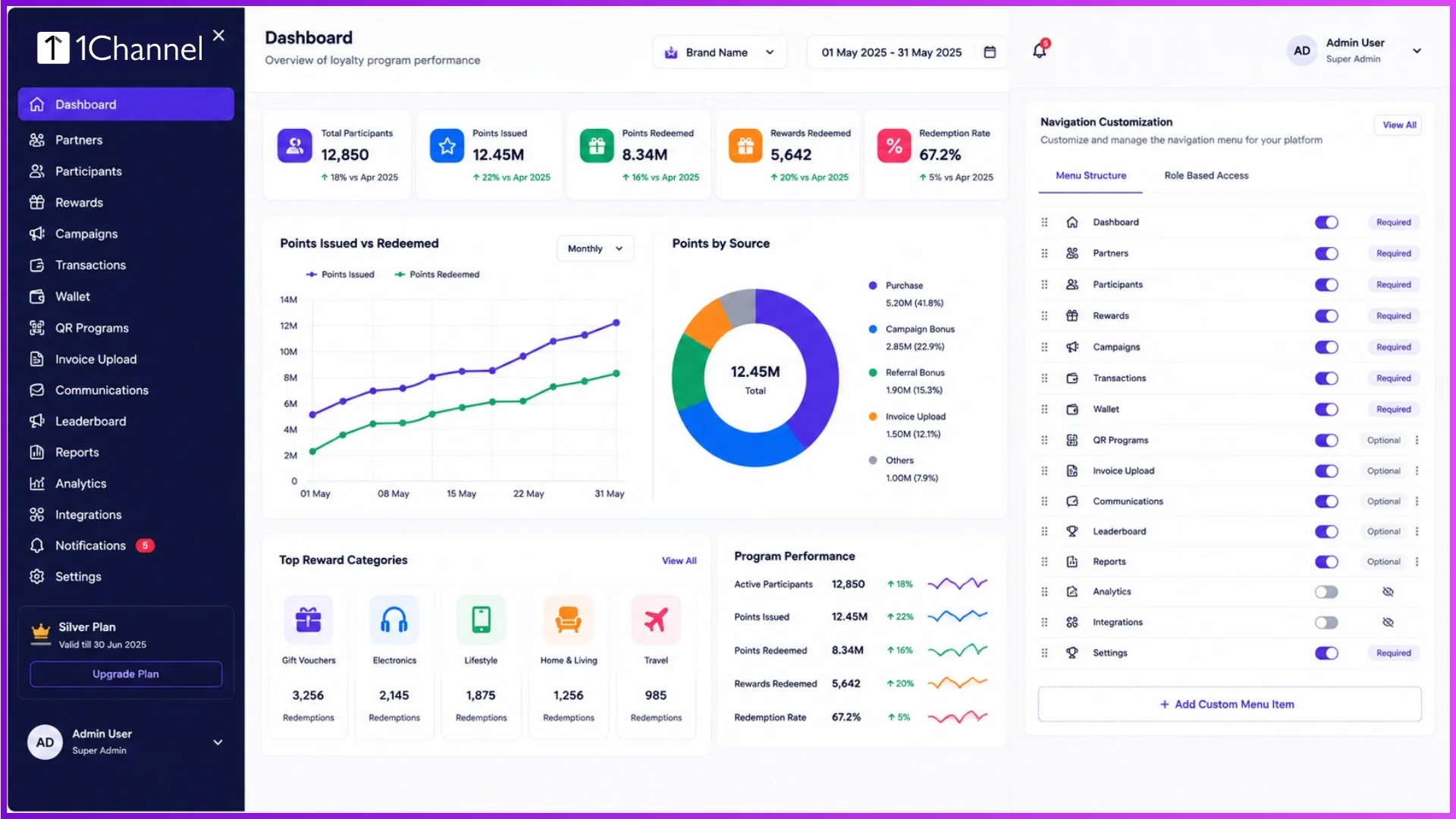
The application architecture keeps navigation simple while allowing organizations to customize how users access various modules.
The platform can include:
- Home Dashboard
- Bottom Navigation
- Side Navigation Menu
- Quick Action Cards
- Profile Access
- Shortcut Icons
Administrators can configure which modules appear, rename menu items, reorder navigation, or restrict access for specific participant categories.
Example:
A distributor-focused loyalty program may display quick access to Transactions and Rewards, while another program may highlight Performance and Campaigns on the dashboard.
Personalization Without Changing the Core Application
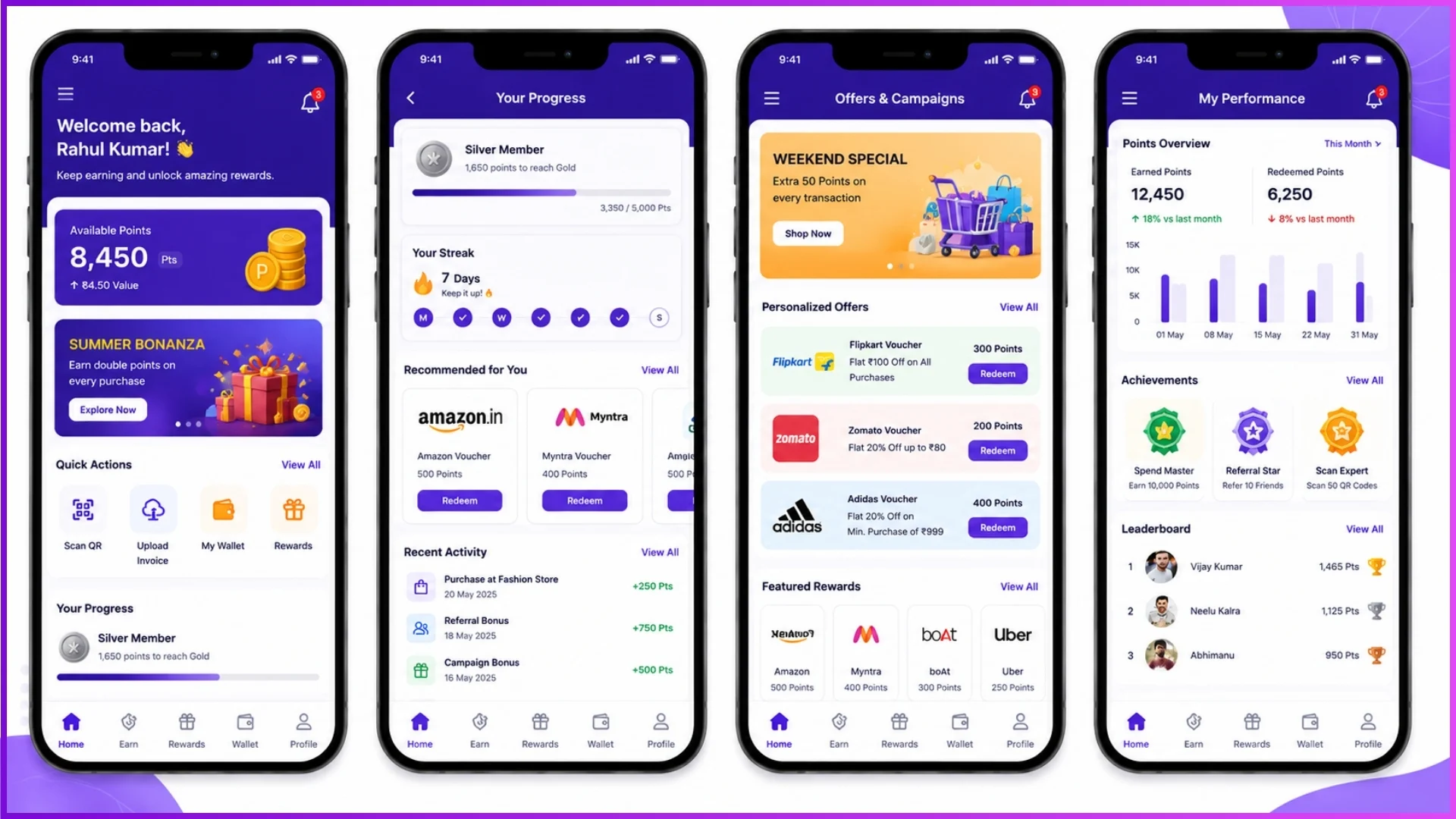
One of the defining characteristics of the architecture is that different participants can experience different versions of the same application.
Depending on configured business rules, the platform can personalize:
- Dashboard widgets
- Reward visibility
- Promotional campaigns
- Notifications
- Menu options
- Leaderboards
Example:
A participant belonging to one membership category may see exclusive rewards and campaign banners, while another category sees a different reward catalogue and notification set, even though both users access the same application.
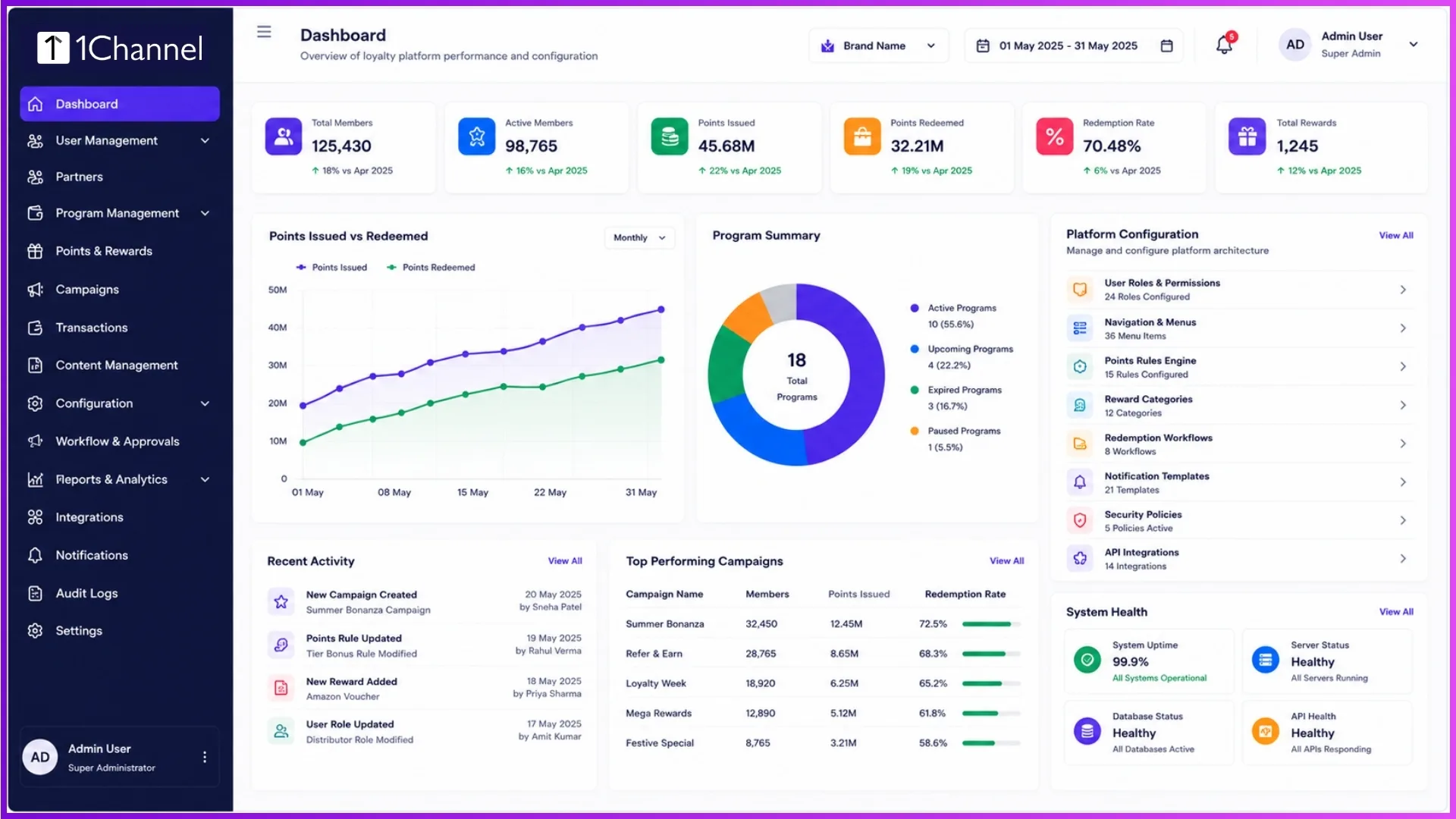
Backend Configuration Powers the Entire Architecture
Rather than modifying application code for routine business changes, administrators manage the platform through a centralized backend.
The backend controls:
- Branding
- Login flow
- Registration process
- Dashboard layout
- Home widgets
- Quick actions
- Menu structure
- Reward catalogue
- Point logic
- Banner content
- Notifications
- FAQs
- Help content
- Terms & Conditions
- Privacy Policy
- Language preferences
Example:
If a business launches a seasonal campaign with new reward categories and promotional banners, administrators can update these configurations through the backend without requiring participants to install a new version of the application.
Architecture Designed for Transparency and Engagement
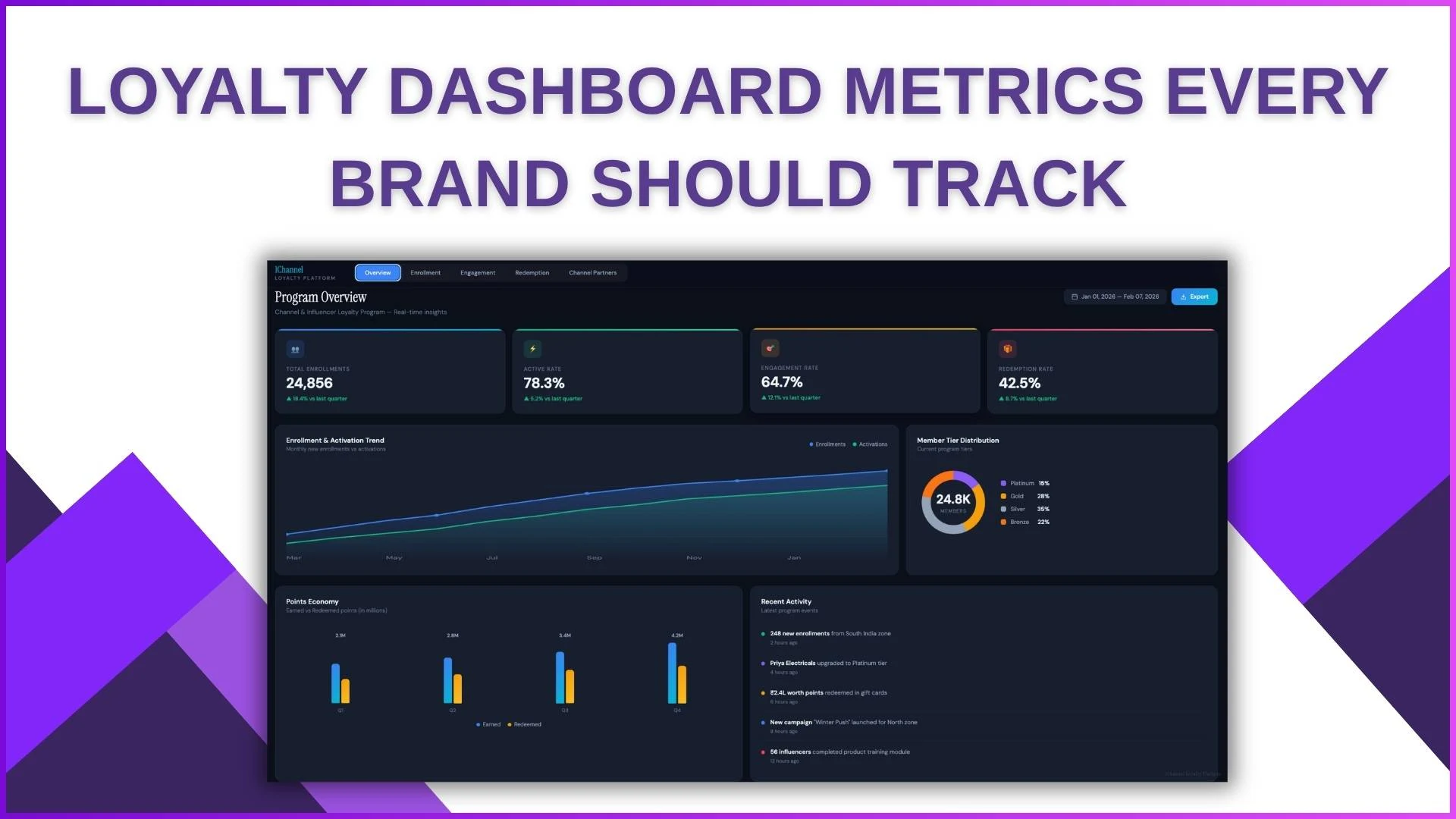
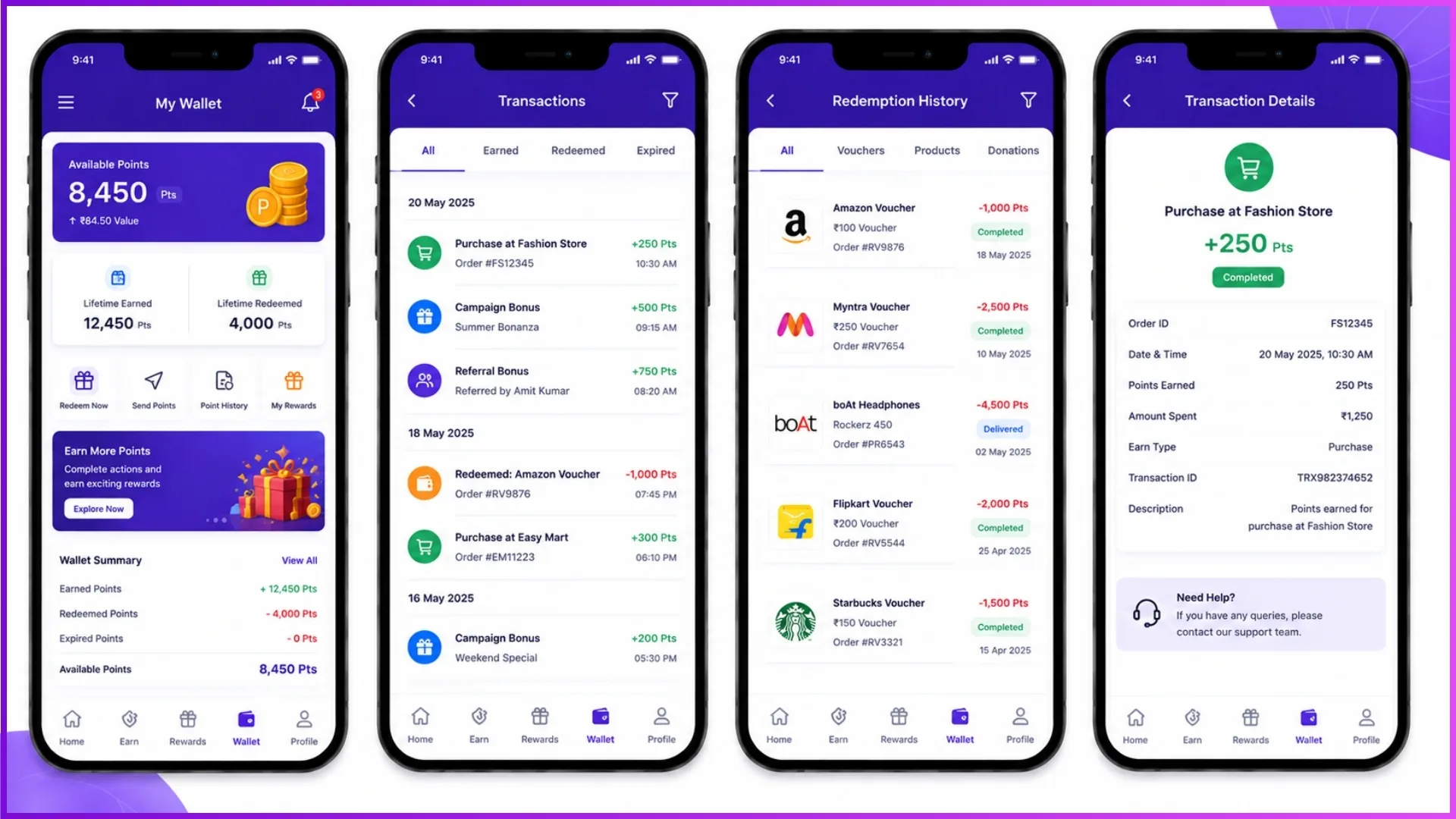
The application architecture ensures participants can easily monitor every important activity throughout the loyalty program.
Users can view:
- Current loyalty balance
- Transaction history
- Reward redemption history
- Performance progress
- Notification history
- Reward order status
This visibility reduces uncertainty while encouraging continued participation in the loyalty program.
Example:
After redeeming a reward, participants can immediately see the deducted points, redemption confirmation, order status, and future delivery progress directly within the application.
Why Choose 1Channel for White Label Loyalty Platform Development?
A configurable architecture is the foundation of every scalable loyalty program.
1Channel delivers white label loyalty platform solutions that allow organizations to configure branding, navigation, dashboards, rewards, business rules, campaigns, notifications, and participant experiences without changing the application's core structure.
This approach helps businesses adapt loyalty programs to evolving operational requirements while maintaining a consistent user experience across the platform.
Explore 1Channel Loyalty Management Software
See how 1Channel's Loyalty Management Software delivers a configurable, white-label application architecture with modular workflows, personalized dashboards, and backend-driven business rules.
Explore Loyalty Management →FAQs
1. What is a white label loyalty platform app architecture?
It is a configurable application structure that enables organizations to launch branded loyalty programs using the same core platform while customizing features, workflows, navigation, and business rules through backend configuration.
2. Can different loyalty programs use the same application?
Yes. The architecture allows administrators to configure dashboards, rewards, campaigns, menus, and participant experiences so multiple loyalty programs can operate on the same platform.
3. How does the platform support personalization?
The application can personalize dashboards, reward visibility, notifications, campaigns, menu items, and other user experiences based on configured participant categories, membership types, regions, or business rules.
4. Can business changes be implemented without updating the mobile app?
Yes. Administrators can manage reward catalogues, banners, notifications, FAQs, dashboard layouts, navigation, and other configurable elements from the backend without modifying the core application.
5. What makes this architecture suitable for long-term loyalty programs?
Its modular and configurable design allows organizations to introduce new campaigns, adjust business rules, personalize user experiences, and evolve loyalty programs while maintaining the same underlying application framework.