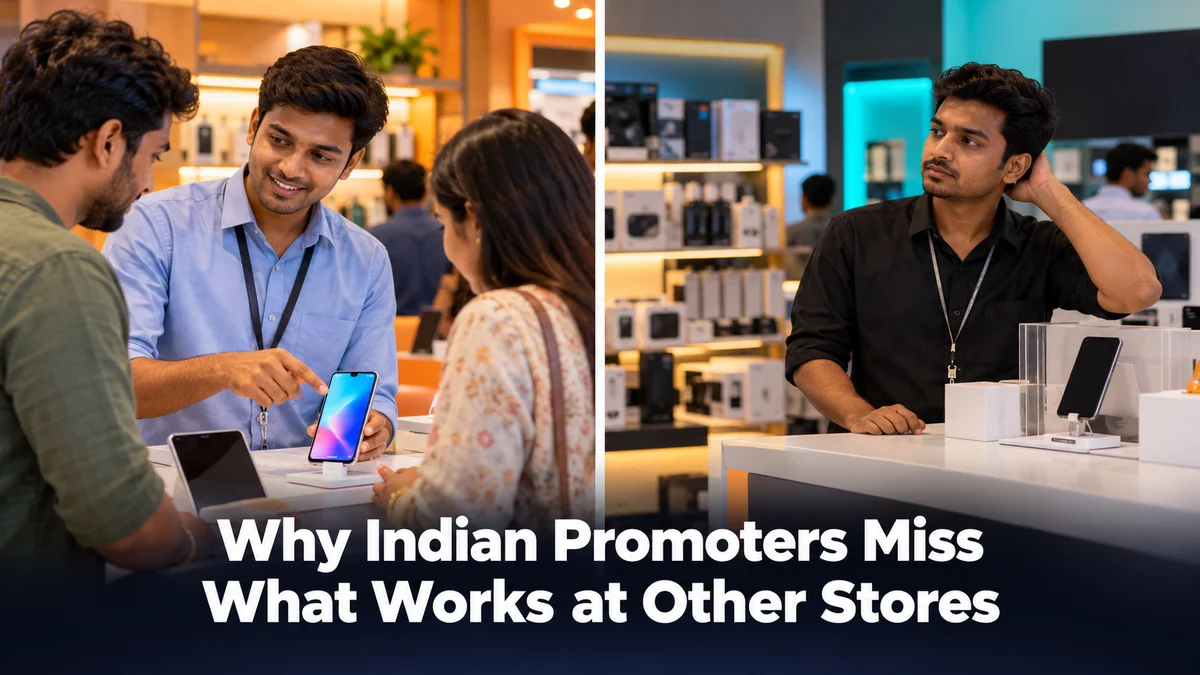
Two electronics stores in different Indian shopping malls sell the same products, run similar promotional offers, and employ trained brand promoters. Yet one store consistently outperforms the other.
At the better-performing store, the promoter keeps a working demo unit on the front counter, letting shoppers try the product before buying. At the other store, the same demo unit sits behind the counter, rarely used.
The second promoter may be following every instruction correctly. What they do not know is that a simple change in placement might help them sell more.
Successful practices often stay confined to the store where they originate. For brands managing hundreds of promoters across India, the problem is not a lack of performance data. It is turning a successful store-level practice into guidance for everyone else.
Why Good Store Practices Stay Invisible
Retail promoters spend their working hours at assigned outlets, whether in shopping malls, electronics showrooms, beauty counters, or multi-brand stores. A supervisor managing dozens of locations cannot observe every customer interaction or display arrangement.
A few things make this knowledge sharing hard. A promoter in Pune may never interact with someone selling the same product in Hyderabad, so an effective technique discovered there has no guaranteed path to Pune. Sales dashboards show which outlets beat their targets, but not always why: better visibility, a different demo approach, stronger stock availability, or simply more footfall. What success stories do get shared often travel through meetings or WhatsApp conversations that never translate into a specific action for a specific store.
The result is a retail network where useful knowledge exists, but stays unevenly distributed.
What Promoters Could Learn From Better-Performing Stores
A successful retail practice does not always need a major campaign or investment. Small execution changes can matter just as much.
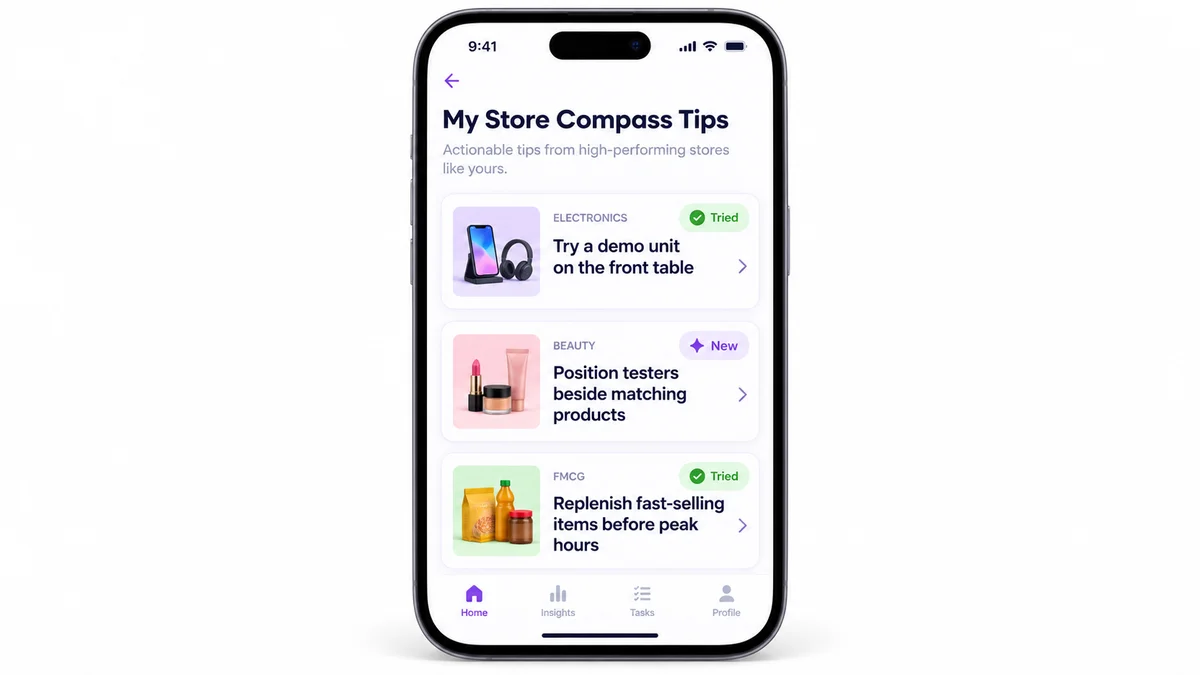
In electronics, a promoter might notice shoppers engage more readily when a working unit sits at the front counter instead of waiting to be requested. In beauty, testers positioned beside their matching products make it easier for shoppers to try them. In FMCG, a store that checks shelf availability and replenishes fast-selling products before peak hours avoids the stock gaps another outlet might be struggling with.
These examples are illustrative, and their effectiveness depends on actual store conditions. The point is that practical improvements become more valuable once relevant stores can learn from them.
How 1View Store Compass Turns Store Insights Into Action
Traditional retail reporting helps a manager understand performance. A promoter on the shop floor needs something more immediate: guidance on what to try differently. That is the idea behind Store Compass, an AI-powered capability in 1View.
Store Compass provides store-level tips learned from what similar stores do better. Rather than only showing performance numbers, it surfaces a practical suggestion a promoter can consider during everyday execution. A Store Compass tip might read:
"Similar stores sell more with a demo unit on the front table. Try it this weekend."
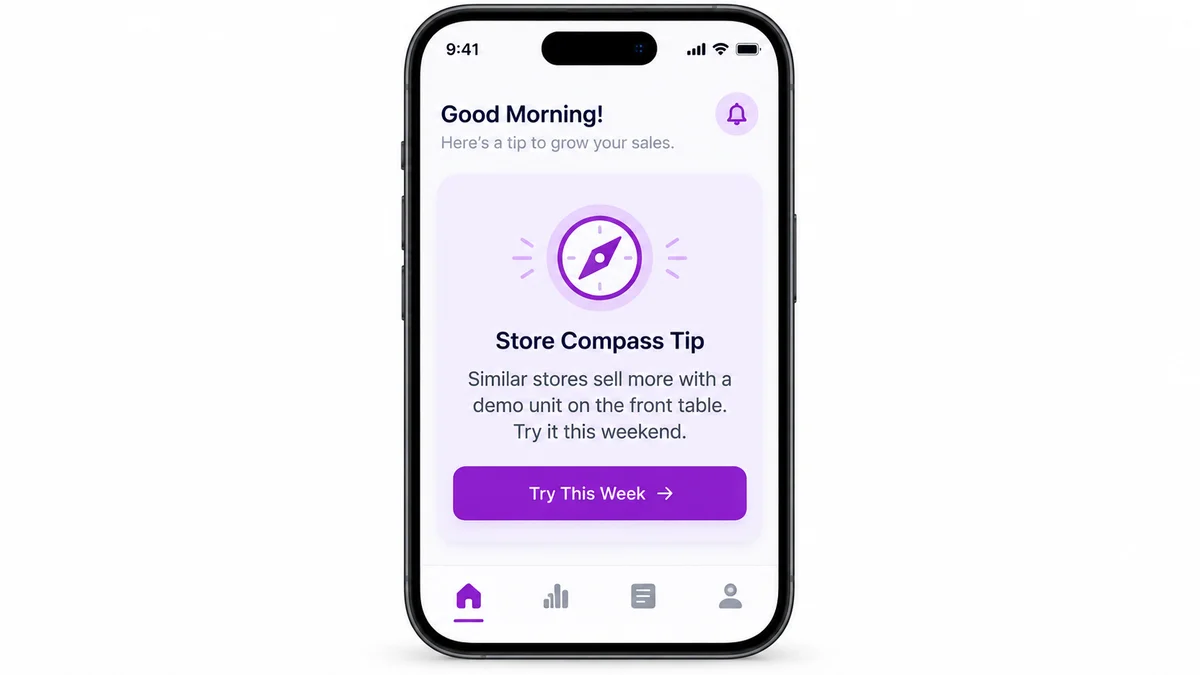
That is different from simply showing a promoter they have reached 65% of their monthly target. A target figure describes performance; a Store Compass tip identifies something worth trying, which matters for Indian retail programmes where promoters rarely get to observe practices beyond their own outlet.
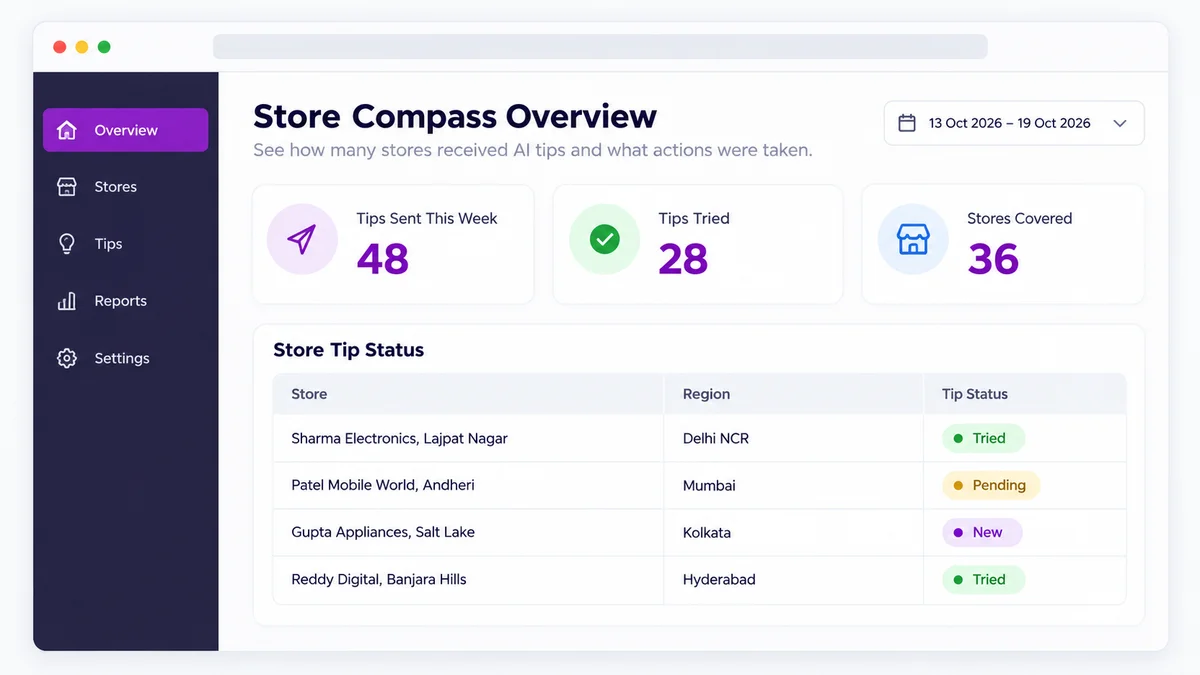
1View also tracks store-level sales, stock, targets, and visit activity, giving brands visibility across distributed retail operations. Store Compass adds a store-focused recommendation layer on top of that.
Why Lessons From Similar Stores Matter More
Not every successful practice should be copied across an entire network. A high-performing flagship outlet in Mumbai may have very different footfall, display space, and shopper expectations than a smaller multi-brand store in Jaipur.
A large demo unit near the entrance might work in a spacious showroom and be impractical in a compact one. That is why learning from similar stores, rather than copying whichever outlet sells the most, is the more useful distinction. Even a relevant recommendation is an opportunity to test, not a guarantee of higher sales; promoters and store managers still need to apply their own read of local customers and constraints.
From One Store's Success to Better Execution Across Stores
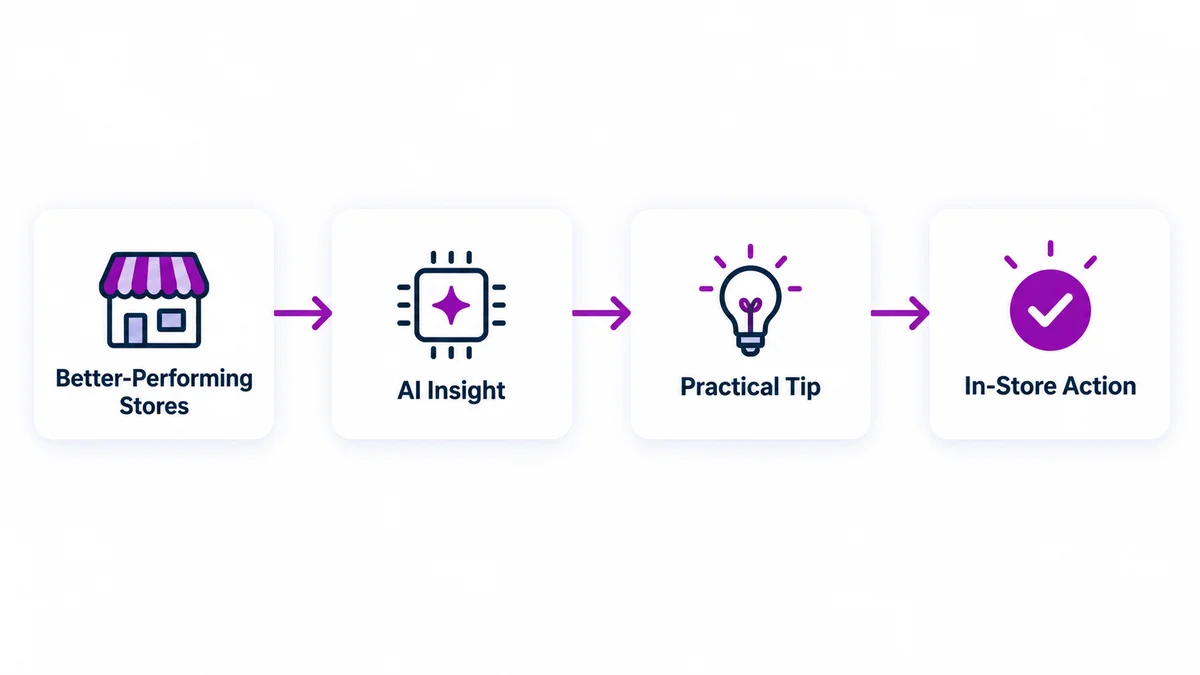
The bigger opportunity for a retail brand is a continuous loop: identify what a better-performing store does differently, turn that into a clear suggestion, let a promoter try it locally, and review the results before deciding whether it is worth continuing.
A regional manager overseeing promoters across Delhi NCR, for instance, could encourage specific store-level experiments instead of telling every promoter to simply improve. One might try better demo visibility, another might focus on replenishment timing. The goal is not to make every store identical. It is to help each one adopt the practices that would otherwise stay undiscovered.
Why Choose 1View for Smarter Retail Execution?
1View brings field execution, sales and stock tracking, and AI-powered insights into one platform for retail programmes. Its Store Compass capability turns store comparisons into practical, store-level suggestions promoters can actually try.
Explore 1Channel's Sales Force Automation →Conclusion: Good Practices Should Not Stay in One Store
Across India's retail networks, promoters come across useful selling ideas every day. When those ideas stay confined to one outlet, every other store misses a chance to improve.
Identifying the best-performing location is not enough on its own. Brands also need a way to turn that store-level learning into guidance a promoter can act on, which is what AI-powered store execution tools like Store Compass are built for.
Frequently Asked Questions
1. Why do retail promoters struggle to learn from other stores?
Promoters usually work at separate outlets with limited opportunities to observe colleagues. Performance reports and supervisor discussions may not capture or communicate the specific practices responsible for better results.
2. How can brands identify successful practices across retail outlets?
Brands can review store-level sales, product availability, merchandising execution, and field observations to identify potentially useful practices. Comparing similar stores makes those observations more relevant.
3. What is Store Compass in 1View?
Store Compass is an AI-powered 1View capability that provides store-level tips based on practices that work better at similar stores. It helps translate store performance insights into practical suggestions.
4. What is the difference between a sales target and a Store Compass tip?
A sales target shows whether a store or promoter is ahead of or behind a goal. A Store Compass tip is a practical, store-level suggestion based on what works better at similar stores, meant to be tried rather than just reported.
5. Can AI recommendations replace on-ground retail sales coaching?
No. AI recommendations can supplement coaching with relevant suggestions, but supervisors still play an important role in assessing store conditions, guiding promoters, and reviewing execution outcomes.
Note: Software screens may vary based on your business structure and configured workflows.