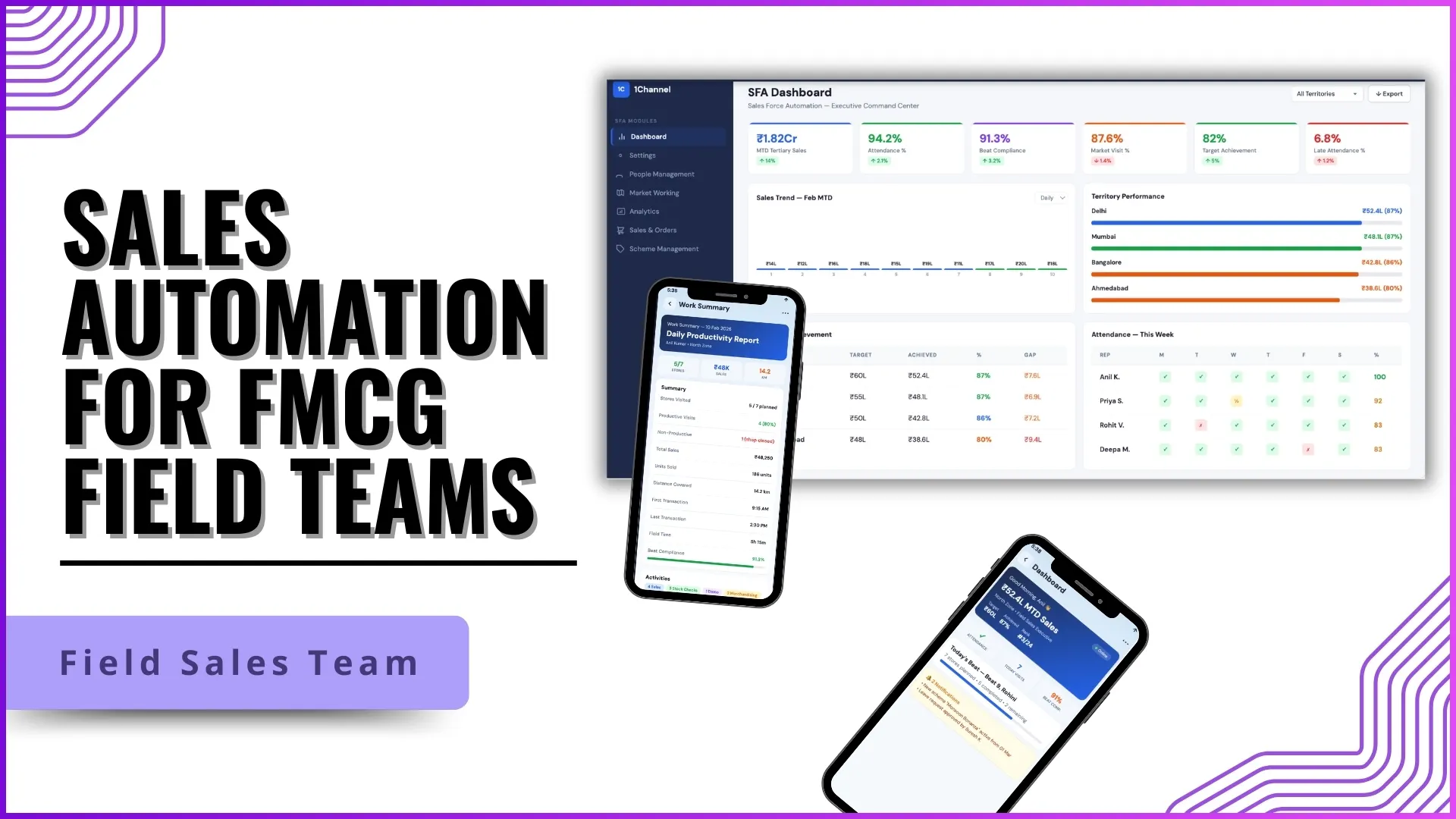
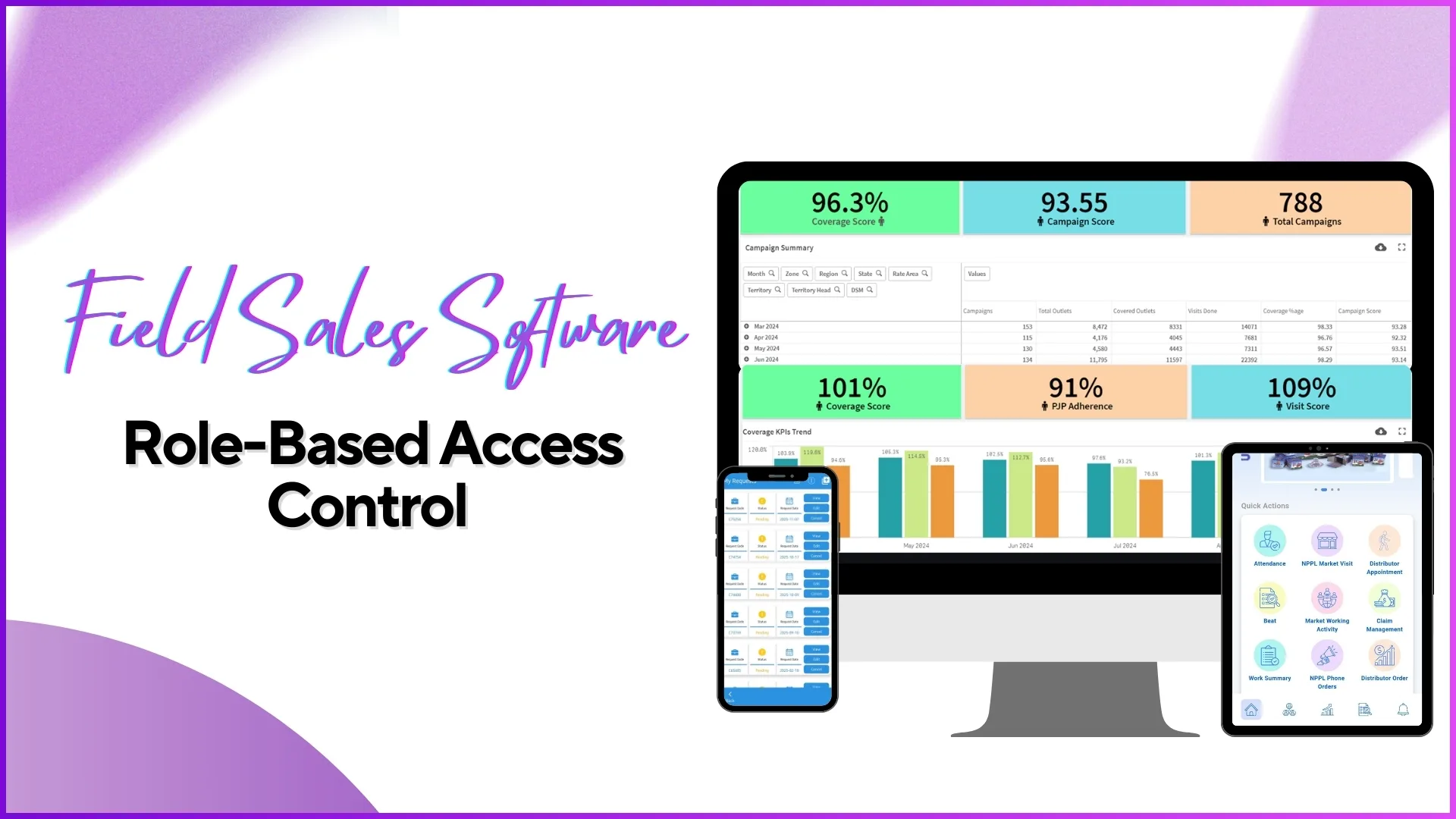
Manufacturers that automate the channel side of their sales operation gain three things at once: real visibility into distributor and partner performance, faster order cycles that do not depend on phone calls and emails, and structured incentive payouts that stay aligned with sell-through. Channel sales automation is what brings these together under a single platform, replacing the patchwork of distributor portals, ad-hoc spreadsheets, and manual reconciliations that most indirect operations still run on.
Table of Contents
What Channel Sales Automation Replaces
Most channel operations run on hand-offs. The manufacturer sends pricing and stock updates to distributors over email. Distributors push orders back through portals that may or may not sync with the manufacturer's ERP. Field reps follow up sell-out at retail with paper forms. Schemes get communicated in PDFs and reconciled at quarter-end. Each step works in isolation but the system as a whole has no shared truth. Channel sales automation collapses those hand-offs into one continuous flow with the same data visible at every level.
Five Modules That Run the Channel Stack
A working channel automation platform sits on five modules:
Partner Management
The master record for every distributor, dealer, and sub-distributor, with their classification, credit limits, and territory mapping.
Order and Inventory
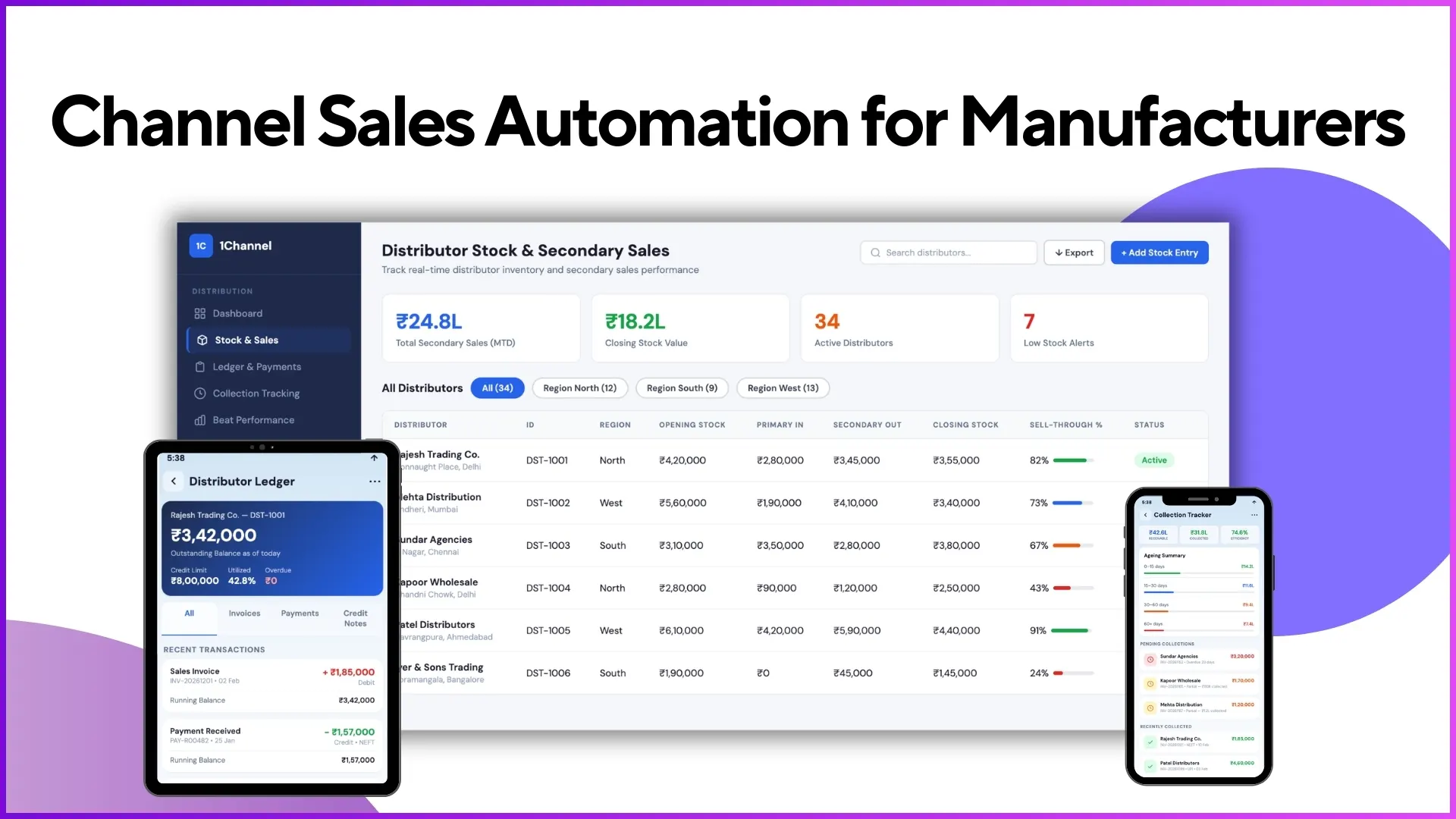
Real-time order placement, stock visibility across distributor warehouses, and primary sales tracking back to the manufacturer.
Field Sales for Indirect Channels
Beat plans, store visits, and sell-out capture for the rep teams employed by manufacturers or their distributors.
Scheme and Incentive Management
Configurable schemes by SKU, region, and time window, with auto-calculation against actual purchase data.
Analytics and Reporting
Sell-in, sell-out, and stock dashboards that update as the data lands.
Visibility That Reaches the Last Distributor
The single biggest gap in manual channel operations is visibility into sell-out. The manufacturer sees primary sales, meaning what shipped to distributors, but loses the trail at the second hop. Automation closes the gap by pulling secondary sales data from distributor systems or field rep captures back into the manufacturer's dashboard. The result is stock-on-hand, in-transit, and consumed quantities visible per distributor per SKU, refreshed on the platform's own clock.
Incentives That Run Themselves
Scheme management is the area where channel teams lose the most time. The manufacturer designs a quarterly slab scheme. The distributors track their progress in spreadsheets. The finance team reconciles claims at the end, and disputes pile up. Automation moves all of this into the platform. Schemes are configured once, applied to actual transactions as they happen, calculated for each distributor in real time, and visible to both sides. Quarter-end becomes a payout event, not a reconciliation cycle.
Explore Distributor Order Management Software
1Channel's cloud distributor order management module handles order placement, stock visibility, and scheme calculation across the full channel network for Malaysian manufacturers.
Explore Distributor Order Management →How 1Channel Delivers the Pay-Off for Manufacturers
1Channel brings the five modules together on a single cloud platform. The Distributor Order Management module handles order placement and stock visibility, the Distributor Portal gives partners direct access to their data, the SFA layer powers field rep activity, and the scheme engine calculates incentives against real transactions. The platform is configurable per industry, scales from a single distributor pilot to a nationwide channel, and integrates with existing ERP and finance systems so manufacturers do not have to rebuild their stack.
Three operational wins show up first. Order-to-delivery cycle times drop because the manufacturer responds to live demand signals rather than monthly reports. Stock-out incidents fall because 1Channel surfaces low-inventory distributors before they hit zero. Channel partner engagement improves because the same data the manufacturer sees is also visible to the partner, removing the trust friction that comes with opaque settlements.
Conclusion
Channel sales automation is not a single tool, it is the operational fabric that holds a manufacturer's indirect business together. When partner data, order flow, schemes, and analytics live on the same 1Channel platform, the manufacturer stops chasing distributors for updates and starts running the channel with the same level of control as its direct operations.