A QR code redeemed twice does more damage than the second credit suggests. The program pays out for the same purchase twice, and the audit trail breaks.
Scale that to a few hundred duplicates a week, and the leakage compounds into a real budget hole by quarter-end.
Stopping the duplicate at the scan is the only economical defence. Catching it later, after the credit has landed and the partner has spent it, is forensic work, not prevention.
Table of Contents
What a Duplicate Scan Looks Like in Practice
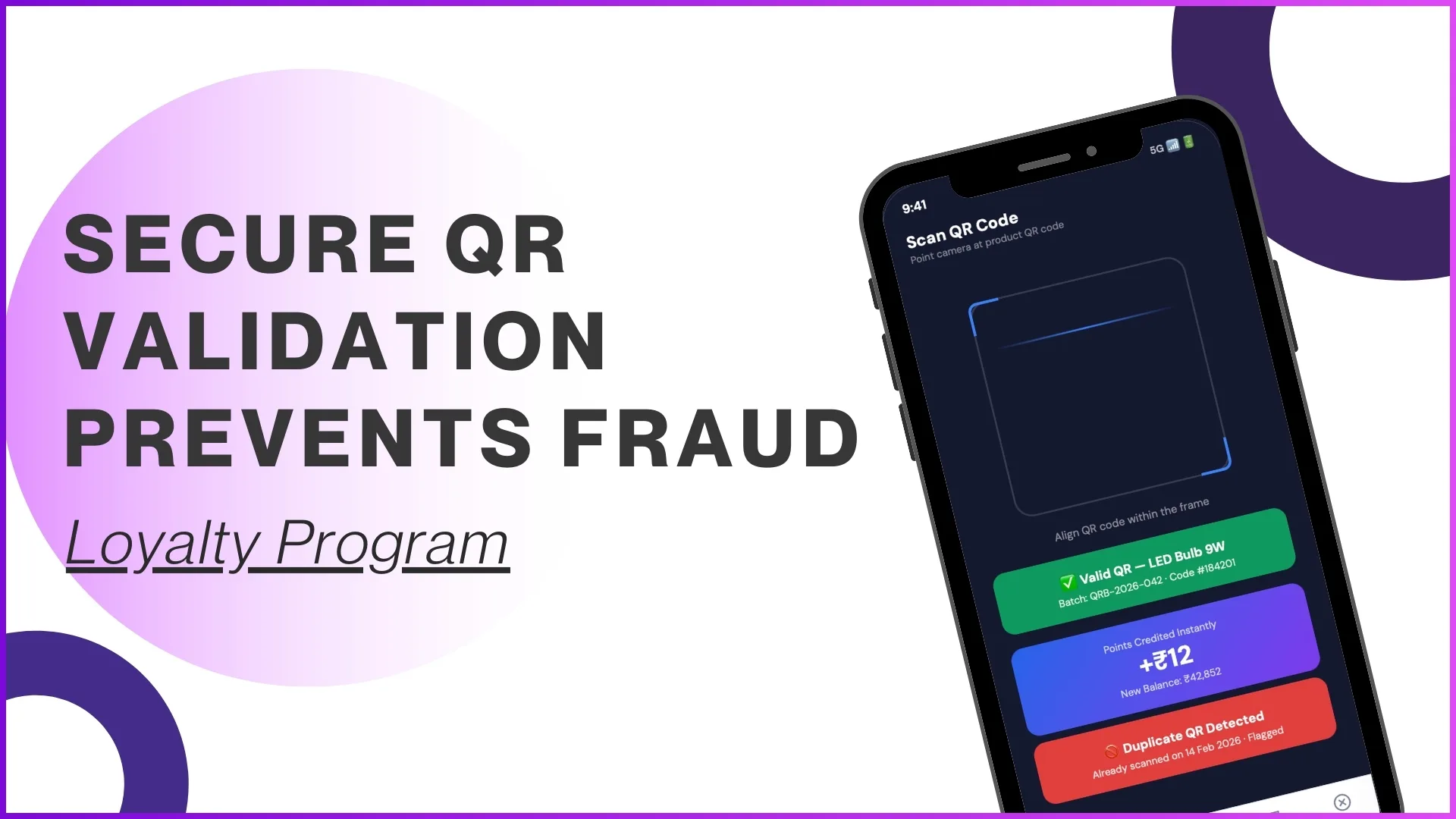
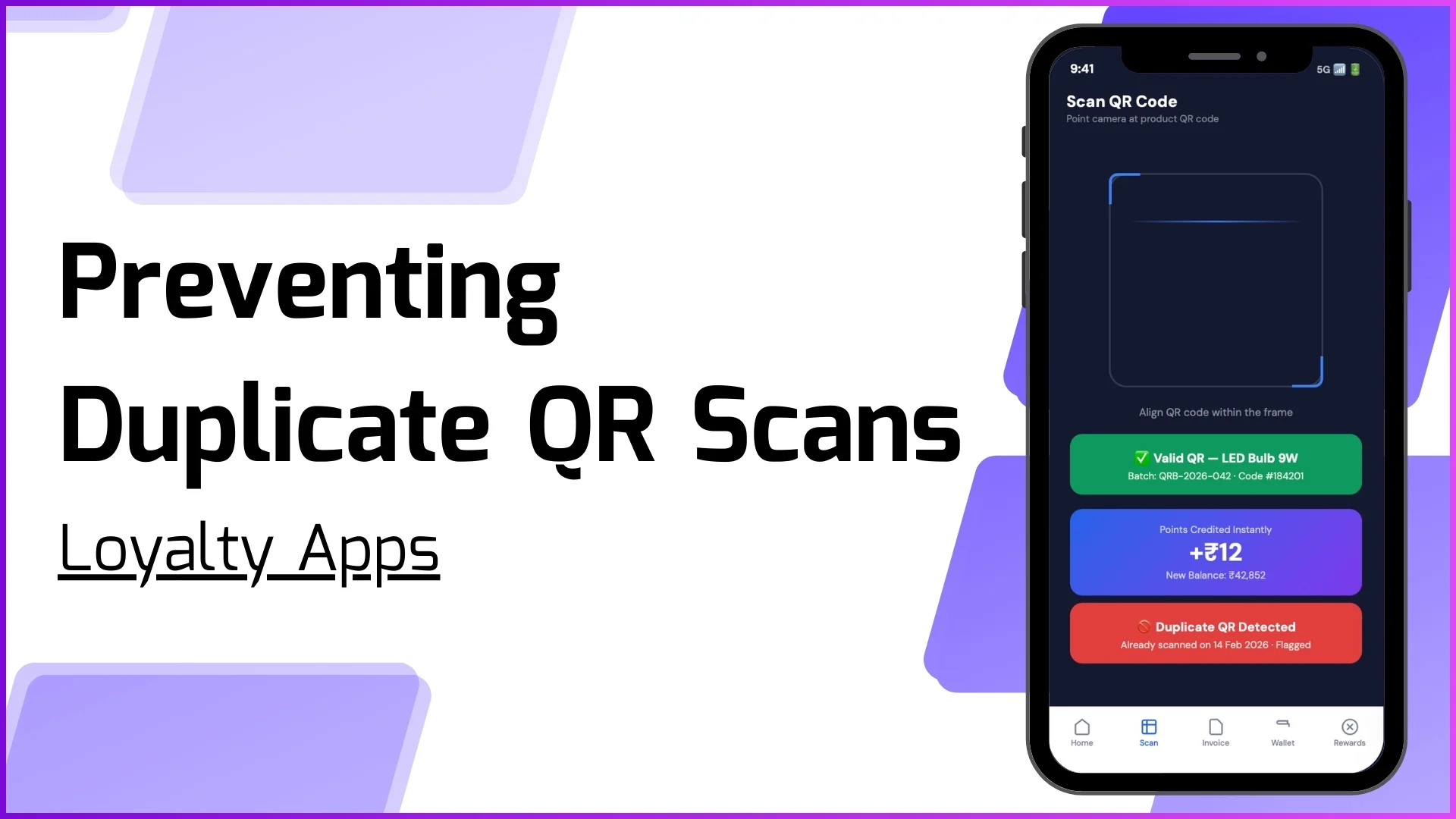
A duplicate scan is any attempt to redeem a QR code that has already been validated and credited once. The second attempt can come from the same device, a different device, or another retailer's network entirely.
The platform's job is to recognise the code as already used and reject the second attempt before the points calculation runs. The reject has to be polite enough for genuine errors and firm enough for fraud attempts.
Four Patterns Behind Duplicate Scans
Most duplicate-scan events fall into one of four patterns. Each pattern needs a different response strategy:
| Pattern | Origin | Response Strategy | Audit Trail Note |
|---|---|---|---|
| Genuine Retry | Partner re-scans after a network timeout | Friendly "already redeemed" message with status check | Mark as benign retry |
| Code Sharing | Photo of the QR code circulated in a chat group | Hard reject plus anomaly queue entry | Flag for partner-segment review |
| Collusive Re-Use | Retailer and partner agree to share a code | Hard reject plus escalation to compliance | Audit log links the scans by device fingerprint |
| Spoofed Code | Printed copy without the server signature | Reject at the authenticity layer | Reject reason logged for analysis |
Why Catching It at the Scan Beats Catching It at Audit
A duplicate caught at the scan costs the program nothing. The platform returns "already redeemed," the ledger stays clean, and the partner moves on.
A duplicate caught at audit, after the credit has landed, costs the program the credit plus the cost of reversing it plus the partner-trust hit when the reversal shows up in their wallet.
How the Cloud Validation Layer Stops the Loop
Every QR code carries a unique server-issued ID. The cloud platform records the redemption status against that ID the moment the first scan clears.
Every subsequent scan, from any device or any retailer, queries that status before the points engine runs. The check completes in milliseconds, so the partner sees the result inside the normal scan flow.
How 1Channel Blocks Duplicate Scans Inside Malaysian Loyalty Programs
1Channel runs duplicate-scan defence through its cloud Loyalty Management module. Every QR code carries a cryptographic signature, and every scan attempt updates the central ledger automatically, so duplicate detection runs across devices, retailers, and regions in a single pass.
1Channel's AI engine watches for organised duplicate patterns. Geo-clusters of rejected scans, repeating identities behind sharing attempts, retailers whose codes are re-scanned at unusual rates: all surface as alerts before the leakage shows up at quarter-end.
Every accepted and rejected scan lands in the audit log automatically with timestamp, device fingerprint, geo-stamp, and reason code. Disputes resolve on evidence, and the fraud review reads the log instead of rebuilding the timeline manually.
Explore Cloud QR Invoice Loyalty
1Channel's cloud QR invoice loyalty platform runs duplicate-scan defence with AI pattern detection and automated audit logging.
Explore QR Invoice Loyalty →Action Checklist for Tightening Duplicate-Scan Defence
A clean sequence to harden a QR loyalty program against duplicates:
- Make every code uniquely identifiable on the server. A QR with no server-side ID cannot be tracked, and untracked codes are the easiest fraud vector.
- Enforce the one-time-scan rule at the platform, not on the device. Device-side enforcement can be bypassed; platform-side cannot.
- Build the polite-reject UI for genuine retries. Most repeat scans are network timeouts, not fraud. A friendly "already redeemed" message keeps the partner experience clean.
- Cluster reject reasons in the analytics layer. Track the rejection mix over time to spot organised patterns versus background noise.
- Tie the rejected stream to the manager dashboard. A spike in rejections in a region is an early signal worth surfacing before the leakage becomes quarter-end news.
- Recalibrate threshold rules quarterly. Fraud techniques evolve, and the platform's defaults need a review window built into the operating rhythm.