A QR code is just a pattern. The same pattern can carry a one-time, signed, server-validated reward token, or it can be a printed image that anyone with a phone can scan.
The distance between those two QR codes is the difference between a clean loyalty ledger and a fraud-soaked one.
Secure QR validation is the discipline that decides which kind of QR the program is actually running. The mechanics live on the cloud platform, not on the printed sticker.
Table of Contents
Why Loyalty QR Needs More Than a Simple Scan
Most loyalty fraud at the QR layer is not exotic. It is a printed code shared on a closed group, scanned by ten different phones, and claimed as ten separate purchases.
A scanner that just reads the code and credits points has no way to tell those ten claims apart. Each scan looks identical at the device level.
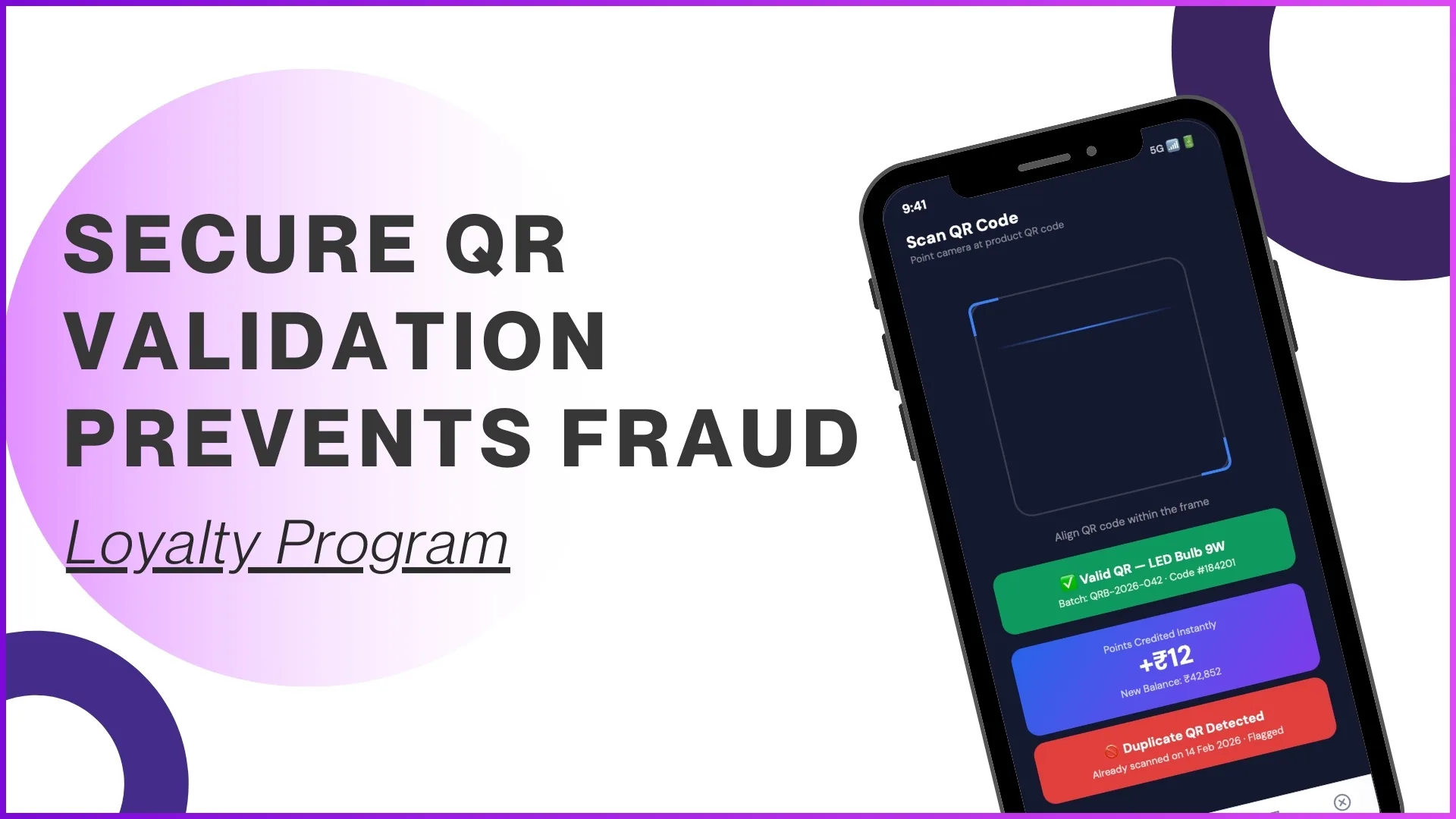
Secure validation breaks that pattern. The same code cannot redeem twice, and a code that does not match the server's record gets rejected before the points ledger sees it.
Five Validation Layers That Stop Fraud at the Door
A serious QR validation stack runs through five layers. Each one rejects a different fraud pattern before it reaches the reward ledger:
Layer 1: QR Code Authenticity Check
The server verifies the cryptographic signature embedded in the code. A code that was not issued by the brand's loyalty platform fails immediately, no matter how convincing the printed image looks.
Layer 2: Duplicate Scan Prevention
Every successful scan locks the code as used. The next attempt on the same code from any device returns an "already redeemed" response. The fraud pattern of one-code-many-claims dies here.
Layer 3: Product-Level Reward Control
The code carries the SKU it was issued for. The platform validates the SKU against the active scheme, so a code printed on a 50 ml pack cannot claim the reward for a 500 ml pack.
Layer 4: Mobile Identity Pairing
The scan is tied to the authenticated mobile session. The same code scanned by two different phones triggers an anomaly flag and routes the second attempt through manual review automatically.
Layer 5: Backend Audit Trail
Every attempt, successful or rejected, lands in the audit log with timestamp, device fingerprint, geo-stamp, and reason code. Disputes resolve on evidence, not on memory.
How 1Channel Powers Secure QR Validation
1Channel runs secure QR validation through its cloud Loyalty Management module. Every code carries a cryptographic signature generated at issue, and the validation logic sits inside the same platform that runs the rest of the loyalty workflow.
1Channel's AI engine watches the rejected-scan stream for organised patterns. A cluster of rejections from a single geography in a tight time window gets flagged, and the operations team sees the fraud signal before the financial impact accumulates.
Configuration runs through the admin console: which SKUs need which validation layers, how long the validity window is, what the duplicate-attempt threshold should be. Changes go live with an automated dry-run, so the program team previews the impact before activation.
Explore Cloud QR Invoice Loyalty
1Channel's cloud QR invoice loyalty platform runs signed-code validation with AI fraud detection and automated audit trails.
Explore QR Invoice Loyalty →Frequently Asked Questions
How does QR validation know a code has already been used?
Every successful scan flips the code's status in the cloud platform's ledger. The next scan, from any device, queries that status and returns "redeemed" before any points calculation happens.
Can a partner appeal a rejected scan?
Yes. The audit log preserves the rejection reason, the device fingerprint, and the timestamp. The operations team can review the entry against the partner's history and clear the rejection if the evidence supports it.
What stops someone from printing fake QR codes?
The cryptographic signature embedded in every legitimate code. A printed copy without the signature fails authentication at Layer 1, and the platform rejects it before it gets near the reward ledger.
Does the validation slow the partner experience down?
No. The five layers run in milliseconds. The partner sees a normal scan flow with an authentic confirmation message.
Where does the audit log help most?
In commercial disputes and quarterly fraud reviews. The log carries the evidence a brand needs to defend a payout decision or to demonstrate program governance to internal stakeholders.