A missed shelf facing is the silent killer of retail campaigns. The brand pays for the placement, the rep validates the shelf at the morning visit, and within hours a shopper buys the last unit and nobody notices the gap until the next cycle.
Manual audits catch some of these gaps; image-only audits catch more. Neither scales to the cadence the brand actually needs. A retail chain with 2000 outlets cannot read every shelf photo by hand.
AI shelf-gap detection closes the loop. The platform reads every photo against the planogram, flags the gaps, scores the severity, and routes the rectification automatically. The brand reads what was missing, where, and when.
Table of Contents
What "Shelf Gap" Actually Means at the Retail Floor
A shelf gap is any deviation between the brand's planogram and the actual state of the shelf. It can be a missing facing, a wrong SKU in the slot, an off-position pack, a faded price tag, or a displaced POSM kit.
Each gap has a different commercial cost: lost sale, brand visibility loss, customer experience friction, or compliance failure. The platform reads all of them as detectable signals.
Seven Steps in the AI Shelf-Gap Detection Workflow
Seven steps cover the workflow from setup to action:
1. Defining the Shelf Standard
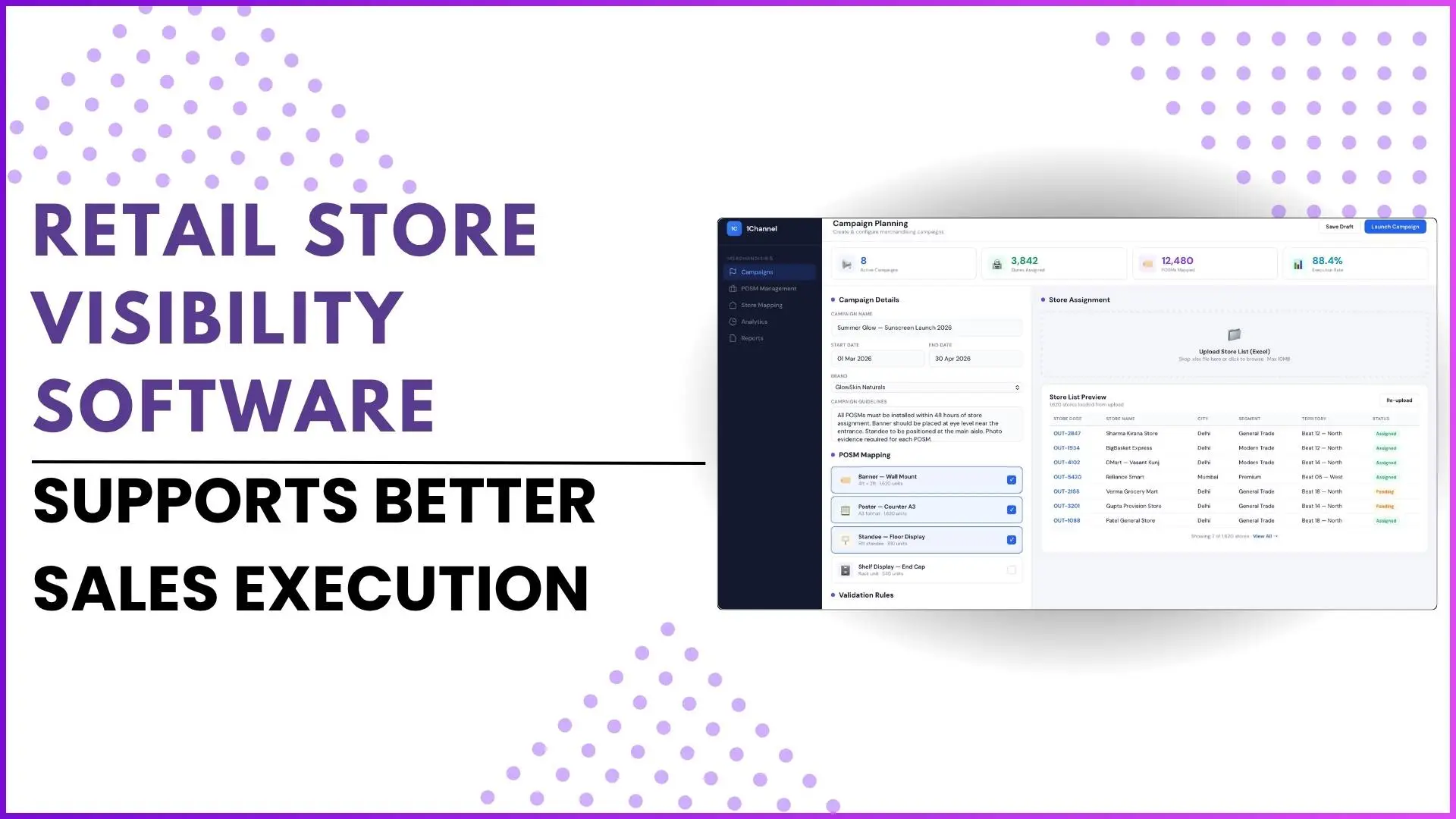
Brand teams lock the planogram, the facing count, the SKU sequence, and the price-tag norms for each category and chain.
2. Capturing the Field Image
The rep photographs the shelf during the visit, geo-tagged and time-stamped. The capture flow guides the angle and distance.
3. AI-Based Image Analysis
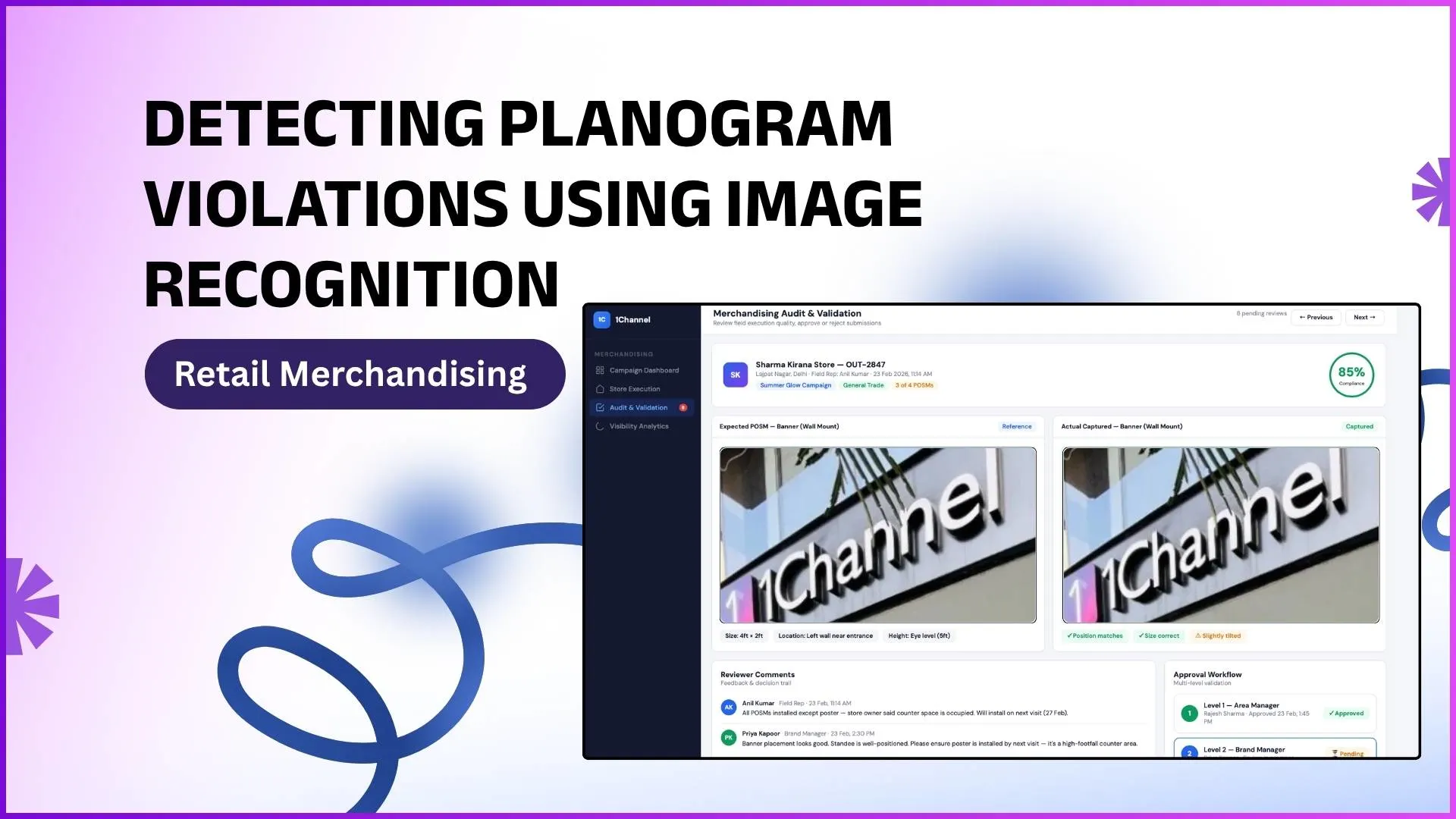
The cloud AI engine reads the photo, identifies every SKU on the shelf, counts the facings, validates the sequence, and detects POSM placement.
4. Comparing Actual vs Expected
The platform compares the AI output to the planogram standard. Variances surface as scored gaps, ranked by commercial impact.
5. Multi-Level Audit Layering
The rep self-audits the gap report, the supervisor verifies a sample, the brand auditor cross-checks high-impact stores. Each tier signs off in the same workflow.
6. Continuous Automated Auditing
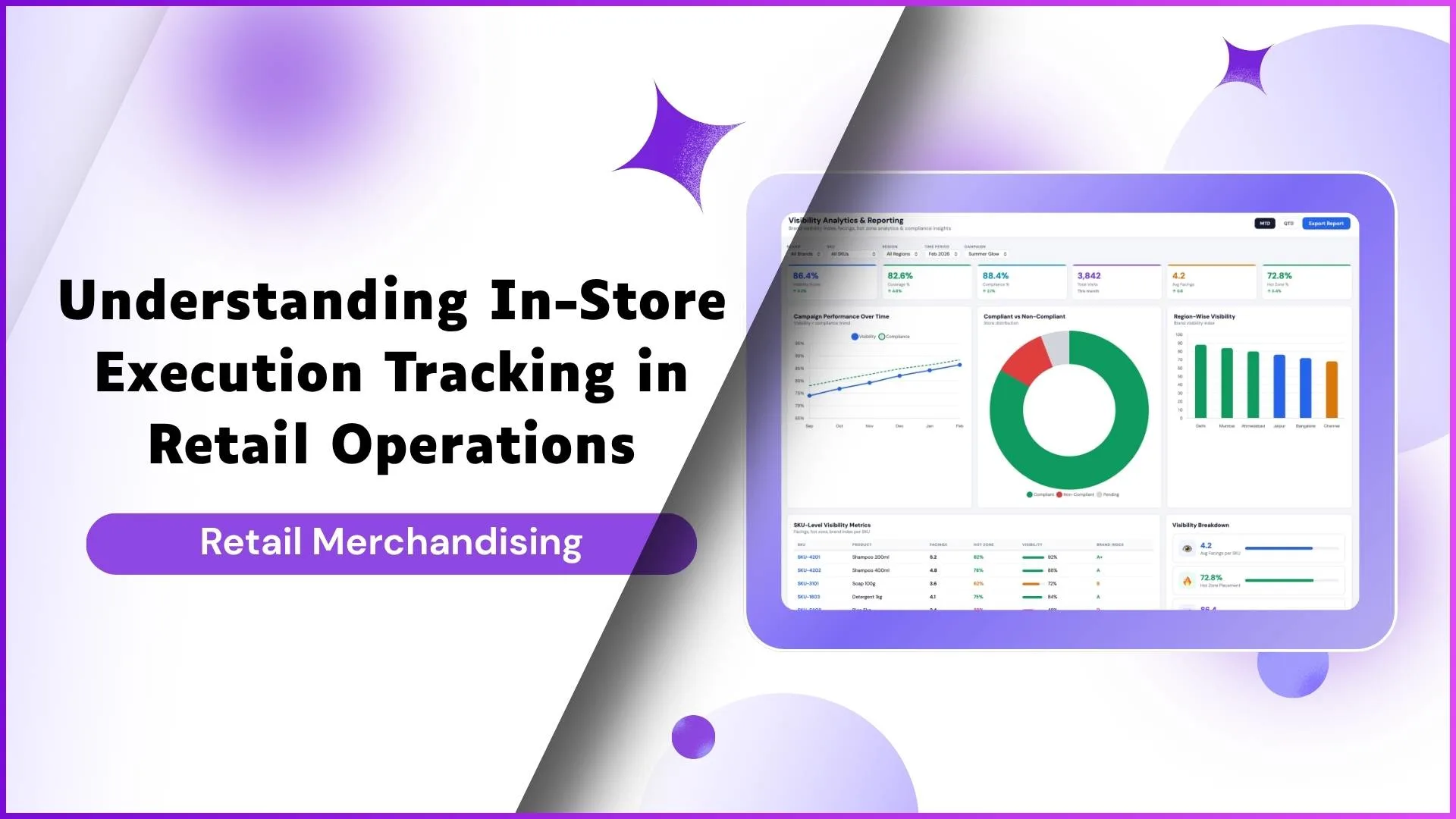
Repeat visits feed the agent. Trend analysis runs automatically: persistent gaps surface as systemic, one-off gaps surface as transient.
7. Exception Handling and Alerts
Critical gaps (out-of-stock on a flagship SKU, missing POSM during a campaign window) trigger immediate alerts and route to the responsible field supervisor.
Where the Pattern Detection Pays Back
The single-photo gap report is useful. The multi-photo pattern is where the AI starts paying back operationally.
A planogram drift across one chain, a recurring stock-out at one store cluster, a POSM placement bias across one geography: all surface from the trend, not from any single audit.
How 1Channel Runs AI Shelf-Gap Detection for Malaysian Retail
1Channel runs shelf-gap detection through its cloud retail execution suite. Brand teams, merchandising supervisors, and field reps all read the same gap state in real time.
1Channel's AI engine handles the image analysis, the variance scoring, the trend detection, and the alert routing. Configuration runs through the admin console without developer involvement.
New planogram standards, gap thresholds, audit cadences, and exception rules go live the same day they are approved, with an automated dry-run preview against existing store data.
Explore POSM Tracking & Proof of Execution
1Channel's cloud POSM tracking platform pairs shelf-gap detection with AI-driven variance scoring and automated proof-of-execution audits for Malaysian retail.
Explore POSM Tracking →FAQs
What counts as a shelf gap in retail?
Any deviation between the brand's planogram and the actual shelf state: missing facings, wrong SKU in slot, off-position packs, faded price tags, or displaced POSM.
Can AI replace manual shelf audits?
It augments rather than replaces. AI handles scale and consistency; the human handles judgement calls and exception verification.
How accurate is AI shelf-gap detection?
Accuracy depends on capture quality and training data. With consistent angles, planogram-trained models, and quarterly tuning, accuracy reaches 90 to 95 percent on most categories.
Which industries benefit most from this approach?
FMCG, alcohol and beverage, consumer electronics, personal care, and pharma all run high-volume planogram-driven shelf operations that pay back the AI cost quickly.
How long does an AI shelf-gap rollout take?
A pilot in 25 stores lands inside 30 days. Tuning to production quality takes another 30 to 60 days, depending on category complexity and capture discipline.