Without store visibility, an FMCG brand sells on faith. The campaign brief leaves the office, the dispatch leaves the warehouse, and the brand assumes that what was promised on the shelf is what is actually on the shelf.
Every gap in that chain costs measurable revenue. A missing facing, a misplaced POSM kit, a delayed compliance pickup, a stock-out hidden behind a competitor's pack: each shows up as soft underperformance in the month-end report, with no clear cause.
Retail store visibility software closes the gap by making every campaign-related shelf event a measured signal. The brand stops guessing and starts reading.
Table of Contents
What "Retail Store Visibility" Actually Tracks
Retail store visibility is the cloud platform's discipline of measuring every campaign-relevant element at the retail floor against the brand's brief.
What gets tracked: SKU facings, POSM placement, planogram compliance, pricing display, stock availability, promoter presence, and exception state. Each tracked against the original brief, store by store, over the campaign window.
Where Lack of Visibility Costs the Brand
Three operational losses show up when visibility is weak: wasted POSM spend, missed compliance windows, and slow rectification cycles.
Wasted spend is the cleanest to measure. Missed windows are harder to quantify but compound across campaigns. Slow rectification is the silent killer: the campaign ends before the brand reads where it underperformed.
Eight Capabilities That Make Up the Visibility Stack
Eight capabilities cover the bulk of what a modern retail visibility stack delivers:
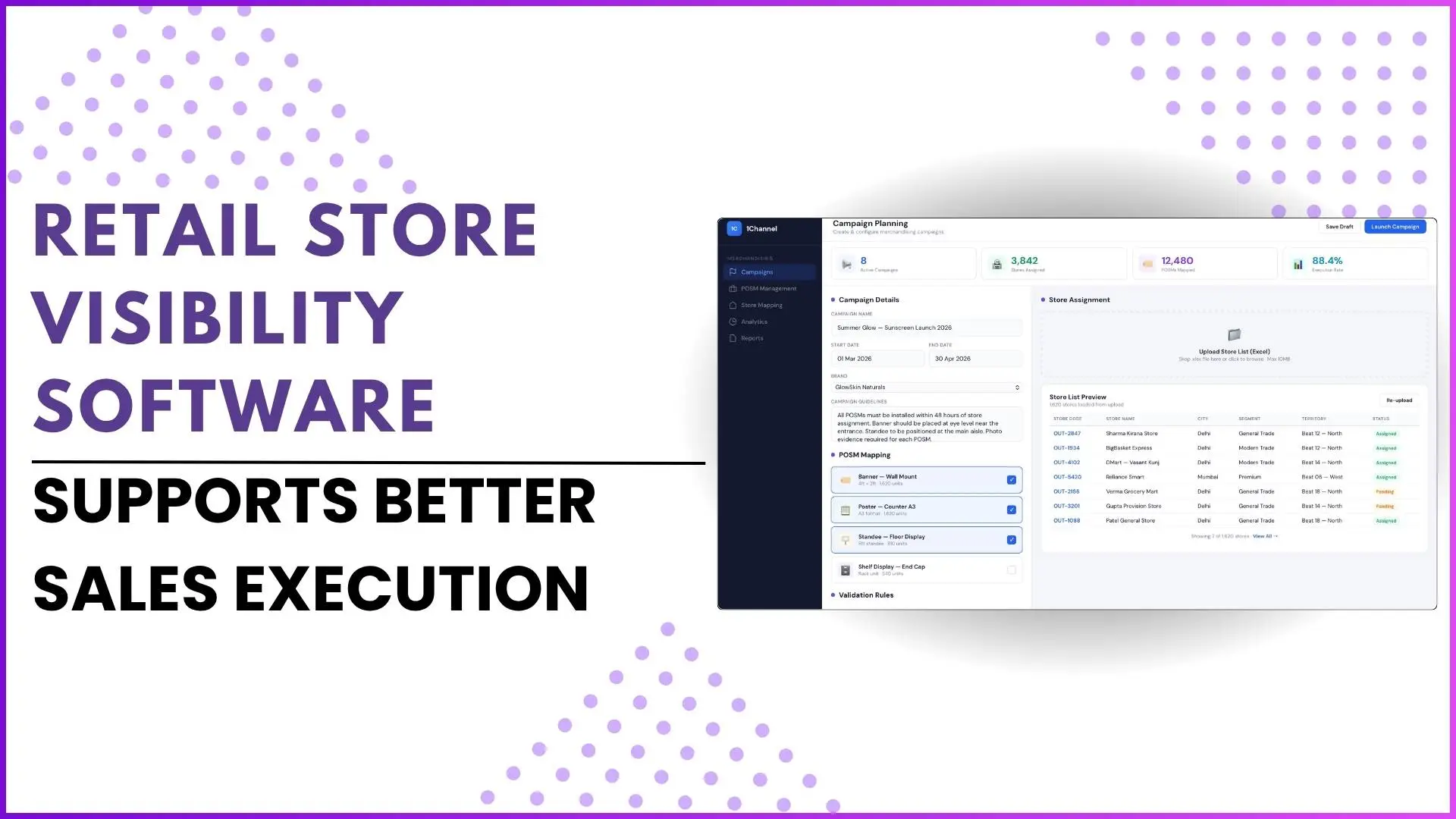
- Structured Campaign Planning. Brief, planogram, POSM kits, and store list all live in one cloud workflow before launch.
- Guided Field Execution. The rep's app walks through the brief step by step so nothing in the campaign gets skipped at the shelf.
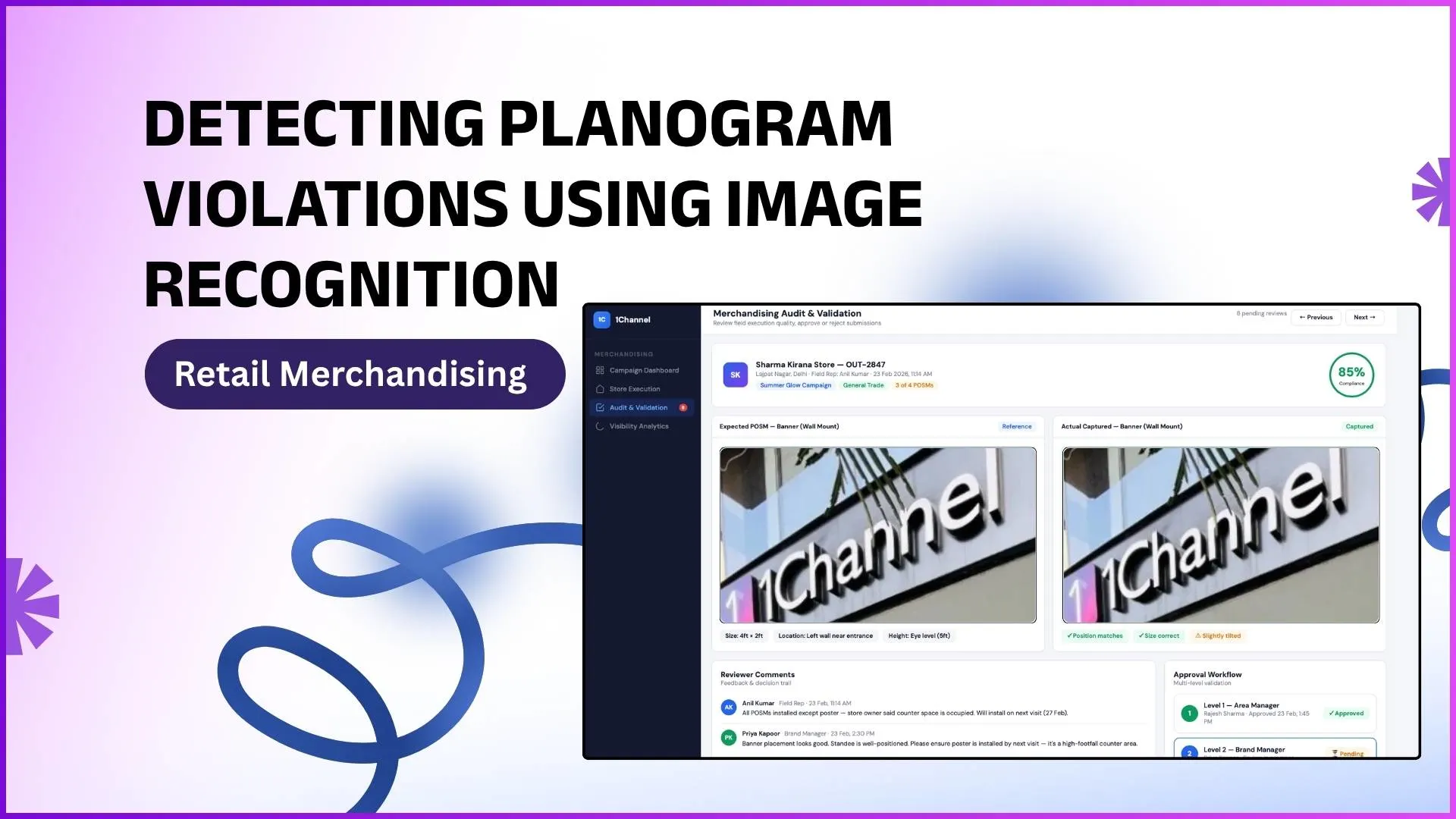
- Proof-Based Validation. Photos, geo-tags, and timestamps validate that the brief was executed at the right store, at the right time.
- Shelf-Level Optimisation. Facing count, hot-zone placement, and brand-arrangement coherence all get measured against benchmarks.
- Multi-Level Audit. Rep self-audit, supervisor verification, brand auditor cross-check: each tier signs off in the same workflow.
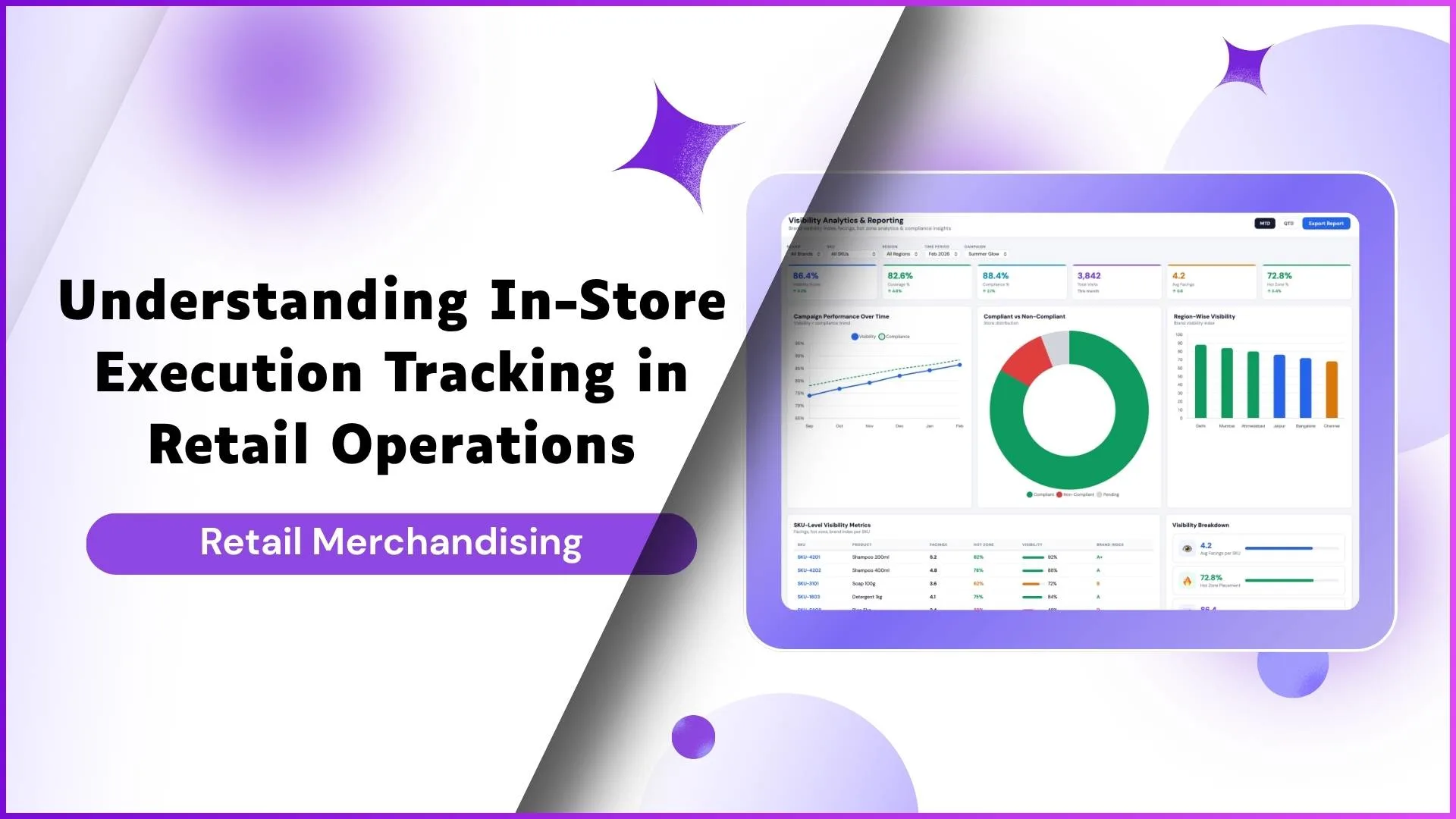
- Real-Time Dashboards. Coverage, audit scores, exception counts, and rectification turnaround all read live for brand and merchandising teams.
- Exception Handling. Stock-outs, damaged POSM, planogram deviations, and pricing errors all flag automatically and route for resolution.
- Visibility Index. A composite score per store rolls the underlying signals into one number the brand reads against sales-velocity correlation.
Where the Visibility Index Lands in the Daily Workflow
The Visibility Index is the single number that turns the underlying signals into action. A store whose index has dropped triggers a supervisor call; a region whose average index is rising tells the brand the field push is working.
The number only works when the brand reads it daily. Weekly reads turn the index into a lagging report. Daily reads turn it into an operating signal.
How Cross-Industry Use Cases Adapt the Same Stack
The same stack covers four core industries with the workflow staying constant; the SKU mix and planogram details adapt per category.
FMCG
Runs on facing count, POSM placement, and shelf-share against competitor packs.
Pharma
Adds expiry-batch tracking and regulatory compliance to the planogram audit.
Consumer Electronics
Adds price-display compliance and SKU positioning against premium competitors.
Personal Care
Adds beauty-bay merchandising and brand-coherence audit beyond facing count.
How 1Channel Retail Execution Runs Visibility for Malaysian Brands
1Channel runs retail store visibility through its cloud retail execution suite. Brand teams, merchandising heads, field supervisors, and reps all read the same store state in real time.
1Channel's AI engine surfaces the visibility patterns that need attention: stores whose index has been slipping, regions where exception density is rising, or beats where rectification turnaround is widening.
New campaign briefs, audit checklists, index thresholds, and dashboard widgets go live the same day they are approved, with an automated dry-run preview against the existing store base.
Explore Retail Execution Software
1Channel's cloud retail execution platform powers Malaysian visibility programmes with AI-driven index tracking and automated exception routing.
Explore Retail Execution Software →Implementation Snapshot for a 60-Day Rollout
Four phases cover the typical 60-day visibility rollout for a Malaysian brand:
Phase 1 — Brief and Master Data Lock
Brand brief, planogram, POSM kit details, store master, and rep list all loaded in cloud workflow. Validation runs in sandbox before any field activity.
Phase 2 — Field Activation
Reps go live with the brief on the app, geo-validation enabled, photo proof workflow active. First two weeks run with daily supervisor review.
Phase 3 — Index Calibration
Visibility Index thresholds tune against the first two weeks of data. False positives drop, action triggers sharpen, the dashboard becomes useful.
Phase 4 — Steady State
Daily index reads for brand teams, weekly deep-dives, monthly cross-store benchmarking. The rhythm is set; new campaigns plug in.