A regional sales manager walks through a key partner outlet on a Tuesday morning. The launch campaign for the new SKU went live ten days ago, with POSM kits dispatched to every store on the schedule.
Two displays look exactly like the brief; one is off-position and missing the shelf strip; the fourth has the wrong SKU facings. The manager opens the app, photographs each one against the audit checklist, and the platform stamps the exception in real time.
By the time the manager leaves, the merchandising team at headquarters has started the rectification call. In-store execution tracking closes the loop between the brief and the shelf.
Table of Contents
What "In-Store Execution" Actually Covers
In-store execution is the umbrella term for everything that has to happen at the retail floor for a campaign to deliver: shelf placement, POSM (point-of-sale materials), planogram compliance, pricing, stock availability, and promoter conduct.
Tracking is the discipline of measuring each of these against the brief, store by store, over the full campaign window.
Why the Retail Manager Cannot Skip It
A campaign without execution tracking is a brief with no receipt. Marketing commits the budget, field dispatches the materials, and nobody verifies the shelf reflects either.
Three operational risks land directly on the retail manager: wasted POSM spend, missed compliance windows, and brand teams asking why share of shelf dropped despite the spend.
Six Layers in the Execution Tracking Workflow
Six layers cover the typical workflow:
- Campaign and POSM Setup. The brand uploads the brief, the planogram, and the POSM kit details into the cloud platform. Every store on the campaign gets tagged.
- Store-Level Execution. The promoter or rep executes the brief on the shelf. The app guides the steps so nothing in the brief gets skipped.
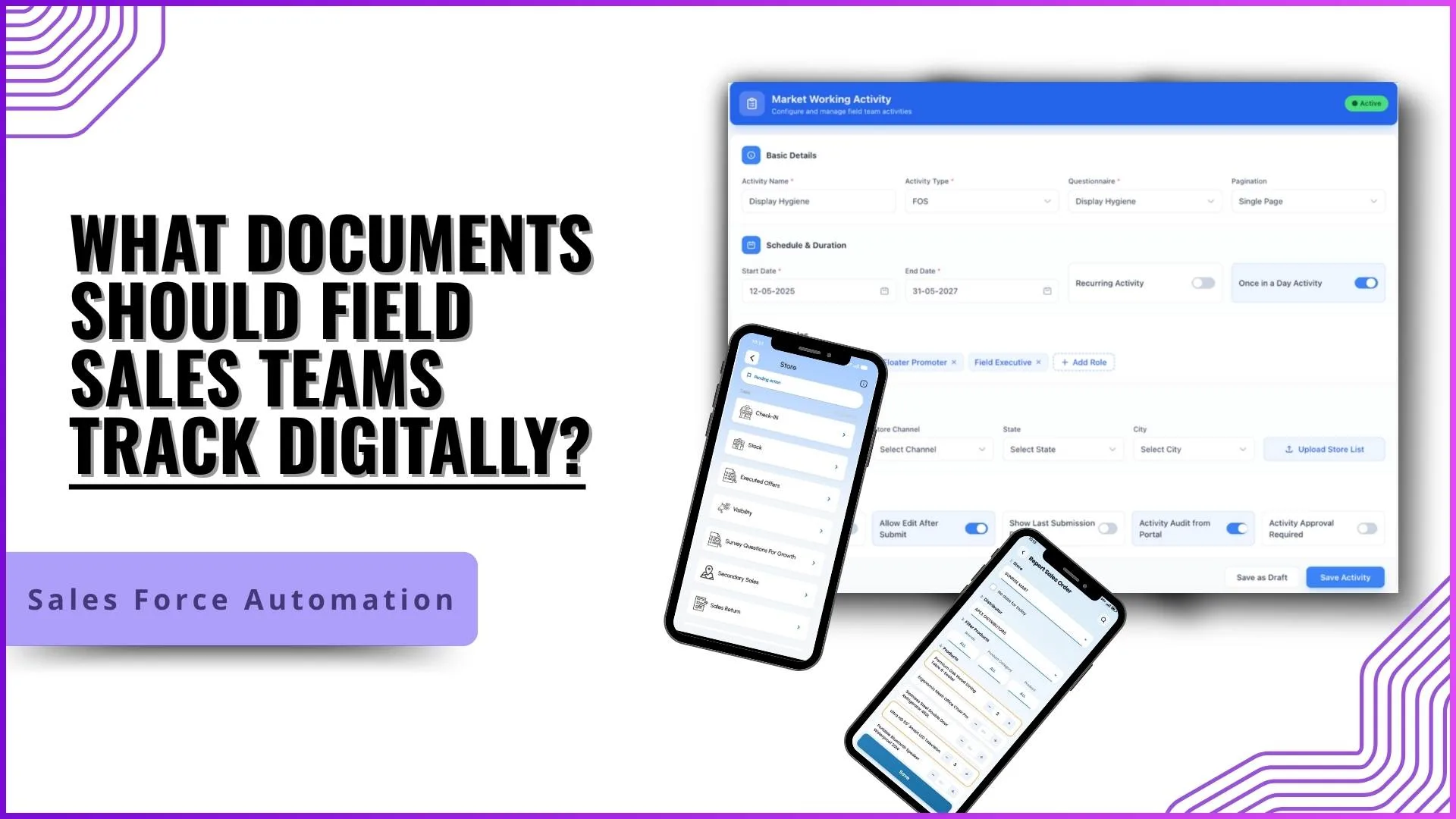
- Image-Based Proof of Execution. Photos of the shelf, the planogram, the POSM placement, and the price tag all upload geo-tagged from the visit.
- Multi-Level Audit Workflow. Audits run in tiers: the rep self-audits, the supervisor verifies a sample, the brand auditor cross-checks. Each tier signs off in the same workflow.
- Exception Handling. Stock-outs, damaged POSM, planogram deviations, and pricing errors all get flagged automatically and routed to the right approver.
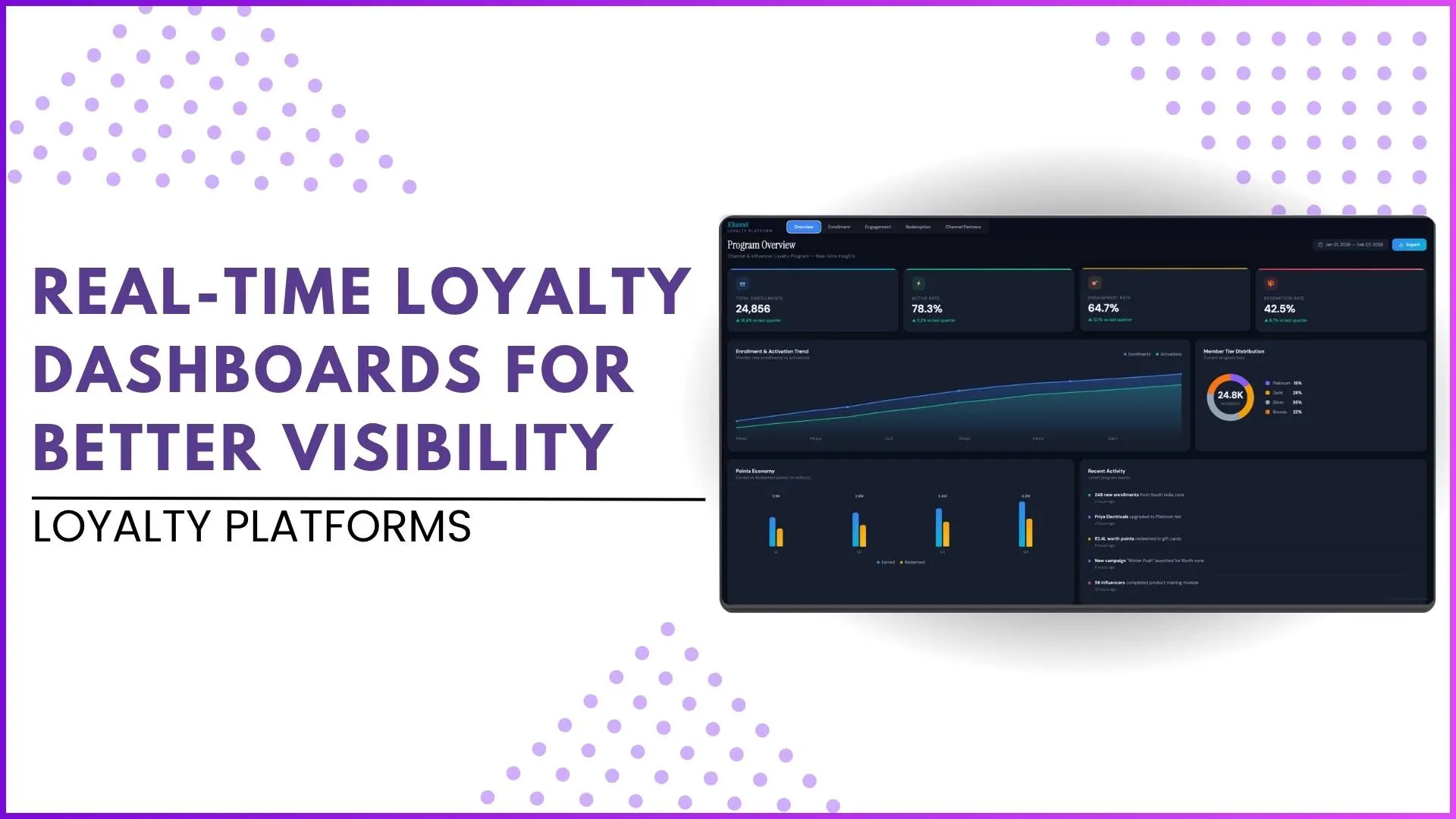
- Coverage Dashboards. Brand teams read campaign coverage in real time, store-by-store, against the original target list.
How Exceptions Get Handled
Real-world stores do not always cooperate with the brief. A POSM kit arrives damaged, a shelf gets reorganised by the retailer, a competitor blocks a critical slot.
The platform captures each exception, routes it for resolution, and tracks the response time. Persistent exceptions surface as patterns for the next campaign brief.
What the Real-Time Dashboard Surfaces
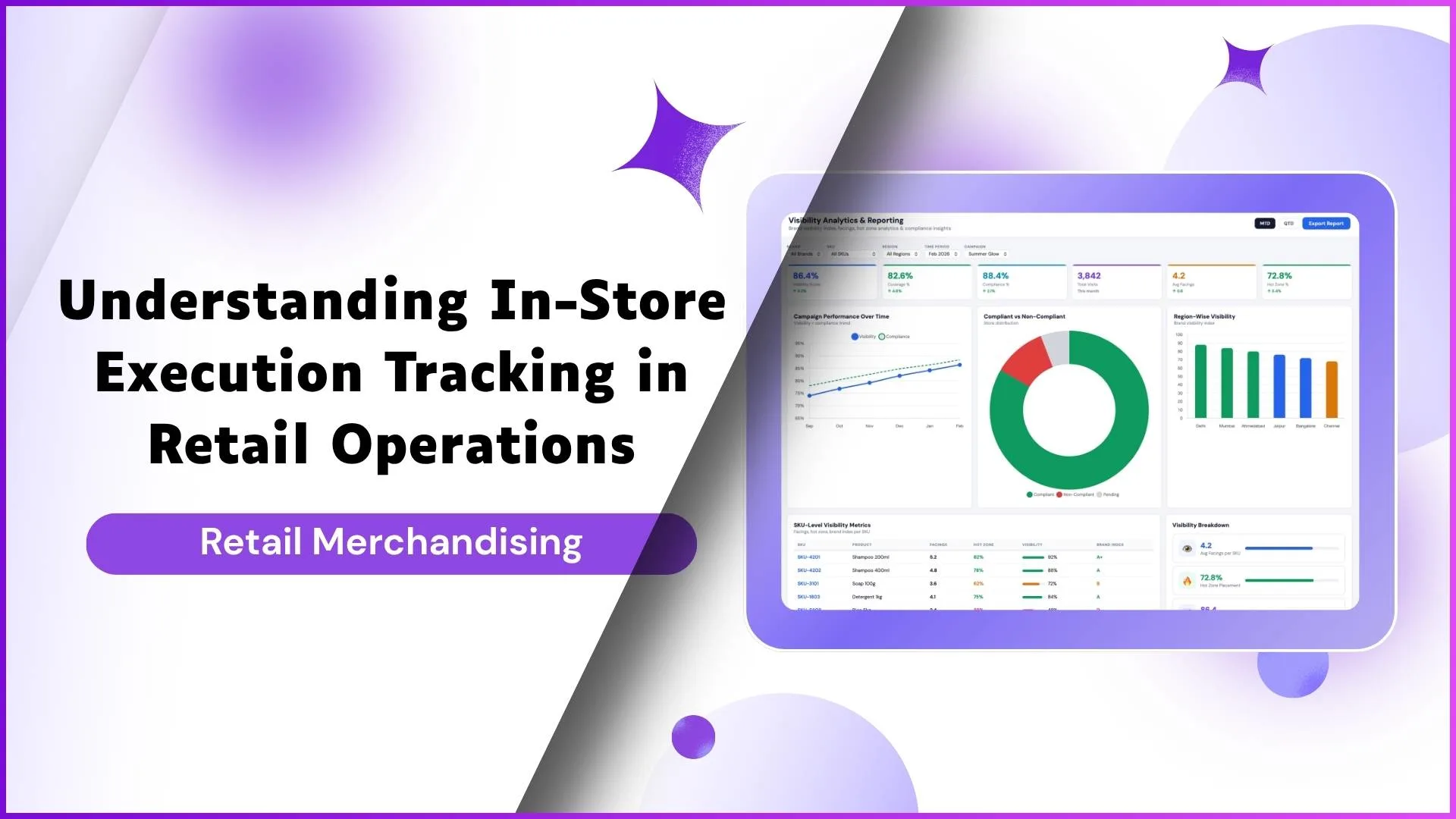
Brand teams read four signals on the execution dashboard: coverage percentage, audit score, exception density, and rectification turnaround.
Each signal carries a different operational call: coverage misses to the field supervisor, audit drops to the rep manager, exception spikes to supply chain, long rectifications to the campaign owner.
How 1Channel Retail Execution Runs Tracking for Malaysian Retail Operations
1Channel runs in-store execution through its cloud retail execution suite. Promoters, supervisors, auditors, and brand teams all read the same execution state in real time.
1Channel's AI engine watches the photo stream for visual anomalies a human auditor might miss. A planogram drift across a region, POSM placement off in one chain, a pricing tag mismatch in one territory: all surface as soft alerts.
New campaign briefs, audit checklists, exception rules, and dashboard widgets go live the same day they are approved, with an automated dry-run preview against the existing store base.
Explore Retail Execution Software
1Channel's cloud retail execution platform gives Malaysian brand teams live coverage dashboards with AI-driven planogram audits and automated exception routing.
Explore Retail Execution Software →FAQs
What is in-store execution tracking?
The discipline of measuring every campaign-related activity at the retail floor (shelf, POSM, planogram, pricing, stock, promoter) against the brief, store by store, throughout the campaign window.
Why is image capture central to retail execution?
Photos are the only neutral record. They prove the shelf state at a moment in time, capture the geo-tag and timestamp, and feed the AI engine for cross-store anomaly detection.
What does POSM tracking actually verify?
That the right POSM reached the right store, got placed against the brief, stayed up through the window, and was removed cleanly.
How do multi-tier audits improve store execution?
They split verification across the rep, the supervisor, and the brand auditor. Each tier catches what the previous level missed, so the audit signal is stronger than any single reviewer.
Can execution tracking improve campaign ROI?
Yes. The brand sees where coverage missed, where exceptions concentrated, and where rectification was slow. The next campaign reads on real execution data, not on assumed compliance.