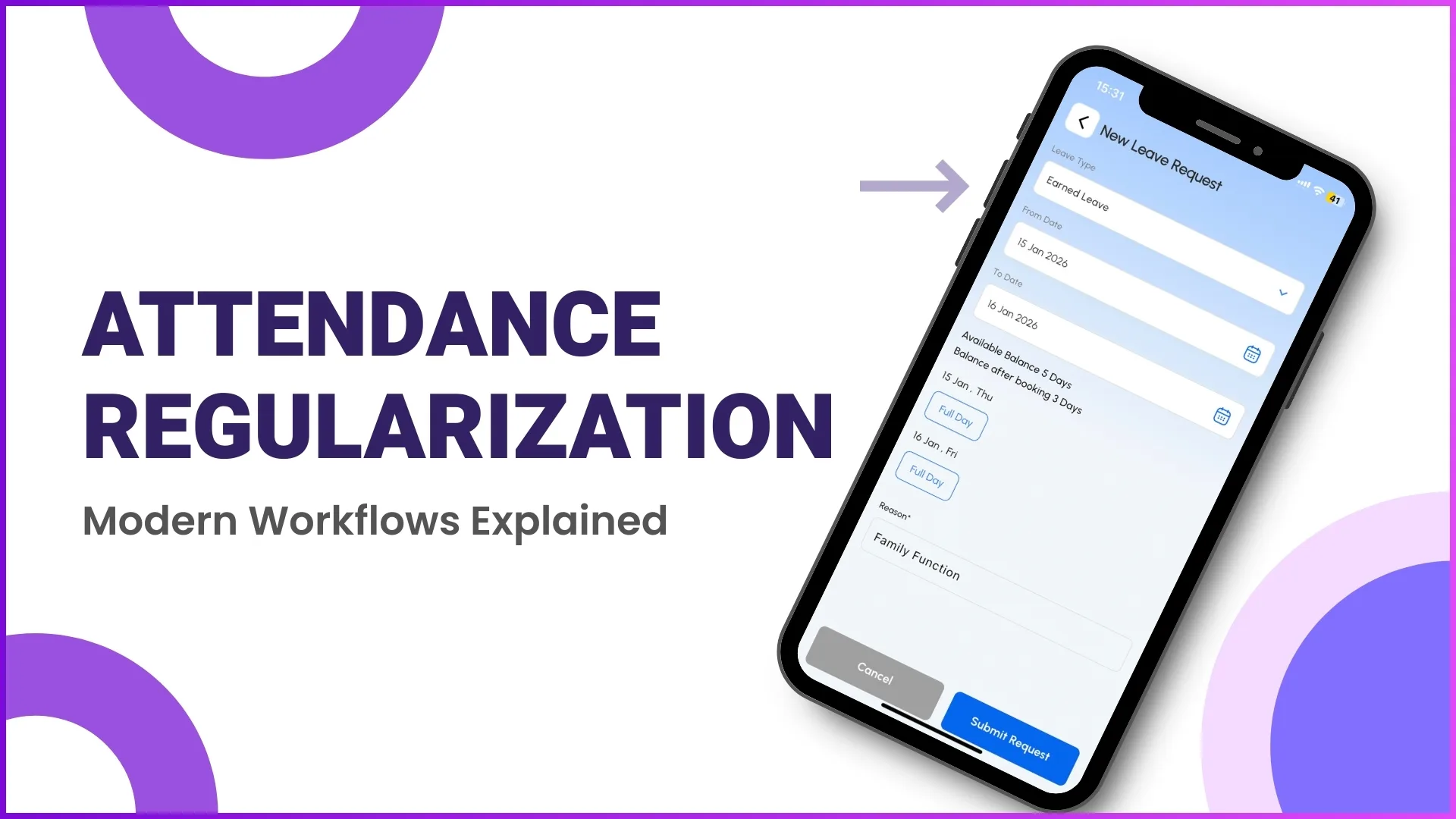
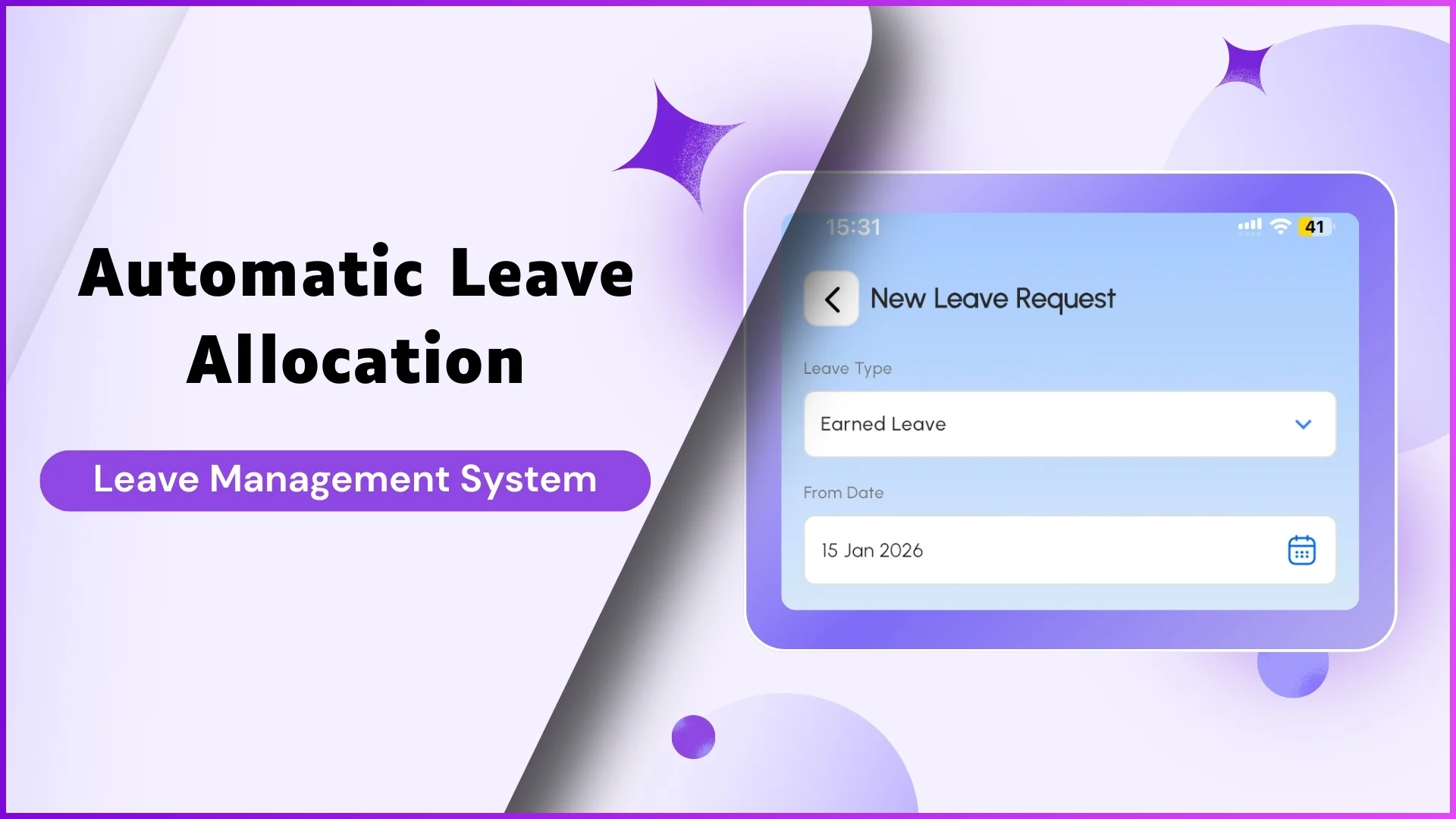
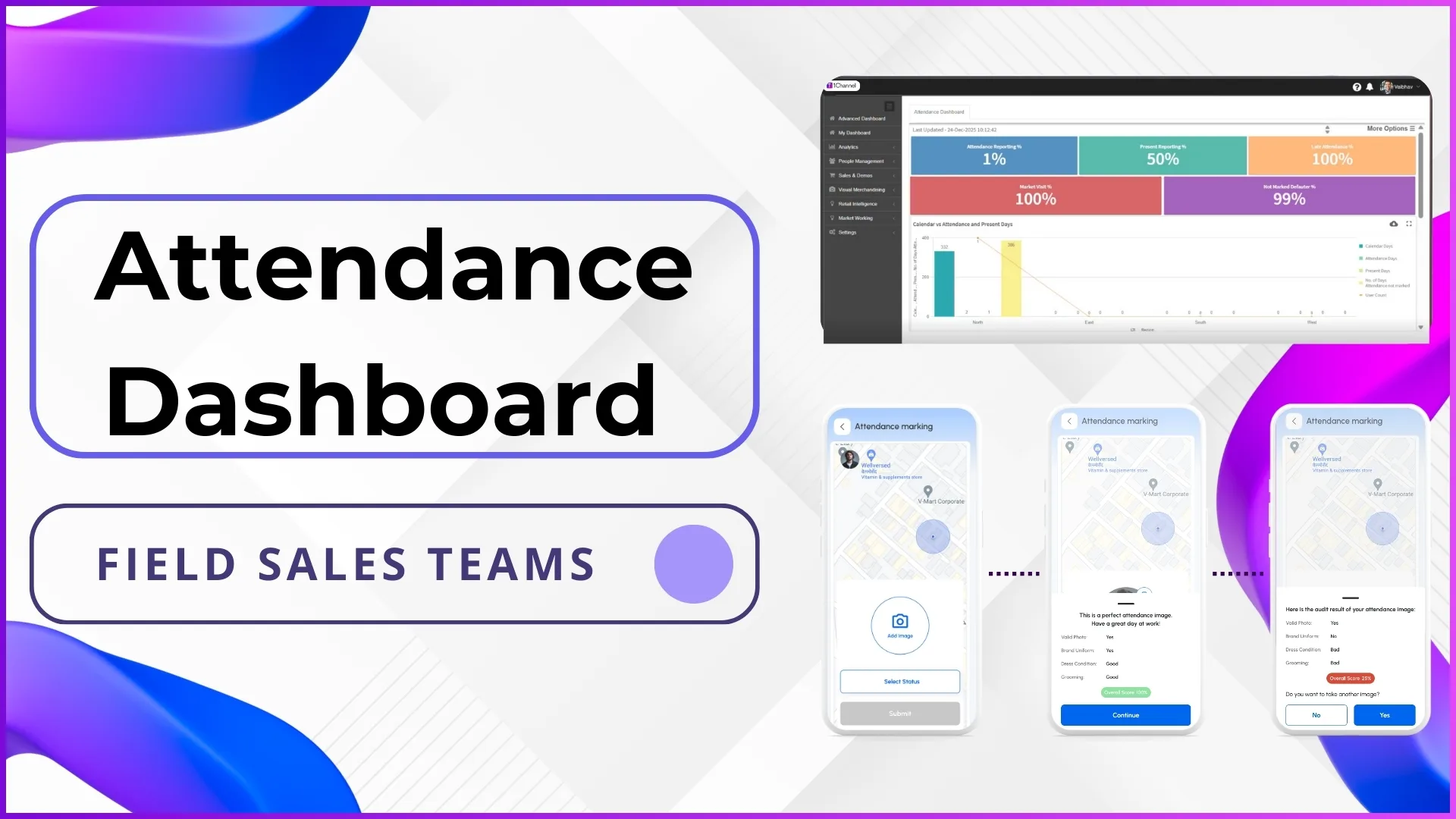
Attendance closure is the final lock on a month of attendance data. Before closure, the records are still editable: regularisations come through, exceptions get reviewed, and approvals flow up the hierarchy. Once closure runs, the data freezes. From that moment, what the system shows is what payroll uses. The closure event is what makes the monthly salary cycle reliable.
Table of Contents
What Attendance Closure Locks Down
At the configured cutoff each month, the closure routine sweeps through every user's attendance log for the period and finalises it. Three categories of data move into the locked state together:
Approved Attendance Records
Every present, absent, on-duty, and half-day entry for the closed period becomes read-only. The HR admin can review, but cannot edit.
Applied Regularisations
Manager-approved corrections, such as on-duty conversions or late-attendance fixes, are folded into the user's record before the lock takes effect.
Held-Over Pending Items
Requests still under review at the cutoff carry forward to the next cycle and do not block the current closure from running on schedule.
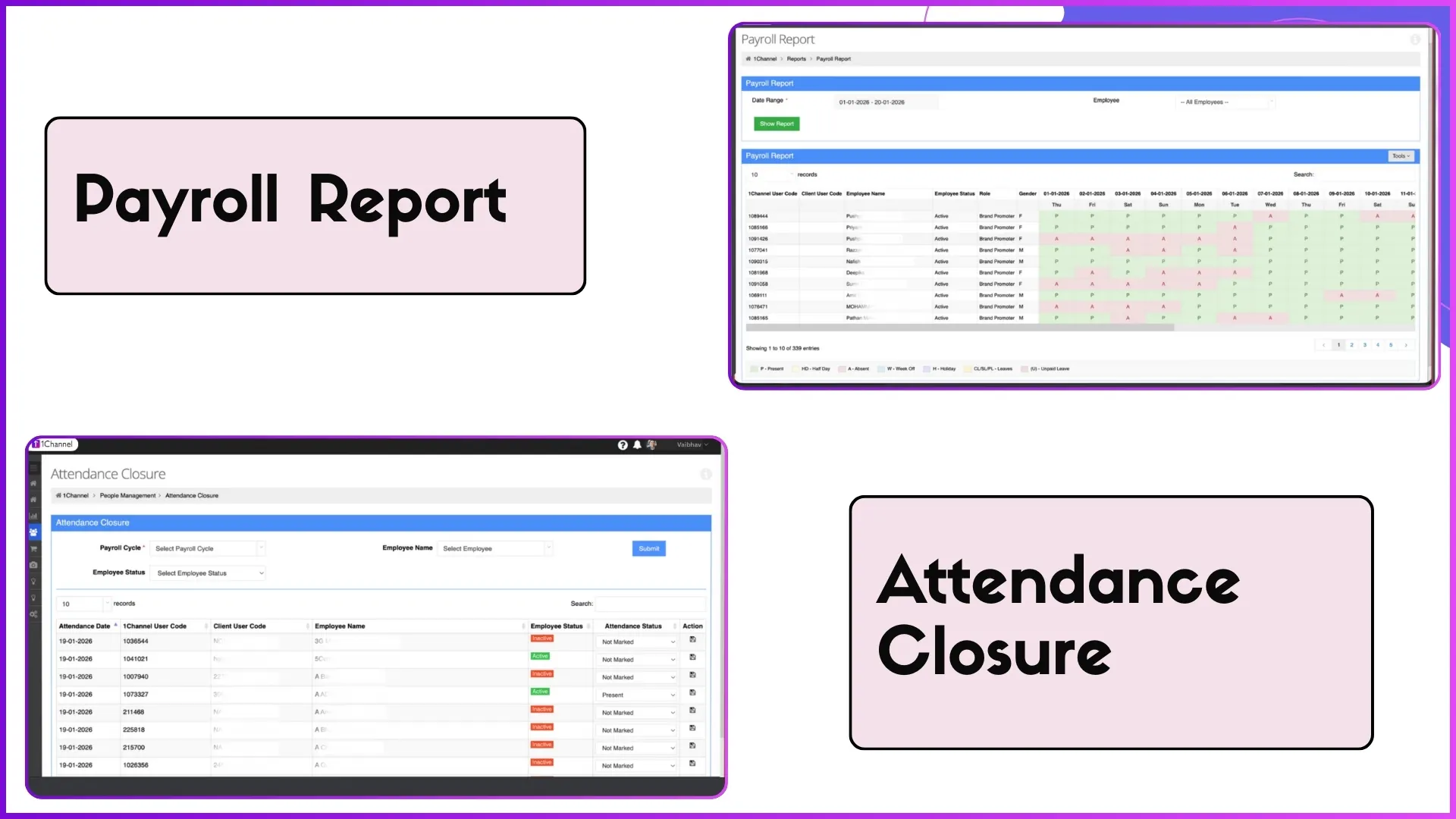
How Approved Adjustments Flow In Before Closure
The closure window leaves room for the legitimate corrections that always come up in field operations: a missed check-in that was actually an on-duty visit, a planned leave that was applied late, a half-day that needs the regularisation form. Each of these enters through the standard approval flow, routes to the reporting manager, and gets debited or credited against the user's attendance record. Closure runs after the agreed cutoff for these adjustments, so by the time it fires, every reviewable adjustment has already been decided one way or the other.
What Payroll Sees Once the Period Closes
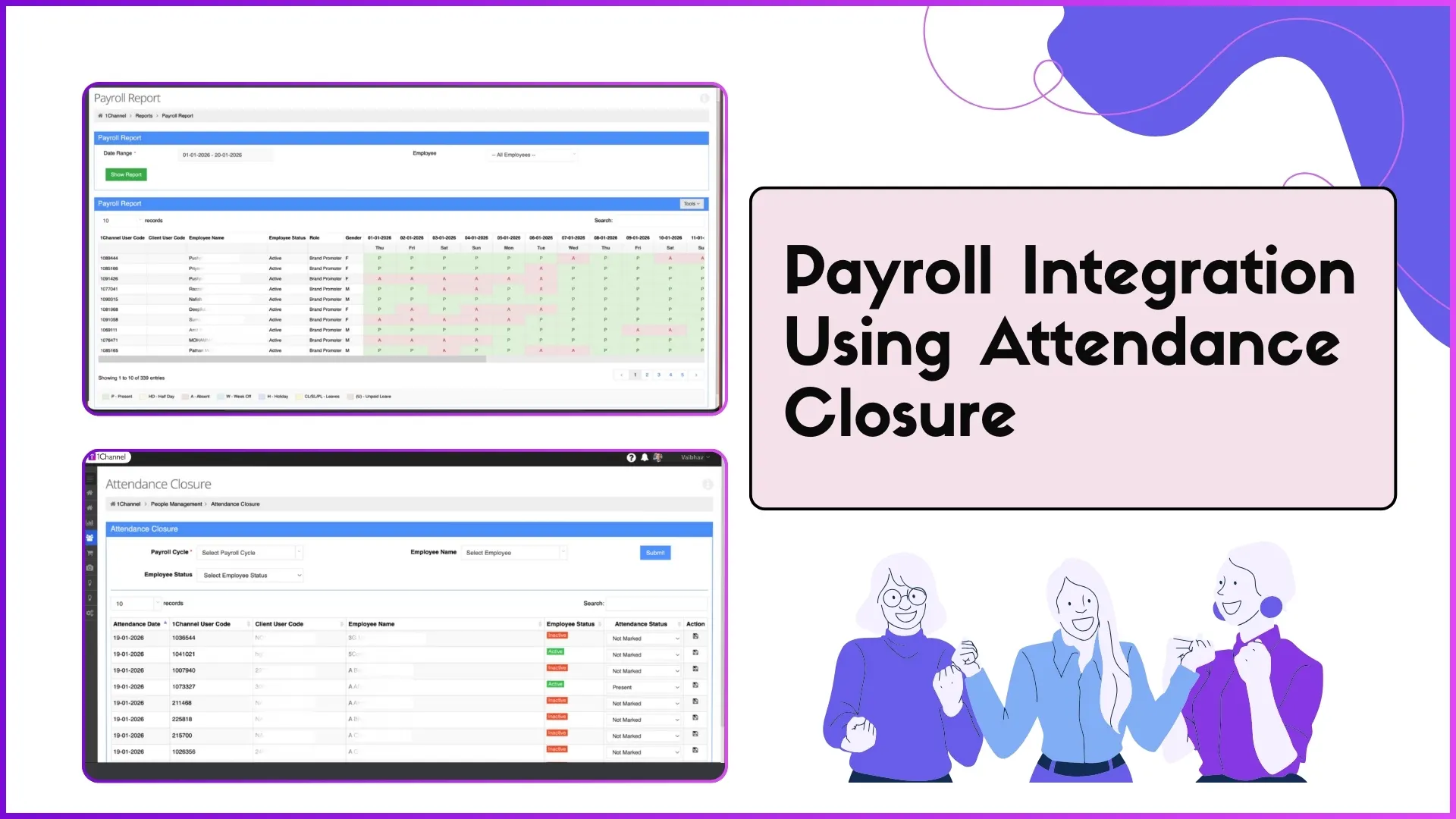
The payroll team works against a finalised dataset, not a live feed. The Attendance Closure Report exports the locked period as an Excel sheet with one row per user: present days, leave days by type, late-attendance counts, on-duty days, half-day counts, and any payroll-relevant flags. The export feeds the payroll system either through a direct integration or as a periodic file drop. Because the source data does not move after closure, the payroll cycle does not stall mid-processing. The reconciliation conversations that used to dominate the first week of every month shrink to genuine outliers, not chasing data that shifted while finance was working with it.
Explore HR Management Software
1Channel's cloud HR management module handles attendance closure, regularisation approvals, and payroll-ready exports for Malaysian field sales operations of any size.
Explore HR Management →Final Words
Attendance closure is a small operational discipline with an outsized payoff. The teams that treat it as routine, run it on schedule, and trust the locked data downstream end up with payroll cycles that finish on time. The teams that defer it, edit records after the fact, or run it late spend the first week of every month firefighting reconciliation issues that the closure event was designed to prevent. The discipline is what compounds.