A well-structured Malaysian sales team depends on a clear hierarchy. Without one, even capable reps drift, managers lose visibility into their patch, and reports stop matching how the team actually operates on the ground. The Organisation Tree is what brings that order back. It is the structured layout of every user in the system, mapped to their reporting line, their data scope, and their position within the team.
Table of Contents
What the Organisation Tree Captures
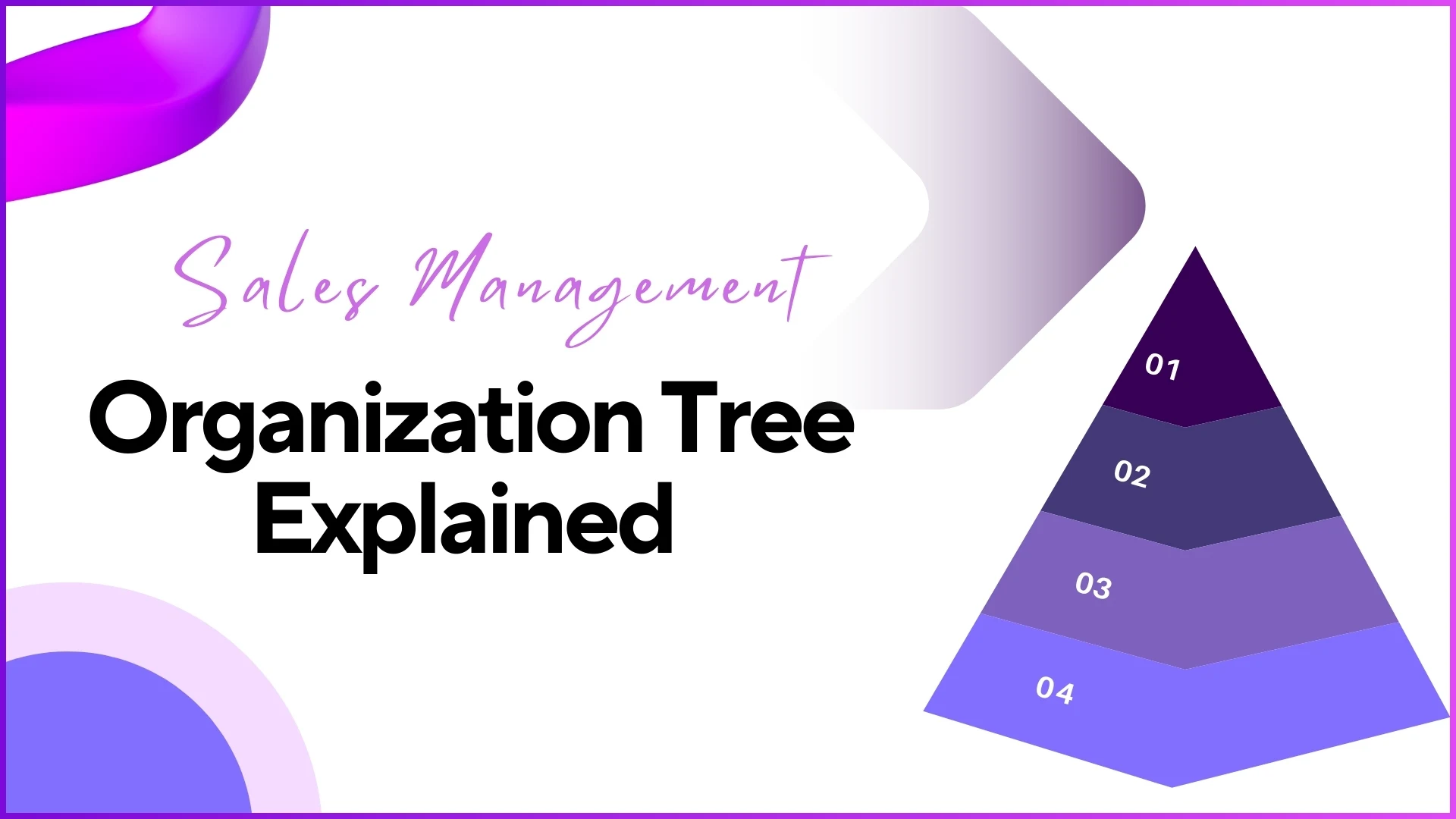
The Organisation Tree is the visual hierarchy of sales users. Every person, from the country head down to the field rep, sits at a level that defines four things: who they report to, whose data they can see, which approvals they own, and which team they manage. For a Malaysian sales operation spanning Klang Valley, Penang, and Johor, this structure is what keeps regional, area, and field reporting clean.
Reporting Lines Across Malaysian Regions
Reporting lines are the backbone of the tree. A Country Sales Head sits at the top, with Regional Managers below for Klang Valley, Northern, Eastern, and Southern zones. Under each Regional Manager are Area Managers handling specific clusters such as Subang, Petaling Jaya, or Penang Island. Field Sales Executives sit at the base, reporting to their assigned Area Manager. Each line flows upward, so a daily visit log from a rep in Ipoh reaches the Northern Regional Manager without manual aggregation.
Role Layers Inside the Tree
Each role carries a defined level of access:
Top Management
Views the full picture across Malaysia, including consolidated regional performance and country-wide compliance metrics.
Regional Manager
Sees only their assigned zone. The Northern Regional Manager monitors Penang and Kedah; the Klang Valley Regional Manager covers Selangor and KL.
Area Manager
Sees the cluster they own. An Area Manager in Johor Bahru never sees Subang data, and a Petaling Jaya cluster lead does not see Ipoh activity.
Field Sales Executive
Sees only their own activities, assigned outlets, and personal performance numbers. The role decides the scope, automatically.
Data Visibility Travels With the Hierarchy
Visibility is inherited downward and aggregated upward. When a rep submits a daily report, that report becomes visible to their reporting manager, who sees their full team. The Area Manager's report then rolls up to the Regional Manager, and finally to the Country Sales Head. No data is shared sideways. A rep in Selangor cannot see a rep's data in Sabah, and an Area Manager only sees consolidated views for their own cluster.
Adding New Users Without Restructuring
Adding a new rep to the team should not require rewiring the tree. The user is created, assigned a reporting manager, and instantly slots into the right team. Their data starts flowing into the manager's dashboard from day one. When a manager is promoted, their reportees can be reassigned to the new manager without breaking historical reports. The tree adapts to the team, not the other way around.
Scaling as Malaysian Sales Teams Grow
Sales teams in Malaysia rarely stay static. A new product line might add ten reps in Klang Valley. A new region in East Malaysia might need a fresh Regional Manager and three new Area Managers. The tree handles this by extension. A new Regional Manager is created at the right level, Area Managers are slotted under them, and field reps are mapped to the Area Managers. The existing teams in other regions are not touched, and existing reports continue to roll up correctly through the new structure.
Explore Sales Force Automation
1Channel's cloud SFA platform lets Malaysian sales leaders define multi-level organisation trees, route approvals through the right managers, and adjust the hierarchy as the team grows.
Explore SFA Solutions →Practical Notes Before You Build the Tree
A few habits keep the tree useful as the team grows. Keep role names consistent so reports do not break when a new region launches. Set up the hierarchy before adding users, not after, so visibility rules apply from the start. Review the tree quarterly so promotions and exits are reflected in real time. And keep the levels shallow where you can. A tree that is three or four levels deep stays readable; one that runs to seven becomes a tax on every report.
The Tree Gives the Team Its Shape
The Organisation Tree is what gives a Malaysian sales operation its shape. With clear reporting lines, role-based visibility, and easy scalability, it lets every activity, every report, and every approval flow through the right hands. Build it once with care and the team grows around it without losing structure.