Malaysia's B2B landscape runs on relationships. Whether you are a building materials supplier managing dealer networks across Johor and Penang, or a packaging manufacturer coordinating sales reps who cover industrial zones from Shah Alam to Pasir Gudang, closing deals still depends on people meeting people.
But managing those field interactions with spreadsheets, WhatsApp groups, and paper visit logs creates blind spots. Sales managers in KL cannot see what happened at a distributor meeting in Kota Kinabalu. Reps forget to follow up because notes are scattered across chat threads. Pipeline data arrives a week late, if at all.
This is where a field sales CRM built for mobile teams changes the game. This guide breaks down what field sales CRM actually does for Malaysian B2B operations, the measurable benefits, and how to roll it out without disrupting your existing workflow.
Table of Contents
What Is Field Sales CRM and Why Does It Matter in Malaysia?
A field sales CRM is a Customer Relationship Management platform purpose-built for sales teams that spend most of their time outside the office, such as visiting dealers, meeting procurement heads, doing site assessments, or checking distributor stock levels.
Unlike a generic CRM designed for desk-based inside sales, a field sales CRM prioritises mobile-first access, GPS-verified visit tracking, and offline capability. These features matter when your reps are driving between industrial estates in Penang or visiting plantation offices in Sabah where connectivity drops.
For Malaysian B2B companies specifically, this matters because:
- Geography is fragmented. Peninsular Malaysia alone spans 800+ km north to south, and East Malaysia adds entirely separate logistics. A rep covering Klang Valley operates differently from one covering Sarawak.
- Distributor networks are layered. Many manufacturers sell through multiple tiers such as master distributors, sub-dealers, and direct key accounts, each needing different visit frequencies and sales approaches.
- Competition is intensifying. With regional players from Thailand, Indonesia, and Vietnam expanding into Malaysia, B2B buyers have more options. The speed and quality of your field engagement becomes a differentiator.
Core capabilities of a field sales CRM include:
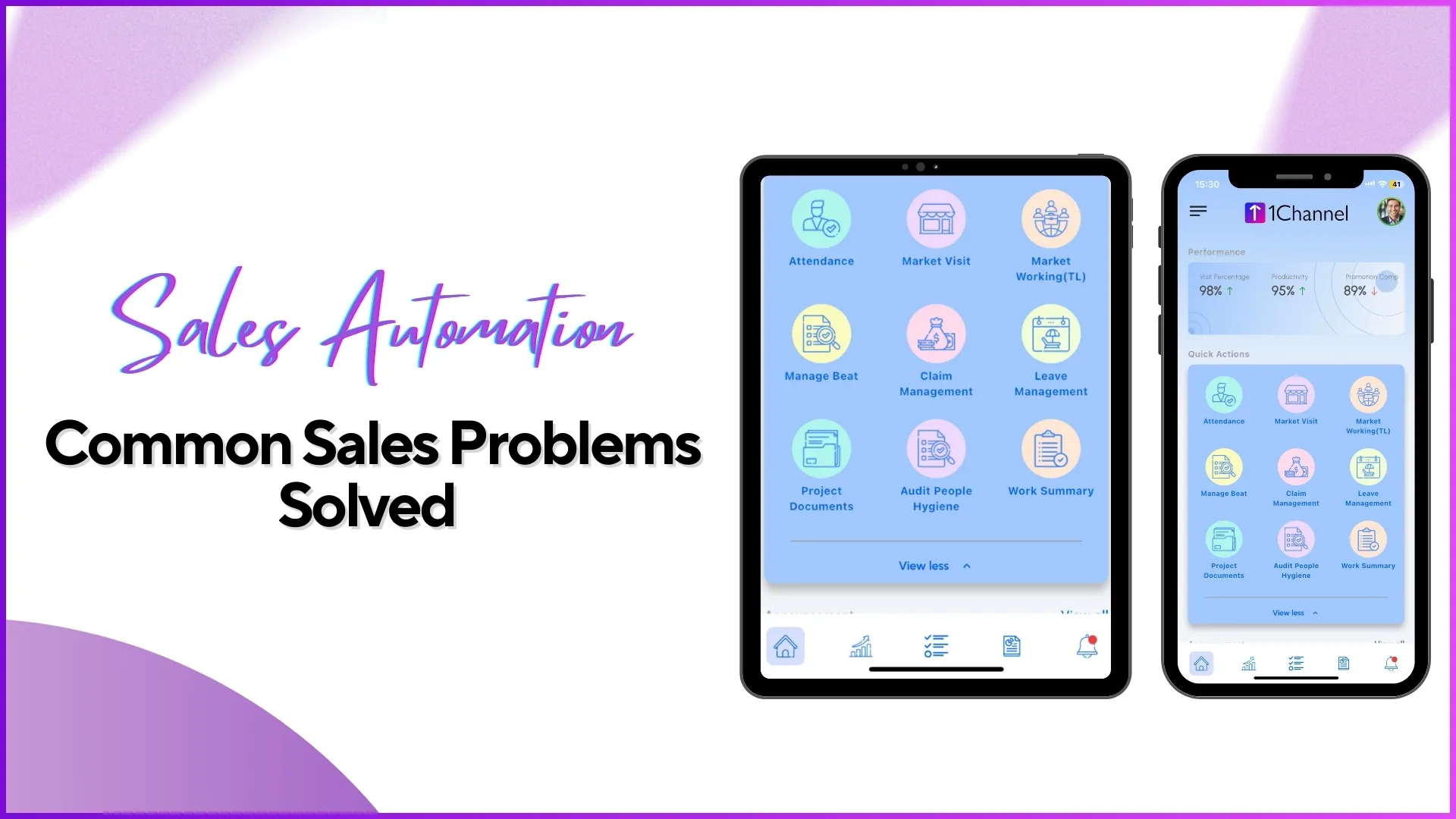
1. Mobile-first access — Reps log visits, update deals, and pull customer history from their phone, whether they are at a factory in Bayan Lepas or a trading office in Petaling Jaya.
2. Real-time data sync — When a rep updates an order status or records a meeting note in Johor Bahru, the sales manager in the head office sees it immediately. No waiting for end-of-day reports.
3. Route planning and GPS tracking — Plan daily visit routes across cities, verify that visits actually happened at the right location, and optimise travel between sites in traffic-heavy areas like KL and Selangor.
4. Offline functionality — Critical for reps visiting remote estates, construction sites, or areas in East Malaysia where mobile data is unreliable. Data syncs automatically once connectivity returns.
5. Analytics and reporting — Dashboards that show visit completion rates, pipeline by region, conversion timelines, and rep productivity, broken down by territory, product line, or customer segment.
Key Benefits of Field Sales CRM for Malaysian B2B Companies
1. Reclaim selling time from admin work
A typical B2B field rep in Malaysia spends a surprising amount of time on non-selling tasks: filling out visit reports after hours, consolidating orders into Excel for the back office, chasing WhatsApp threads to find what a customer said last week.
Field sales CRM automates these workflows. Visit reports are generated from GPS check-ins. Orders are captured on-the-spot with product catalogues and pricing rules built into the app. Customer history is searchable in seconds, not buried in a group chat.
For a rep covering 8–10 accounts daily across the Klang Valley, this can free up 60–90 minutes per day, and that time goes back into actual customer conversations.
2. Target the right accounts with data, not gut feel
In a market like Malaysia where B2B relationships can span decades, it is easy to fall into the habit of visiting the same comfortable accounts while neglecting higher-potential ones. A field sales CRM surfaces data that challenges these patterns.
For example, a chemicals distributor might discover through CRM analytics that their rep in Penang visits one large account 12 times a quarter but barely touches three mid-sized accounts that collectively represent more revenue potential. The CRM flags this imbalance, and the sales manager can reallocate visits accordingly.
Lead scoring based on purchase history, engagement frequency, and deal stage helps reps prioritise accounts that are most likely to convert rather than the ones that are simply closest to their usual route.
3. Coordinate teams across a geographically spread market
B2B selling in Malaysia is rarely a solo effort. A deal with a national retail chain might involve a field rep in KL who handles the procurement relationship, a technical specialist in Penang who does product demos, and a distributor partner in Kota Kinabalu who manages local delivery.
Without a shared CRM, these touchpoints create information silos. The technical specialist might not know what pricing the field rep quoted. The distributor partner might follow up on a lead the head office already closed.
A unified field sales CRM gives everyone visibility into the same account timeline. Meeting notes, quotations, product specs shared, and next steps are all logged in one place. Marketing can see which campaigns generated qualified leads in which region. Finance can track receivables tied to field commitments. Everyone works from the same truth.
4. Make decisions backed by field data, not weekly summaries
Many Malaysian B2B companies still rely on weekly or monthly reports compiled manually by regional managers. By the time the data reaches the leadership team, it is already stale. A distributor issue that surfaced two weeks ago is now a lost account.
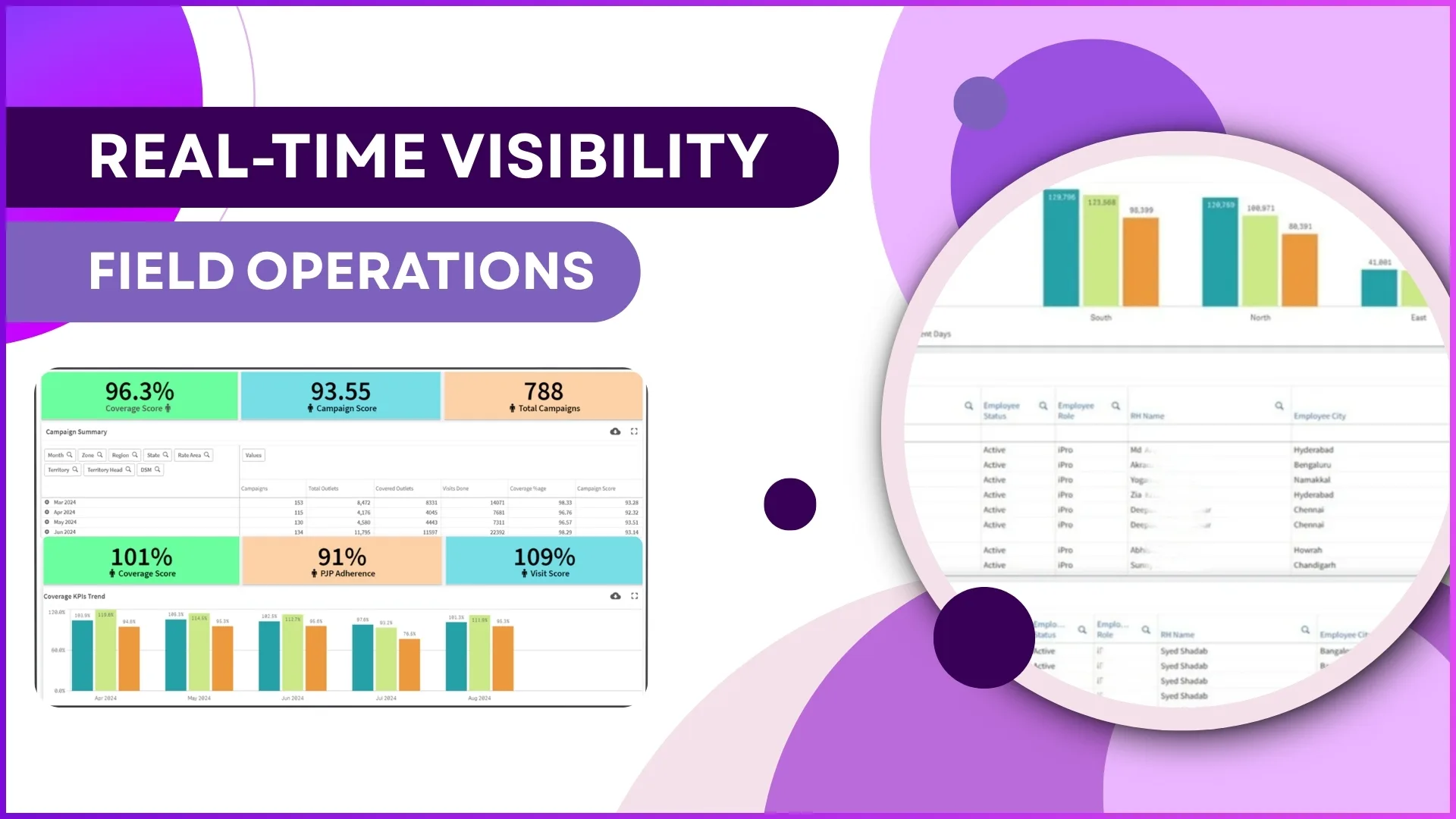
Field sales CRM delivers live dashboards. A sales director can check, in real time, how many visits were completed in Selangor today, which deals moved to the quotation stage in Johor this week, or which product line is gaining traction in East Malaysia.
This is not just monitoring. It enables faster response. If a competitor drops prices in the Northern region, the team can see the impact on pipeline within days and adjust strategy, not after the quarter closes.
5. Strengthen long-term dealer and distributor relationships
In Malaysia's B2B environment, trust-based relationships with dealers and distributors are commercial assets. A rep who remembers that a distributor in Ipoh mentioned cashflow concerns during Ramadan, or that a dealer in Kuching prefers quarterly bulk orders over monthly ones, builds the kind of rapport that keeps accounts loyal.
Field sales CRM acts as institutional memory. Every interaction is logged, not just orders, but conversations, concerns, commitments, and context. When a rep is transferred or leaves, the relationship history stays with the company. The new rep walks in prepared, not starting from zero.
This is especially valuable in Malaysia where business relationships often blend professional and personal rapport. Losing that context when a rep changes territory can set a relationship back months.
6. Improve forecast accuracy for better planning
Accurate sales forecasting in a multi-territory market like Malaysia requires more than pipeline snapshots. It needs data on visit frequency, deal progression speed, regional seasonality, and distributor stocking patterns.
A field sales CRM captures all of this passively as reps go about their work. The system can then surface forecasts segmented by region, product, or channel, so leadership knows that Q4 demand in East Malaysia typically spikes due to year-end construction projects, or that Klang Valley accounts have a longer sales cycle but higher average order value.
Better forecasts mean better inventory planning, more efficient allocation of sales resources, and fewer surprises in quarterly reviews.
How to Implement Field Sales CRM in Your Malaysian B2B Operation
Knowing the benefits is one thing. Rolling out a CRM without disrupting existing sales momentum requires a practical approach tailored to how Malaysian B2B teams actually work.
1. Audit your current field sales workflow
Before selecting a tool, map out how your field team currently operates. How do reps plan their daily visits? How do they report back? How does order data flow from the field to operations? Where are the bottlenecks?
For most Malaysian B2B companies, the answer involves a mix of WhatsApp for communication, Excel for reporting, and ERP for order processing, with significant manual handoff between each. Identifying these handoff points tells you exactly where CRM will add the most value.
2. Choose a platform that fits the Malaysian market
Not every CRM works well for field-heavy B2B operations in Southeast Asia. Look for:
- Robust offline mode — Essential for reps covering East Malaysia or rural Peninsular areas.
- GPS-based visit verification — Builds accountability without micromanaging.
- Multi-tier distributor support — Malaysian supply chains often involve layers of distribution that simpler CRMs cannot model.
- Mobile-native design — Your reps use their phones all day. The CRM should feel as natural as the apps they already use.
- Cloud-based deployment — No on-premise IT setup needed. Teams can get started quickly with remote onboarding.
1Channel's Sales Force Automation platform is designed specifically for these requirements and supports cloud-based deployment for businesses across Southeast Asia.
3. Start with a pilot territory, then expand
Rather than a company-wide rollout, start with one region like the Klang Valley team and run the CRM alongside existing processes for 4–6 weeks. This lets you refine configurations, train a core group of champions, and build internal proof points before scaling to Penang, Johor, and East Malaysia.
The pilot team's results become the most convincing argument for adoption in other regions.
4. Invest in proper onboarding, not just installation
The most common reason CRM fails is not the technology. It is adoption. Reps who see the tool as another reporting burden will find workarounds. Reps who see it as something that makes their day easier will use it willingly.
Run hands-on training sessions, not slide decks. Show reps how to log a visit in 30 seconds, how to pull up a customer's order history before walking into a meeting, how route planning saves them 45 minutes of driving. Make the value tangible to their daily routine.
5. Monitor, iterate, and optimise
After launch, track adoption metrics: daily active users, visit logs per rep, data completeness rates. Collect feedback from the field team. Are there features they find clunky? Are there workflow gaps the CRM does not cover?
CRM implementation is not a one-time project. It is an ongoing optimisation cycle where the tool adapts to how your team actually sells in the Malaysian market.
Ready to Transform Your Field Sales in Malaysia?
1Channel helps Malaysian B2B companies digitise field operations, from visit tracking and route planning to distributor management and real-time analytics.
Book a Free Demo →Final Words
The Malaysian B2B market rewards companies that can combine strong field relationships with operational discipline. Field sales CRM is not about replacing the personal touch that makes Malaysian business culture work. It is about giving your team the tools to do it better, faster, and at scale.
When your reps walk into a meeting in Penang with full context on the account, when your sales manager in KL can see the real pipeline across all territories, when your leadership team can forecast demand with confidence instead of estimates. That is what a well-implemented CRM delivers.
For B2B companies in Malaysia looking to professionalise field sales operations without losing the relationship-driven approach that works here, 1Channel's field sales CRM is built for exactly this balance. Get in touch to see how it fits your operation.