Loyalty software lives or dies on the rules it runs. A program with a clever reward structure but a hard-coded engine ends up rewriting the codebase every time the marketing team wants to test a new slab. A program with a configurable rule engine lets the operator change the math, the eligibility, and the redemption logic from the admin console without touching the application stack. Most modern cloud loyalty platforms now build the rule engine as the platform's central nervous system: every member action passes through it before a single point gets credited or debited.
Table of Contents
What a Rule Engine Actually Does Inside Loyalty Software
A rule engine is the layer that interprets a member's action, an enrolment, a transaction, a redemption, a referral, against the program's policy and decides what happens next. The policy is expressed as a set of configurable rules: eligibility checks, point math, approval routes, redemption ceilings, communication triggers. The engine evaluates the rules in the right order, returns the outcome, and writes the event to the audit log. The operator changes the rules without changing the engine, and the platform's automation enforces every rule without manual intervention at runtime.
Where Rules Apply Across the Member Lifecycle
The rule engine fires at every stage of the member journey. Each stage carries a distinct rule family with its own configuration surface.
Enrolment and Eligibility
Rules here decide who can join, what data they must provide, and which segment they enter at sign-up. Common configurations include channel-restricted enrolment (only retailers in approved geographies), KYC depth (full document validation for higher tiers), and automatic segment assignment based on profile attributes captured at registration.
Point Accrual
Once a member is active, accrual rules convert their actions into points. The platform supports multiple accrual modes simultaneously: sales-based slabs that pay points per quantity sold, QR-code scans that credit points on a verified scan, and invoice-based logic that reads structured purchase data. Rules per SKU, per category, and per promotion period coexist without contradicting each other because the engine evaluates them in priority order.
Approval Workflows
Some transactions need human review. The rule engine routes high-value, unusual-pattern, or AI-flagged transactions to the right approver based on configurable thresholds. Routine transactions pass through automated approval, and the audit log captures every decision with the approver ID and timestamp.
Redemption and Payout
Redemption rules decide what a member can redeem, when, and how. The platform supports instant redemption for low-value claims and queue-based redemption for high-value rewards, with eligibility checks running before each request consumes points. The cloud platform's automation also handles partial redemption, point expiry, and clawback when a transaction is reversed downstream.
Notifications and Gamification as Rule-Driven Layers
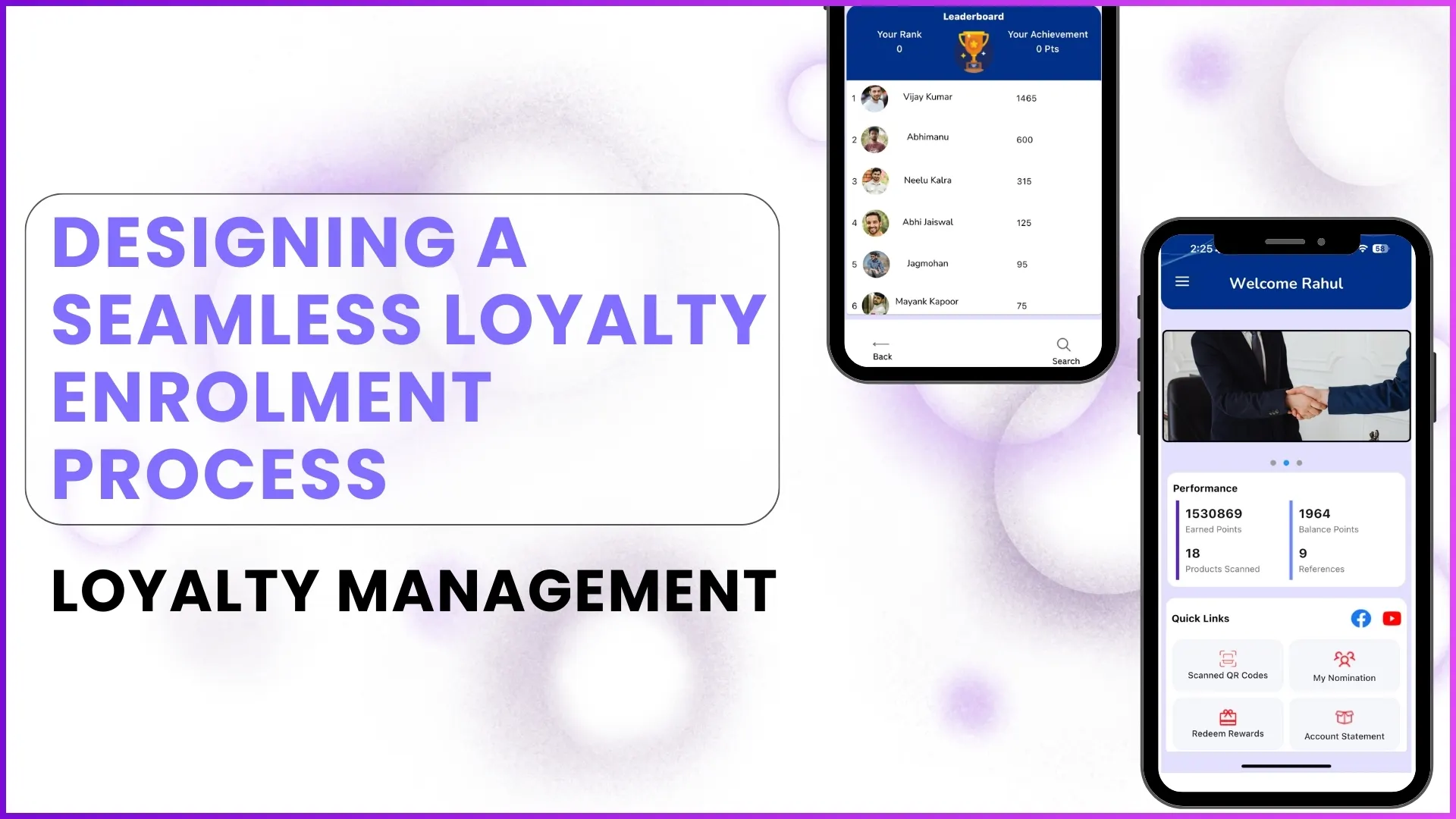
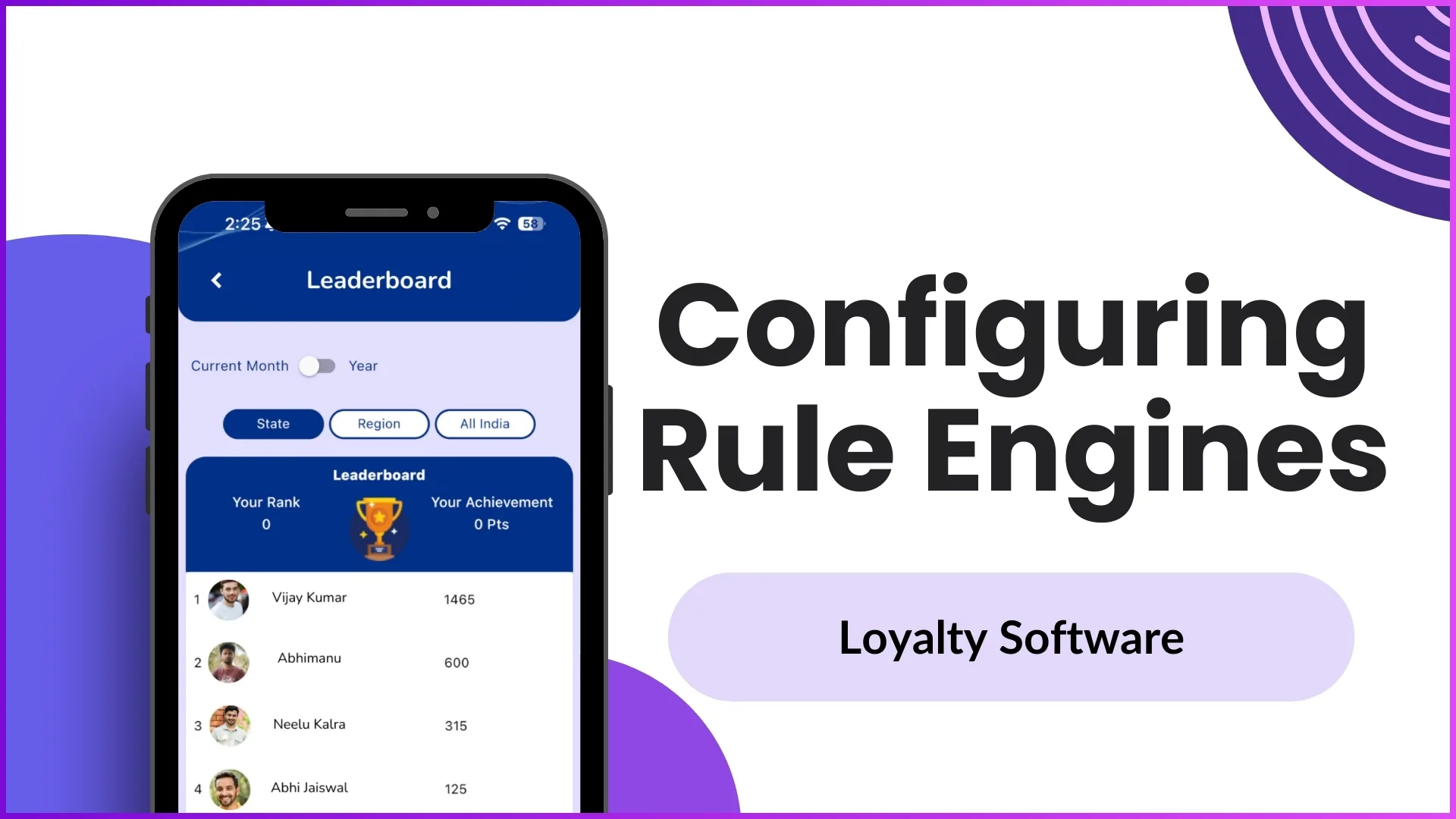
Two adjacent layers run on the same rule engine. Notifications fire when a rule matches an event: a welcome message on enrolment, a points-credited confirmation on accrual, a redemption confirmation on payout, a low-balance reminder on a configurable threshold. Gamification adds another rule set: badges on milestones, level-up events on cumulative volume, leaderboards on activity. The same engine that runs the core program runs the engagement layer, so the operator changes a gamification rule the same way they change a points slab.
Backend Configuration and Audit Trail
The configuration surface is the admin console. Rules are exposed as forms, drag-and-drop builders, or structured templates depending on the platform. The cloud loyalty platform protects the production rules with versioning, dry-run mode, and rollback. Every rule change writes to the audit log with the editor's ID, timestamp, and a diff against the previous version. The audit trail is what makes the engine safe for the operator to edit in production: a misconfigured rule can be reverted, and the affected transactions can be re-evaluated against the corrected rule without losing data.
How 1Channel Configures Loyalty Rule Engines
1Channel's cloud Loyalty Management module exposes its rule engine through the admin console. Enrolment, accrual, approval, redemption, notification, and gamification rules are configured from the same interface, and the platform validates each new rule against the existing rule set before activating it. 1Channel's AI engine surfaces conflicts, a new accrual rule that overlaps an existing one, unintended interactions, a redemption rule that violates a tier policy, and underperforming rules where conversion sits below forecast. The audit log captures every change with full diff and rollback, so the operations team can iterate confidently. Multiple programs share the same rule engine on 1Channel, so a learning from one program transfers to the next without re-engineering the stack.
Explore Loyalty Program Software
1Channel's cloud loyalty platform exposes enrolment, accrual, approval, and redemption rules through a single configurable engine for Malaysian brands.
Explore Loyalty Program Software →Common Pitfalls in Rule Configuration
A few patterns surface repeatedly when programs build out their rule engine. Worth catching early in the rollout:
- Stacking too many overlapping accrual rules. The rep-facing math becomes opaque, and the operations team loses track of which rule actually fired for a given transaction.
- Skipping the dry-run before activating a new rule. Even small rule changes can produce unintended interactions with adjacent rules; the dry-run mode catches most of them before the rule goes live.
- Treating notification rules as an afterthought. A notification triggered too early or too late breaks the member's trust in the program, and a missing notification reads as silence rather than convenience.
- Hard-coding eligibility for a single tier. Programs evolve and add tiers; eligibility rules built around one tier need rewriting later, which is expensive in a live program.
- Ignoring the audit trail until a dispute surfaces. The log is the operator's evidence base; sampling it on a cadence keeps the rules honest between cycles rather than only at incident time.