Loyalty platforms hold member identity, reward balance, transaction history, and KYC documents. The login layer is where the protection of all that data begins. When the entry gate is weak, every other safeguard downstream carries the same risk. OTP login replaces password-based authentication with a one-time code sent to a verified contact, which gives the cloud loyalty platform a clean, automated way to confirm the member before the session opens.
Table of Contents
OTP Login in a Loyalty Context
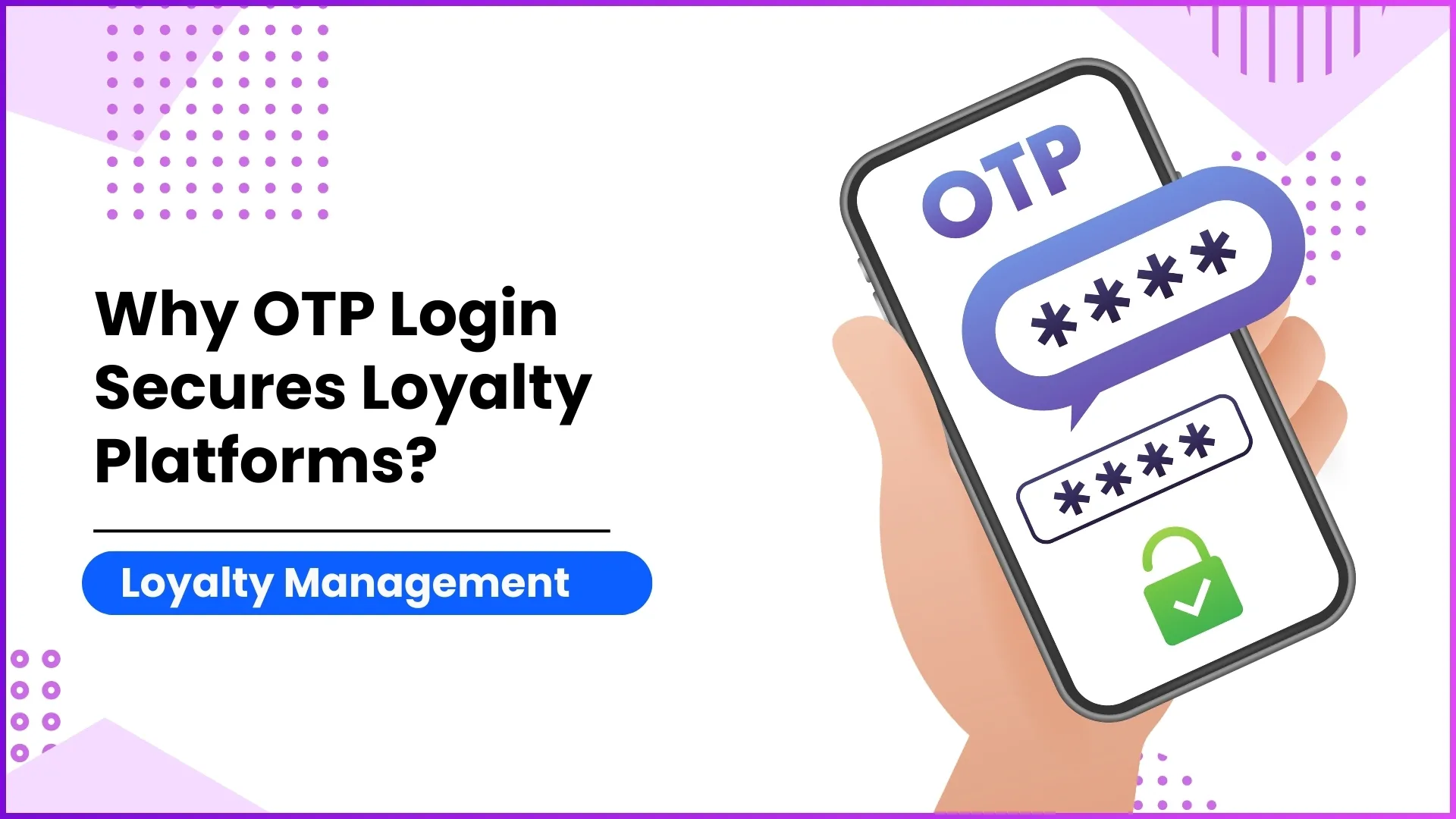
OTP is a short numerical code generated by the cloud loyalty platform and sent to the member's registered mobile number or email at the moment of login. The code is valid for a few minutes and works once. There is no password to set, remember, or recover, and there is no shared secret stored anywhere outside the platform. The verified contact channel becomes the credential, and the platform issues a fresh code on every login attempt.
Risks the Login Layer Defends Against
Loyalty programs are a frequent fraud target because they carry real monetary value. Reward points are redeemable for cash equivalents, and KYC fields hold personal data that carries its own resale risk. The login layer must hold the line against a few concrete threats:
- Account takeover through credential stuffing on reused passwords.
- Bulk fake enrolments aimed at harvesting joining bonuses.
- Unauthorised redemption of accrued points by someone other than the legitimate member.
- Unauthorised access to KYC documents stored against the member profile.
Five Security Layers Built on OTP
OTP is the entry mechanism, but the security value compounds across five layers the cloud platform stacks on top of it.
- Verified contact at the gate. Mobile or email is verified at sign-up, so every subsequent login goes to a known channel. Spoofing that channel means compromising the SIM or email itself, which is a separate and harder attack surface.
- Eligibility check before issuance. The platform validates that the contact belongs to an active member before it issues the OTP, so an outsider cannot trigger a code to a random number.
- AI-driven fraud signals on issuance. The platform watches for repeated OTP requests from the same device, IP, or geography and throttles or blocks the issuance automatically when the pattern looks suspect.
- Single-use, short-lived code. Each OTP works once and expires in minutes, so an intercepted code cannot be replayed later.
- Full audit trail. The cloud platform logs the device, time, and outcome of every OTP attempt, so the operations team can trace any disputed access after the fact.
How 1Channel Hardens Loyalty Login
1Channel runs OTP login as the default entry point on its cloud Loyalty Management module. The OTP gateway integrates with SMS, email, and WhatsApp channels, and the operator picks the channel per program from the admin console. 1Channel's AI fraud module watches the issuance and verification pattern continuously, flagging suspicious bursts before they hit the reward ledger. The login event flows into the same audit log that captures enrolment, KYC submission, and redemption activity, so the security team has a single timeline per member. 1Channel also supports automated lockout after repeated failures, which prevents brute-force attempts from progressing past the entry point.
Explore Loyalty Program Software
1Channel's cloud loyalty platform secures member access with OTP login, AI fraud detection, and full session audit for Malaysian brands.
Explore Loyalty Program Software →FAQs
What does OTP login do that a password cannot?
OTP ties the login to a contact channel the platform has already verified, so the credential is fresh on every attempt. A leaked password works until the user changes it; a leaked OTP works for a single login window of a few minutes and then expires.
Is OTP login enough to prevent unauthorised redemption?
OTP secures the entry point. Most platforms layer a second OTP at the redemption step itself for high-value rewards, so the session login and the transaction approval are both verified against the member's contact.
Can OTP login work for backend-enrolled members?
Yes. The program owner adds the member's contact at enrolment, and the OTP route activates the moment that member opens the app or web portal for the first time. The verified contact is the credential from the very first session.
How does the platform handle a member who changes their mobile number?
The member updates the contact through a verified flow: OTP on the old number followed by OTP on the new number. The cloud platform logs the change as a profile event, and any future login goes to the new contact automatically.
Does OTP login slow down the user experience?
Modern OTP delivery over SMS, WhatsApp, or email completes in seconds, and the platform pre-fills the code through automation on supported devices. The trade-off against a forgotten password and recovery cycle is firmly in favour of OTP for most loyalty audiences.