When Malaysian businesses evaluate field sales software, the conversation often centres on features: does it have GPS tracking, does it support offline mode, can it generate reports in Excel. These are valid questions, but they miss the bigger picture. A modern field sales platform is not defined by a checklist of features. It is defined by whether its core components connect field execution to management visibility to business decision-making in a way that scales.
This article outlines the nine components that separate a functional field sales platform from a collection of disconnected tools. Each component is explained in terms of what it does operationally and why it matters for businesses managing distributed sales teams across states like Selangor, Penang, Johor, and East Malaysia.
Table of Contents
The Nine Components
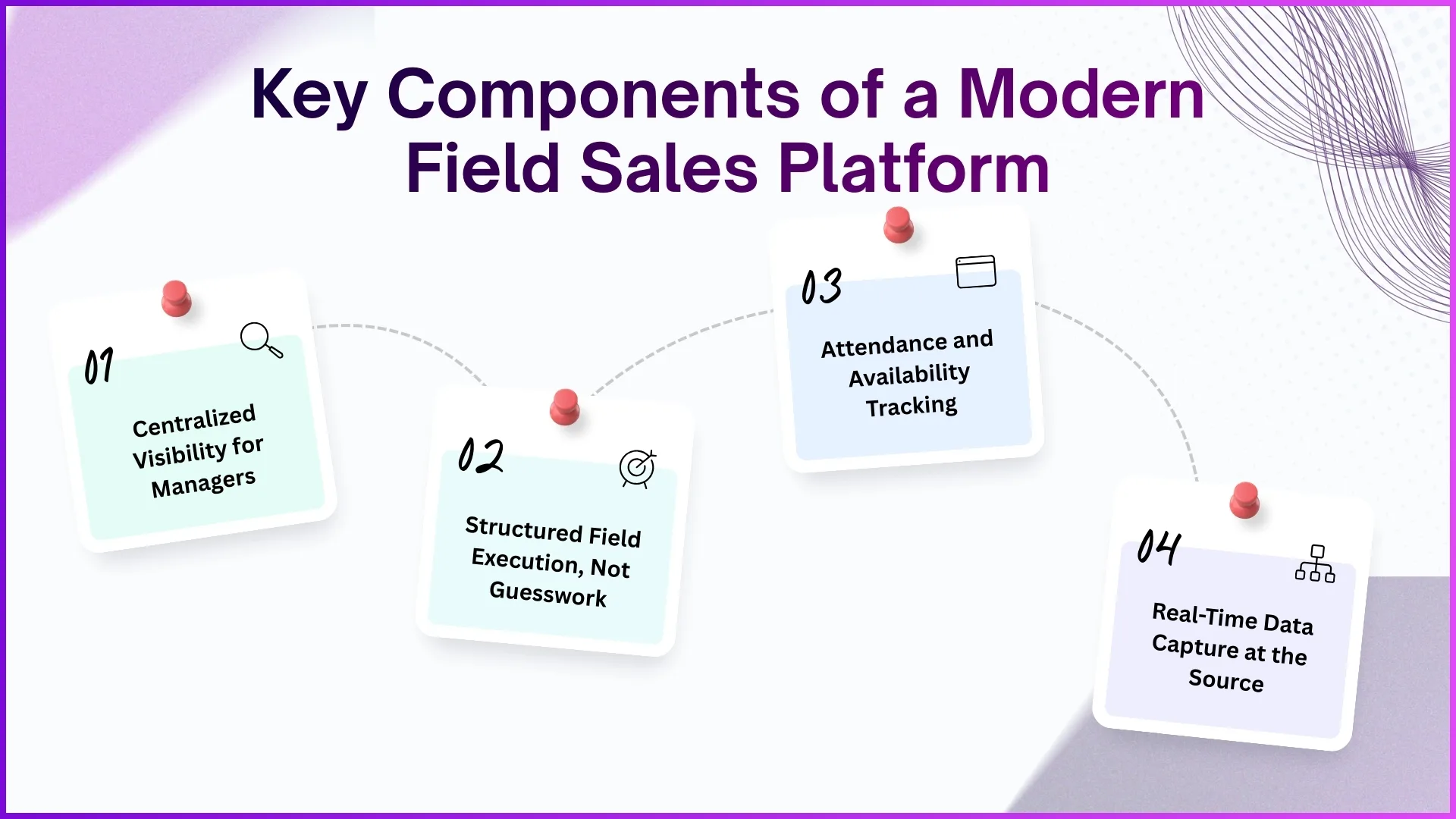
1. Centralised visibility for managers
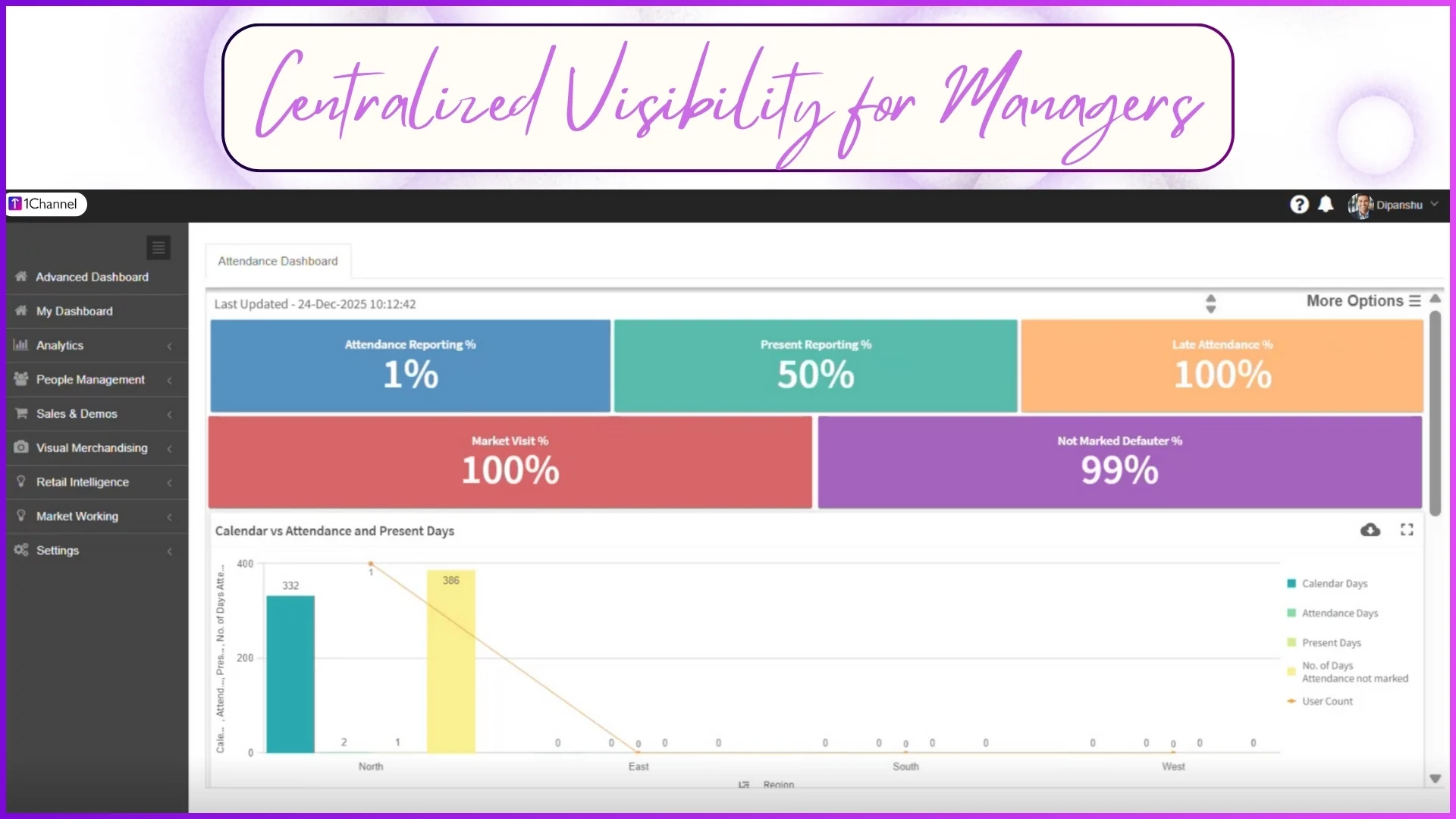
The most fundamental problem in field sales management is that managers cannot see what is happening in the field. A sales director in KL might have 40 reps across four states, but without a centralised system, their understanding of daily activity comes from WhatsApp updates, phone calls, and weekly summaries compiled from memory.
A modern platform brings all field activity into a single dashboard: who is in the field, which outlets have been visited, what orders were captured, where attendance was marked, and which planned visits were missed. This is not a nice-to-have feature. It is the foundation that makes every other component useful. Without centralised visibility, data exists but remains scattered and unactionable.
2. Structured field execution
Field sales success depends on consistency. Without structure, execution quality varies from one rep to another. One rep visits 10 outlets systematically. Another visits 6 and skips the ones that are hard to reach. Without a structured system, the manager has no way to enforce consistency or even know it is missing.
Beat plans, visit schedules, and activity workflows create this structure. Reps see their daily plan in the app. Each visit is logged with GPS verification. Missed visits are visible in real time. This does not restrict the sales team. It ensures that the basics of field coverage happen reliably, regardless of which rep is covering which territory.
3. Attendance and availability tracking
Knowing whether a team is active in the field should not require phone calls. A modern platform captures when a rep starts their day, where field activity happens, and how long productive work continues. GPS-stamped, AI-verified attendance creates transparency for management and HR, reducing friction around productivity discussions and payroll accuracy.
For a company with reps spread from Klang Valley to Sabah, system-driven attendance eliminates the guesswork that manual processes depend on.
4. Real-time data capture at the source
Manual reporting has always been a weak link. Data entered hours later from memory loses accuracy. A modern platform captures information at the moment of action: stock levels during the visit, orders while standing in the store, questionnaire responses while observing the shelf. This approach means decision-makers work with data that reflects reality, not reconstructed recollections.
5. Sales activity and order flow management
Beyond tracking visits, a field sales platform must support the full sales workflow from opportunity to order. Reps need to capture orders using pre-loaded product catalogues with pricing rules. Stock levels need to be recorded at each outlet. Scheme and promotion information needs to be available during the visit. This reduces errors, speeds up the order-to-fulfilment cycle, and maintains consistency across all locations.
For an FMCG distributor managing secondary sales across 150 outlets in Selangor, structured order capture during visits means the back office receives clean, validated data rather than handwritten order notes that need to be deciphered and re-entered.
6. Expense and claim management
Field reps incur travel, toll, parking, and meal expenses daily. Manual claim processes create delays, disputes, and inflation. A modern platform integrates expense capture into daily operations: reps submit claims with photo receipts from the app, managers approve through digital workflows, and finance teams can cross-reference claimed amounts against GPS-verified travel distances. When expenses are part of the system rather than a separate paper process, trust improves for everyone involved.
7. Performance reporting that drives action
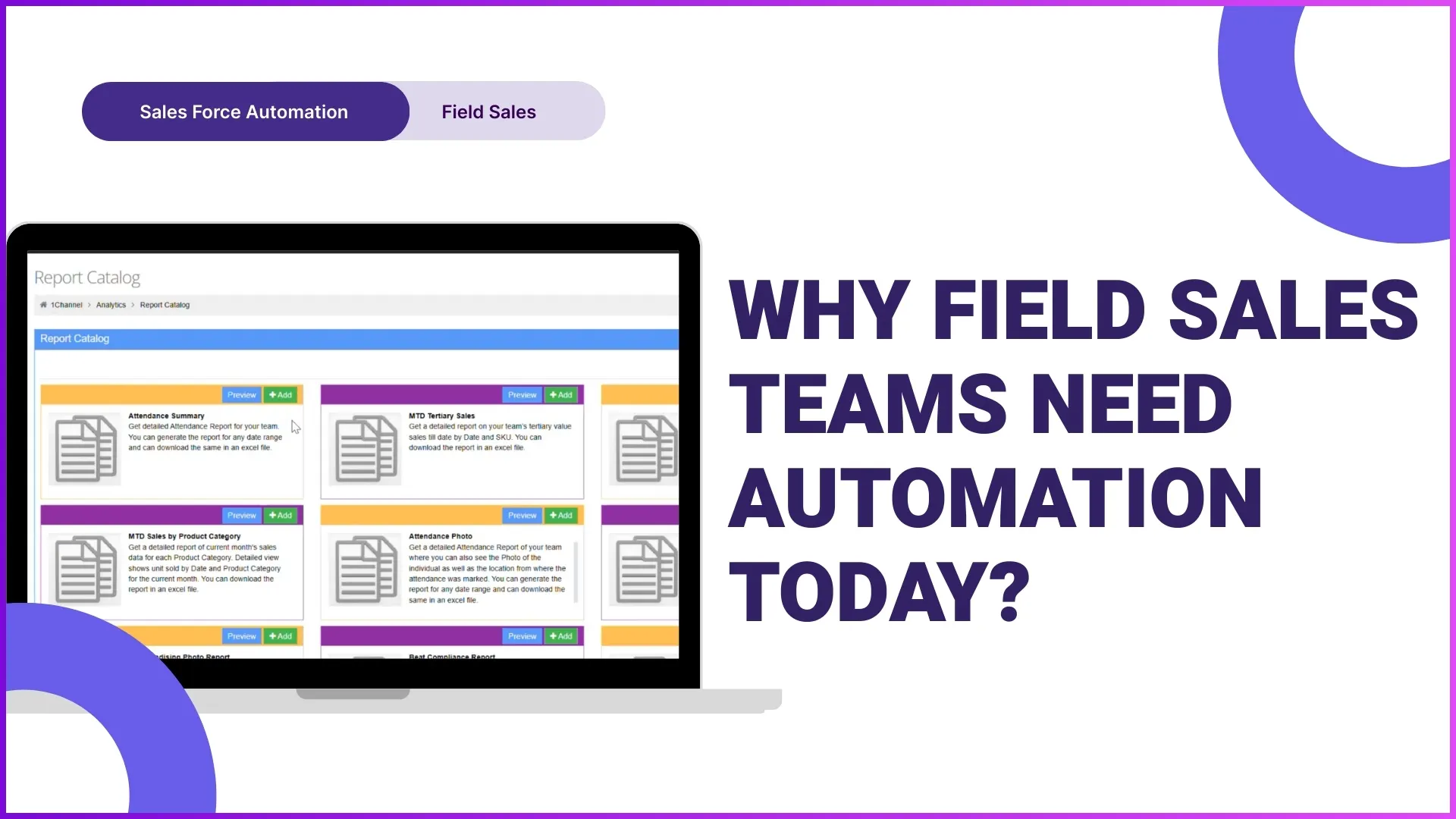
Reports should support decisions, not just summarise the past. Pre-built report catalogues covering attendance compliance, beat coverage, visit productivity, sales performance, and merchandising status give managers the data they need without manual compilation. A custom report builder allows admins to create additional reports by selecting specific dimensions, filters, and date ranges. The goal is not more data but faster, clearer answers to the questions managers are actually asking.
8. Configurability for different sales models
No two field sales operations are identical. An FMCG company in Selangor has different workflows from a pharmaceutical company in Penang or a building materials distributor in Johor. A modern platform adapts to different team structures, approval flows, product types, and reporting requirements through configuration rather than requiring custom development. Dynamic labels, role-based module visibility, and configurable dashboards ensure the system supports the business rather than forcing the business to adapt to the software.
9. Role-based access and control
Field sales platforms serve multiple stakeholders: reps, team leaders, regional managers, HR, finance, and leadership. Each role needs access to different data and functions. A rep should see their own stores and targets. A team leader should see their team's performance. A regional head should see all territories. Finance should see expense data but not field activity details. Granular role-based access ensures each person sees a clean, relevant interface while maintaining governance over who can view, edit, or export what.
Platform Readiness Checklist
Use this checklist to assess whether your current field sales operations have the components of a modern platform or whether gaps exist:
If more than three of these questions result in "no," the gap between your current operations and a modern field sales platform is likely affecting visibility, accountability, and scalability.
Explore Sales Force Automation
1Channel's SFA platform includes all nine components: centralised dashboards, structured beat planning, AI-verified attendance, real-time data capture, order management, expense workflows, configurable analytics, and granular role-based access.
Explore SFA Software →A modern field sales platform is not defined by how many features it lists. It is defined by whether its components connect execution in the field to visibility for managers to decisions for the business. When these nine components work together, the result is a field operation that is structured, measurable, and scalable, which is exactly what Malaysian businesses need as they expand teams, enter new territories, and compete in markets where execution speed matters. Get in touch to explore how these components can work for your operation.