Every Malaysian business with a field sales team started with manual processes. Reps planned their own routes based on familiarity. Attendance was confirmed through a morning WhatsApp message. Visit reports were typed up at the end of the day from memory. Expense claims were submitted as paper receipts at the end of the month. Managers tracked performance through weekly phone calls and monthly Excel summaries.
For a team of five people covering one city, this works. The manager knows everyone personally, can spot-check visits occasionally, and trusts the team to self-manage. But as soon as the team grows to 15, 30, or 50 people spread across Selangor, Penang, Johor, and East Malaysia, the manual approach starts breaking down in ways that directly affect revenue.
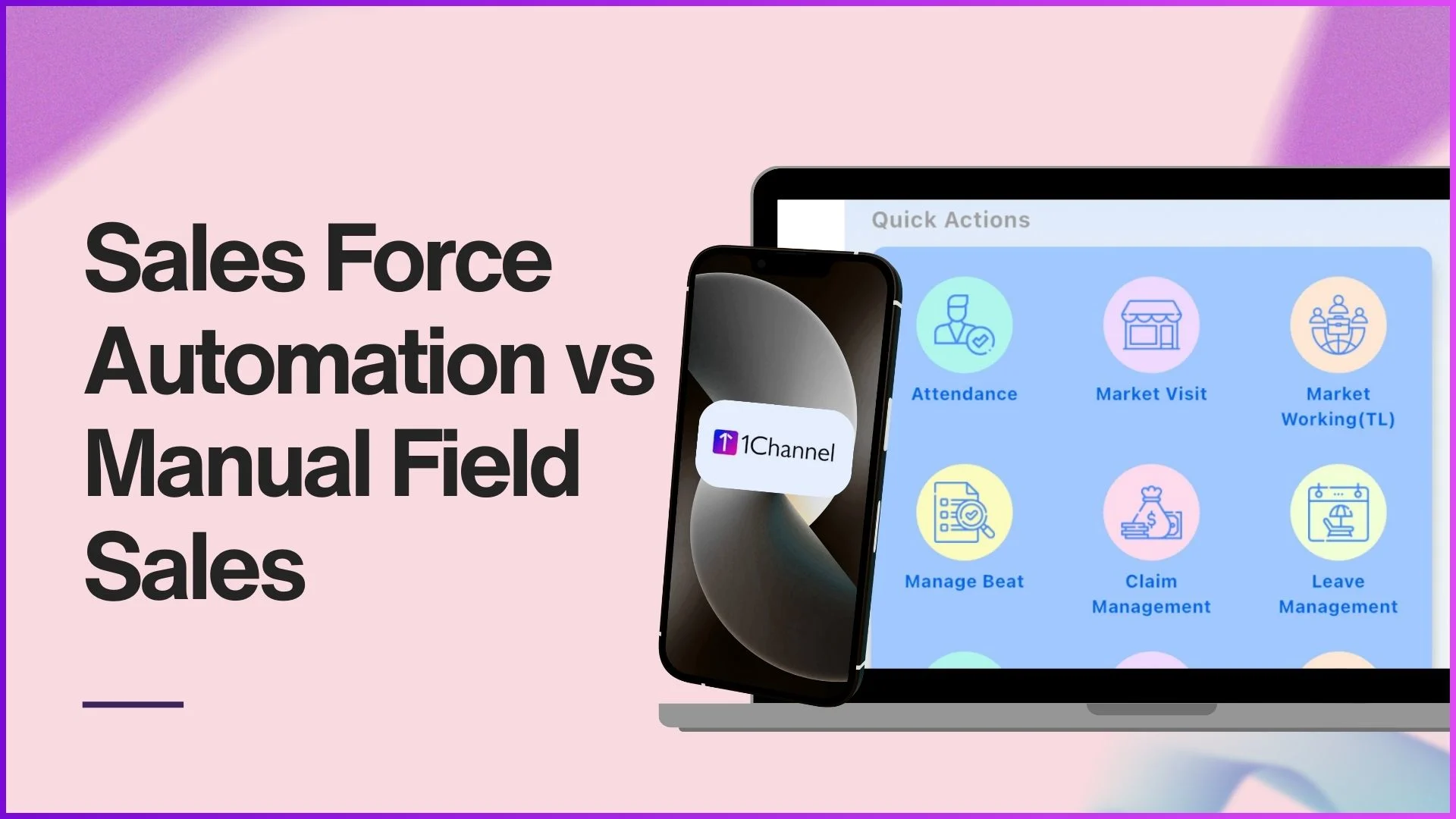
This article compares manual field sales with sales force automation across the operational areas that matter most, and explains where the tipping point is for Malaysian businesses.
Table of Contents
Attendance: Assumption vs Verified Proof
With manual processes, a sales manager starts the day assuming the team is in the field. Attendance confirmation might come through a WhatsApp message that says "On the way" or a group chat check-in. If a rep does not message, the manager calls to check. If there is a discrepancy between claimed attendance and actual presence, it typically surfaces only during payroll reconciliation at month end.
With SFA, attendance is timestamped, GPS-located, and identity-verified in real time. When a rep marks attendance through the mobile app, the system captures their GPS coordinates, a selfie, and runs AI face validation against their stored reference photo. The manager does not need to call anyone. The dashboard shows who is in the field, who has not checked in, and who marked attendance from an unexpected location.
For a company with 30 reps spread across Klang Valley and Johor, this difference means the manager sees a verified attendance picture by 9:15 AM instead of piecing together WhatsApp messages over two hours.
Market Visits: Plans on Paper vs Verified Execution
With manual processes, visit plans are shared verbally or through a spreadsheet. Whether a store was actually visited or skipped depends entirely on the rep's self-reported data. A rep might claim they visited 10 outlets but actually covered only 7, skipping the three that were furthest from their usual route. The manager discovers this gap only when sales from those outlets drop weeks later.
With SFA, beat plans are created in the system and approved by the manager. Each visit is GPS-verified with check-in and check-out timestamps. The beat compliance report calculates the percentage of planned visits completed versus missed. If a rep in Petaling Jaya skipped two assigned outlets today, the manager sees it by late afternoon, not next quarter.
Reporting: End-of-Week Summaries vs Real-Time Data
With manual processes, reports are compiled by reps at the end of the day or week. They type visit notes from memory, estimate order values, and sometimes round numbers for convenience. By the time this data reaches the sales manager, it is already stale. A distributor issue that surfaced on Monday is only visible in Friday's report. By then, the opportunity to intervene has passed.
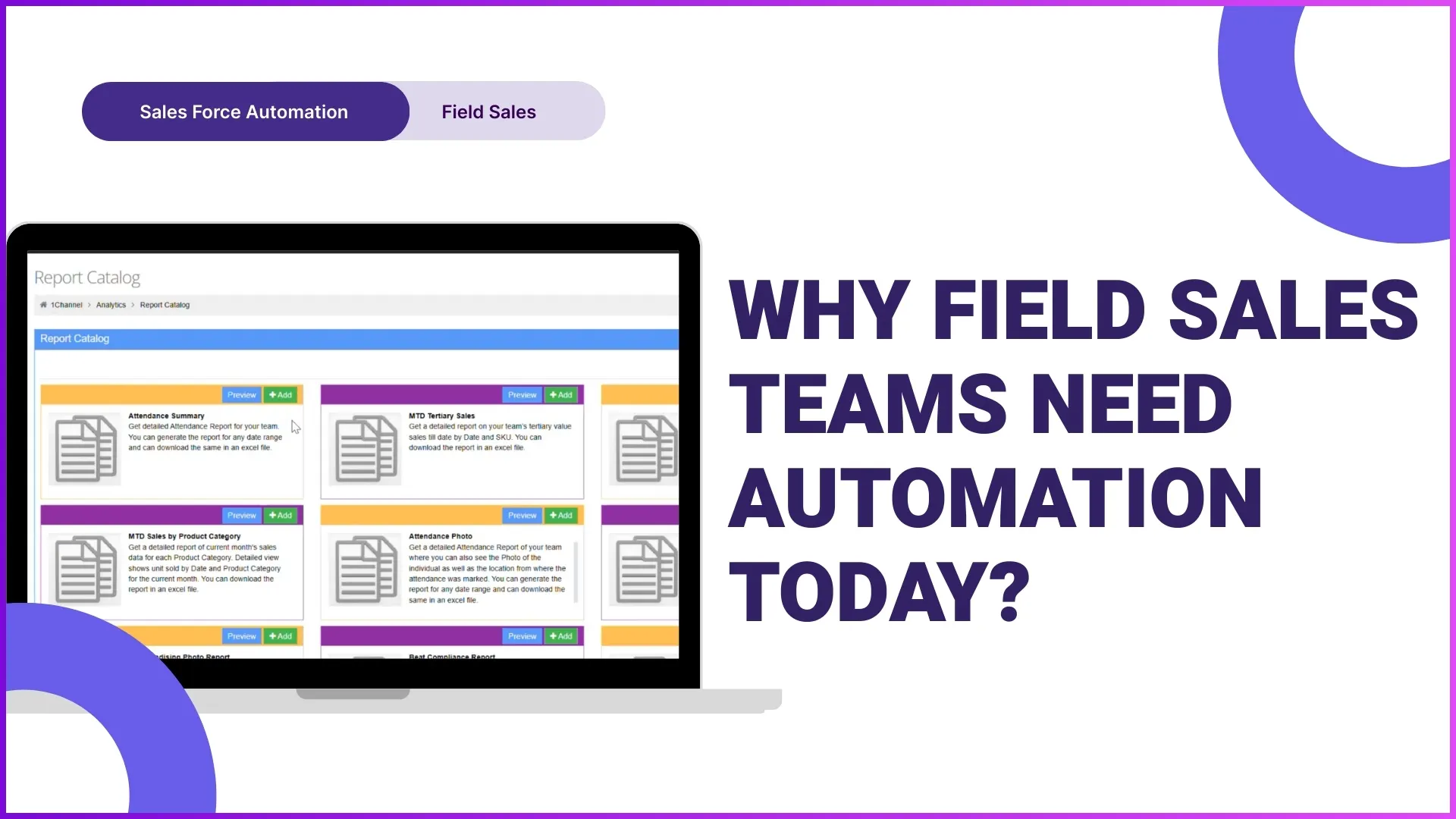
With SFA, data flows continuously. Every visit, every order, every stock count, and every questionnaire response enters the system at the moment it happens. The manager does not wait for compiled reports. Dashboards update in real time showing visit productivity, sales by territory, attendance compliance, and route efficiency. A sales director can check at 2 PM how many outlets were visited in Penang today.
Data Accuracy: Memory-Based vs System-Captured
With manual processes, reporting depends on people remembering details accurately. Store names, stock quantities, visit durations, and order values are recalled from memory and typed into a report hours later. Even well-intentioned reps make transposition errors, forget details, or estimate instead of recording precisely. When this data is used for sales forecasting or inventory planning, the inaccuracies compound.
With SFA, data is captured at the source. Stock levels are entered during the visit from pre-loaded SKU catalogues. Orders are recorded through structured forms with product codes and pricing rules. Visit durations are calculated from GPS check-in and check-out timestamps. The data is consistent, reliable, and immediately available for analysis without manual cleanup.
Manager Time: Chasing Updates vs Strategic Work
With manual processes, sales managers spend a significant portion of their day on verification calls and follow-ups: "Did you visit that store?" "Can you resend the report?" "Why is this data missing?" "What happened with the Johor distributor?" Each question requires a phone call, a wait for response, and often a second follow-up. For a manager overseeing 25 reps, this administrative overhead can consume half the working day.
With SFA, managers shift from chasing data to analysing it. The information is already in the system. Instead of asking "What happened?" the manager asks "What should we do differently?" Their time goes toward coaching reps, improving territory coverage, adjusting beat plans based on actual performance data, and driving better outcomes. This shift in role is what enables a manager to effectively oversee 40 or 50 reps instead of struggling with 20.
Scalability: Bottleneck vs Growth Enabler
With manual processes, adding 10 more reps means 10 more people sending WhatsApp updates, 10 more sets of Excel reports to review, 10 more expense claims to verify manually, and 10 more attendance records to track through messages. The administrative overhead scales linearly with headcount. At some point, the manager's capacity becomes the bottleneck, and the business either hires more supervisors or accepts reduced visibility.
With SFA, adding 10 more reps means adding 10 users to the system. Their attendance, visits, orders, and reports flow into the same dashboards. The same beat compliance report covers 30 reps or 130 reps. The same analytics show performance by territory, by product, by day. For Malaysian businesses expanding into new states or adding distribution channels, SFA absorbs growth without proportionally increasing management overhead.
The Comparison at a Glance
Explore Sales Force Automation
1Channel's SFA platform provides GPS attendance with AI verification, beat planning, real-time analytics, expense management, and configurable workflows for field teams of any size.
Explore SFA Software →The comparison is not about technology versus people. Manual field sales is not wrong. It is simply limited. It works when teams are small, geographies are contained, and the manager has direct personal oversight of every rep. The moment any of those conditions changes, the limitations become operational costs: missed visits that reduce revenue, late reports that delay decisions, unverified attendance that inflates payroll, and management time consumed by administrative follow-ups instead of strategic work. SFA does not replace the sales team. It gives the sales team and their managers the structure and visibility to operate at a level that manual processes cannot sustain. Get in touch to explore how automation can work for your field operation.