Promotions in most Malaysian sales organisations happen through subjective conversations between regional managers and HR. A team leader recommends a promoter for advancement based on their impression. HR asks for documentation. The manager scrambles to pull together attendance records, training completion data, and performance notes from WhatsApp threads and Excel files. The promotion decision takes weeks and often lacks consistency because the criteria are not standardised across the organisation.
A level-based LMS with automated promotions replaces this with a system where promotion criteria are defined upfront, employee progress is tracked continuously, and advancement happens automatically when all conditions are met. The admin configures what "ready for promotion" means. The system monitors every employee against those criteria. When an employee qualifies, the next level unlocks without manual intervention.
This article explains how automated promotions work within a level-based LMS and why this structure matters for Malaysian businesses scaling their field sales training.
Table of Contents
How the Level System Drives Automated Promotions
The level system is the foundation that makes automated promotions possible. The admin creates levels from Level 0 upward and defines three measurable promotion criteria for each level:
- Certificates received (as a percentage): The employee must earn a defined percentage of available certificates at their current level. If Level 0 has 5 modules with certifications and the threshold is 80 percent, the employee needs at least 4 certificates to qualify.
- Tenure (in days): A minimum time spent at the current level before promotion is possible. This prevents employees from rushing through content without properly absorbing it. A 30-day minimum at Level 0 ensures the new joiner has enough time to apply what they learned before advancing.
- Average productivity units: A performance-based metric that ties learning to actual work output. For a retail promoter, this might be average daily sales units. For a medical rep, it might be average doctor visits per week. This criterion ensures that training translates into on-the-ground performance.
When an employee meets all three criteria simultaneously, the LMS automatically promotes them to the next level. New modules, new sessions, and new quizzes assigned to that level become visible in their app immediately. The admin does not need to manually approve the promotion or update the employee's access. The system handles it based on the predefined rules.
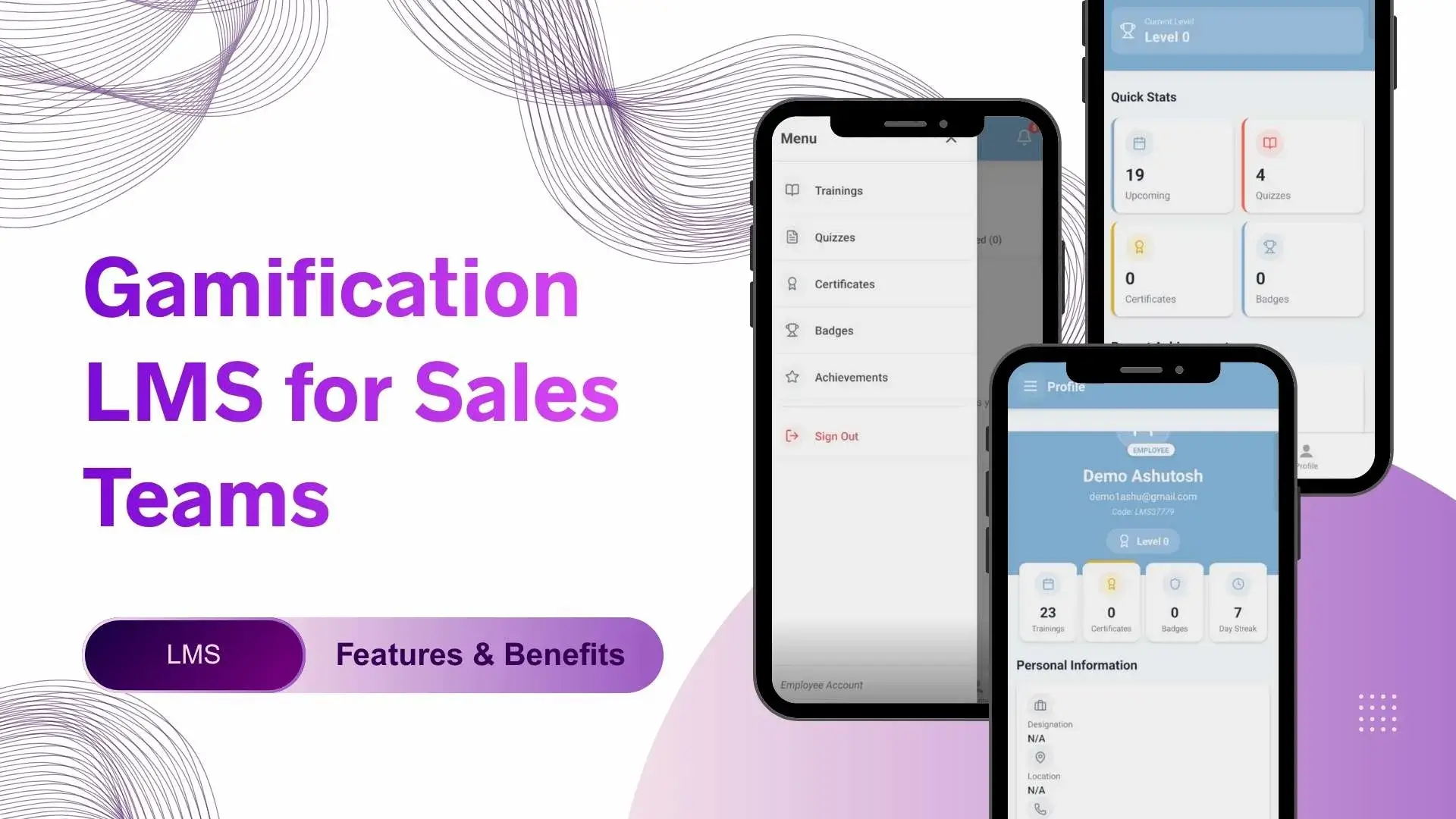
For a consumer electronics company with 80 promoters across retail outlets in Selangor and Johor, this means a promoter who started at Level 0 three months ago, completed all required product knowledge modules, passed the quizzes, and maintained consistent sales performance gets promoted to Level 1 automatically. Their app shows new advanced selling techniques modules the next time they log in. No paperwork, no manager intervention, no delays.
What the Admin Sees Across the Organisation
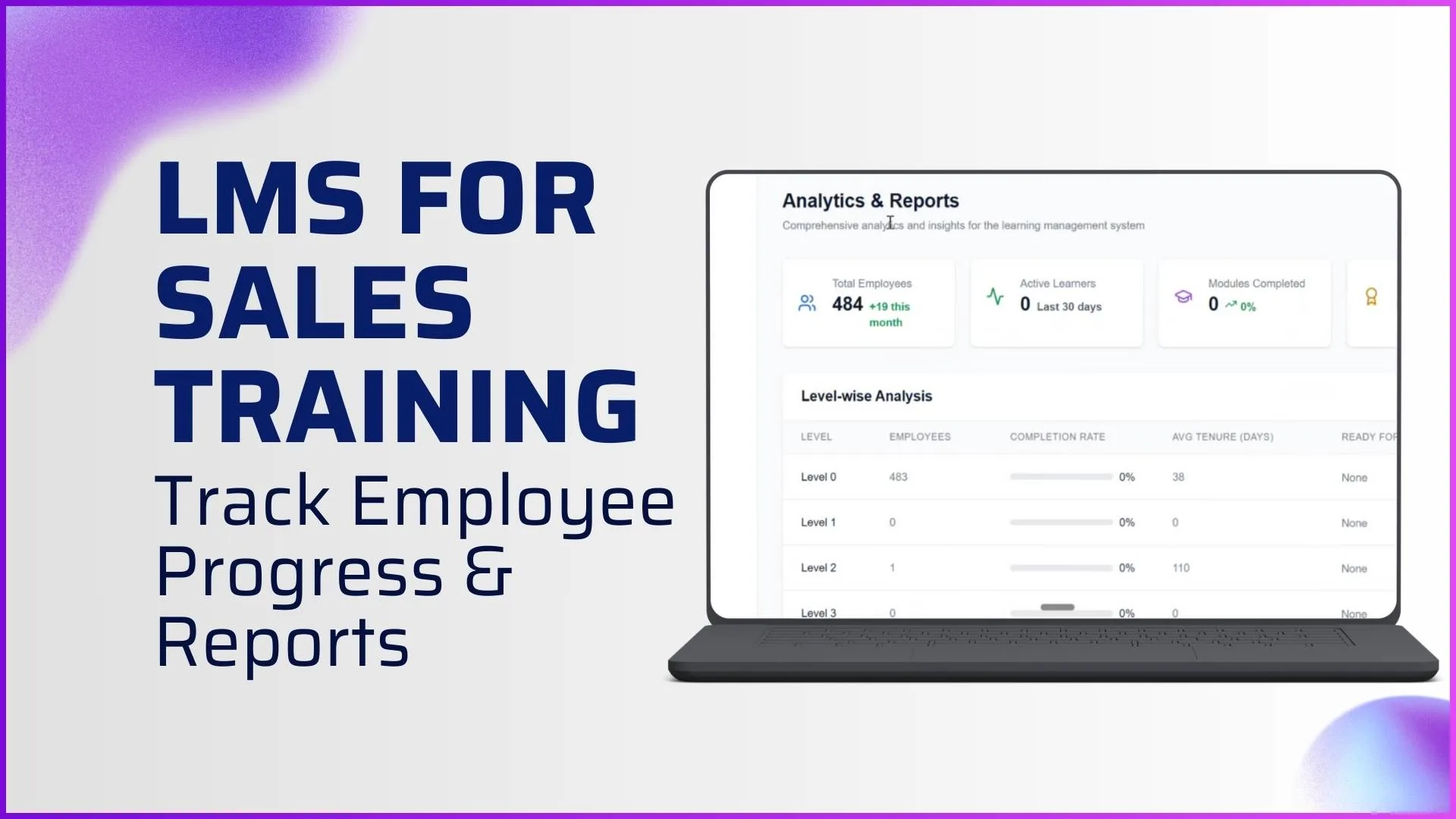
The admin dashboard provides a centralised view of the entire training operation. At a glance, the admin can see total employees, training modules created, active sessions, certifications issued, badges earned, and crucially, the number of employees currently eligible for promotion.
The employee progress screen provides a per-person breakdown: each employee's current level, module completion progress, achievements earned, and promotion status. A search function lets the admin look up any specific employee. The performance matrix shows aggregate metrics including quiz pass rates, attendance rates, and module completion percentages.
For a training manager at an FMCG company in Penang overseeing 60 merchandisers, this dashboard eliminates the guesswork that used to consume end-of-quarter review meetings. Instead of asking "Who should we promote?" and getting subjective answers, the system shows exactly who has met the criteria and who is close.
Training That Unlocks with Each Level
The practical value of automated promotions becomes clear when you see what changes for the employee at each level. Training is not just a one-time onboarding event. It is a continuous progression where each level introduces more advanced content.
A telco company training promoters across outlets in KL, Penang, and Sabah might structure their levels like this:
Level 0 (First 30 days): Modules covering basic plan details, store procedures, attendance and reporting processes, and introductory product knowledge. Sessions delivered through e-learning for self-paced completion plus one classroom session for hands-on practice. Quizzes test foundational knowledge.
Level 1 (30 to 90 days): Advanced product features, competitor comparison, and basic objection handling. In-store sessions where trainers visit outlets for live product demonstrations. Quizzes become more rigorous with higher passing thresholds and time limits.
Level 2 (90+ days, team leader track): Modules on team management, performance coaching, escalation handling, and store visit planning. Virtual sessions connecting team leaders across regions for collaborative learning. Gamified quizzes with badges and certificates that serve as formal recognition of leadership readiness.
Each level is a self-contained learning journey with its own modules, sessions, and quizzes. The content is invisible to employees at other levels, preventing information overload for new joiners and ensuring experienced staff are always challenged with relevant material.
How the Automated Promotion Flow Works
This automated flow ensures that promotions are consistent, transparent, and based on measurable outcomes rather than subjective assessments. Every employee follows the same path and is evaluated against the same criteria, regardless of which region or manager they report to.
Why Automated Promotions Matter for Malaysian Sales Teams
- Fairness across regions. A promoter in Sabah and a promoter in Selangor are evaluated against identical criteria. Geography, manager preferences, and office politics do not affect who gets promoted.
- Speed of advancement. Employees who learn fast and perform well advance faster. There is no waiting for quarterly reviews or annual cycles. The system promotes as soon as criteria are met.
- Reduced admin burden. Training managers do not manually track who qualifies for promotion. The system does it continuously. The admin's role shifts from tracking to strategic training design.
- Motivation through visibility. Employees can see their own progress toward the next level in the app. They know exactly what they need to complete to advance. This transparency drives self-motivated learning.
- Scalability. Whether the company has 20 promoters or 200, the promotion system works the same way. Adding more employees does not increase the manual effort of managing promotions.
Explore Sales Team LMS
1Channel's LMS platform supports level-based learning with automated promotions, configurable criteria, gamified assessments, and real-time progress tracking for field sales teams.
Explore LMS Software →A level-based LMS with automated promotions turns training from a compliance exercise into a career development system. For Malaysian businesses managing field sales teams across multiple states, the ability to define promotion criteria once and let the system handle advancement continuously means faster scaling, fairer outcomes, and a workforce that is motivated by visible, achievable growth milestones. Get in touch to explore how level-based training can work for your team.