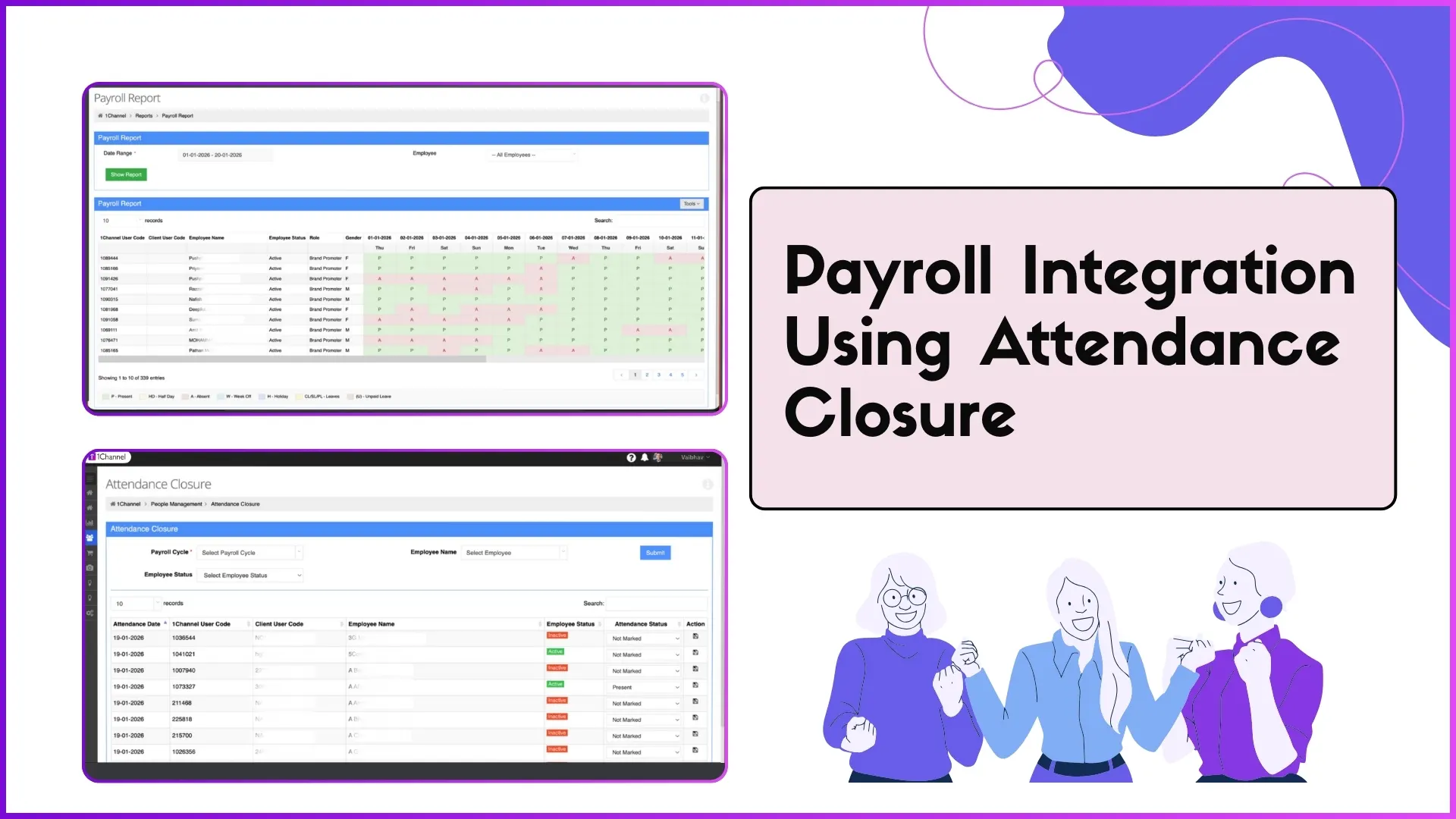
Unlike daily attendance tracking, which runs live across the month, attendance closure is the discrete event that locks the data after the cycle ends. Daily check-ins, regularisations, and on-duty approvals all stay editable up to the cutoff. Once closure runs, the dataset freezes. Cloud-based attendance dashboards stop updating for that period, and payroll runs against a single locked source of truth. The closure event is what makes the next salary cycle reliable.
Table of Contents
What Closure Locks Down
The cloud platform finalises every attendance entry for the closed period. Present days, leave days, on-duty days, half-days, late attendance, and any approved regularisations move into the locked state together. Pending requests beyond the cutoff carry over to the next cycle without blocking the current closure. Once the lock is in place, the data becomes read-only across dashboards, reports, and analytics. The HR admin can review what is there but cannot edit it after closure has run.
Why Closure Matters for Payroll Accuracy
Payroll teams need a stable dataset to run salary calculations against. If attendance keeps shifting during salary processing, every cycle turns into a reconciliation exercise that finance has to redo each time the source moves. The closure event sets a firm cutoff so the payroll team works against a fixed dataset for the entire processing window. Automation across the cycle is what makes this practical at scale: the cloud platform handles the lock, the validation pass, and the downstream propagation without manual intervention from HR or finance.
How Attendance Data Is Prepared Before Closure
A few steps tighten the data before the lock fires:
Attendance Submission and Review
Field reps submit daily attendance through the mobile app. AI face matching and geofence validation tie each entry to the assigned outlet at the moment of capture. The reporting manager reviews exceptions through the month and applies edits when the rep requests regularisation.
Approval and Regularisation
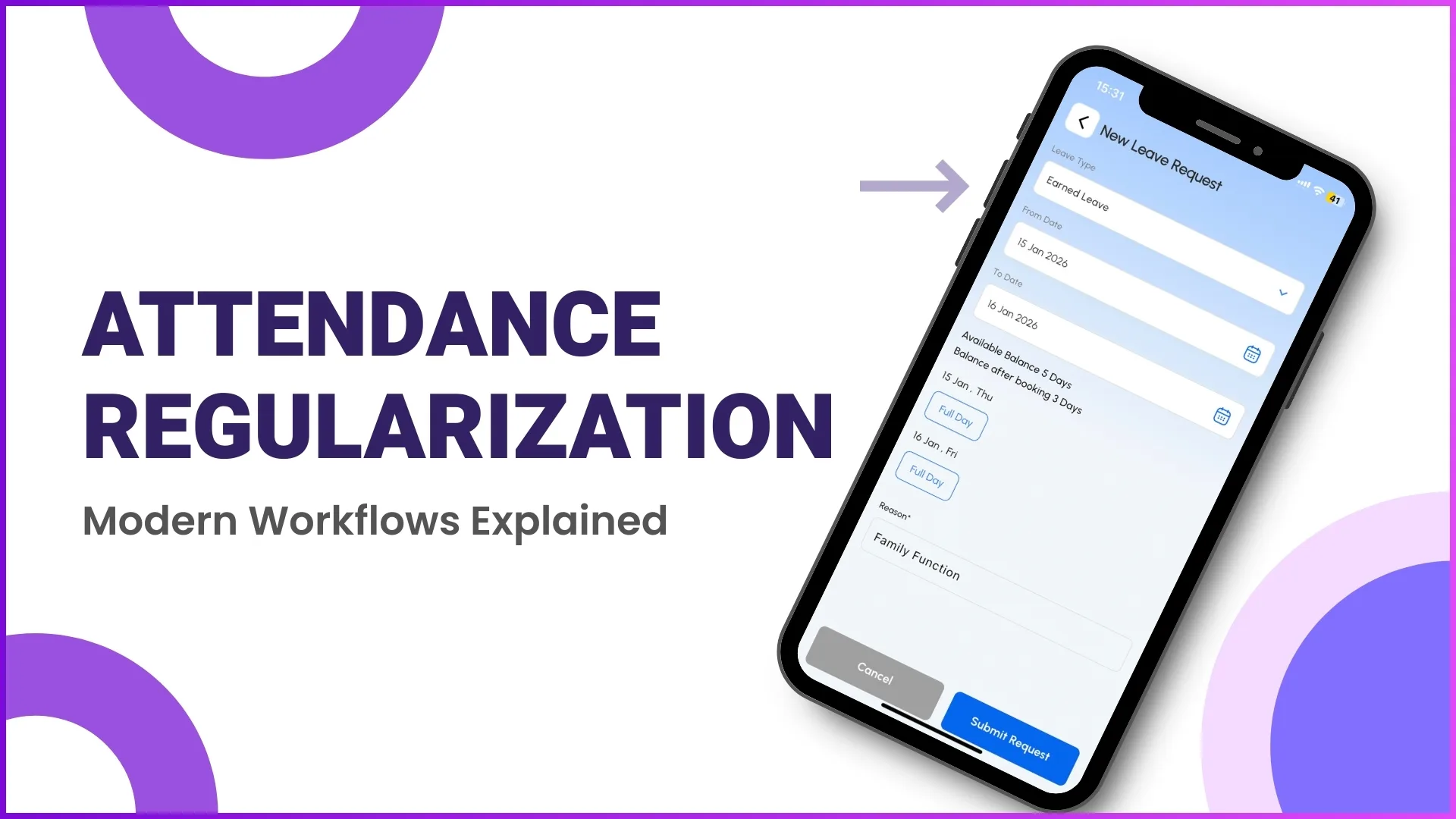
Manager-approved corrections, including late-attendance fixes, on-duty conversions, and half-day cases, are folded into the user's record before the cutoff. Automated routing handles the approval flow up the user hierarchy so requests reach the right manager without manual escalation.
Validation Through Reports
The Attendance Photo Report, Detailed Attendance Report, and User Activity Report act as the final dataset audit before closure. The HR admin scans for outliers, confirms the audit trail is clean, and signs off on the dataset as ready to lock.
How 1Channel Handles Attendance Closure
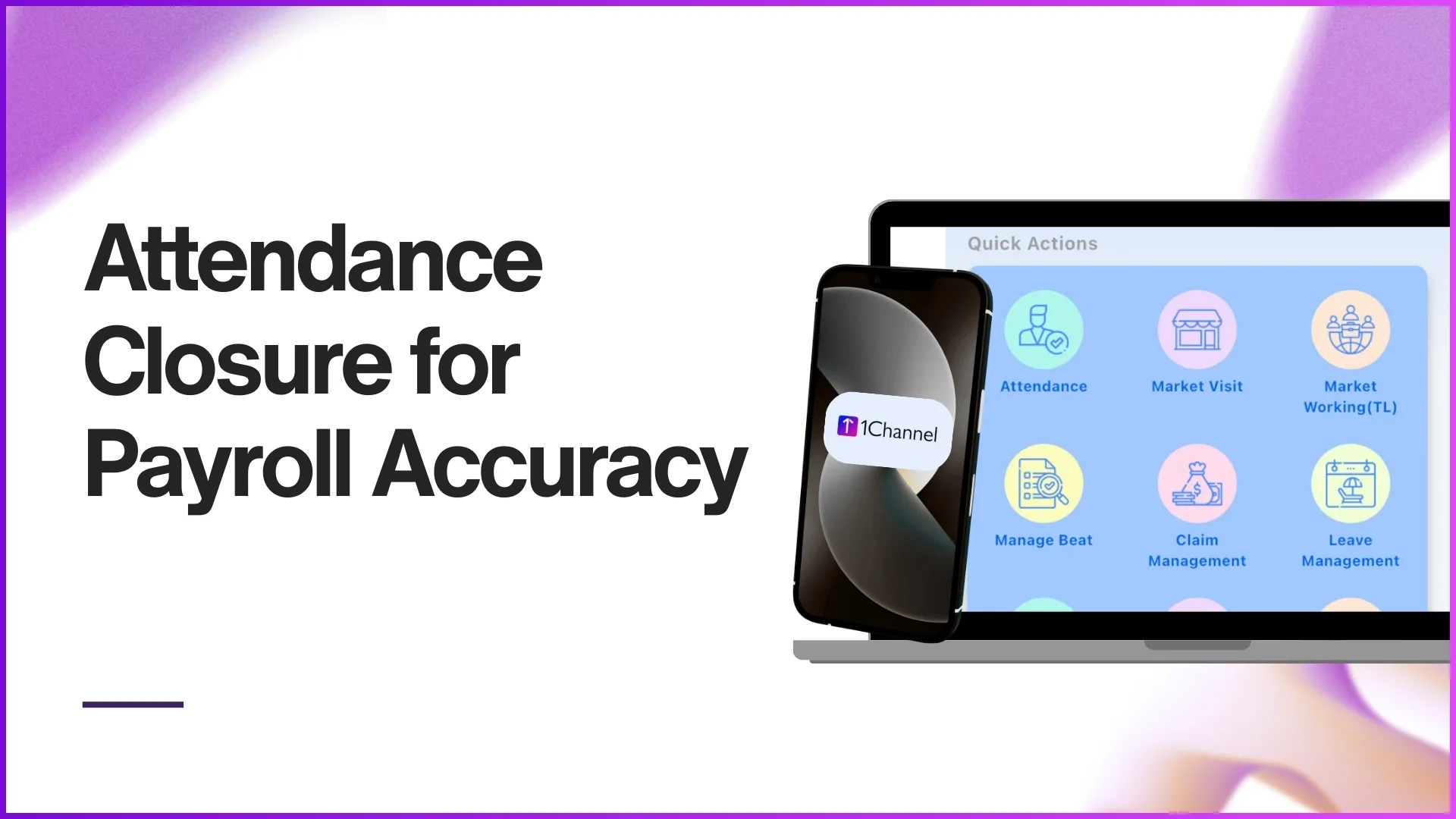
1Channel runs attendance closure through the HR Management module on its cloud SFA platform. The admin configures the cutoff date once and the closure routine locks the period automatically when the cutoff hits. AI-powered face matching and geofence validation tighten the source data through the month, so by the time closure runs, the dataset is already validated. The Attendance Closure Report exports the locked period as a payroll-ready Excel file with one row per user, ready to feed into the payroll system. Pending regularisations carry over to the next cycle, and 1Channel maintains the historical audit trail so any review years later still shows what was approved and when.
Explore Attendance Software
1Channel's cloud attendance module combines AI face matching, geofence validation, and automated closure into one workflow that keeps Malaysian payroll cycles accurate.
Explore Attendance Software →Key Takeaways
- Attendance closure locks the month's data so payroll runs against a fixed, validated dataset.
- Cloud-based platforms automate the lock and the downstream propagation, removing manual steps from the cycle.
- Approved regularisations flow in before the cutoff; pending requests carry forward without blocking the lock.
- AI validation and geofence checks tighten the source data through the month, not just at the closure event.
- The discipline of running closure on schedule is what shrinks payroll reconciliation conversations from days to hours.