The terms SFA and CRM get used interchangeably in many conversations about sales software, which creates confusion when Malaysian businesses try to decide what they actually need. A building materials distributor in Johor looking for a way to track field rep visits and verify attendance is solving a different problem from a SaaS company in Cyberjaya that needs to manage a lead pipeline from website enquiry through to contract signing.
Both are valid needs. Both involve sales. But they require different tools, or at least different configurations of the same platform. Understanding where SFA ends and CRM begins, and where they overlap, helps businesses invest in the right capabilities rather than paying for features they will never use.
Table of Contents
What Is Sales Force Automation
Sales Force Automation is software that manages the daily operational activities of field sales teams. Its primary users are field reps, promoters, merchandisers, and their managers. The core problem it solves is visibility and accountability: ensuring that the right people visit the right locations at the right times, and that every field activity is tracked, verified, and reported.
SFA handles the execution layer of sales. The rep's morning starts with GPS-verified attendance. Their day follows a beat plan that assigns specific outlets to visit. At each store, they check in with location verification, record stock levels, capture orders, complete questionnaires, and log visit notes. Expense claims are submitted from the app with photo receipts. Managers see all of this in real time through dashboards showing beat compliance, visit productivity, attendance rates, and sales data by territory.
For a Malaysian FMCG company with 40 merchandisers covering retail outlets across Selangor and Penang, SFA is the system that turns an unstructured field operation into a data-driven one. The question it answers every day is: "What happened in the field today, and can we verify it?"
What Is Customer Relationship Management
CRM is software that manages the entire customer lifecycle, from the moment a potential customer becomes known to the business through to ongoing engagement, retention, and service. Its primary users are sales managers, marketing teams, customer support agents, and business owners. The core problem it solves is relationship intelligence: ensuring that every interaction with a customer or prospect is recorded, accessible, and actionable.
CRM handles the relationship layer of sales. A lead comes in from a website form, a trade show in KLCC, or a referral from an existing customer. The CRM captures the lead, assigns it to the appropriate sales rep, and tracks it through the pipeline stages, from initial contact through quotation, negotiation, and closing. After the sale, CRM manages customer data, tracks communication history, handles support tickets, manages renewals or AMC contracts, and enables marketing campaigns to existing customers.
For a Malaysian IT services company in Cyberjaya managing a pipeline of 200 active prospects across different deal stages, CRM is the system that ensures no lead falls through the cracks and every customer interaction builds on the last. The question it answers is: "Where does each prospect and customer stand, and what should we do next?"
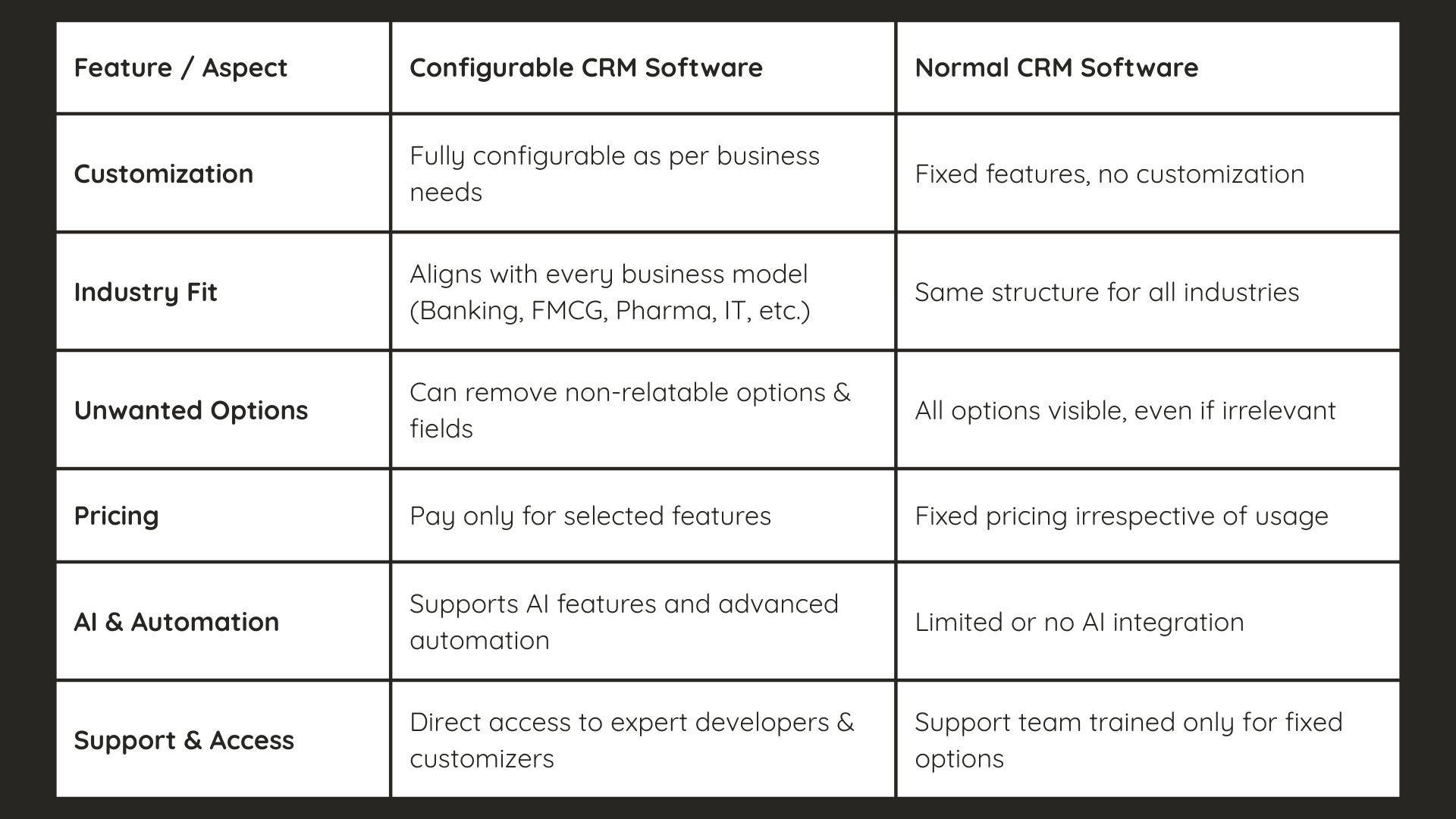
How SFA and CRM Differ in Practice
The Relationship Between SFA and CRM
An important point that often gets lost in the SFA vs CRM discussion: SFA is typically a subset of CRM, not a separate category. A comprehensive CRM platform includes SFA capabilities as one of its modules. However, not every SFA platform includes the full CRM functionality.
Think of it this way: CRM is the broader system that manages the complete customer relationship. SFA is the operational arm within CRM that specifically handles how field teams execute sales activities. A CRM without SFA can manage leads and customer data but has no visibility into what field reps actually do in the field. An SFA without CRM can track field activities but has no pipeline management, marketing automation, or customer lifecycle tools.
For Malaysian businesses, the practical implication is straightforward. If your operation is primarily field-based, with reps visiting outlets, distributors, or clients daily, SFA is the capability you need first. If your operation is primarily desk-based or digital, with leads coming through online channels and deals progressing through pipeline stages, CRM is where you start. If you have both, you need a platform that integrates SFA and CRM so field data and customer data live in the same system.
Which One Does Your Business Need
Start with SFA if your primary challenge is field operations
An FMCG company in Klang Valley with 50 field reps visiting retail outlets daily needs to know where reps are, whether they are following their beat plans, and what happened at each store visit. Their challenge is not lead generation or pipeline management. It is field execution, accountability, and operational efficiency. SFA solves this directly.
Start with CRM if your primary challenge is lead and customer management
A real estate agency in KL with 15 agents handling enquiries from property portals, walk-ins, and referrals needs to track each prospect through viewing, negotiation, and closing stages. Their challenge is not field tracking but ensuring every enquiry is followed up, every deal stage is documented, and no prospect goes cold because of a missed call. CRM solves this directly.
You need both if you have field teams AND a customer pipeline
A pharmaceutical company with medical reps visiting clinics across Penang, Johor, and Sabah while also managing a pipeline of hospital procurement deals needs both capabilities in one system. The reps need SFA for visit planning, GPS attendance, and detailing logs. The sales managers need CRM for pipeline tracking, quotation management, and follow-up scheduling. When both live in the same platform, a field visit logged through SFA automatically updates the customer record in CRM.
Explore Sales Force Automation
1Channel's platform combines SFA and CRM capabilities in a single configurable system, so field operations data and customer relationship data work together seamlessly.
Explore SFA Software →Explore CRM Software
Manage leads, pipelines, customer relationships, and post-sale service with a configurable CRM platform that integrates with field sales automation.
Explore CRM Software →The SFA vs CRM question is not about which is better. It is about which capability addresses your most pressing operational problem right now. For field-heavy businesses, SFA provides immediate value through visibility and accountability. For customer-pipeline businesses, CRM provides immediate value through structured lead management and engagement tracking. The best platforms offer both in one system so you do not have to choose. Get in touch to explore which configuration fits your business.