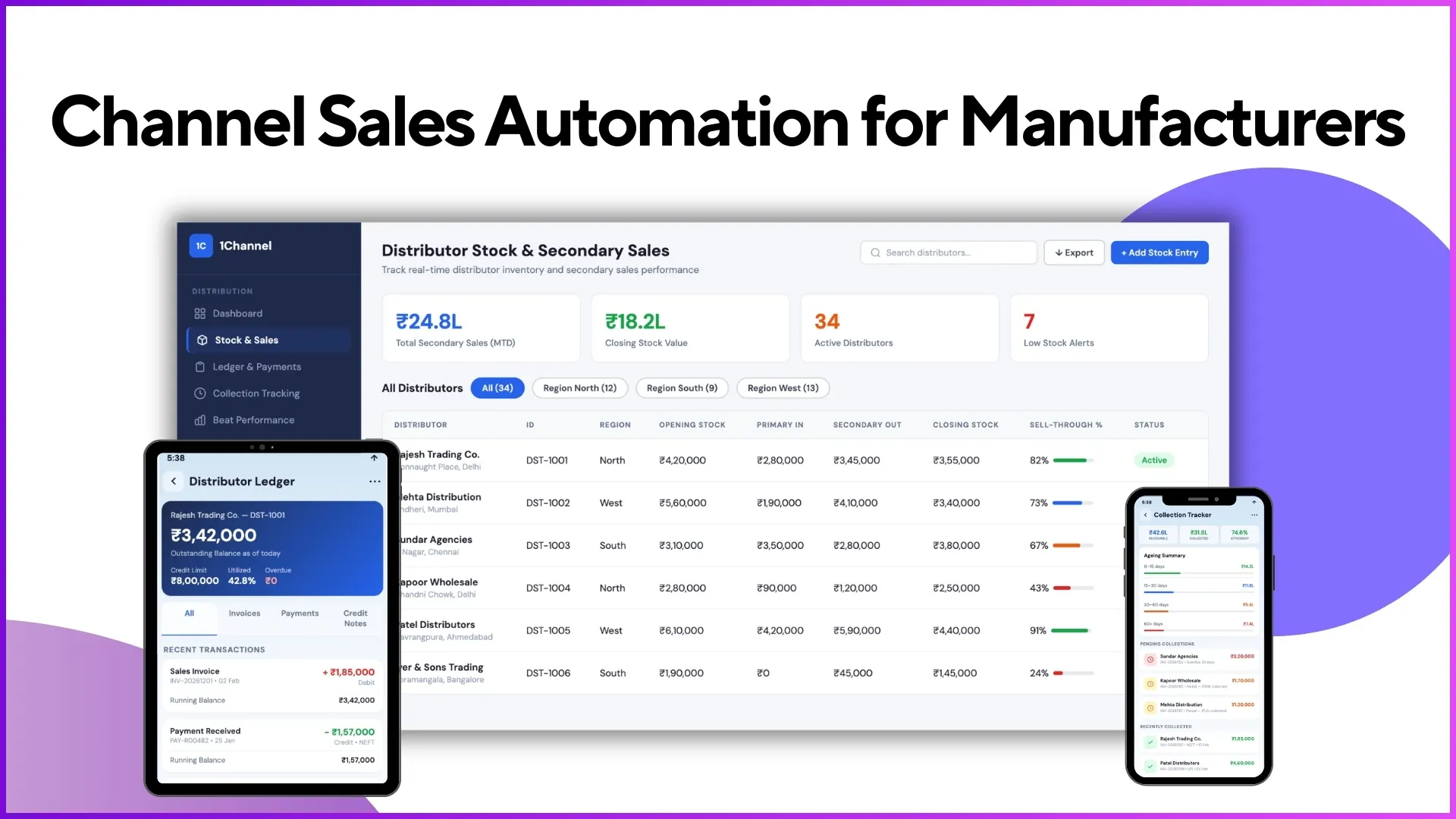
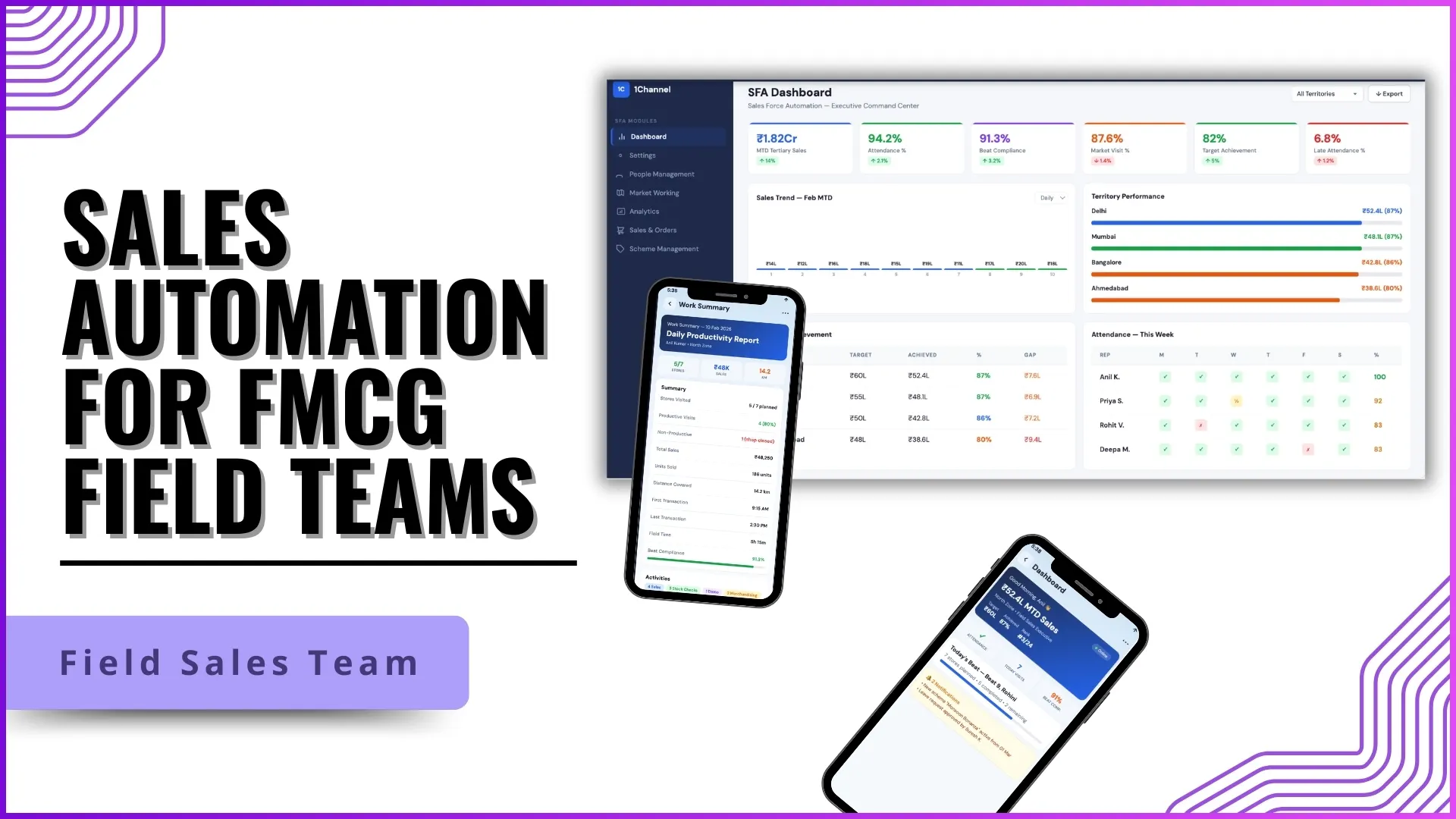
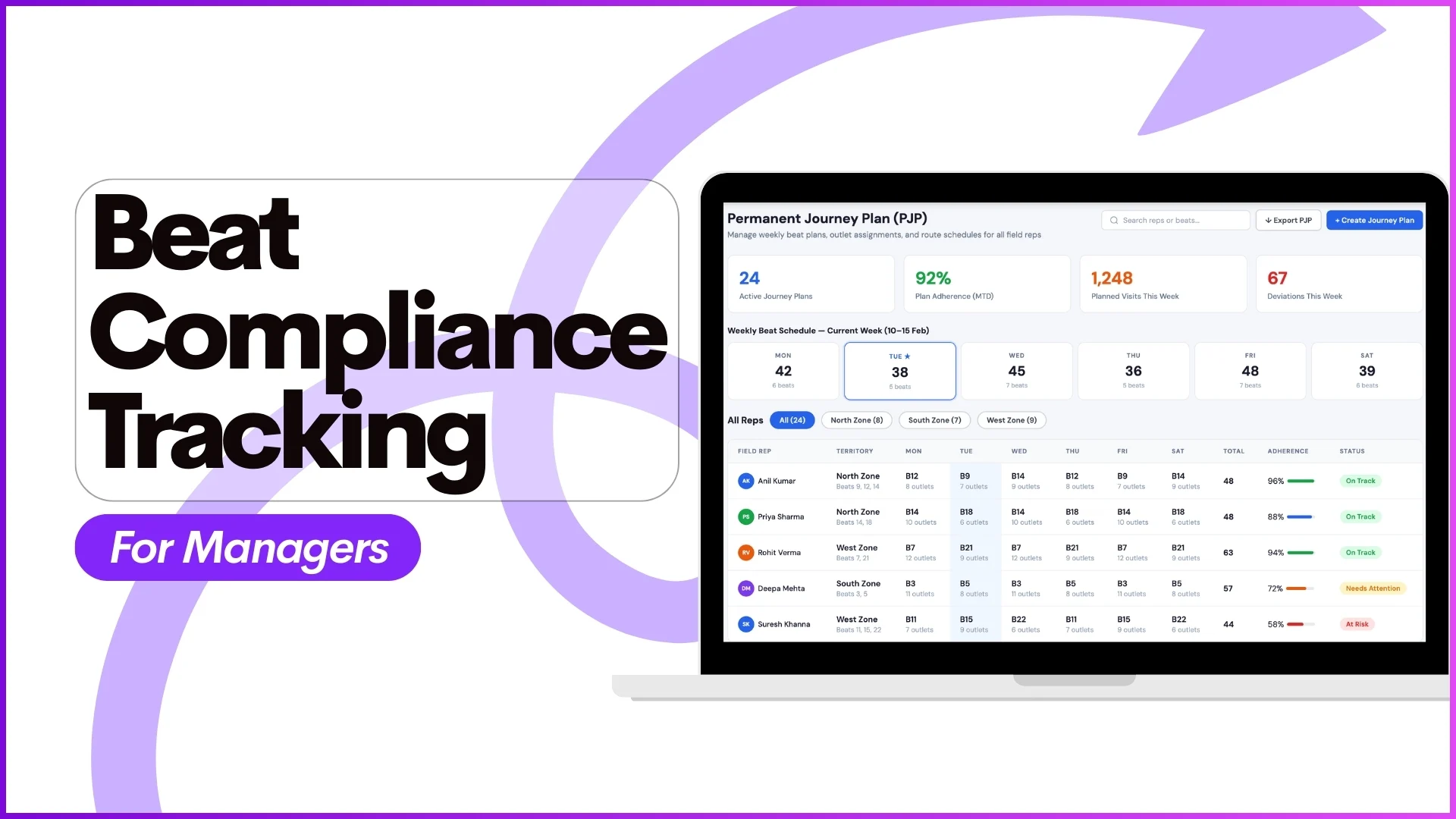
Most field sales operations track two numbers that look similar but mean very different things. One measures what the manufacturer ships out to distributors. The other measures what those distributors sell onward to retail. Mixing the two leads to overstocked warehouses, missed schemes, and dashboards that tell the wrong story. The cloud-based SFA layer keeps them separate, automated, and visible at the right grain.
Table of Contents
What Primary Sales Captures
Primary sales is the transaction between the manufacturer and the distributor. When a manufacturer invoices a distributor for SKUs shipped from the warehouse, that volume is counted as primary sales. The number rolls up to the top-line revenue forecast, drives production planning, and lands in the finance ledger. It does not say anything about whether the goods actually reached the retail shelf, only that they left the manufacturer's control.
What Secondary Sales Captures
Secondary sales is the transaction between the distributor and the retailer. A retail outlet places an order with the distributor, the distributor delivers, and the volume gets counted as secondary sales. The number measures actual market demand. It tells the brand what the retail channel is consuming, which SKUs are moving slowly, and where promotional schemes are landing. Automated capture from distributor systems or field rep entries in the SFA app keeps the data current.
Where the Two Numbers Differ
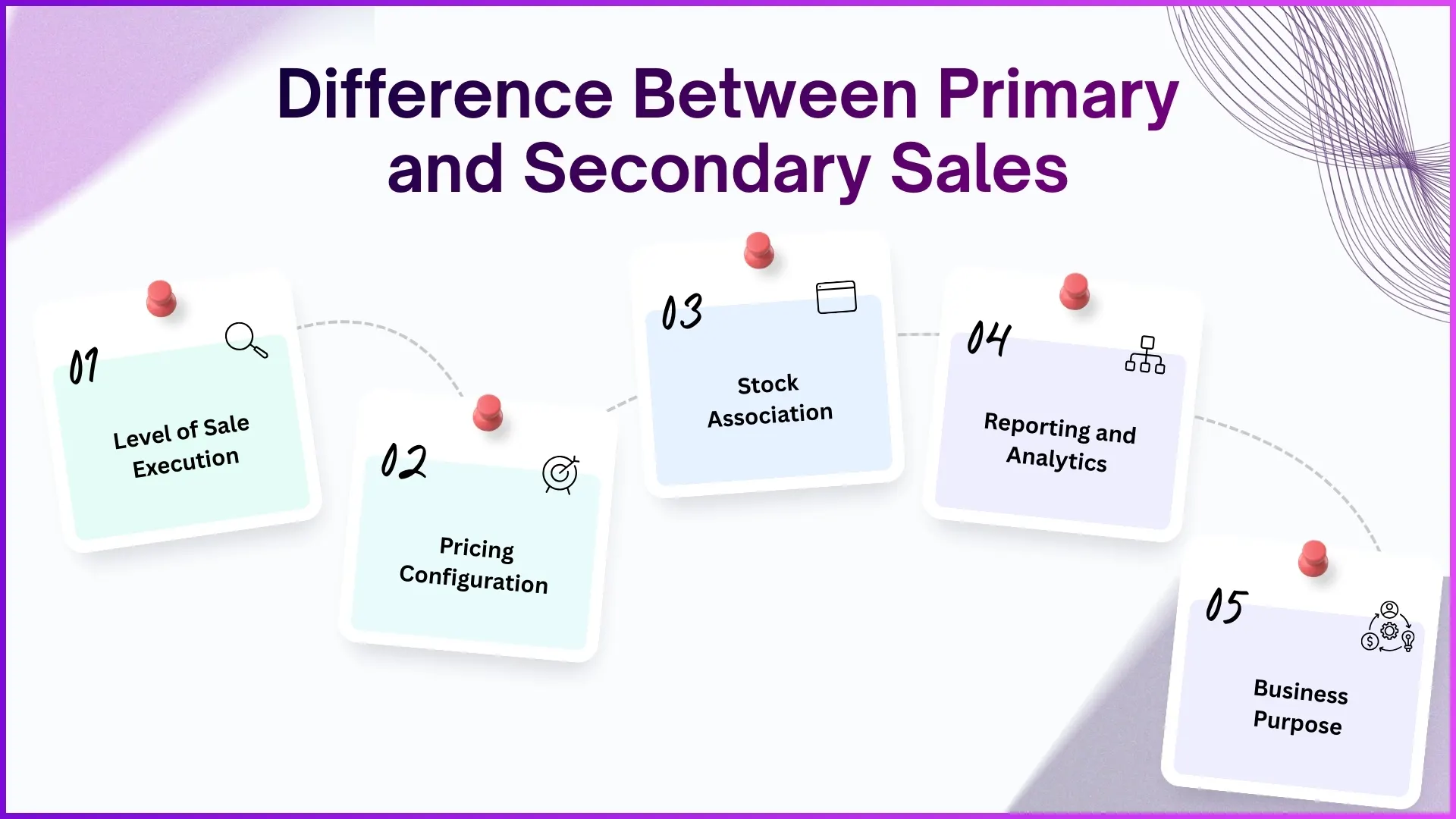
Five operational differences separate primary and secondary sales reporting:
Level of execution. Primary sits at the manufacturer-to-distributor handoff. Secondary sits at the distributor-to-retailer handoff.
Pricing. Primary uses the manufacturer's distributor pricing tier with its volume discounts and credit terms. Secondary uses the distributor's retail pricing tier.
Stock association. Primary debits the manufacturer's warehouse stock. Secondary debits the distributor's stock, not the manufacturer's.
Reporting and analytics. Primary reports are read by finance and supply planning. Secondary reports are read by sales operations and brand teams looking at sell-through.
Business purpose. Primary tells you what was sold. Secondary tells you what was sold through.
Why Both Numbers Matter for the Brand
A high primary number with low secondary is a warning sign: the warehouses have been pushed full but the goods are not moving. A high secondary number with sluggish primary suggests the distributor is running down stock without replenishing. Reading them together tells the manufacturer whether the channel is healthy. Automated tracking inside the cloud platform lets the brand spot the gap the same week it appears rather than waiting for month-end reconciliation.
Reading Both in One Dashboard
The reporting layer pulls primary and secondary sales side by side. Cloud-based dashboards show the daily trend for both, broken down by distributor, region, and SKU. Variance reports flag any divergence between the two numbers, with automated alerts when the gap crosses a configured threshold. AI-driven anomaly detection picks up unusual patterns earlier than manual review, helping the brand catch supply-chain issues before they reach the retail shelf.
How 1Channel Tracks Both Together
1Channel handles primary and secondary sales through its cloud SFA platform. The Distributor Order Management module captures primary sales as they hit the system, while the field rep activity in the 1Channel SFA app captures secondary sales at the outlet level. Both data streams feed into the analytics layer in real time, where 1Channel's AI-driven reports overlay them on a single dashboard. The platform's automation also handles scheme calculation across both sales types, so incentive payouts stay aligned with actual sell-through rather than just shipment volume.
Explore Sales Analytics Software
1Channel's cloud sales analytics module overlays primary and secondary sales on a single dashboard, with AI-driven variance alerts for Malaysian field operations.
Explore Sales Analytics →