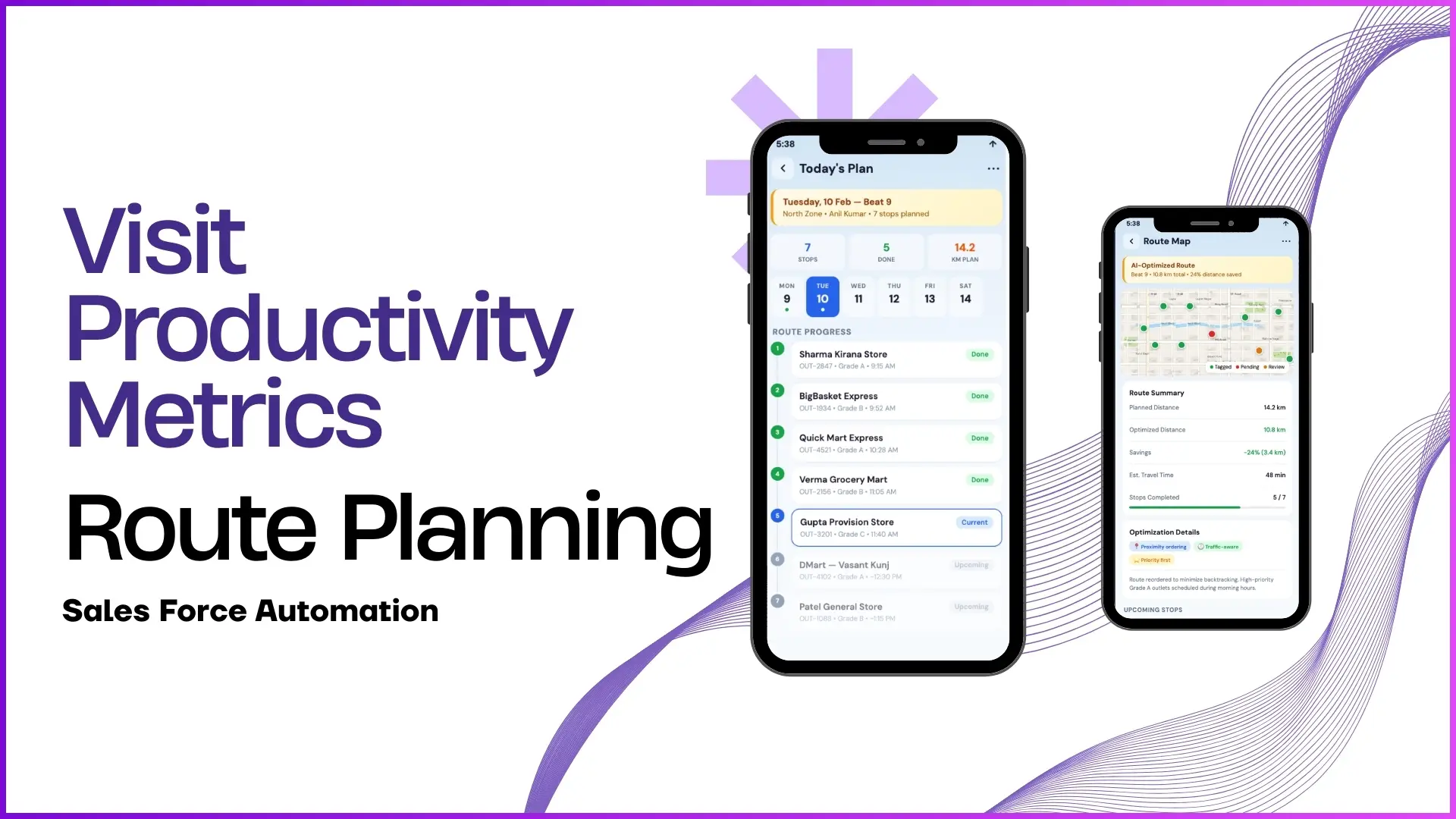
A medical rep's day is built around the doctor list. The list decides the route, the calls, the call objectives, and the order in which the rep introduces a sample, a journal, or a prescription support note.
Visit tracking is the layer that turns that day into structured data. Which doctors were called on, what was discussed, what was left behind, what the doctor asked for next.
Without tracking, the program reads on faith. With it, the program reads on evidence. The difference shows up in coverage, in compliance, and in the next cycle's plan.
Table of Contents
What 'Visit Tracking' Means for a Medical Rep
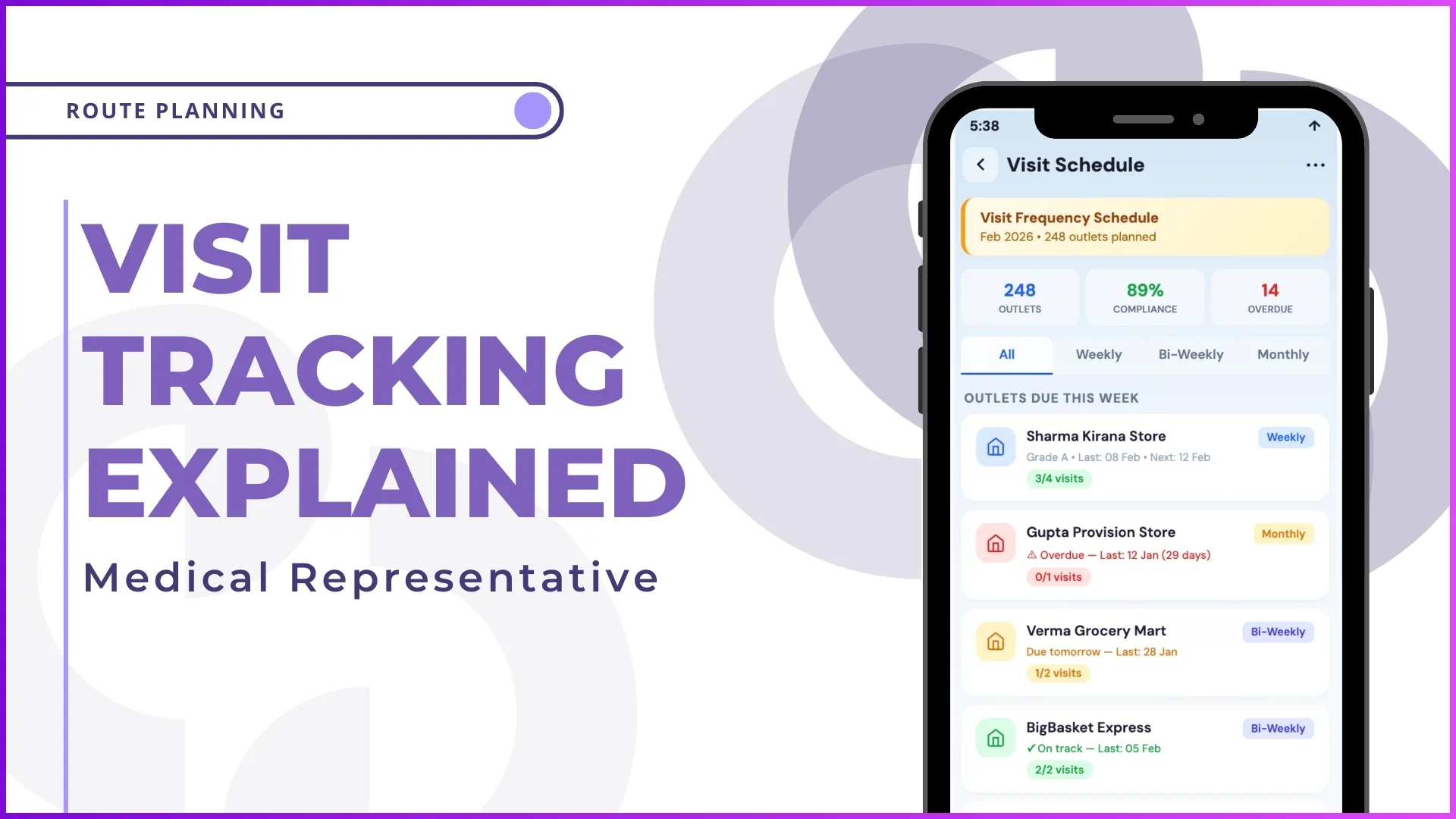
Visit tracking is the structured capture of every doctor interaction in the field, with the metadata that makes the interaction analysable later. Time of call, location, duration, materials shared, and outcome.
The capture lives in the rep's mobile app and syncs to the cloud platform automatically. The headquarters team reads the same data the rep filed, with no rekeying and no manual reconciliation.
Five Signals Every Working Visit Tracker Captures
A serious visit tracker captures five signals on every call. Each one anchors a different part of the program review:
- Doctor identity and segment. The unique doctor ID, the speciality, the chamber, and the segment classification. Without it, the visit cannot be tied back to the territory plan.
- Time and duration. Check-in timestamp, check-out timestamp, and the time-in-chamber computed automatically from the geofencing layer. Tells the supervisor how much actual face-time the call carried.
- Activity completed. Sample given, journal placed, e-detailing screen presented, RX commitment captured, follow-up note logged. Without this, the visit is just attendance.
- Geo-stamp and proof. GPS confirmation that the rep was inside the chamber perimeter, paired with an optional photo of the sample handover. Closes the most common fraud path of remote check-in.
- Doctor feedback and next step. Free-text or structured fields capturing the doctor's response and what the rep committed to do next. Anchors the next call's preparation.
Where Geo-Fencing Earns Its Keep on a Med Rep Beat
Geo-fencing is the difference between visit tracking and check-in theatre. A clean fence around the chamber address validates that the rep was inside the perimeter when the activity was logged.
The fence radius is configurable per chamber. Hospitals get a larger fence; clinic addresses get a tight one. The same platform handles both without separate workflows.
Why Quality Checks Sit Between the Visit and the Approval
Not every captured visit clears for full program credit. A 90-second call without any activity logged is different from a 12-minute call with a sample handover and a follow-up commitment.
Quality checks read the visit holistically before approving it. Duration, activity, geofencing, photo, and doctor feedback together decide whether the call counted. The supervisor reviews only the edge cases.
How 1Channel Runs Visit Tracking for Malaysian Medical Reps
1Channel runs medical rep visit tracking through its cloud Sales Force Automation and field activity modules. The mobile app captures every signal above, and the data syncs to headquarters in real time even when the chamber sits in a network dead zone.
1Channel's AI engine flags unusual visit patterns. A rep whose average call duration has dropped sharply, a chamber with repeated geofencing exceptions, a doctor list whose coverage is slipping in a single region: all surface as alerts in the manager's dashboard.
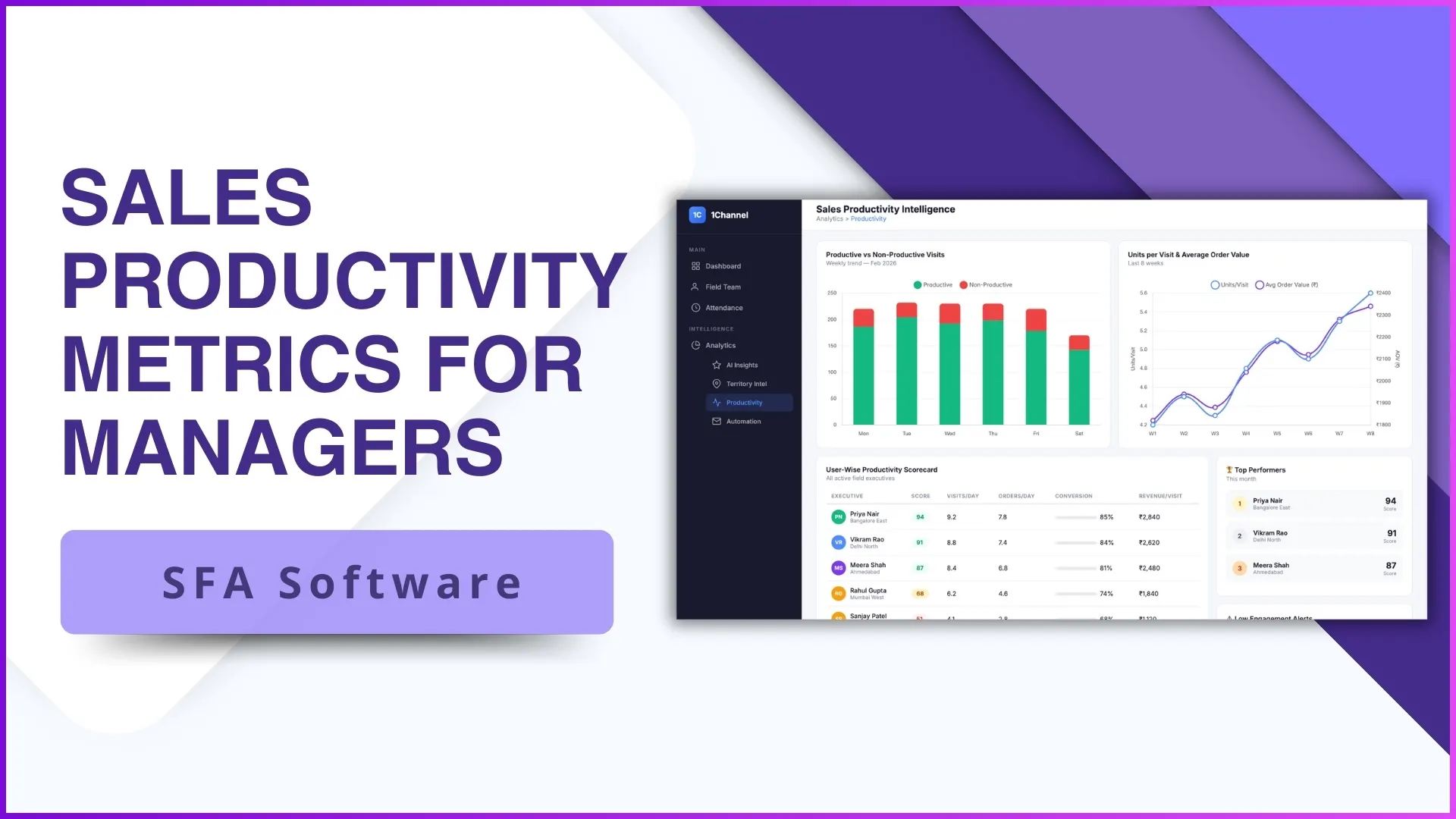
The cloud platform's analytics layer rolls visits up by territory, by chamber type, and by activity outcome. Configuration is automated through the admin console, so adding a new doctor segment or a new activity type takes minutes, not engineering tickets.
Explore Cloud Field Activity Management
1Channel's cloud field activity platform turns every doctor call into structured data, with AI anomaly detection and automated quality checks.
Explore Field Activity Management →Quick Recap
Visit tracking is what turns a medical rep's day from a self-reported activity log into an audited program metric. The five signals above are the minimum capture set; anything less leaves the program reading on faith.
Geo-fencing closes the location loophole. Quality checks close the activity loophole. Together they make the data trustworthy enough to drive territory decisions, compensation, and pipeline forecasts.
The mechanism matters more than the app. A modern cloud platform with offline capture, configurable fencing, and a clean audit log is what separates a tracking program that scales from one that collapses at the first dead zone.