How does a Klang Valley Area Manager know that the promoter who marked attendance at Mydin Subang at 9:15 AM is still in the store at 11:30 AM? Daily attendance only tells one story: the start. It says nothing about whether the rep stayed on site, slipped out for an early lunch, or left the assigned territory for the afternoon. Random attendance checks fill that gap by asking the SFA app to verify presence at unpredictable points during the workday.
Table of Contents
What the Random Check Actually Does
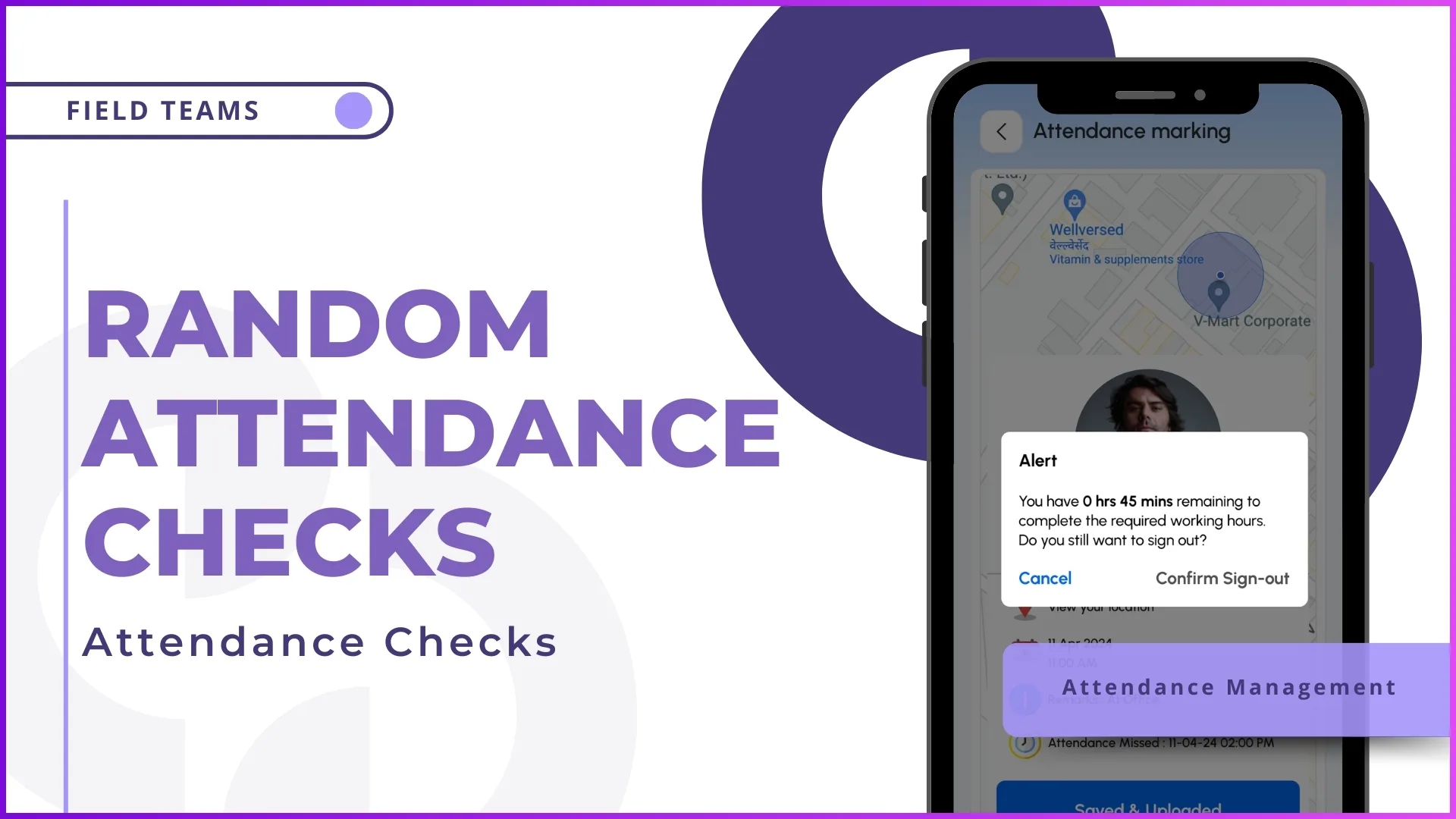
At a randomly selected moment within the configured window, the SFA app pushes a notification to the promoter's phone. They have a short response window, typically a few minutes, to confirm presence by taking a fresh selfie at the store location. The capture bundles three pieces of evidence together: the photo, the GPS coordinates at the moment of capture, and the timestamp. All three flow back to the portal in real time.
The window and frequency are project-specific. A promotional campaign in Penang might run one check between 11 AM and 4 PM. A high-stakes account in Klang Valley might run two checks across a wider window. The configuration sits in HR Management and is applied per role, so promoters and team leaders can carry different policies.
Photo Plus Location: The Two Validators
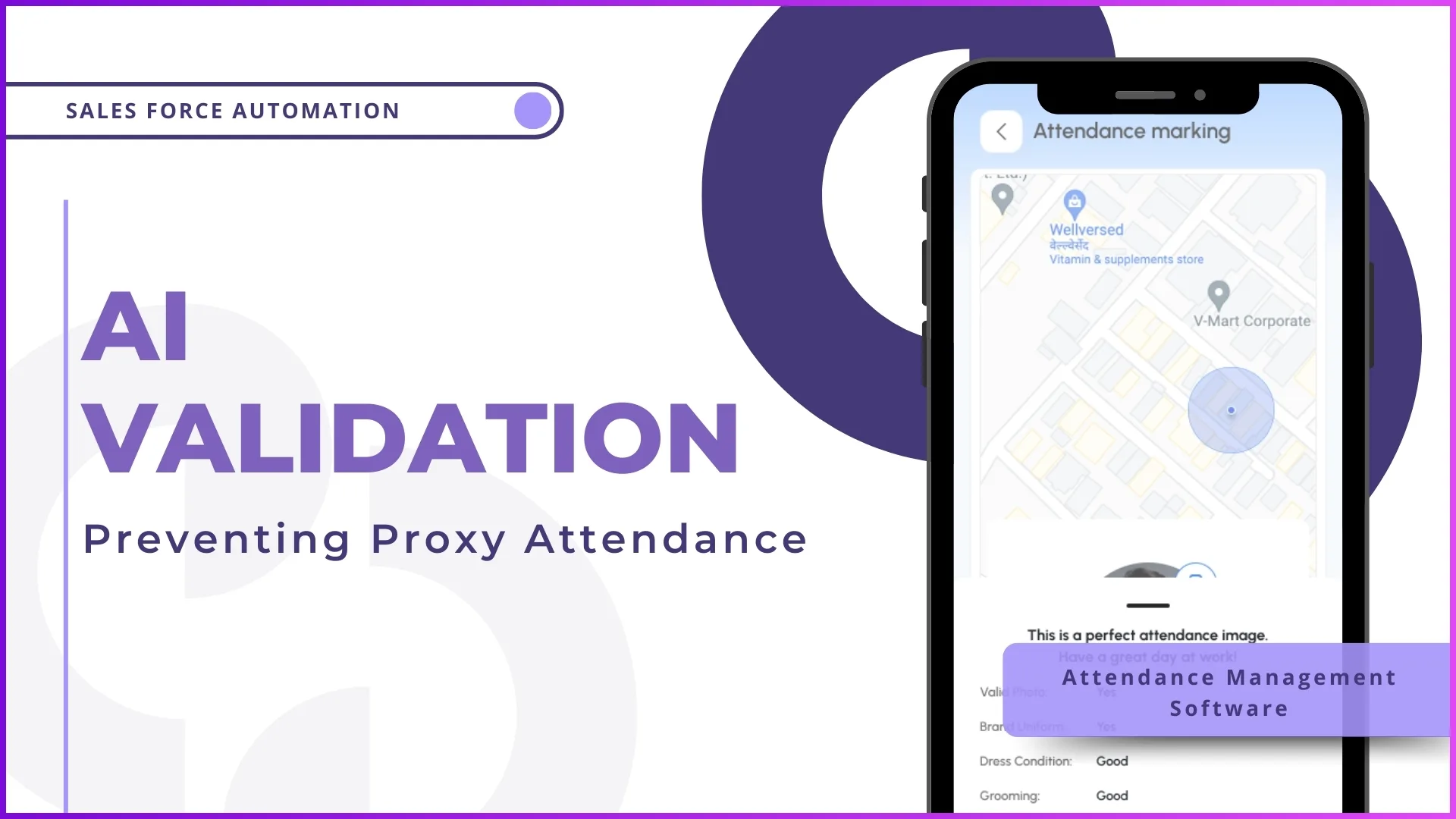
Each random check carries two independent pieces of evidence, and both must pass for the check to count as compliant. The photo runs through AI face matching against the reference image the promoter saved on their first app login. If the face does not match, the check fails regardless of where the phone was located. The location is compared against the geofence around the assigned outlet. If the phone is outside the radius, the check fails regardless of whose face appears in the selfie.
This dual-validator design is what makes the check hard to game. A promoter cannot ask a friend to clock in remotely (the face check rejects it), and they cannot mark presence from a nearby kopitiam (the geofence rejects it). Both gates have to open at the same time, and both are captured for the audit trail.
How Managers See the Results
The portal's attendance dashboard treats random checks as first-class data alongside daily check-ins. The Area Manager filters by date range, by promoter, by region across Klang Valley, Northern, Eastern, and Southern zones, and by outlet. Each entry shows the captured photo, the location pin on the map, the timestamp, and the pass-or-fail outcome.
Failed checks surface separately for review. The reporting manager can open each one, see exactly where the photo was taken from, view the face-match score, and either flag a follow-up conversation or approve a regularisation if there is a valid reason. The Attendance Photo Report and Detailed Attendance Report expose the same data in downloadable form for audit trails or payroll discussions at month-end.
Explore Sales Force Automation
1Channel's cloud SFA platform combines random attendance checks with photo, geofence, and dashboard reporting in a single workflow for Malaysian field teams.
Explore SFA Solutions →What This Looks Like in Practice
A 200-rep field team running a quarterly campaign across Selangor and Penang turns on random checks between 11 AM and 4 PM, firing once per promoter per day. By the end of the first week, twelve promoters show a recurring pattern of failed checks: selfies taken from outside the geofence or face-match scores below threshold. Each case is routed to the respective Area Manager, who reviews the captures and follows up directly with the rep that same week.
By week three the failure rate has dropped to two cases per week. The promoters know the check is happening, the check is non-negotiable, and the data is being read. Daily coverage compliance climbs from 78% to 91% across the same outlets, without any change to the headcount, the beat plan, or the product mix. The random check did not invent the discipline. It made the gap visible enough for the team to close it.