Oman is not a single-city sales territory dressed up as a country. A distributor or FMCG brand selling here is really running two channels at once across a coastline, an interior plateau and a southern monsoon region, each with its own rhythm. Field sales software designed for a denser, single-metro Gulf market tends to buckle once it meets Oman's actual geography and actual retail mix. This is what a platform built for Oman's own conditions needs to get right.
A Retail Floor With Two Genuine Channels
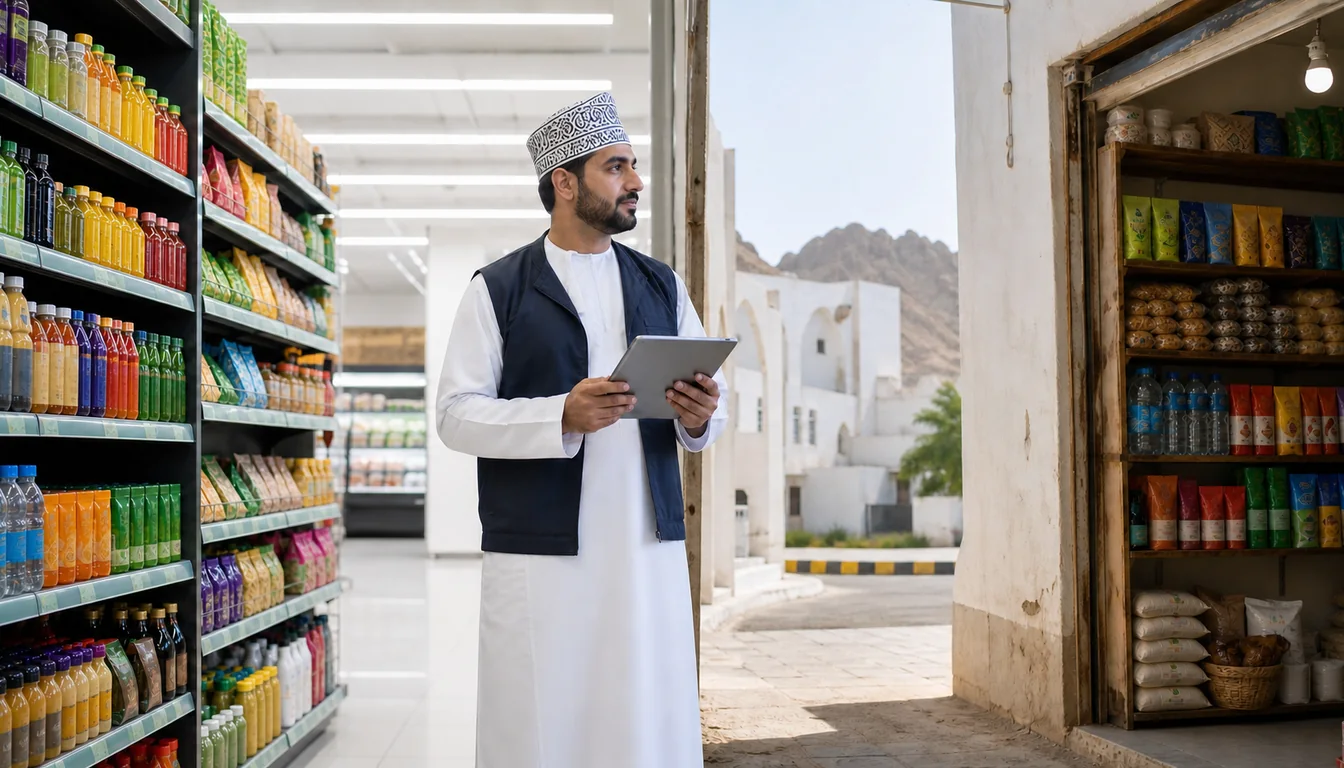
Oman's modern trade sector is real and expanding. Lulu Hypermarket, Carrefour, Sultan Center, Nesto and SPAR all operate stores across the country, and new openings keep landing outside Muscat as well as inside it. For a field team, that means planned visit schedules, shelf compliance checks and promotional execution inside a professionally managed retail environment, the kind of work covered in retail execution software built for the format.
The Baqala Network Still Carries the Country
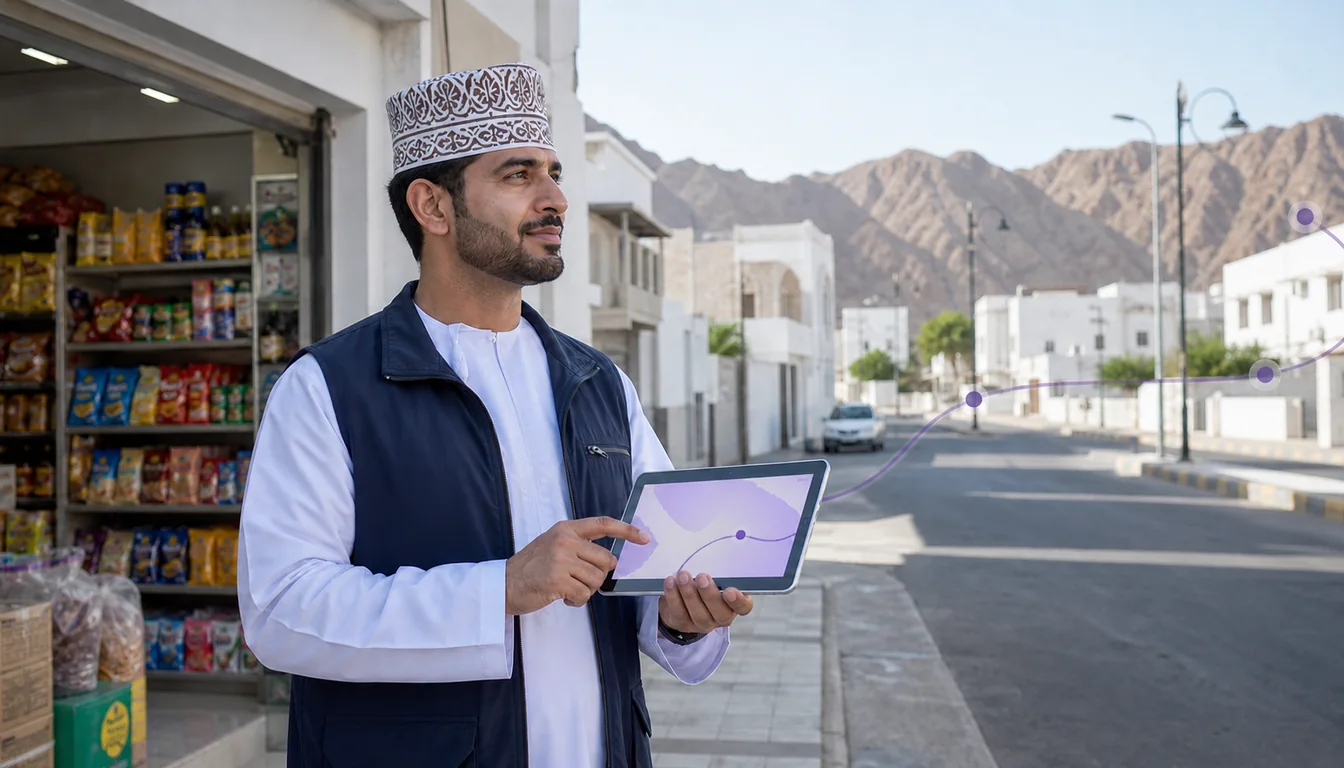
Alongside that modern trade layer sits a baqala network that reaches well beyond Muscat's retail corridor, into the Batinah towns, the interior and the smaller coastal settlements. These are the small, independently run neighbourhood grocers that most Omani households still buy from for daily top-ups, and they are not a shrinking legacy channel, they are a genuinely large and durable part of the market. A rep calling on a baqala needs a different visit cadence, a different order size and often a different pricing conversation than the same rep gets inside a hypermarket aisle later the same day. Treating Oman as a modern-trade-only market, or building a baqala workflow as an afterthought, misses half the country's retail floor. Covering both channels well is less about picking a side and more about giving each its own rules inside the same system.
A Sales Team That Looks Like Oman
Oman's workforce is not the expatriate-majority picture some Gulf markets present. The country's own nationals make up the majority of the population, working alongside a long-established expatriate community, largely from Bangladesh, India and Pakistan. On the ground, that shows up as a field team that genuinely mixes Omani supervisors, Omani reps and expatriate colleagues on the same route, often moving between Arabic and English within a single store visit. Field software has to work naturally in both languages rather than treating English as the default and Arabic as an afterthought, and it has to make onboarding and day-to-day use simple enough that language is never the reason a visit gets logged badly or an order gets miskeyed.
Omanisation adds a second, quieter layer to this. Under Royal Decree No. 53/2023, employers are expected to maintain accurate workforce records and file an annual national-workforce plan with the Ministry of Labour. A platform that already tracks attendance, leave and territory assignment by employee gives an operations team a cleaner base to build that reporting from, without turning compliance into a separate spreadsheet exercise.
Route Planning Across Oman's Governorates and Ports
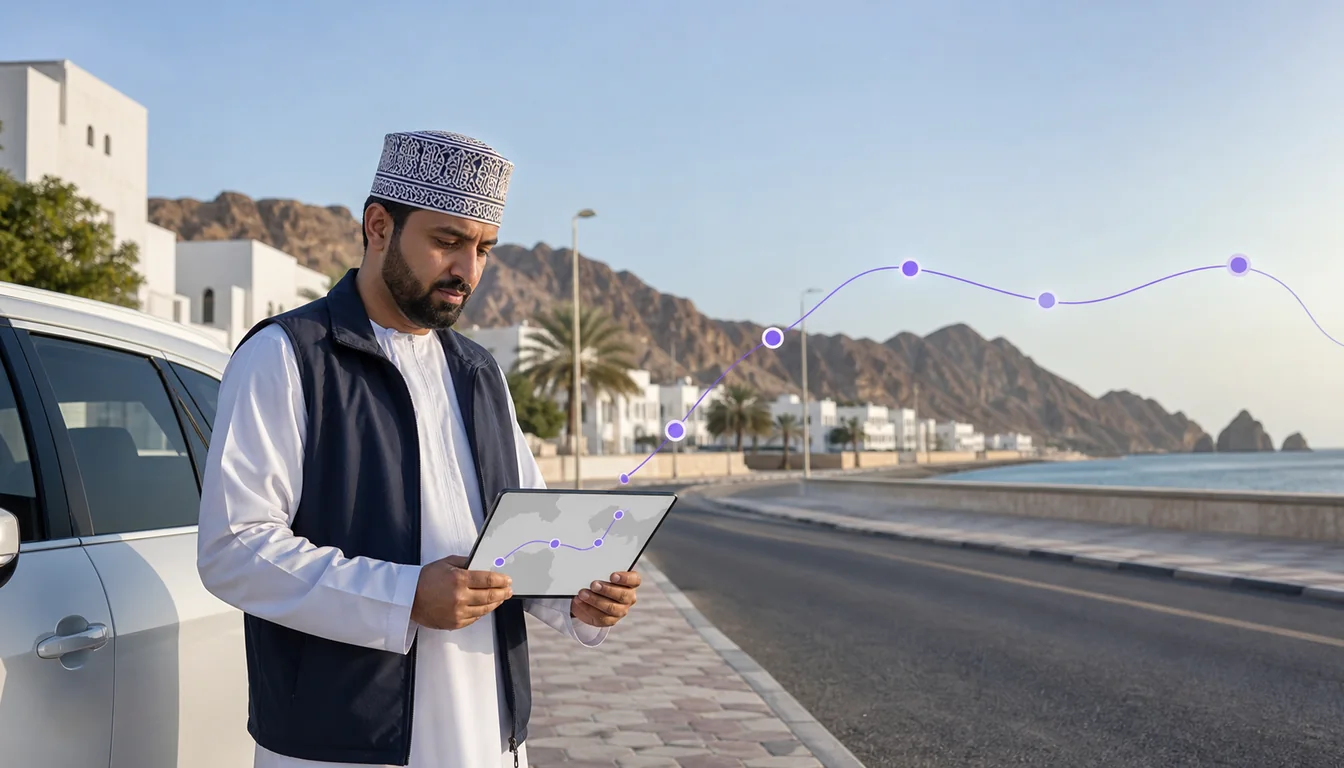
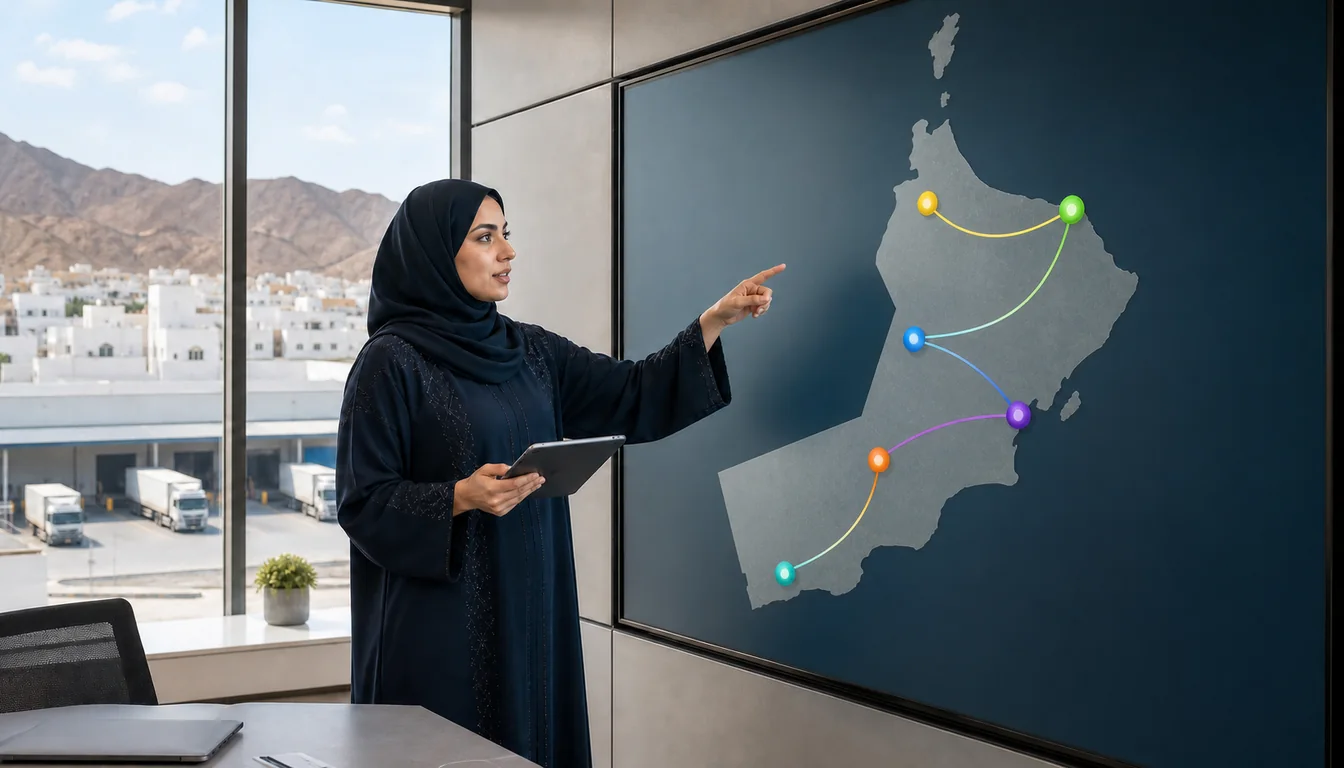
Oman's eleven governorates do not sit conveniently close together. A distributor's territory can stretch from the Muscat corridor, where most head offices and modern trade concentration sit, north-west along the Batinah coast toward the port and industrial cluster at Sohar, inland to the historic trade town of Nizwa, east to the fishing town of Sur, and south again to Salalah in Dhofar, a full day's drive from the capital by any measure. The emerging Duqm special economic zone, further south-west on the coast, adds a newer, lower-density stop to that map. None of this is a connectivity problem so much as a plain distance and planning problem: a rep's day, a van's load and a supervisor's visibility all have to hold together across territory that a single-city Gulf sales operation never has to think about.
That is what territory management and route planning software are actually for here, structuring beats so that a governorate gets the visit frequency its outlet density deserves, sequencing calls sensibly within a Sunday-to-Thursday working week, and giving a sales manager one view of coverage across Muscat, Batinah, the interior, the east and Dhofar rather than five disconnected patches.
Software Built for How Reps Actually Work
None of this matters if the app itself gets in the way. A Field Sales Representative moving between a hypermarket aisle in the morning and three baqalas in the afternoon needs an order flow, a visit checklist and a payment step that take seconds, not minutes, to complete correctly. That means a clean, simple interface in the rep's preferred language, order and stock information that stays accurate whichever channel the rep is standing in, and a supervisor dashboard that reflects the same day in near real time.
Oman's commercial corridor has reliable mobile connectivity, so most of the country's field sales activity should assume a normal, connected working day. The exception is genuinely remote territory, parts of the interior and desert wilayats where terrestrial coverage is patchier. For reps who cover those routes, software that keeps working through a short signal gap and syncs the moment coverage returns is a useful, narrow safeguard, not the headline reason to choose a platform.
Closing the Loop on Collections
Payment at the point of sale in Oman is a genuine mix of cash, card and, increasingly, Maal, the Central Bank of Oman's own national payment card, alongside the OmanNet switch network that already underpins card acceptance across the country. For a distributor, the operational question is less about which method a baqala or hypermarket prefers and more about reconciling that mix cleanly against invoices in Omani rials, so a finance team is not left chasing down which of three payment types settled a given order. Getting order-to-cash right across cash, card and Maal keeps that reconciliation a same-day task instead of a monthly one.
Planning Around Khareef and Ramadan
Two seasonal windows genuinely move demand in Oman. Ramadan shifts buying patterns across the whole country, as it does across the Gulf. Khareef is Oman's own event: from roughly mid-June to mid-September, the monsoon that greens the mountains above Salalah draws large numbers of visitors into Dhofar, and demand for everything from fresh produce to hospitality and gifting climbs sharply in that one region for that one window. A field sales platform earns its keep here by making it straightforward to flex visit frequency, stock allocation and promotional planning for Dhofar specifically during Khareef, rather than applying a flat national uplift that overstocks the rest of the country and understocks the south.
Staying Ready for PDPL and OTA E-Invoicing
Two regulatory shifts are worth building toward now. Oman's Personal Data Protection Law is already fully in force, its transition period ended in February 2026, and the Ministry of Transport, Communications and Information Technology now actively supervises compliance. Field sales software that handles customer, outlet and employee data needs to be built with that in mind today, not as a future project. Separately, the Oman Tax Authority's e-invoicing mandate is rolling out in phases, from a voluntary pilot in late 2026 through to full mandatory coverage in 2027. Neither shift is urgent in the way a live deadline is, but a platform that already generates clean, structured invoices and keeps organised records makes the eventual transition a formality rather than a scramble.
How 1Channel Helps Oman Field Sales Teams
1Channel's field sales platform is built to treat Oman's dual-channel retail floor, dispersed governorates and mixed national-and-expatriate workforce as the normal operating condition, not an edge case bolted onto a template built for somewhere else.
- Separate visit, pricing and order rules for modern trade and baqala outlets within the same territory.
- Route and beat planning that spans Muscat, the Batinah coast, the interior, the east and Dhofar without manual rework.
- An interface available in Arabic and English, built for a genuinely mixed national and expatriate field team.
- Order-to-cash workflows that reconcile cash, card and Maal payments against invoices in Omani rials.
- Attendance, leave and territory records that support Omanisation workforce reporting.
- Seasonal demand planning tools for Khareef-driven Dhofar spikes and Ramadan-wide shifts.
Give Every Route in Oman the Same Visibility
See how 1Channel's sales force automation platform covers modern trade and baqala visits across every Oman governorate from one system.
Explore Sales Force Automation →Key Takeaways
Field sales software for Oman has to start from the country's own shape, not a template inherited from a denser Gulf neighbour.
- Two channels, two playbooks. Modern trade chains like Lulu, Carrefour, Sultan Center and Nesto need a different visit and pricing rhythm than the baqala network that still reaches well beyond Muscat.
- The workforce is nationally balanced. Omani nationals and a long-established expatriate community work side by side, so field software needs to work naturally in Arabic and English, not just one.
- Geography is the real complexity, not connectivity. Coverage spans the Muscat corridor, the Batinah coast toward Sohar, the interior around Nizwa, the east around Sur, Dhofar in the south and the emerging Duqm zone, a genuine multi-governorate planning challenge.
- Offline resilience is a narrow safeguard, not the headline. Oman's commercial corridor has reliable connectivity; only remote-territory routes need a fallback for short signal gaps.
- Payments settle in three ways. Cash, card and Maal all need to reconcile cleanly against invoices in Omani rials.
- Two regulatory shifts are worth preparing for now. PDPL is already enforceable, and OTA e-invoicing is rolling out through 2027, so clean data handling and structured invoicing should already be standard practice.
Built around these realities rather than around a generic Gulf assumption, field sales software becomes a genuine operating system for Oman's retail floor, not a dashboard that only makes sense in Muscat.