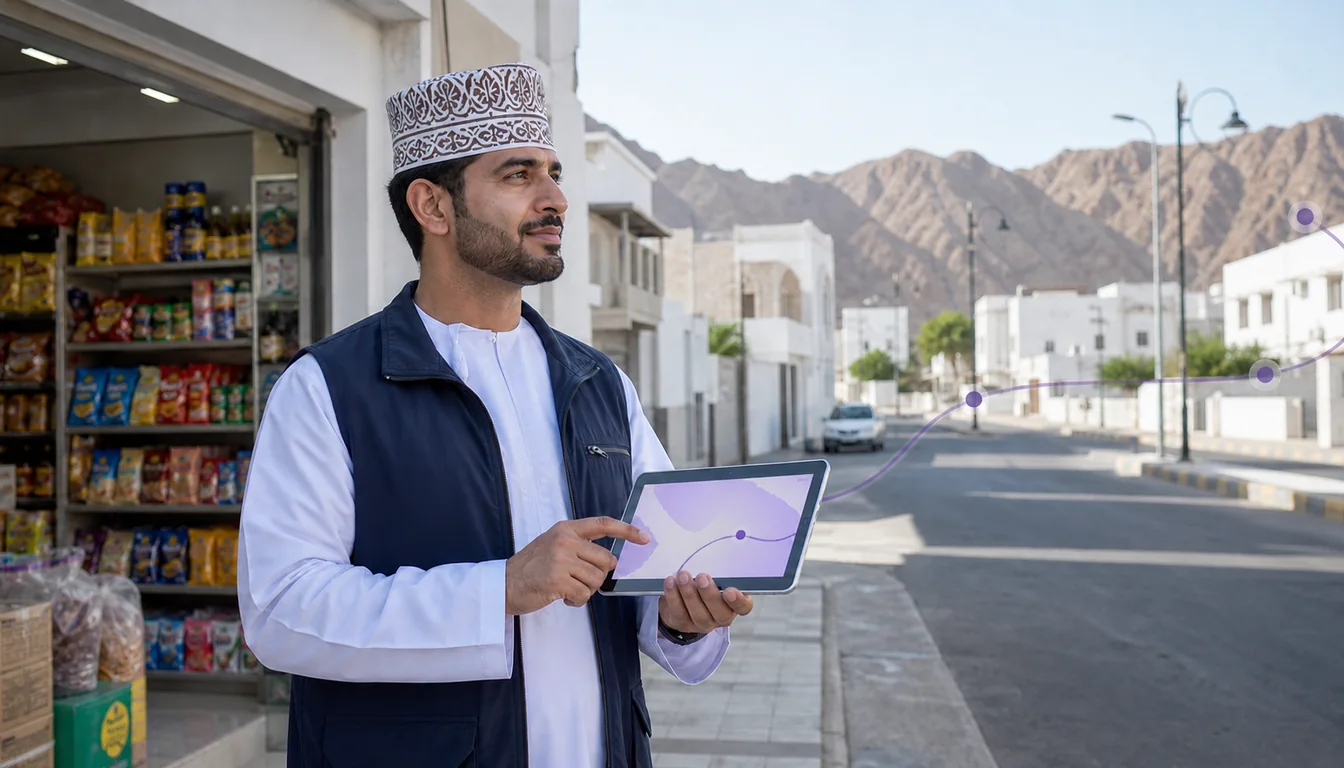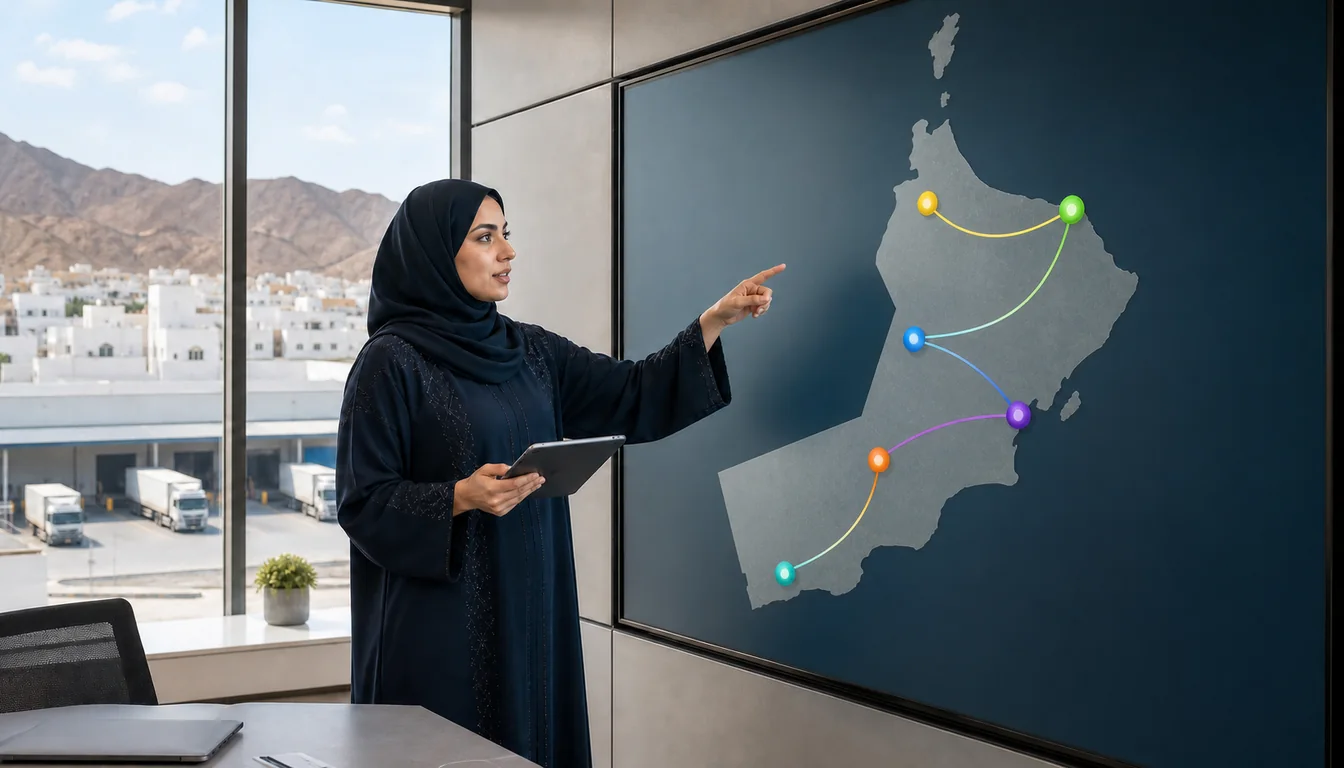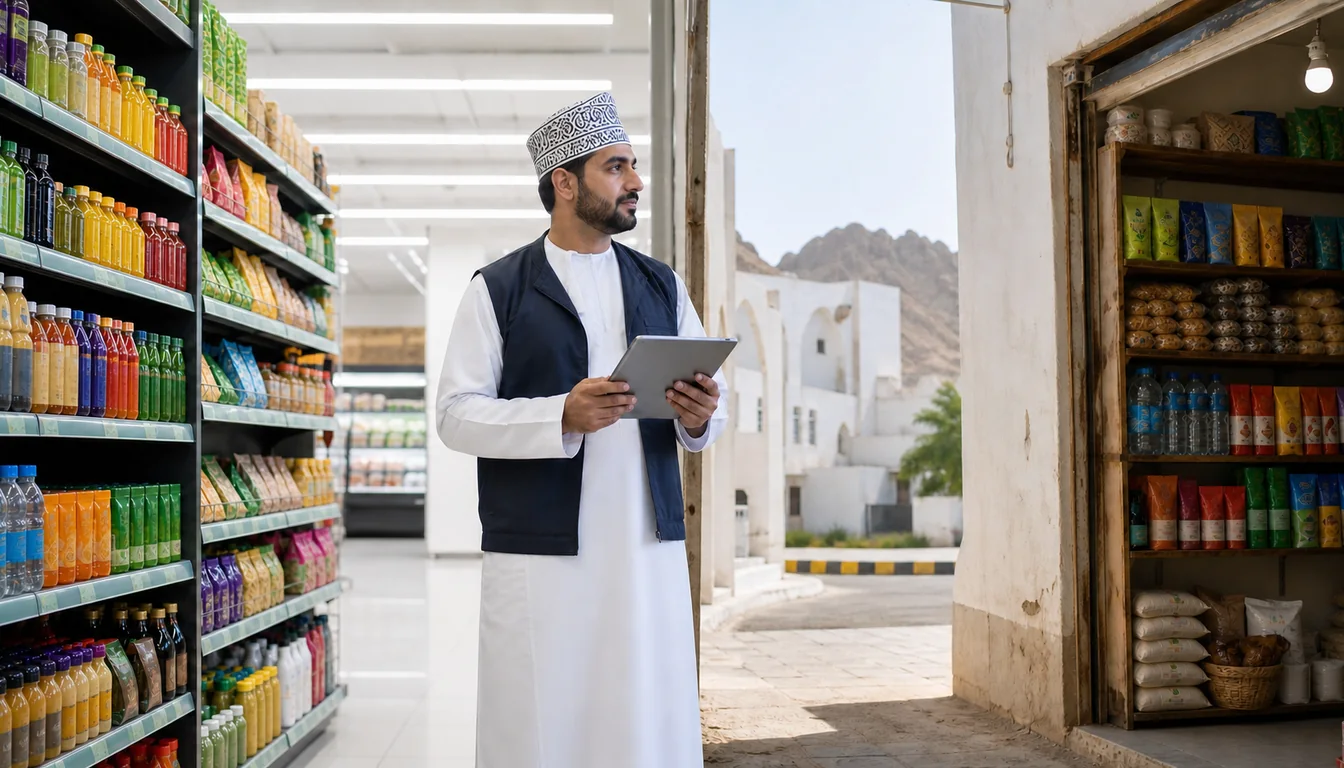
FMCG brands building distribution in Oman are not choosing between two markets, they are serving both at once. A modern trade sector built around hypermarket and supermarket chains is genuinely growing across Muscat and the coastal cities, while an extensive network of baqalas, the small independent neighbourhood grocery store, remains the everyday shopping stop for a large share of the country, especially outside Muscat's concentrated retail corridor.
Neither channel is a smaller version of the other. A hypermarket buyer negotiates a listing once and expects it honoured at every branch. A baqala owner decides on the spot whether to reorder from whichever rep turns up with stock and a fair price this week. A single playbook tends to satisfy neither: overbuild for modern trade and baqala reach thins out across the governorates; overbuild for baqala frequency and a chain buyer notices gaps on the shelf.
Getting this right also means understanding how Oman's established trading houses fit into the picture, how payment habits split across cash, cards and the newer Maal payment card, and how demand moves sharply around Ramadan and the Khareef season in Dhofar.
Oman's Genuine Dual-Channel Retail Market
Hypermarket and supermarket chains anchor grocery shopping in Muscat and along the coastal cities. Lulu Hypermarket operates more than thirty stores across the Sultanate and continues to expand, with new stores planned in Duqm, Musannah and Samail. Carrefour, operated by Majid Al Futtaim, Sultan Center, Nesto Hypermarket and SPAR, whose Oman licence has been held by Khimji Ramdas since 2014, round out a modern trade sector that is a genuine growth story for the country.
That growth has not displaced the baqala. Retail research on Oman consistently describes thousands of baqalas coexisting with the expanding hypermarket and supermarket sector, especially significant outside Muscat's concentrated retail corridor, across the Batinah coast, the interior and the south. No reliable published figure splits the country's trade cleanly between the two formats, and a brand is better served treating Oman as a genuine dual-channel market than chasing a precise ratio that does not exist. The practical challenge is building one coverage plan flexible enough to run a hypermarket buyer's negotiated terms and a baqala owner's same-week reorder side by side.
How Oman's Trading Houses Shape FMCG Distribution
Two Oman-headquartered conglomerates sit at the centre of how many international and regional FMCG brands reach the market. The Khimji Ramdas Group is a major trading and distribution business with interests spanning trading, distribution, retail and manufacturing, and it holds the Oman SPAR licence. The W.J. Towell Group, established in 1866, runs its FMCG and retail operations through the Enhance Group cluster, which distributes brands including Reckitt Benckiser, Colgate-Palmolive, Johnson & Johnson, L'Oréal, Nestlé, Unilever International and Al Safi Danone, and also operates retail banners of its own, Noor Shopping, Noor Express and Al Maha forecourt convenience stores. Neither trading house is a 1Channel customer or partner, they are named here purely as market context.
Routing volume through a network like Khimji Ramdas or Enhance Group gives faster access to modern trade shelf space and an established field presence, at the cost of visibility into secondary sales and baqala-level performance depending on what the distributor reports back. A brand appointing its own distributors keeps that visibility directly, but has to build governorate-by-governorate coverage from scratch. Either path benefits from the same underlying discipline, a distributor order management system giving a brand real primary and secondary sales visibility regardless of the structure underneath.
What Modern Trade Buyers Expect From a Supplier
Selling into a hypermarket or supermarket chain in Oman means working inside a formal buying process that a category buyer sets once and expects honoured at every branch, every week, without a rep renegotiating shelf space store by store.
Listing Negotiations and Planogram Compliance
A listing agreement fixes which SKUs sit where, in what facing count, for how long. Chains such as Lulu and Carrefour plan shelf layout centrally, so a branch visit is really a compliance check against that agreed plan. A brand that cannot show, branch by branch, that the shelf still matches what was agreed struggles to defend the listing at the next review.
Chain-Level Ordering and Reconciliation
Large chains typically order and settle at chain level rather than negotiating fresh terms at each branch, and expect delivery, invoicing and returns to reconcile cleanly across every store under that account. A supplier tracking this branch by branch on spreadsheets loses visibility fast once it supplies several outlets under the same chain across Muscat, Sohar and beyond.
Audit Trails Against Delisting Risk
A listing is a negotiated privilege that gets reviewed, not a permanent right, and a slow-moving or poorly-executed SKU is the first thing a buyer will free up space for. Store audit records and shelf-compliance photos become the evidence a brand needs at the next review.
What Baqala Owners Need From a Supplier
A baqala owner is not negotiating a listing. They are deciding, on the spot, whether to reorder from whichever rep turns up with stock and a fair price this week. Winning that decision looks nothing like winning a chain buyer's sign-off.
Smaller Orders, More Often
A baqala rarely has the storage space or the working capital to hold a hypermarket-sized order. It needs a smaller drop, more frequently, timed to when the shelf actually runs low rather than a fixed monthly cycle set for the distributor's own convenience. Delivery schedules built around Oman's Sunday-to-Thursday working week, with Friday and Saturday as the weekend, hold up far better than a schedule copied from a market on a different week.
Cash, Card and Maal Settlement
Payment at baqala level is genuinely mixed. Cash still moves alongside card payments through the OmanNet network, and increasingly the newer Maal national payment card. A Field Sales Representative who cannot record a part-cash, part-card settlement against the correct invoice while still standing in the shop ends up reconciling by memory at the end of the day, exactly where collections quietly go missing, a pattern explored further in order-to-cash with Maal, cards and cash for Oman distributors.
Route Density Across the Governorates
There is no single buyer to negotiate with here, only a beat of separate relationships spread across many small outlets, often across the Batinah coast, the interior around Nizwa, or the eastern reach towards Sur. Coverage depends on how many baqalas a rep can realistically call on in a working day, and how well that beat is planned so smaller towns do not quietly fall off the rotation. Route planning built for Oman's spread-out geography matters more here than any amount of trade spend.
Credit Terms and Collections Diverge by Channel
Modern trade accounts typically settle on agreed credit terms in Omani Rial, invoiced and reconciled at chain level, often well after delivery. Baqala owners are far more likely to settle close to the point of delivery, in cash, by card or through Maal, sometimes splitting a single invoice across two payment types in one visit. Reconciling that mix against the right invoice is the real collections problem, not a shortage of payment options, and a rep working a mixed beat needs one record tying a cash note, a card tap and a Maal payment back to a single outlet's outstanding balance. Treating a chain's negotiated credit period and a baqala's near-immediate settlement as two distinct rules, not one blended average, is covered further in distributor credit and collections in Omani Rials.
Ramadan and the Khareef Season Move Both Channels, Differently
Two demand windows shape Oman's retail calendar more than any other. Ramadan, observed across the Gulf, produces a sharp, predictable, short-window spike in demand rather than a gradual seasonal build. The Khareef, the Dhofar monsoon running from around mid-June to mid-September, is unique to Oman among the Gulf markets, drawing large numbers of visitors to Salalah and the hills above it each year and driving a genuinely concentrated, geographically specific spike in demand for seasonal produce, hospitality supplies, gifting and related goods.
Both seasons land on modern trade and baqala differently. Chains want stock in place ahead of the peak with little tolerance for a stock-out during the busiest trading weeks, while baqala channels see more frequent, smaller top-up purchases rather than one large seasonal order, concentrated sharply in and around Salalah for Khareef rather than spread evenly across the country. Buffer stock and a route plan that can absorb higher-frequency baqala visits, along with pricing and scheme timing that accounts for both channels rather than just one, keep both windows from becoming a scramble, a subject covered further in trade schemes and promotions planning for Ramadan and the Khareef season.
Multi-Governorate, Multi-Port Coverage Adds a Planning Layer
Oman's commercial geography is more dispersed than a single-metro market, spanning Muscat, the Batinah coastal strip around Sohar, the interior around Nizwa, the eastern coast towards Sur, the Dhofar south around Salalah, and the emerging Duqm special economic zone. Under Vision 2040, logistics is a named growth pillar, with Oman building a genuinely diversifying, multi-port identity across Sohar Port and Freezone, Salalah Port and the Port of Duqm rather than relying on a single established hub. For a distributor supplying modern trade in Muscat and baqalas across the Batinah, the interior and Dhofar at once, that geography is a distribution planning problem as much as a policy story. Territory boundaries, stock positioning and route plans need to reflect genuinely different distances, not a single national template stretched to fit, a subject covered further in territory coverage planning across Oman's governorates and ports.
Building One Coverage Plan With Two Playbooks
None of this holds up on spreadsheets and memory once a brand is supplying dozens of hypermarket branches and hundreds of baqalas spread across several governorates. The brands that manage it well do not run two separate teams, they run one coverage plan that branches by channel exactly where it matters.
- Segment the territory by channel, not only by governorate. A beat that mixes a hypermarket call with a run of baqala visits needs different preparation and a different length of stop for each.
- Keep the metrics separate. Planogram compliance and listing performance measure modern trade; outlet coverage and route density measure baqala reach. Judging both against the same number hides where the real gap is.
- Treat credit terms as two linked rules, not two spreadsheets. Negotiated chain terms and near-immediate baqala settlement need to be reconciled centrally, not by hand at month end.
- Give Ramadan and the Khareef season their own seasonal settings. Buffer stock and delivery frequency both need a temporary adjustment, and Khareef's Dhofar concentration needs its own route plan rather than a national default.
How 1Channel Helps FMCG Brands Win Across Oman's Modern Trade and Baqala Channels
1Channel gives FMCG brands one platform that runs a modern trade playbook and a baqala playbook side by side, rather than forcing every outlet through an identical process. A rep sees the checklist, pricing rule and payment options that match the outlet in front of them, a hypermarket aisle in Muscat or a baqala counter in the interior, and across both channels, including through the Ramadan and Khareef season, the platform gives one view of coverage, pricing and stock instead of two disconnected pictures. On this topic, it helps brands:
- See chain-level orders and branch-level compliance for hypermarket and supermarket accounts in one view.
- Plan baqala beats around realistic route density and delivery frequency across Muscat, the Batinah, the interior and Dhofar.
- Record mixed cash, card and Maal settlements against the correct invoice at the point of collection.
- Keep chain credit terms and baqala settlement rules as two linked, reconcilable records rather than separate spreadsheets.
- Build seasonal buffer stock and delivery plans ahead of Ramadan and the Dhofar-concentrated Khareef season.
One System for Modern Trade and Baqala Coverage
See how 1Channel's distributor order management gives Oman FMCG brands chain-level order visibility and baqala-level coverage in a single view, from Muscat to Salalah.
Explore Distributor Order Management →Key Takeaways
Oman rewards FMCG brands that plan for two genuinely different buying behaviours rather than one average approach stretched across every governorate.
- Modern trade and baqala are different businesses. A hypermarket buyer and a baqala owner make different purchase decisions, and coverage needs to match each one.
- Established trading houses shape how many brands reach the market. Whether a brand routes through a network like Khimji Ramdas or Enhance Group, or builds its own distributors, the same order and sales visibility discipline applies underneath.
- Modern trade runs on listing negotiations and planogram compliance. Chain-level order visibility and audit-ready records protect the listing at the next buyer review.
- Baqala coverage runs on frequency and route density, not a formal buying process, and it reaches well beyond Muscat.
- Payments are genuinely mixed at outlet level. Cash, card and Maal all need to reconcile against the right invoice on the spot.
- Ramadan and the Khareef season each need their own seasonal plan, with Khareef's demand sharply concentrated around Salalah rather than spread nationally.
Get the channel split right, and Oman's wider geography, from Muscat's retail corridor to the Batinah coast, the interior and Dhofar, becomes a coverage plan rather than a guessing game.