An Asyad Group study found a 137 per cent variation in the total cost of a single sea voyage between India and Sohar.
That spread, shared around last week's Muscat Maritime Resilience Forum, shows how unpredictable inbound freight into Oman can be.
This post covers what the forum set out, why a late container turns into a shelf problem for distributors, and which stock signals to watch.
It matters most for import-heavy categories: FMCG, pharma and healthcare, cosmetics and personal care, and consumer durables.
What the Muscat Forum Set Out
Asyad Group hosted the forum in Muscat from 27 October, with the transport ministry, the Foreign Ministry and Oman Investment Authority.
Working groups covered supply chains, logistics services, proactive readiness, infrastructure and regulatory frameworks, among other sectors.
Their findings stressed a unified approach to risk, better sharing of trusted data across the maritime network, and readiness before a crisis hits.
The resulting Muscat Maritime Resilience Framework will roll out in phases, starting with closer integration among GCC countries.
Why a Late Ship Becomes a Shelf Problem
More than 80 per cent of global merchandise trade by volume moves by sea, so freight delays reach almost every imported category.
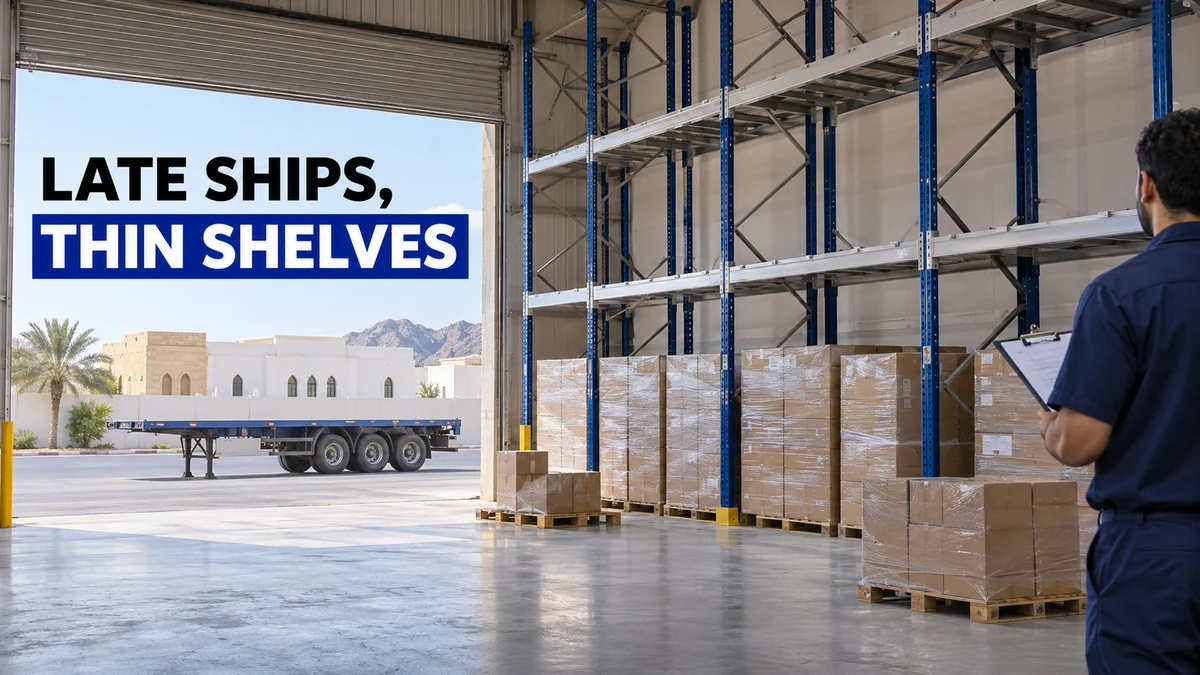
For a distributor, a late container rarely shows up as one big outage. It shows up a week later as thin shelves in a few SKUs and towns.
The real damage comes from not knowing. Stock sits in one depot while another runs dry, and reps keep booking orders nobody can fill.
| Stock signal | What it tells you | When it matters |
|---|---|---|
| In-transit stock | Goods dispatched but not yet received | Before promising dates to retailers |
| Stock by warehouse | Where cover is thin, depot by depot | When deciding transfers |
| Low-stock alerts | Which SKUs crossed their minimum | Every day of a delay |
| Goods receipt shortfalls | What arrived against what was sent | When a delayed load finally lands |
None of these signals stop a ship being late. They decide whether a delay costs a week of sales or a quiet stock transfer.
How 1Channel Keeps Stock Visible When Freight Runs Late
1Channel shows sellable, in-transit and warehouse-level stock on one screen, and moves stock between warehouses as soon as a transfer is submitted.
Auto-replenishment raises orders once an SKU drops below its set minimum, and AI-powered order validation checks stock on every order, so reps sell what distributors actually hold.
See Every Depot's Stock Before the Shelves Go Thin
Track in-transit stock, warehouse cover, transfers and low-stock alerts in one place, so a delayed shipment becomes a planning decision.
Explore Inventory Management →Common Mistakes to Avoid
Freight delays are not new. These habits are what usually turn them into empty shelves.
- Planning on the vessel ETA alone. Track what is in transit SKU by SKU, not just which container is late.
- Treating every depot as one pool. A healthy national total can hide a town that is already out of stock.
- Leaving reorder minimums untouched in peak months. Ramadan and Khareef demand needs different floors than a quiet month.
- Letting reps book what the warehouse cannot ship. Show distributor stock on the order screen so gaps surface at the counter.
- Skipping goods receipt checks. A short delivery nobody records leaves the system promising stock that is not there.
Fix these and the next late ship becomes a transfer and a reorder, not a week of lost sales.
Source: Oman Observer