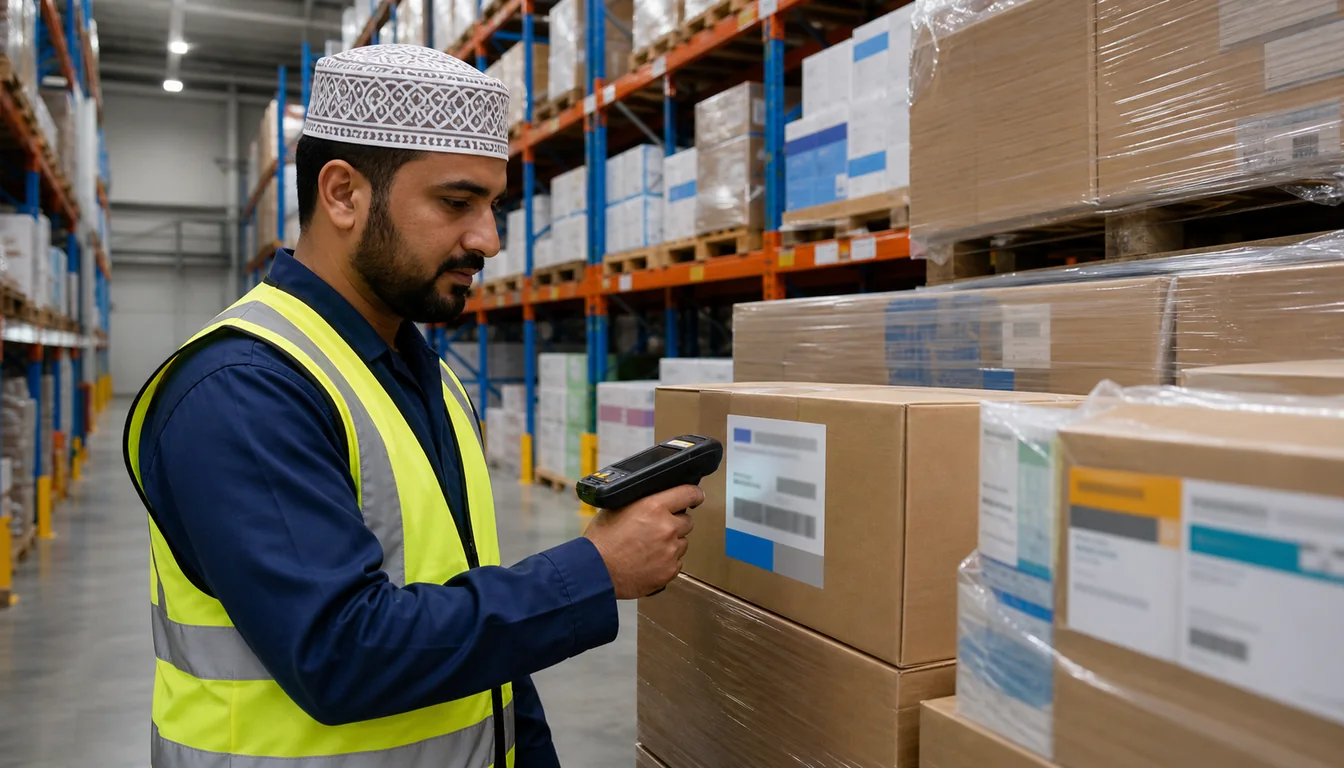
Ask an Oman distributor how last month went and the number that comes back first is usually dispatch value: how much stock left the warehouse against invoice. That figure is easy to produce because it lives entirely inside the distributor's own books, and it is also, on its own, a poor guide to what actually happened in the market.
A distributor can lift three months of stock ahead of a scheme deadline, sit on most of it in the warehouse, and the purchase ledger still shows a strong month. What happened next, on a hypermarket shelf in Muscat or at a baqala counter on the road to Nizwa, stays invisible until someone goes looking for it through a separate set of records.
That gap between what a distributor buys in and what the market actually absorbs is the difference between primary and secondary sales. An Oman distributor covering a genuine dual-channel market, a real modern trade sector alongside a baqala network that reaches well beyond Muscat, needs a working answer for both, not just the one that happens to be easiest to invoice.
What Primary and Secondary Sales Mean for an Oman Distributor
The two terms get used loosely, sometimes as if they describe the same event from two angles. They do not. Each measures a different transaction, several steps apart in the same chain, and mixing them up is usually where a reporting disagreement between sales and finance starts.
Primary sales
Primary sales are the transaction between the distributor and whoever it buys from, whether that is a principal, an FMCG brand or a manufacturer. This is the invoice raised the moment a distributor's warehouse in Muscat or Sohar takes on a container or a truckload of stock and pays for it, in OMR, against agreed pricing and terms through the distributor's own order management system.
Because it is billed and lands in the books immediately, it is the number every finance team reaches for first. The problem is that a primary sale is a purchasing decision, not proof that anyone downstream actually wants the product yet. A distributor might load up ahead of a price change, to clear a scheme slab before it lapses, or simply because a delivery slot was available that week.
Secondary sales
Secondary sales are what happens next: the distributor's own sales onward, to sub-distributors, wholesalers, and the baqala, mini-market, pharmacy and modern trade accounts a field sales team actually calls on. When a Van Sales Representative books an order at a baqala outside Sohar, or a merchandiser confirms a repeat order at a hypermarket in Muscat, that is a secondary sale.
This is where genuine demand shows up, because an outlet only reorders what its own customers have already bought off the shelf. It is also the layer that is hardest to see, spread across eleven governorates and however many baqala counters and hypermarket aisles a route actually covers in a given week, and settled at the outlet level rather than through the distributor's own invoicing system.
Why a Primary-Only View Misreads a Dual-Channel Market
Oman's retail landscape is genuinely dual-channel: a real, growing modern trade sector operating alongside an extensive baqala network that reaches well beyond Muscat's own concentrated retail corridor. A distributor watching primary sales alone gets one blended figure that hides how differently these two channels actually behave.
Modern trade accounts tend to order on a schedule, against listed SKUs and agreed shelf space, so a hypermarket's primary order tracks reasonably close to what it actually sells through. A baqala's ordering pattern looks nothing like that. It orders in smaller, less predictable amounts, topping up what has already moved rather than following a schedule, and it is precisely this layer where a primary-only view goes furthest wrong. A distributor cannot tell, from the invoice ledger alone, whether a quiet order week from a baqala means weak sell-out or simply an outlet waiting on cash flow before its next restock.
| Aspect | Primary sales | Secondary sales |
|---|---|---|
| What it records | An invoiced, OMR-denominated purchase into the distributor's own warehouse | An outlet-level sale, often settled in cash, card or Maal |
| Who is buying | The distributor, from a principal or brand | Baqala, mini-market, pharmacy and modern trade accounts, from the distributor |
| Where it lives | The distributor's purchase ledger, updated the moment stock is billed | Field visit records, van-sales handovers and outlet order history |
| What it actually tells you | How much stock the distributor is willing to hold | Whether the market is genuinely buying the product |
What Genuine Secondary-Sales Visibility Should Measure
Deciding to track secondary sales is the easy part. The harder part is choosing which numbers are worth building a reporting habit around, because a dashboard that just repeats the primary figure in a different colour has not actually added anything.
Sell-through by outlet and SKU
The most basic secondary-sales question is also the most useful one: which SKUs are moving out of which outlets, and at what pace. Rolled up across a route, this turns a vague sense of "sales are down in the interior" into a specific, actionable pattern, one SKU losing ground at baqala accounts in Ad Dakhiliyah while holding steady at modern trade accounts in Muscat, for example.
Numeric and weighted distribution across both channels
Numeric distribution counts how many outlets stock a SKU. Weighted distribution adjusts that count by outlet importance, so a listing at a large hypermarket carries more weight than one at a small baqala. Tracking both, separately for the baqala network and for modern trade, shows whether growth is coming from genuinely broader reach or from a handful of large accounts doing more of the work.
Reorder rate and order size
How often an outlet reorders, and how much it orders each time, is a more honest read on demand than a single order value. A baqala reordering small amounts frequently is usually a healthier sign than one placing a large order and then going quiet for weeks, even though the second pattern can look better on a primary-sales report.
Primary-to-secondary ratio by governorate
Comparing what a distributor buys in against what its own network sells on, broken down by governorate rather than as a single national figure, is the clearest early warning a distributor has. A governorate where primary purchases keep climbing while secondary sell-out stalls is a stock build-up in the making, whether that stock is sitting in the distributor's own warehouse or with a sub-distributor further down the chain.
Building OMR Reporting That Works Across Baqala and Modern Trade
Most of the practical difficulty in primary versus secondary reporting is not conceptual, it is structural. Primary sales are already OMR-denominated and sit cleanly in one ledger. Secondary sales, by contrast, arrive from dozens of routes, settled through a mix of cash, card and Maal payments, and captured by whichever system a given rep or outlet happens to be using that week. Getting a single, trustworthy OMR figure out of that mix takes a deliberate reporting structure, not a spreadsheet stitched together at month end.
Three things matter most in that structure. First, every secondary sale needs to carry the same OMR pricing logic as the primary order it descended from, so a governorate rollup is comparing like with like rather than mixing list price against a discounted field price. Second, the channel split has to survive the rollup, a report that only shows a blended baqala-plus-modern-trade figure per governorate hides exactly the difference a distributor needs to see, since the two channels move at different speeds and for different reasons. Third, a sub-distributor's or wholesaler's own onward sale needs to be counted once, at the point it actually happens, not folded into the distributor's primary figure and then estimated again further down the chain.
Get that structure right and a distributor can finally answer a simple question with confidence: for a given governorate and a given SKU, how much genuinely sold through this month, in OMR, split by channel, rather than a number reconstructed from memory and a purchase ledger.
Where the Gap Still Hides Beneath the Distributor
Even a distributor with solid reporting on its own direct routes can still be flying blind on the layer beneath it. A sub-distributor or wholesaler covering baqala accounts several governorates away typically settles with its own customers by phone and notebook, which means the secondary sales that matter most for reach beyond Muscat are often the ones a distributor's own analytics never sees.
Closing that specific gap is less a reporting question than an onboarding one, getting a sub-tier onto a shared ordering and stock system in the first place, which is covered in depth in digitising Oman's sub-distributors and wholesalers. Once that tier is reporting through a shared system, the same OMR structure described above extends cleanly to cover it, rather than needing a separate estimate.
Common Pitfalls When Building Primary vs Secondary Reporting
A handful of recurring mistakes account for most secondary-sales reporting efforts that stall or produce numbers nobody trusts.
- Treating a primary shipment as a sale. Recognising revenue, or judging brand performance, purely off what left the warehouse rewards loading up the trade rather than genuine sell-through.
- Blending baqala and modern trade into one figure. A single combined secondary-sales number hides the fact that these two channels order on entirely different rhythms and need to be read separately.
- Letting field data arrive late. Secondary-sales figures reconstructed at month end from paper visit reports are already too stale to influence the current month's stock or scheme decisions.
- Ignoring the sub-tier. A distributor's own direct routes rarely cover the full baqala network, so leaving sub-distributor and wholesaler sell-out out of the picture understates real market reach.
- Reporting in mixed or inconsistent currency logic. A rollup that mixes list price, discounted field price and estimated value in the same OMR total looks precise while being quietly wrong.
How 1Channel Helps Oman Distributors See Primary and Secondary Sales Together
1Channel connects a distributor's primary purchase ledger to the secondary sales its own field team and sub-tier record every day, on one platform, so the two numbers can finally be read side by side rather than reconciled by hand once a month. The same OMR pricing logic runs through both layers, and every figure can be split by channel and by governorate rather than collapsed into one blended total.
On this topic, the platform helps an Oman distributor:
- Capture secondary sales at the point of the visit, from both baqala and modern trade accounts, without waiting on a paper report to reach the office.
- Track sell-through by outlet and SKU, alongside numeric and weighted distribution, split by channel rather than blended into one figure.
- Build a primary-to-secondary ratio by governorate, so a stock build-up shows up as an early signal rather than a surprise at month end.
- Report every figure in consistent OMR pricing logic, from the primary order through to the outlet-level secondary sale.
- Extend the same visibility down to sub-distributors and wholesalers once that tier is reporting through a shared system.
- Put primary and secondary figures on the same dashboard through sales analytics, built for a distributor operating across Oman's governorates rather than a single retail corridor.
See Primary and Secondary Sales on One Dashboard
1Channel's Distributor Analytics brings primary purchases and outlet-level secondary sales into one OMR-denominated view, split by channel and governorate, so an Oman distributor can see what genuinely sold through, not just what shipped.
Explore Distributor Analytics →Key Takeaways
Primary and secondary sales measure two different things, and an Oman distributor that only tracks the first is planning on a number that describes its own purchasing behaviour, not the market's.
- Primary sales measure what the distributor bought. Secondary sales measure what actually sold through to baqala, mini-market and modern trade accounts, and only one of those reflects genuine demand.
- Oman's dual-channel market needs both numbers read separately. Modern trade and the baqala network order on different rhythms, and blending them into one figure hides more than it reveals.
- Sell-through, distribution, reorder rate and the primary-to-secondary ratio are the metrics worth building a habit around. Together they turn a vague sense of performance into a specific, governorate-level picture.
- OMR reporting needs a deliberate structure, not a month-end spreadsheet. Consistent pricing logic, a channel split that survives the rollup, and sales counted once are what make the resulting figure trustworthy.
- The sub-distributor and wholesaler tier is often the biggest remaining blind spot. Extending the same visibility to that layer usually depends on bringing it onto a shared ordering and reporting system first.
Get primary and secondary sales onto the same OMR-denominated view, split by channel and governorate, and a distributor stops guessing at what sold through. It starts knowing.