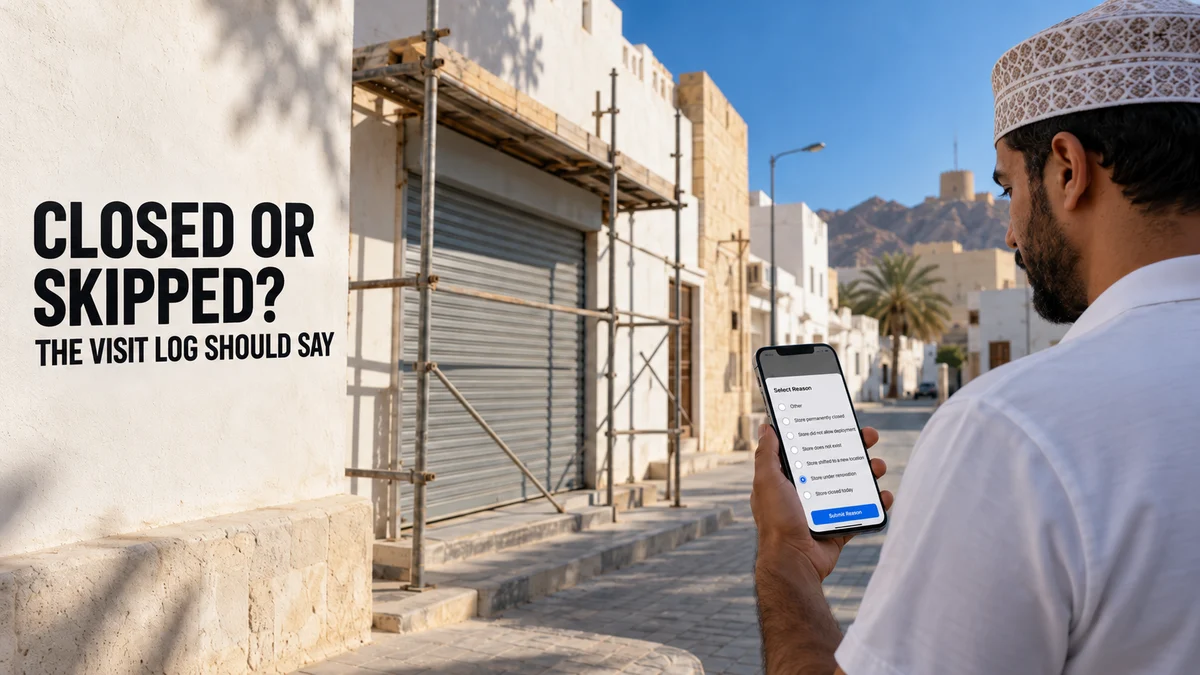
On a shopfront sign job, the expensive visit is usually the second one, when the crew returns for a panel that did not fit or unchecked work.
Throughout Oman, that return trip costs more for a quarter of the year, because outdoor work stops for three hours every summer afternoon.
This post covers three places a sign job leaks money, and how VisiMax, 1Channel's app for retail maintenance, visual merchandising and store audits, closes each.
The pattern matters most for brands in consumer durables and electronics, cosmetics and personal care, FMCG, and retail and modern trade, wherever a backlit logo carries the brand.
Why a Return Trip Costs More in an Omani Summer
Every June, July and August, Oman's Ministry of Labour bans outdoor work from 12:30 to 15:30 at sites directly exposed to the sun.
Shopfront signs, glow sign boards and exterior brand walls sit inside that rule, so crews work early mornings and late afternoons.
With fewer usable hours, one wasted visit pushes the next job back. A dark logo then stays dark for longer, right where the brand should look its best.
Three Places a Sign Job Leaks Money
Most repeat visits trace back to one of three gaps, and each has a matching control.
| Where it leaks | What it costs | How VisiMax closes it |
|---|---|---|
| The crew arrives without a survey | Wrong panel size and a second trip | A costed recce with a bill of quantities and photos |
| Spend goes out before anyone agrees | Disputed invoices and unbudgeted work | Approval on the ticket, then again on the costed recce |
| The job closes on the crew's word | Faults found weeks later on an audit | Before and after photos, then a quality check |
Leak One: No Survey Before the Crew
A crew that sees the site for the first time on job day often brings the wrong face panel, too little cable or no bracket for the wall.
In VisiMax, a rep surveys the site first. Element types carry rate cards, so the recce produces a bill of quantities with photos of each element.
Leak Two: Spend Nobody Signed Off
When an agency quotes by phone and the brand agrees by message, the invoice becomes the first written record of the cost.
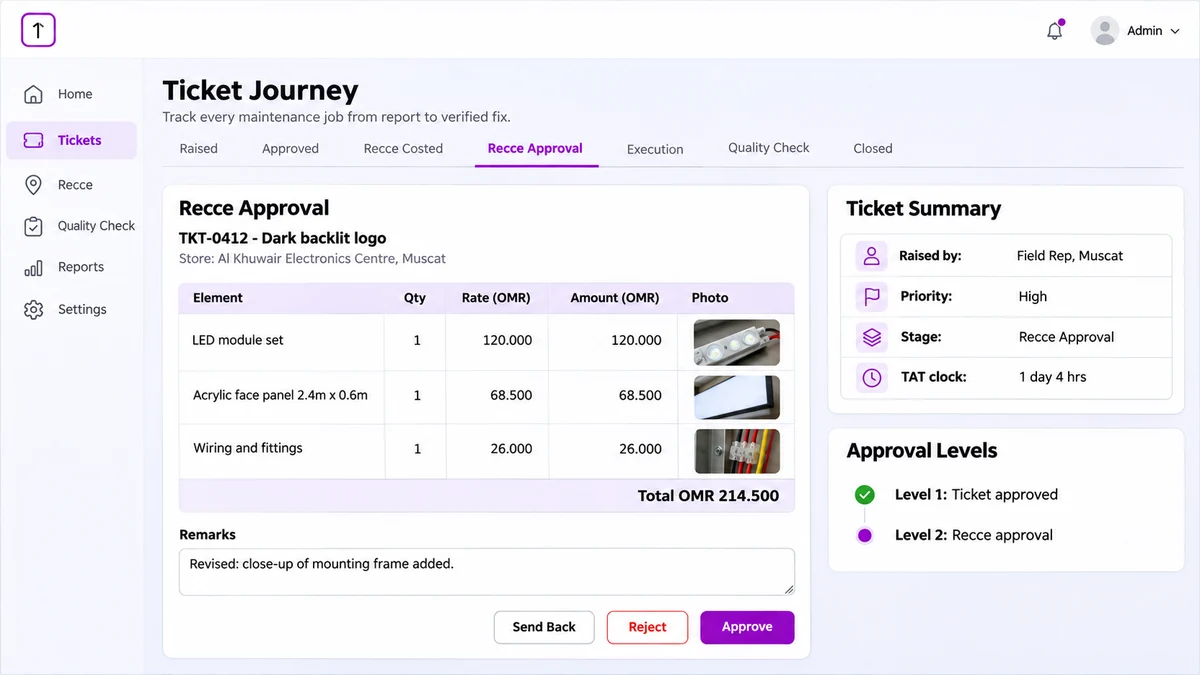
VisiMax puts approval on the ticket and again on the costed recce, with approval levels set per project. The approver can approve, reject or send the recce back.
Leak Three: Work Closed Without a Check
If a job is marked done because the crew says so, a flickering letter or a crooked panel surfaces weeks later.
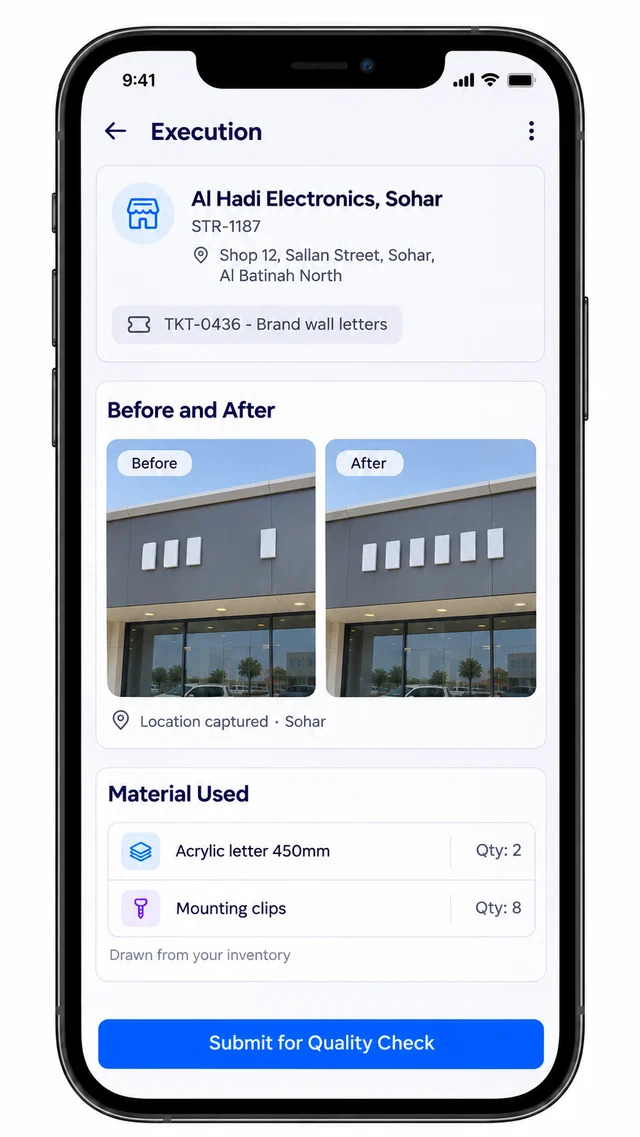
Execution in VisiMax carries before and after photos, geolocation and the material drawn from the rep's own inventory.
A QC reviewer then passes it, fails it or sends it back for rework with remarks. Validation and closure are separate stages, so nothing closes on a promise.
Two Sign Jobs, One Ticket Journey
A merchandising agency in Muscat gets a report of a dark backlit logo at a multi-brand electronics store in Al Khuwair.
The rep dictates the fault in their own language, and VisiMax transcribes it into a clean English description on the ticket, which suits mixed Omani and expatriate teams.
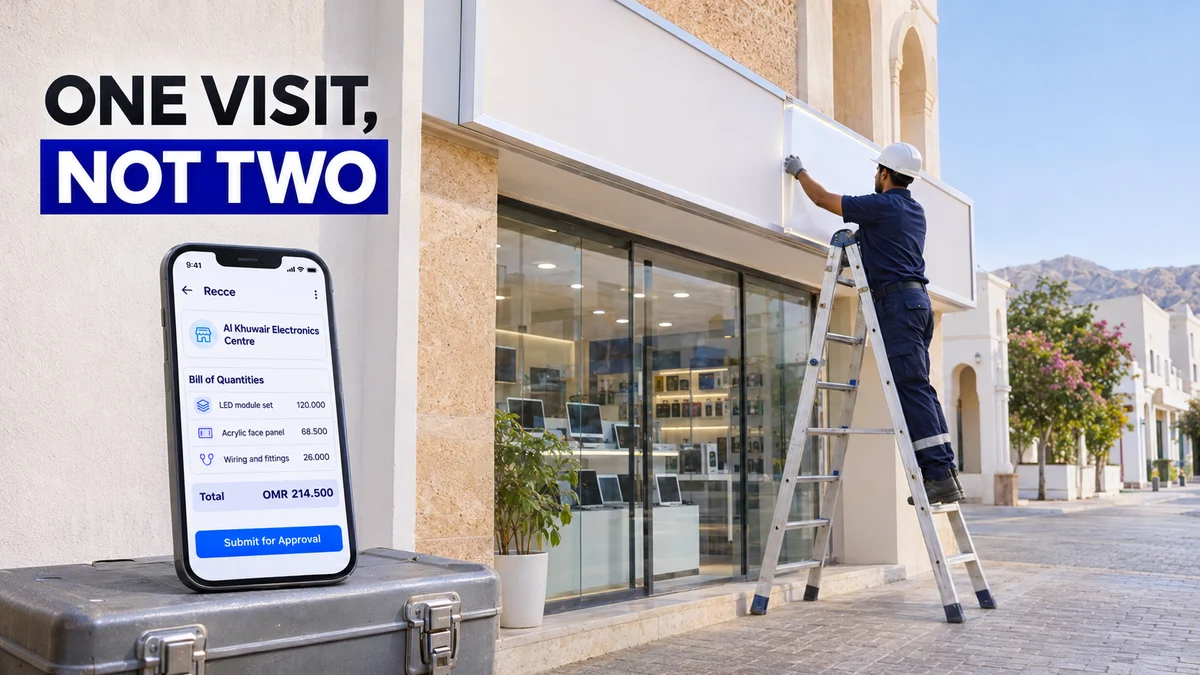
Next morning the rep surveys the fascia. The bill of quantities lists an LED module set, one acrylic face panel and wiring, costed at OMR 214.500.
The approver sends it back once, asking for a close-up of the mounting frame, then approves the revised recce. The crew arrives knowing the exact panel size.
In Sohar, a dealer's exterior brand wall needs two replacement letters. The crew uploads before and after photos, and the letters used come off the rep's inventory.
The QC reviewer spots one letter sitting lower than the rest in the after photo, and marks the job for rework with a remark.
The crew corrects it after 15:30 the same day, and the ticket closes only once QC passes it. The fault never waits for a store audit.
Figures on screen are illustrative; each project's rate cards and approval levels are configured to its own programme.
How 1Channel Puts a Cost and a Check Around Every Sign Job
VisiMax carries a sign job from report to closure on one app and one portal: raised, approved, recce costed, recce approved, executed, checked and closed.
Each stage has an owner and a clock. Vendor crews work inside the same ticket with their own logins, so a brand sees where every rial and day went.
Survey It, Approve It, Then Send the Crew
See how tickets, costed recces and quality checks work together for brands and agencies across Oman.
Explore Retail Execution Software →Final Suggestions
- Survey every exterior job before booking a crew, so the materials match the site.
- Approve the costed recce, not just the ticket, before any money is committed.
- In June, July and August, book outdoor work for mornings and after 15:30.
- Ask for before and after photos on every job, and keep QC with someone who was not on site.
- Review turnaround time by stage to see where sign jobs wait longest.
Note: Software screens may vary based on your business structure and configured workflows.