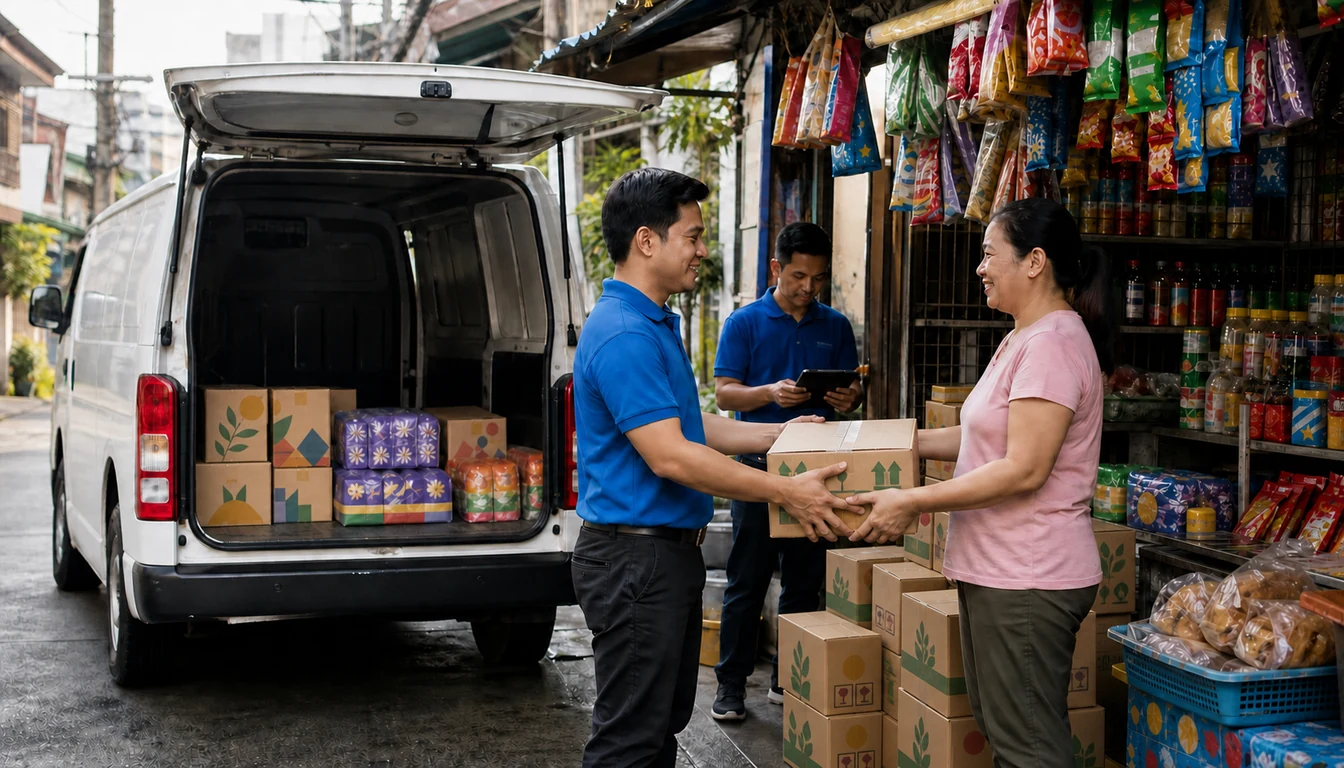
The Philippines is home to an estimated 1.1 million sari-sari stores, and in the country's dense urban barangays it is common to find a dozen or more of them within a few minutes' walk of each other. For a field rep working Metro Manila, Cebu or Davao, that concentration is both an opportunity and a planning headache: a single street can carry more retail calls than an entire rural municipality, and every one of those small counters expects the rep to show up on a schedule it can actually rely on.
What makes the density harder to plan around is tingi, the Filipino habit of buying in small, single-use quantities rather than bulk. Shampoo, coffee, seasoning and detergent sold as sachets is the default, not the exception, and a sari-sari store with barely enough floor space to stock 200 SKUs restocks its fastest-moving lines several times a week rather than once a month. Basket sizes stay small because shelf space and household cash flow both stay small, so the frequency of the call matters as much as the route itself.
A beat plan drawn up once, on paper or in a spreadsheet, and left largely untouched for a year cannot keep pace with that rhythm. New sari-sari stores open inside a barangay faster than a static map gets redrawn, call frequency needs differ sharply between a high-turn corner store and a quieter side-street outlet, and route sequences that made sense six months ago waste travel time today. Beat planning for this channel has to be treated as a living, data-driven exercise, not a document filed away after the first territory launch.
Why fixed beat plans break down in high-density barangays
Most manual beat plans are built around a rough sketch of a territory: a list of outlets, a suggested order of visits and a day-of-week assignment that rarely changes once it is handed to a rep. That approach holds up reasonably well in a market with a modest number of stores spread over a wide area. It falls apart quickly in a Philippine barangay where outlet count per square kilometre is high and every outlet has its own restocking rhythm.
The density problem inside a single barangay
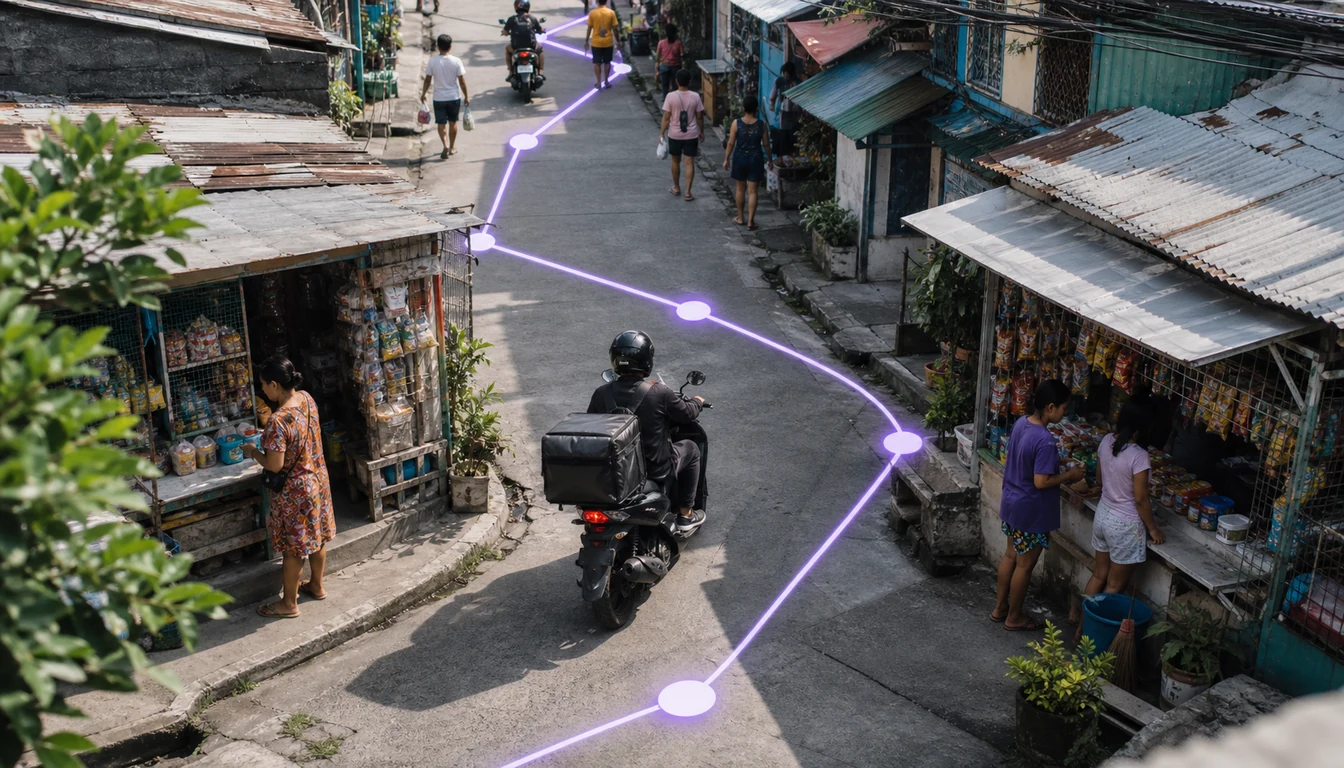
A rep working a dense residential barangay in Metro Manila or Metro Cebu might realistically cover fifteen to twenty-five sari-sari stores in a single working day, many of them a few dozen metres apart. Getting the sequence wrong, doubling back down a street already covered, or visiting a low-frequency outlet on the same loop as three high-frequency ones, quietly erodes the number of productive calls a rep can make before the day ends. At this scale, a few wasted minutes per stop compounds fast.
When the plan is set once, but the street keeps changing
Sari-sari retail also turns over faster than most planning cycles account for. A store closes, a new one opens two doors down, a stall starts stocking a wider range and needs a different call frequency than it did a quarter ago. A beat plan that is not refreshed against current outlet data quickly drifts away from the street it was supposed to describe, and reps end up compensating with their own memory and judgement rather than a plan that reflects what is actually there.
Mapping sari-sari outlets where formal addressing falls short
Formal street numbering is inconsistent across many barangays, particularly in interior streets and informal settlements where a sari-sari store might be known by a landmark or a neighbour's name rather than a postal address. Written directions such as "beside the chapel, second alley" work for a rep who already knows the area, but they do not scale to a growing team, and they make it very difficult to plan a route mathematically rather than by local memory.
The more reliable approach is to capture a GPS pin for every outlet the first time a rep visits it, rather than relying on an address string. Once an outlet exists as a coordinate rather than a description, a beat plan can be built and resequenced against real walking or driving distance instead of a rep's mental map of the neighbourhood. This is also what makes accurate outlet and store data possible in the first place: an outlet record tied to a pin, a photo and a call history is something a new rep can pick up and execute without needing months of local familiarity to be productive.
Setting call frequency and route density by outlet tier
Not every sari-sari store on a beat needs the same visit frequency, and treating them as if they do is one of the more common planning mistakes. A high-turn corner store selling sachets and single-stick items all day genuinely needs a different call cadence than a quieter outlet a few streets over that restocks the same categories far more slowly.
Tiering outlets by basket size and turn
A practical starting point is to group outlets into two or three tiers based on order size and how quickly stock turns, then assign call frequency by tier rather than by a flat weekly or fortnightly default. High-tier outlets, typically the ones with the smallest basket sizes and the fastest tingi turnover, get visited more often; lower-tier outlets get a longer cycle. This is where SKU-level data earns its keep, because tiering decisions are really decisions about which product lines each outlet actually moves, not just how big the shop looks from the street.
Sequencing a beat for minimum dead time
Once frequency is set, the sequence within a day matters almost as much. Outlets on the same tier and the same physical loop should be grouped together so a rep is not crossing back and forth across a barangay to hit stores on different cadences. The goal is to minimise the time spent walking or riding between calls so more of the working day is spent actually serving outlets, which is the whole point of a beat plan in the first place.
Balancing dense urban beats against spread-out provincial routes
The Philippines is not uniformly dense. A beat built for a Metro Manila or Metro Cebu barangay, where dozens of outlets sit within a short loop, looks nothing like a beat in a provincial or rural area, where the same number of calls might require covering many more kilometres between stops. Urban sari-sari stores also lean more heavily on supermarkets and company reps as a supply source, while rural stores tend to rely more on wholesalers and market stalls, which changes both the call purpose and the frequency that makes sense for each.
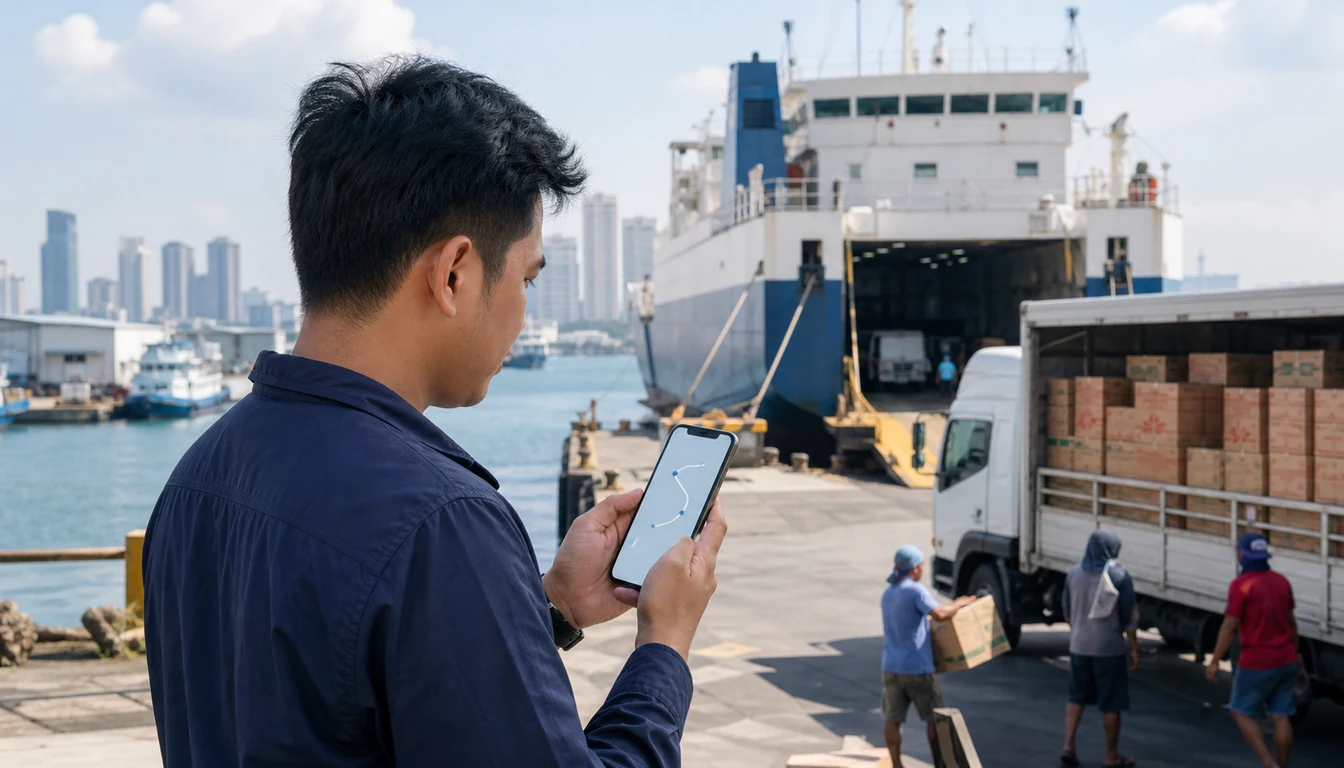
Treating both territory types with a single planning template usually under-serves one side or the other. A dense urban beat needs tight call frequency and short travel legs; a rural or provincial beat needs a route built around fewer, larger stops and realistic travel time, sometimes combining road transport with the inter-island freight the wider distribution chain depends on. Beat planning tools should let a manager set different density and frequency rules by territory type rather than forcing every rep's day into the same shape, and territory management that reflects this split tends to hold up far better once reps are actually out on the road.
Rescheduling beats around typhoon season disruption
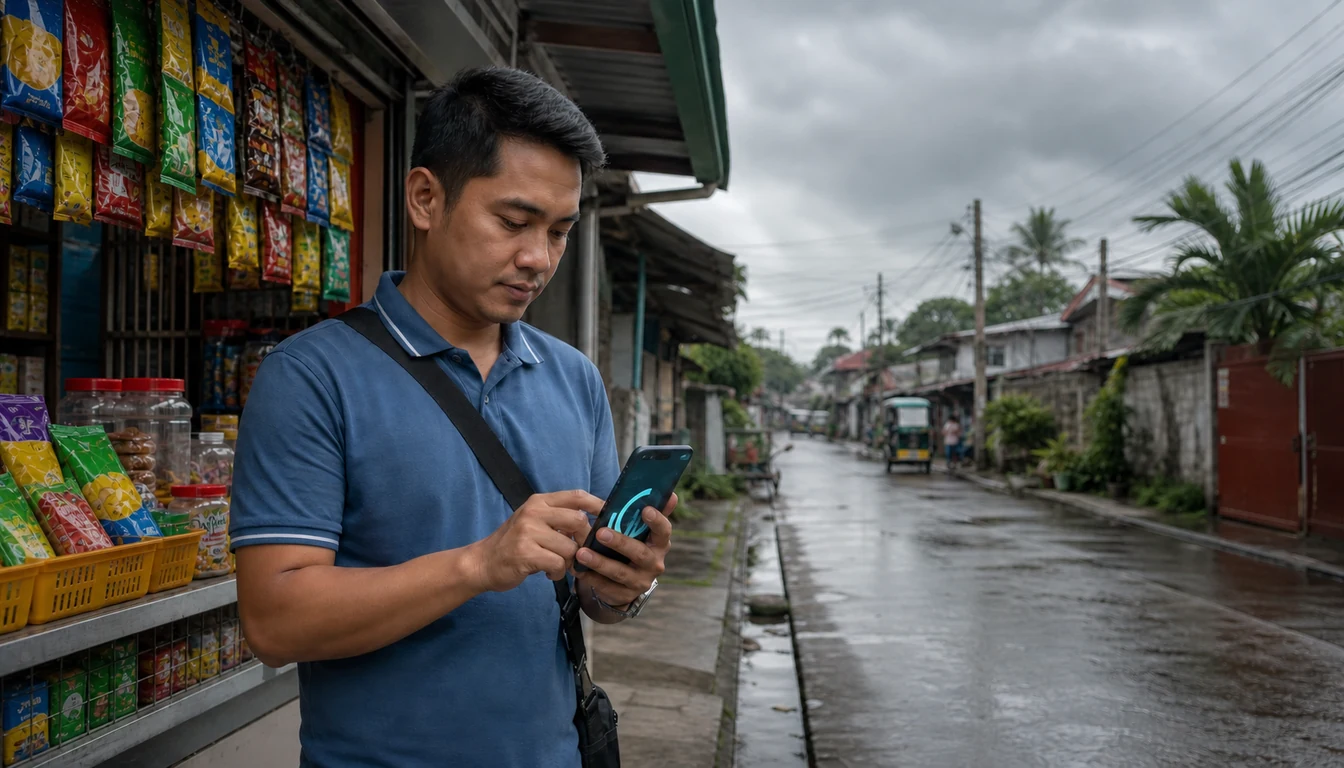
The Philippines sees an average of around twenty typhoons a year, several of which make landfall and disrupt roads, ports and mobile connectivity for days at a time. A beat plan that has no mechanism for absorbing that disruption simply falls behind every time a storm passes through, and catching up manually afterwards is its own separate exercise in guesswork.
A more resilient approach treats missed calls as data to be rescheduled automatically rather than calls that quietly disappear from the record. When a barangay is cut off for two or three days, the outlets due for a visit during that window should roll forward into the next available slot rather than being skipped entirely, and a rep returning to the field after a storm should see an updated plan rather than trying to reconstruct one from memory. This is closely tied to the broader case for offline-first field sales software in this market: a beat plan is only as useful as the app carrying it, and that app needs to keep working, and keep the plan current, when signal drops out.
Measuring productive call rate and beat plan effectiveness
Call count on its own is a weak signal. A rep who makes thirty visits in a day but only converts a fraction of them into an order has not necessarily had a better day than one who made twenty-two visits and converted most of them. The more useful measure is productive call rate, the share of planned visits that result in an actual order, tracked against the frequency target set for each outlet tier.
- Track productive calls as a percentage of planned calls, not a raw count, so a busy but unproductive route shows up as a problem rather than a success.
- Compare productive call rate by tier, since a high-frequency tier with a low conversion rate usually means the frequency assumption, not the rep, needs adjusting.
- Watch for outlets that are consistently skipped or rushed, which is often the earliest sign that a beat has drifted out of date.
Reviewing this data regularly, rather than once a quarter, is what turns a beat plan into something that improves over time instead of a document that is set once and forgotten. Sales analytics built around productive call rate, rather than call volume alone, gives a sales manager a much clearer picture of where a route needs to be re-cut.
Equipping a regional, multilingual field force to execute the plan
A beat plan is only as good as the rep executing it, and the Philippine field force is genuinely regional in a way that affects training. A rep might work Tagalog-speaking barangays in Luzon one quarter and Cebuano-speaking territory in the Visayas or Mindanao the next, alongside colleagues covering areas where Ilocano, Hiligaynon, Waray or Bikol is the everyday language on the street. That diversity is a real onboarding and consistency challenge for any distributor or brand scaling a beat planning discipline nationally.
Standardising how a beat is explained, and how a new rep is trained to read one, matters more here than in a single-language market. A structured learning and training programme that teaches beat logic, call sequencing and outlet tiering consistently, regardless of which region a rep is deployed to, keeps execution steady even as the field force moves across regional-language boundaries.
How 1Channel supports dynamic beat planning in the Philippines
1Channel's route planning tools are built to treat a beat as a living plan rather than a static list. Outlets are captured and organised by GPS pin rather than address string, call frequency and route density can be set independently for dense urban barangays and spread-out provincial territories, and missed calls caused by typhoon disruption reschedule automatically instead of simply vanishing from the record. Combined with field activity management and productive-call-rate reporting, the platform gives sales managers a beat plan that stays current with how sari-sari retail actually behaves on the ground, not one that was accurate only on the day it was first drawn.
Build Beat Plans That Match Real Route Density
See how 1Channel's route planning software sequences high-frequency sari-sari calls by outlet tier, adapts to dense barangays and spread-out territories alike, and reschedules automatically when typhoon season gets in the way.
Explore Route Planning →Key Takeaways
Beat planning for the Philippines' sari-sari channel has to account for density, tingi-driven call frequency and seasonal disruption all at once. The points below summarise the core discipline.
- Sari-sari density demands frequent resequencing. A plan built once for a dense barangay goes stale within months as new stores open and call needs shift.
- Tingi buying drives call frequency, not just basket size. Small, sachet-sized restocking means high-turn outlets need shorter visit cycles than a flat weekly default allows.
- GPS pins beat postal addresses. Where formal street addressing is inconsistent, an outlet captured as a coordinate is far easier to route accurately than one described by landmark.
- Urban and rural beats need different rules. Dense city barangays and spread-out provincial territories should be planned with different density and frequency settings, not one template.
- Typhoon disruption should reschedule, not erase, missed calls. A resilient beat plan rolls skipped visits forward automatically rather than losing them when a storm closes a barangay for days.
- Productive call rate, not call count, is the real measure of a beat's effectiveness. Tracking conversion by outlet tier shows exactly where a route needs to be re-cut.