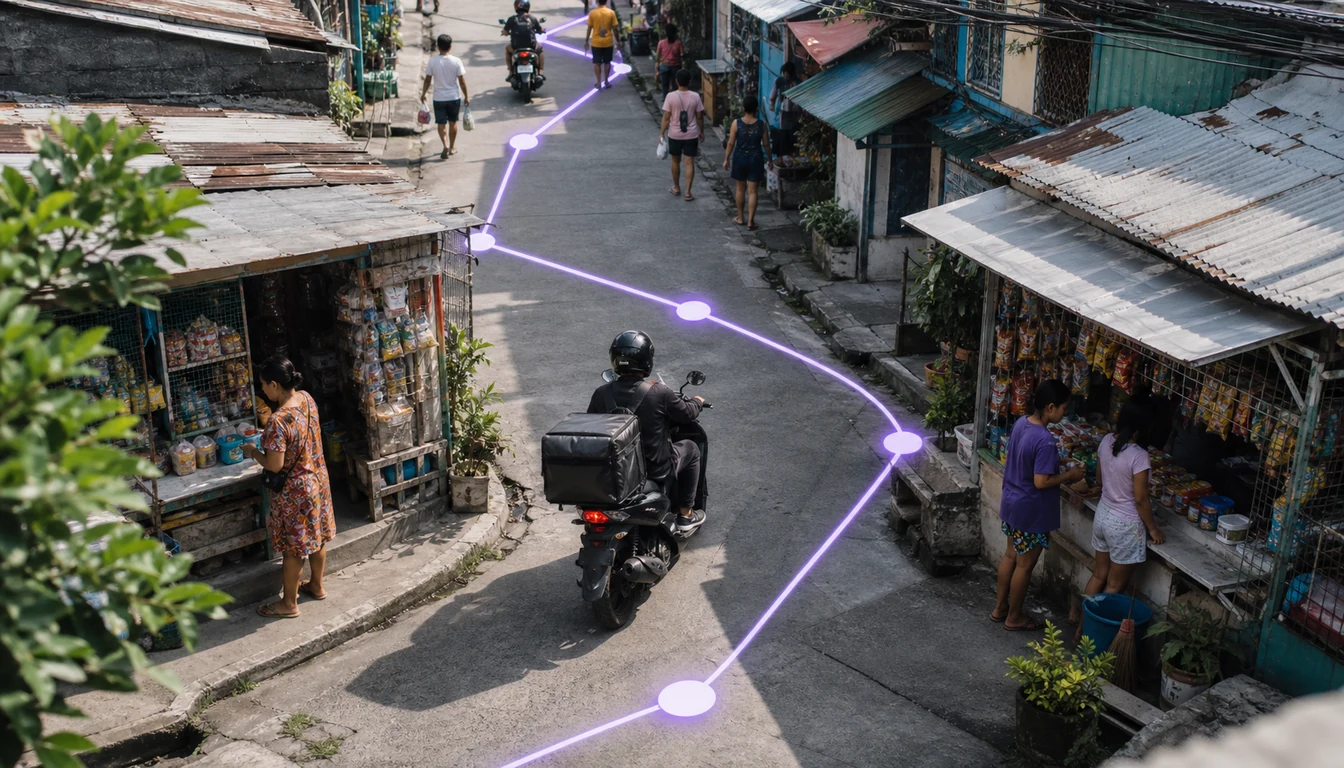
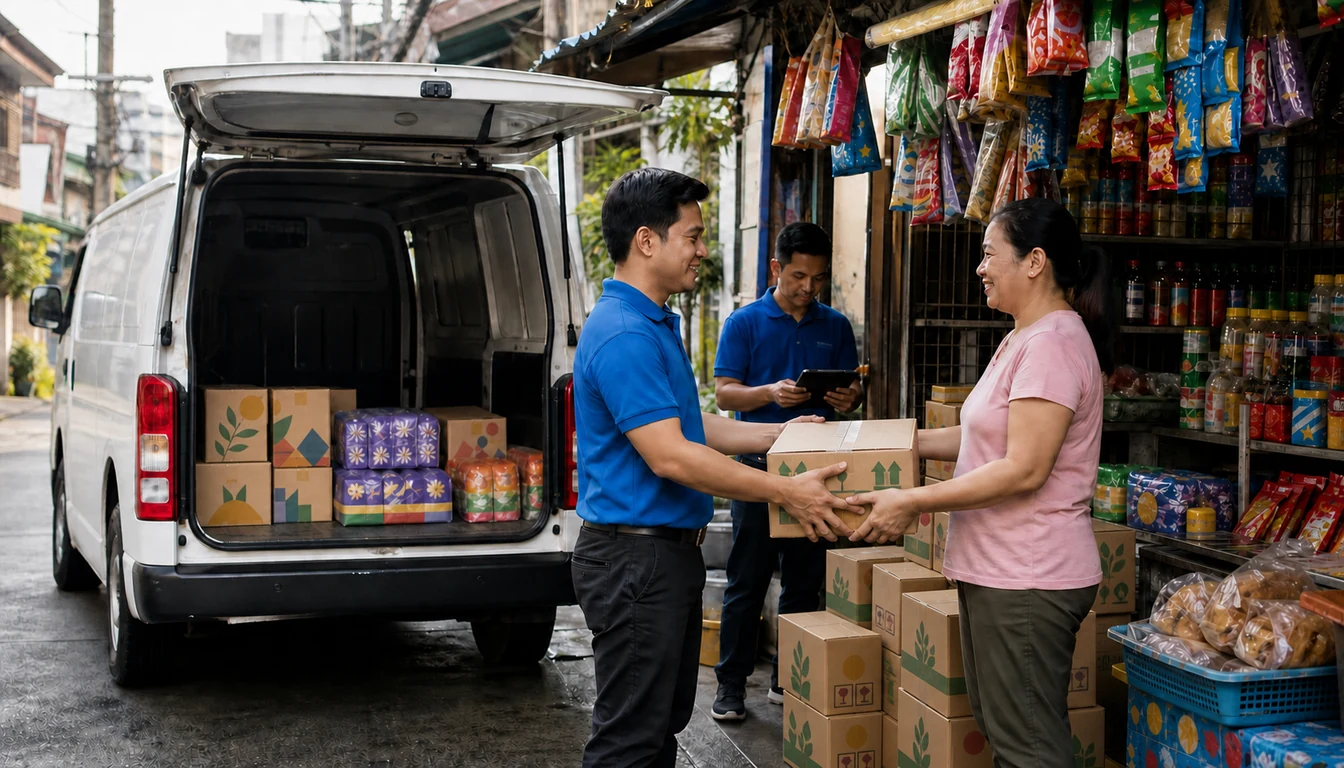
The Philippines is not one market to cover, it is roughly 7,641 islands grouped into three main regions, Luzon, the Visayas and Mindanao. A distributor selling out of Metro Manila can have a sales territory that includes barangays reachable by a two-hour drive and outlets reachable only by inter-island ferry or a short domestic flight. Field sales software built on the assumption of a single, unbroken road network and a permanently available 4G signal was never designed for this geography, and it shows the moment a sales rep steps off the mainland grid.
Add typhoon season to that picture and the connectivity problem becomes seasonal as well as geographic. The country sees an average of around twenty typhoons a year, with several making landfall and disrupting operations for days at a stretch. Mobile towers go down, ports close, flights are grounded, and entire provinces can lose reliable signal while a storm system passes through and clears out afterwards. This is not a permanent outage the way a rural dead zone is, it is a recurring, predictable seasonal window that field sales planning has to design around rather than hope to avoid.
Put the two together, archipelago geography that creates permanent coverage gaps and a typhoon season that creates recurring acute ones, and the case for offline-first field sales software in the Philippines is a straightforward operational argument rather than a nice-to-have feature checkbox. A sales rep, merchandiser or distributor coordinator needs to keep working, capturing orders, checking stock, recording visits, whether or not a signal bar is showing on their phone at that exact moment. This article looks at what that actually requires, from the app architecture to the field force training that makes it usable, and where a platform like 1Channel fits into that picture.
It is worth being precise about what "offline" means in this context, because the phrase gets used loosely. It does not mean a distributor operating entirely without connectivity, most warehouses, distributor offices and modern trade outlets in Metro Manila, Cebu or Davao have perfectly reliable internet most of the year. It means the field layer, the reps, riders and merchandisers actually moving through territory day to day, cannot be designed around an assumption of constant connectivity, because for a meaningful share of their working hours across a meaningful share of the country, that assumption simply does not hold.
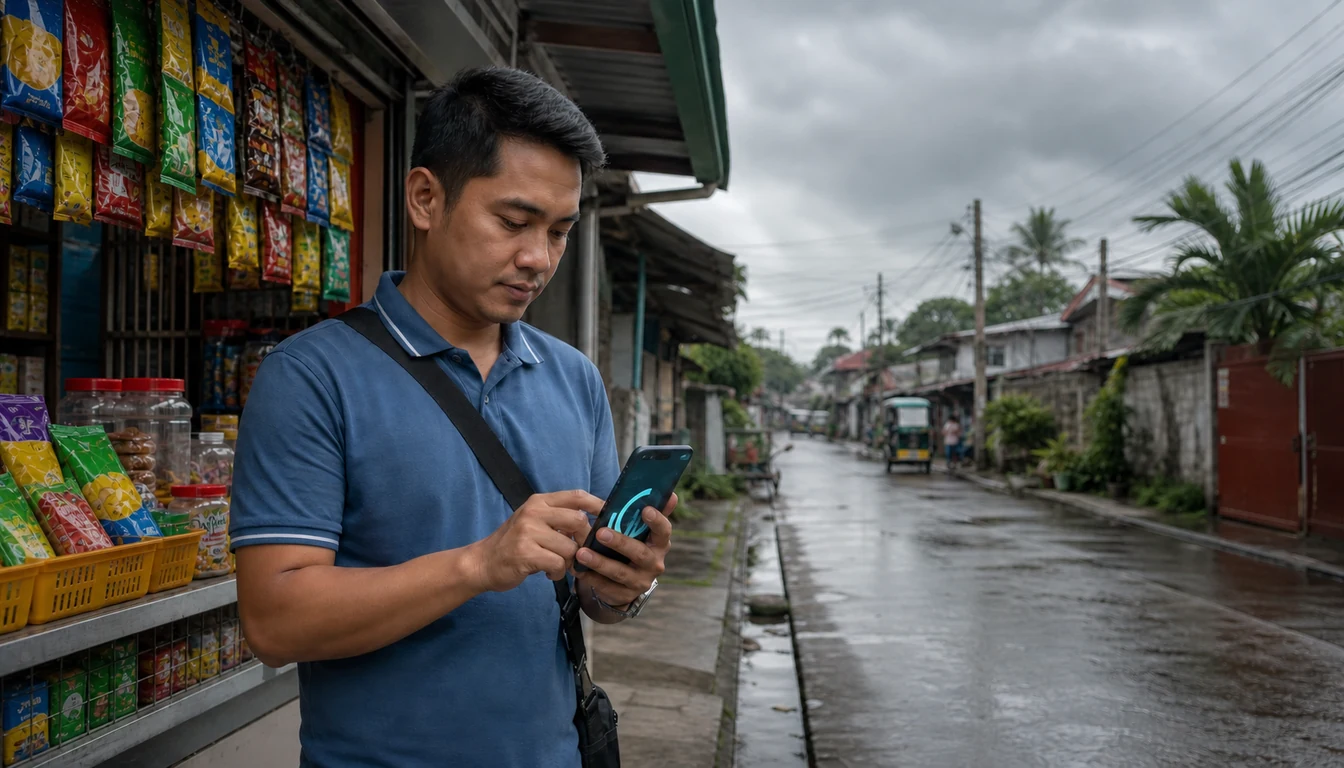
Why "offline-first" means something different here
Offline-first is sometimes treated as a generic checkbox feature, a field app that can technically function without a live connection for a few minutes. In the Philippines that framing understates the problem. There are two distinct failure modes an operations team has to plan for, and they behave differently.
The first is structural: inter-island and rural coverage gaps that exist year-round regardless of weather. A route that includes a ferry crossing, a mountain barangay or a smaller island off the coast of Visayas or Mindanao can simply sit outside reliable network coverage. This is a permanent feature of the territory, not an incident to be resolved.
The second is seasonal and acute: typhoon-driven outages that knock out towers, cut power to base stations and shut ports for days at a time, then resolve once the storm clears. A rep who could reliably sync data on a Tuesday may find themselves fully offline by Thursday and back online the following week. Software that assumes connectivity is a constant, rather than a variable that fluctuates by geography and by month, will fail exactly when the business needs it most, during a storm-disrupted week when distributors are trying to keep supply moving and outlets are trying to restock.
What offline-first field sales software must actually do
Genuine offline-first design goes well beyond letting an app open without a connection. It means every core field function keeps working locally and reconciles cleanly once a signal returns.
Local order capture and a proper sync queue
Order taking has to work fully offline, with the full product catalogue, current pricing and any active scheme or promotion cached on the device rather than fetched live. Orders queue locally and transmit automatically the moment connectivity returns, without requiring the rep to remember to manually resend anything.
Offline stock and inventory visibility
A rep checking whether an outlet is out of stock on a given SKU, or a merchandiser verifying shelf availability, needs that data available on-device, refreshed at the last successful sync, clearly timestamped so nobody mistakes stale data for live data.
Offline visit and merchandising capture
Store visits, planogram checks and point-of-sale material verification should capture photos, notes and geotags locally, then upload in the background once signal is available, rather than blocking the rep's next task while waiting for an upload to complete.
Conflict resolution when multiple reps reconnect
Where more than one device has captured data against the same outlet or order while offline, the sync layer needs clear, predictable rules for merging that data rather than silently overwriting one rep's work with another's the moment both come back online.
Routing across islands: road, sea and air in one plan
Because the country is an archipelago, many distributors run combined freight routes that mix road transport with inter-island sea or air legs, not as an exception but as the normal way stock and sales coverage reach outlets in the Visayas and Mindanao from a Luzon-based warehouse. A route plan that only models road distance and drive time misses half the actual logistics problem.
Typhoon season compounds this. A route that runs cleanly in the dry months can require rerouting, rescheduling or a temporary change to an alternative port or crossing once storm warnings are issued. Route planning software built for this market needs to model multi-modal legs and give distributors and field teams enough visibility to adjust a beat plan quickly when a scheduled crossing or delivery window is disrupted, rather than leaving reps to work it out informally on the day.
There is also a coverage-planning dimension that is easy to overlook. Urban sari-sari stores tend to lean more heavily on supermarkets and company salespeople as their supply source, while rural outlets lean more on wholesalers and market stalls. A single national beat plan that treats every territory identically will under-serve one end of that split. Territory design that accounts for the urban-rural difference, alongside the multi-modal freight reality, gives distributors a route plan that reflects how stock genuinely moves rather than a simplified version of it.
Sari-sari density and the tingi effect on offline data capture
An estimated 1.1 million sari-sari stores operate nationwide, and together they drive roughly 60% of FMCG sales in the country. These are small, often family-run neighbourhood outlets that, despite tiny floor space, can carry up to around 200 SKUs. That density is a direct consequence of tingi, the Filipino consumer habit of buying in small, single-use quantities rather than bulk, sachets of shampoo, coffee or seasoning sold individually rather than in large packs.
For field sales software, this creates a specific offline data problem. A rep visiting a sari-sari store is not choosing from a short list of top sellers, they may need pricing and stock data across a wide, fast-moving SKU range, and outlets restock small quantities frequently rather than large quantities occasionally. That means the offline catalogue cached on a rep's device has to be genuinely complete for their territory, not trimmed down to save storage, and SKU management tooling needs to keep that offline catalogue synchronised accurately as pricing or availability changes, so a rep working offline in a coverage gap is never quoting an outlet on outdated pricing.
Modern trade, supermarkets and hypermarkets, accounts for a meaningfully smaller share of grocery distribution by comparison, so an offline-first field app has to be built primarily around the sari-sari reality rather than treating it as a secondary channel behind organised retail.
Training a regional, multilingual field force to work offline
The Philippines has two official languages, Filipino and English, and English is used extensively in business and commercial contexts, which makes the country somewhat unusual among the markets 1Channel serves, an English-language field app does not read as a foreign import here. But the field force itself is regionally diverse: reps and merchandisers frequently move between Tagalog-speaking Luzon and Cebuano-speaking territory in the Visayas and Mindanao, alongside other regional languages spoken across the country.
That regional spread is a genuine training and onboarding consideration, particularly for offline-first tooling, because a rep who is uncertain how a sync queue or offline order flow behaves cannot simply call a supervisor for a walkthrough while standing in a coverage gap. Training content delivered through sales team learning management needs to cover offline workflows explicitly, what happens when the app has no signal, how to confirm an order queued successfully, what a pending sync indicator means, so the behaviour is familiar before a rep ever depends on it during a storm-disrupted week.
Collections that sync when the signal returns
Digital collections have moved a long way past cash and cheque on the road. GCash and Maya combined now reach more than 95% of digitally active Filipinos, with InstaPay providing real-time transfers up to ₱50,000 per transaction and PESONet handling bulk or scheduled transfers underneath them. For distributors, this is a genuinely strong, current basis for order-to-cash and collections planning.
Offline-first matters here too. A rep recording a collection against an outlet while offline needs that record to hold locally with the correct amount, method and reference, then reconcile automatically against the distributor's books once connectivity is restored, rather than relying on the rep to remember and re-enter it later from memory. Payment management built for this market should treat e-wallet and bank-rail reconciliation as a background sync process, not something that requires a live connection at the point of collection.
E-invoicing readiness, without waiting for connectivity
The Bureau of Internal Revenue's Electronic Invoicing System is being phased in under the EOPT Act, currently covering large taxpayers, e-commerce sellers and CAS or CBA users, with full coverage of VAT-registered taxpayers targeted from 2027. It is not a blanket requirement for every business today, and field sales software should frame it accurately as something a distributor's systems can support and align with as coverage expands, not as a mandate every user already faces.
For in-scope distributors preparing ahead of that expansion, invoice generation still needs to work at the point of sale regardless of connectivity. An offline-capable field app should be able to generate a structured invoice locally and queue it for transmission once a signal is available, so a rep working through a coverage gap or a storm-affected day is not blocked from invoicing an order simply because the transmission step has to wait.
How 1Channel supports offline-first field sales in the Philippines
1Channel's field sales platform is built offline-first rather than offline-tolerant, meaning order capture, stock checks, visit records and collections all function fully on-device and synchronise automatically the moment a connection is available, whether that gap lasted five minutes on a mountain road or five days through a typhoon closure. Combined with multi-modal route planning and territory-aware field activity management, the platform is designed around the reality that connectivity in this market is a variable, not a constant, and that a field team's productivity should not depend on which barangay they happen to be standing in.
Give Your Field Team an App That Works Without Signal
See how 1Channel's offline-first sales force automation keeps order capture, stock checks and collections running across every island and through every typhoon season, syncing automatically the moment signal returns.
Explore Sales Force Automation →Key Takeaways
Offline-first field sales software is a practical necessity in the Philippines, not an optional extra, because connectivity here is genuinely variable rather than reliably constant. The key points for operators to act on:
- Two distinct connectivity problems, not one. Structural inter-island and rural coverage gaps are permanent; typhoon-driven outages are seasonal and acute. Plan for both separately.
- Every core field function needs to work offline. Order capture, stock checks, visit records and collections all need to function fully on-device with a reliable sync queue, not just basic app access.
- Route planning has to model road, sea and air together. Multi-modal, weather-resilient routing reflects how distributors actually move stock and coverage across the archipelago.
- The offline SKU catalogue must be complete, not trimmed. With sari-sari stores carrying up to around 200 SKUs restocked frequently in small quantities, a partial offline catalogue leaves reps quoting outdated pricing.
- Training has to cover offline workflows explicitly. A regionally diverse field force needs to understand sync behaviour before they depend on it during a coverage gap, not while standing in one.
- Collections and invoicing should queue locally and reconcile automatically. E-wallet collections and EIS-ready invoicing both need to function at the point of sale regardless of connectivity, syncing in the background once signal returns.