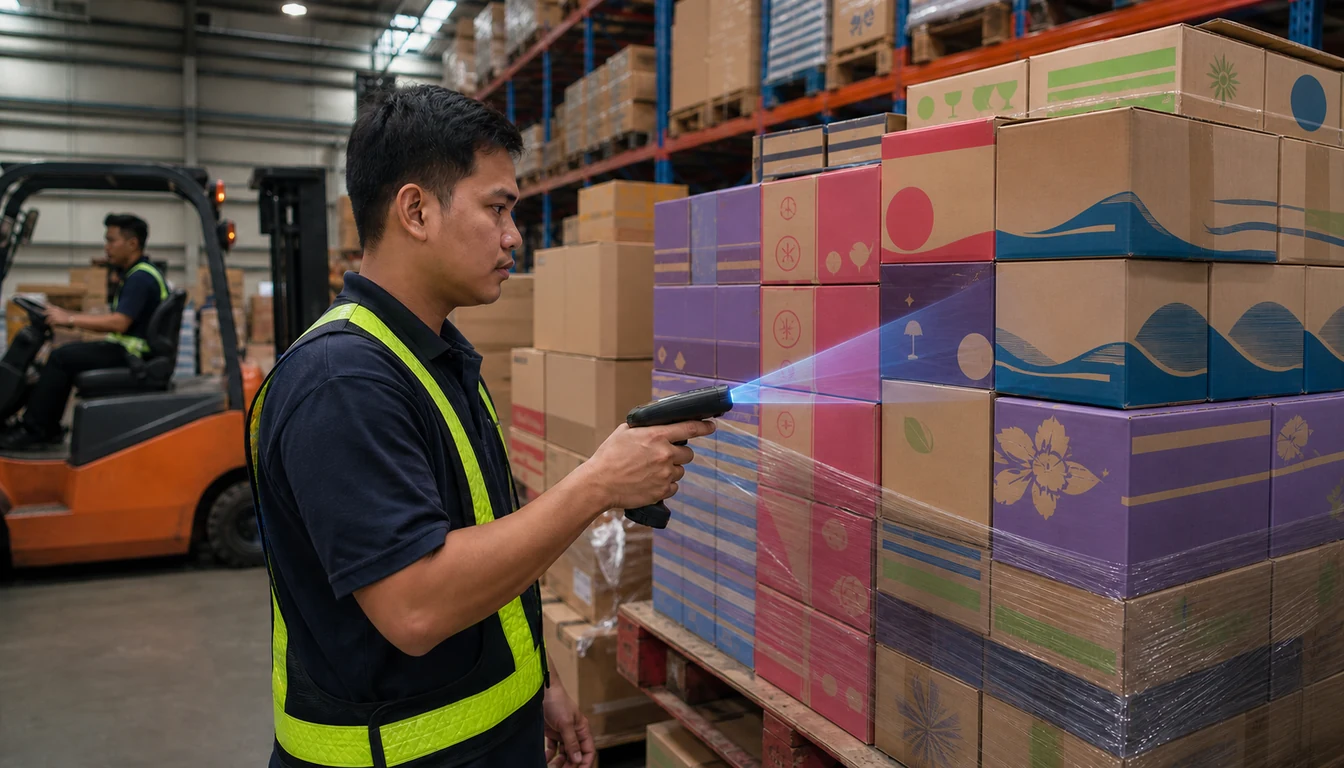
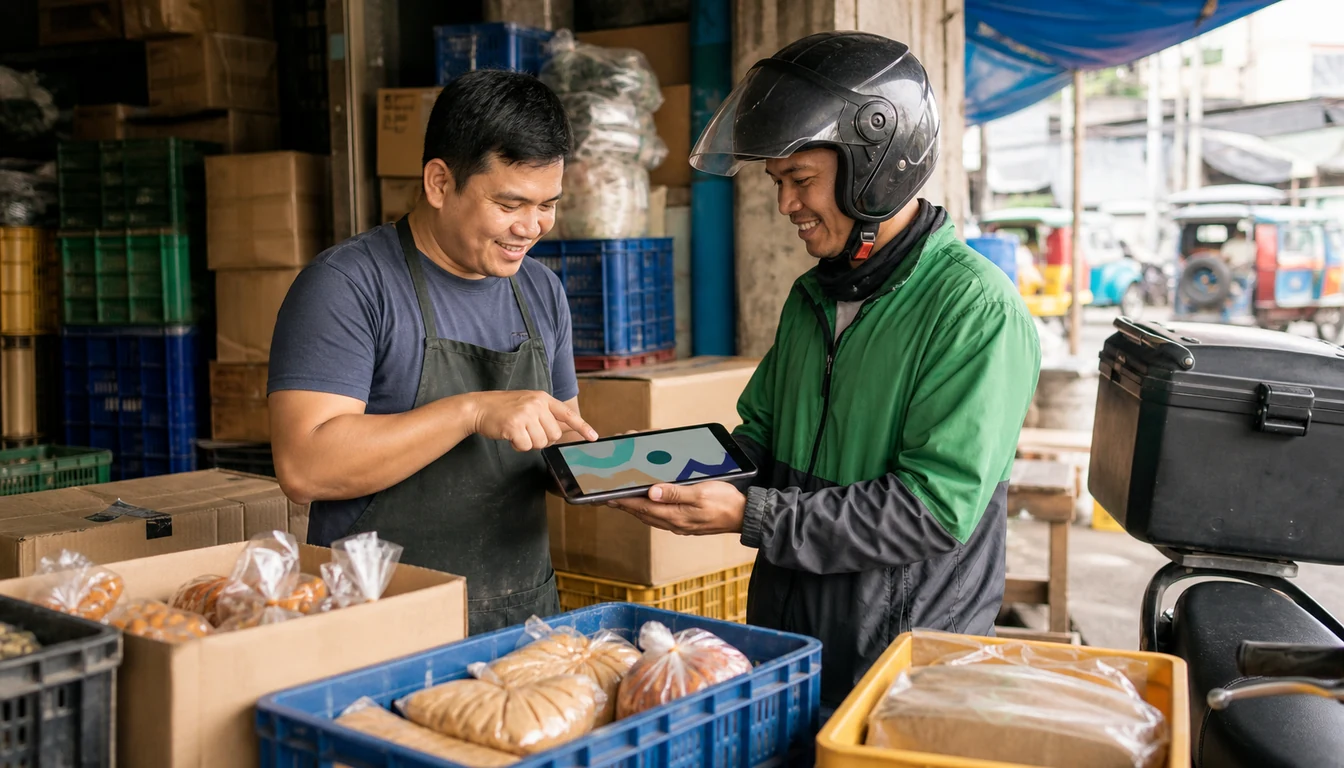
Stock-outs and shrinkage are two of the most persistent drains on margin in Philippine distributor warehouses, and they are frequently treated as the same problem when they are not. A stock-out means a sari-sari store, a sub-distributor or a modern trade account cannot get the SKU it ordered, which pushes the sale to a competitor's brand sitting on the same shelf. Leakage, meanwhile, is stock that never reaches a customer at all: it is written off, unaccounted for, or quietly disappears somewhere between receiving and dispatch. Both problems tend to hide inside the same warehouse at the same time, and a manager who is only watching one of them is guaranteed to be surprised by the other.
The scale of the challenge is shaped by how Filipino consumers actually buy. Tingi, the practice of purchasing shampoo, coffee, seasoning and detergent in small, single-use sachets rather than bulk packs, is the default across sari-sari retail rather than the exception, and it multiplies the number of SKUs a distributor warehouse has to receive, store, count and pick. A single brand that once shipped in a handful of case sizes can easily fragment into dozens of sachet, pouch and bundle variants, each with its own bin location, its own batch code and its own opportunity to be miscounted, misplaced or mis-picked. High SKU density does not just add clutter; it adds error surface area, and every extra SKU is another place for a stock-out or a leak to start.
Geography compounds the problem further. The Philippines is an archipelago of roughly 7,641 islands across Luzon, the Visayas and Mindanao, and a large share of distributor stock does not move on a single, continuous road route the way it might in a landlocked market. It travels by truck to a port, waits, moves by inter-island vessel or air freight, is unloaded again, and is often re-warehoused before it reaches the next leg of the journey. Every additional touchpoint, every extra load and unload, is a point where a carton can be dropped, miscounted, damaged, delayed or simply left behind, and typhoon season adds a further layer of unpredictability that can strand stock for days at a time. None of this gets solved by hoping for careful handling. It gets solved by process discipline at the warehouse door, in the aisles, and at every transfer point in between, backed by systems that make stock visible rather than assumed.
Stock-Outs and Leakage Are Not the Same Problem
Treating stock-outs and leakage as a single "inventory problem" is one of the most common mistakes in distributor warehouse management, because the root causes, and the fixes, are genuinely different.
What Drives Stock-Outs
Most stock-outs trace back to a demand and supply mismatch that the warehouse did not see coming: a promotion that moved more volume than planning accounted for, a reorder point set from last quarter's velocity rather than this month's, or a sub-distributor placing an order the warehouse could not fulfil because the stock was already committed elsewhere. In tingi-heavy categories the problem is sharper still, because a single popular sachet SKU can sell through in days while a slower variant sits untouched, and a warehouse that reorders by brand rather than by individual SKU will end up restocking the wrong half of the range.
What Drives Leakage
Leakage is rarely one dramatic theft event. It is usually a slow accumulation of small failures: cartons received but never formally logged against a purchase order, damaged stock written off informally instead of through a documented process, picking errors that quietly under-deliver an order while the system still shows full stock, and returns that come back from the field but never get reconciled against what left the warehouse in the first place. Because each individual loss looks small, it rarely triggers investigation on its own, which is exactly why leakage compounds over a full financial year into a number that is hard to explain.
Why Receiving Discipline Decides What Happens Next
Almost every downstream stock-out or leak can be traced back to what happened, or did not happen, at the receiving dock.
Matching What Arrives Against What Was Ordered
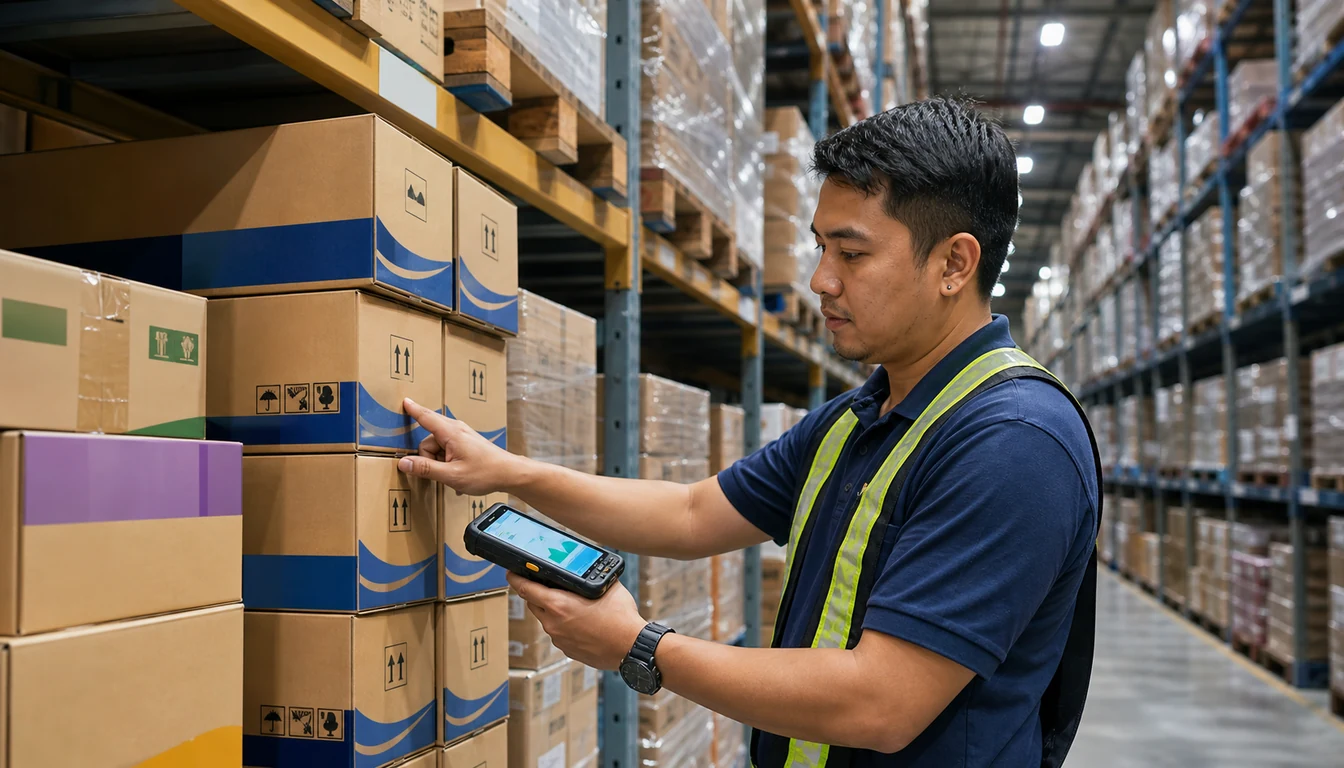
A goods received note process that only checks carton counts against a delivery challan is not enough. Receiving discipline means matching what physically arrives against the original purchase order, line by line and SKU by SKU, before it is accepted into stock. Any shortfall, substitution or damage needs to be logged against that specific consignment at the point of receiving, not discovered weeks later when a picker cannot find the quantity the system says should be there. A proper GRN process turns receiving from a formality into the first, and most important, checkpoint against both stock-outs and leakage.
Capturing Batch and Expiry the Moment Stock Lands
For FMCG and pharma distributors, receiving is also where batch and expiry data needs to be captured accurately, not reconstructed later from a supplier invoice. Getting this right at intake matters for FDA-facing traceability as much as it matters for stock rotation; a fuller treatment of batch and expiry discipline for Philippine distributors is covered in FDA-ready batch and expiry tracking. Warehouses that skip this step at receiving tend to discover expired or close-dated stock only during a cycle count, by which point it has already occupied shelf space and warehouse capacity that could have gone to something sellable.
Building a Cycle Count Habit Instead of an Annual Shock
An annual stock take tells a warehouse manager what went wrong over the past twelve months. It does nothing to stop the same pattern repeating in month thirteen.
Counting by Value, Not Just by Habit
Cycle counting works better when it is weighted toward the SKUs that matter most, rather than spread evenly across a catalogue that, in a tingi-heavy range, can run into hundreds of lines. Fast-moving, high-value and short-shelf-life SKUs deserve more frequent counts than slow-moving bulk packs sitting at the back of the warehouse. This is particularly relevant where sachet and small-pack variants sit alongside standard case sizes; segmenting the count schedule by movement and value, rather than counting the whole warehouse on a single fixed date, catches discrepancies while they are still small enough to investigate.
Closing the Loop on Variances
A count that finds a discrepancy and simply adjusts the system figure to match the physical count is treating the symptom, not the cause. Every variance needs a reason code and, ideally, a named point in the process where it likely occurred: a miscount at receiving, a picking error, an unrecorded return, or genuine loss. Without that discipline, cycle counting becomes an exercise in updating numbers rather than an early warning system for where leakage is actually happening.
How Tingi Packaging Multiplies SKU Counts on the Warehouse Floor
Sari-sari stores account for an estimated 60% of FMCG sales nationwide, and the roughly 1.1 million of them operating across the country restock small quantities of tingi-format goods very frequently rather than large quantities occasionally. That buying pattern on the retail side has a direct, compounding effect inside the distributor warehouse that supplies them.
Why Small-Pack SKUs Break Simple Bin Layouts
A warehouse designed around case-pack logic, one bin per product, one pick per case, breaks down quickly once a brand fragments into a dozen sachet sizes, bundle packs and promotional variants. Each of those needs its own bin, its own barcode and its own place in the pick sequence, and a layout that was fine for fifty SKUs becomes genuinely difficult to manage at several hundred. Distributors who do not actively organise this complexity tend to end up with informal "overflow" zones where fast-moving small packs get stored wherever there is space, which is precisely where miscounts and misplacements start.
Keeping Pricing and Promotions Aligned With What Is Actually on the Shelf
High SKU counts also make it easy for pricing and promotional data to drift out of step with physical stock, particularly where different pack sizes of the same product carry different scheme terms. Warehouse and SKU management data needs to stay tightly linked to what pricing and promotions are actually being offered on each variant, otherwise a rep can end up promising a scheme on a pack size the warehouse has already stocked out of, or worse, dispatching a batch at the wrong price entirely.
Protecting Stock Across Inter-Island Freight Legs
Distribution in the Philippines is rarely a single road journey from warehouse to outlet. Stock frequently moves by truck, then by inter-island vessel or domestic air freight, then by truck again, and each of those legs is a genuine handover point rather than a continuous chain of custody.
Packing and Paperwork for Sea and Air Legs
Every transfer between modes is an opportunity for a carton to go missing, a pallet to be mishandled, or documentation to fall out of sync with what physically moved. Consignments travelling by inter-island freight need packing lists and transfer documentation that can be checked at both ends, at dispatch from the origin warehouse and at receipt in the destination warehouse or hub, so that a shortfall is caught immediately rather than discovered when a downstream sub-distributor complains that an order arrived incomplete.
Building Typhoon Season Into the Plan
With an average of around twenty typhoons a year, several of which make landfall and disrupt ports and mobile networks for days at a time, freight schedules across the archipelago cannot be treated as fixed. Warehouses that build a buffer stock policy for weather-exposed routes, and that keep field and hub teams able to check stock positions even when connectivity drops, absorb these disruptions as delays rather than as stock-outs at the retail end. This is also why offline-capable systems matter here: it is not a power grid problem the way it is in some other markets, it is a genuine connectivity gap during exactly the periods when accurate stock visibility matters most.
Stopping Reps From Overselling Stock That Is Not There
A warehouse can run a disciplined receiving process, a well-segmented cycle count schedule and careful inter-island handling, and still generate stock-outs at the retail level if that information never reaches the people planning routes and taking orders.
Real-Time Visibility Versus the End-of-Day Surprise
When warehouse stock positions only sync to the field once a day, or once a route, a rep can spend a morning taking orders for SKUs that were already fully allocated before the route even started. Feeding live or near-live warehouse stock data into route and beat planning lets reps and pre-selling teams see what is genuinely available before they commit an order to a sari-sari store or a modern trade account, rather than promising stock that a cycle count will later reveal was never really there. It also protects the relationship with larger modern trade accounts, where chains such as SM, Robinsons and Puregold expect reliable fulfilment against confirmed orders, not a retrospective apology for a stock-out.
How 1Channel Connects Warehouse, Route and Reconciliation
1Channel brings warehouse receiving, cycle counting and stock movement into the same cloud system that drives route and beat planning, so a stock-out or a leak is caught at the point it happens rather than reconstructed weeks later from paper records. Mobile GRN capture matches deliveries against purchase orders line by line, cycle counts feed reason-coded variance data back into the platform automatically, and SKU-level stock positions, including tingi and sachet variants, sync through to field teams before they start a route. Distributor analytics then surfaces the SKUs and routes where stock-outs or shrinkage keep recurring, so warehouse managers can fix a pattern instead of chasing individual incidents. The result is a single, cloud-based view of inventory that field, warehouse and finance teams are all working from, rather than three different versions of the truth.
Give Your Warehouse a Single Source of Truth
From GRN and cycle counting to batch tracking and route-ready stock visibility, 1Channel's warehouse management software helps Philippine distributors cut stock-outs and shrinkage at the source.
Explore Warehouse Management →Key Takeaways
Reducing stock-outs and leakage in a Philippine distributor warehouse comes down to a handful of consistent habits, applied everywhere the tingi-driven SKU count and the archipelago's multi-island freight routes add complexity.
- Separate the two problems. Stock-outs and leakage have different root causes, demand-supply mismatches versus unrecorded loss, and need different fixes rather than a single generic "inventory" response.
- Make receiving the first checkpoint. A disciplined GRN process that matches deliveries against purchase orders, and captures batch and expiry at intake, stops errors before they ever enter stock.
- Count by value, not by calendar. Weight cycle counts toward fast-moving and short-shelf-life SKUs, and close every variance with a reason code rather than a silent adjustment.
- Plan for SKU proliferation. Tingi and sachet packaging can turn a handful of case-pack SKUs into dozens of variants, so bin layout, barcoding and pricing all need to keep pace.
- Treat inter-island freight as multiple handovers. Each truck-to-vessel-to-truck transfer needs its own documentation checkpoint, with typhoon-season buffer stock built in for weather-exposed routes.
- Connect warehouse data to the road. Real-time stock visibility in route and beat planning stops reps from promising SKUs that a cycle count will later show were never available.